California’s Water Management: An Overview
California’s vast landscape is home to one of the world’s most extensive and complex water management systems. While this system allows millions of residents and vast agricultural operations to thrive, it has come at great cost to the state’s river ecosystems. The intricate web of dams, aqueducts, reservoirs, and pumping stations not only supports society but also disrupts critical environmental processes, altering habitats and threatening wildlife that depend on freely flowing rivers.
The Origins and Scale of the California Water System
Historically, California’s population growth and agricultural expansion were only possible due to large-scale engineering projects designed to move water across great distances. The state’s geography presents a unique challenge: while 75% of the rain and snow falls in Northern California, 80% of the demand comes from the more arid southern regions. This mismatch required the creation of a vast water grid, comprising state and federal projects:
- State Water Project (SWP): Delivers water to over two-thirds of California’s residents, built with enormous dams and pumping stations.
- Central Valley Project (CVP): Supports the agriculture-rich Central Valley by moving water from north to south.
- Colorado Aqueduct: Transports water from the Colorado River to Southern California’s cities and farms.
These systems collectively serve as a critical backbone for California’s economy, but they also heavily alter the state’s natural water flows and hydrology.
The California Water Grid
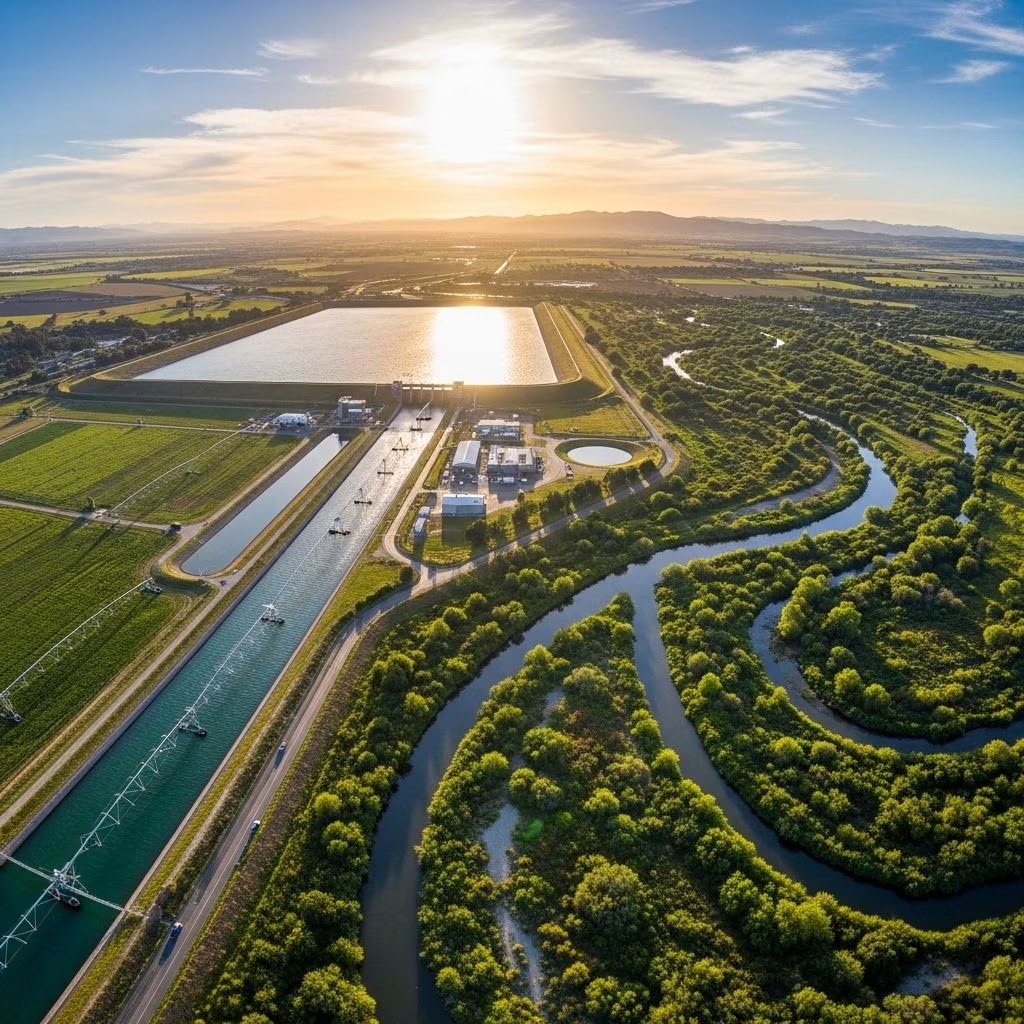
The water grid is a network of thousands of miles of canals, aqueducts, and reservoirs built and operated by various agencies and authorities. The grid’s primary functions include:
- Capturing and storing winter rain and snow in reservoirs and aquifers.
- Transporting water to cities, industries, and agricultural areas far from the original source.
- Providing flood control, recreation, and hydroelectric power—even though these goals sometimes clash with water supply management.
The Infrastructure: Dams, Reservoirs, and Aqueducts
California’s water system is dominated by monumental structures that have physically and ecologically reshaped its rivers. Key features include:
- Dams: Over 1,200 major dams impound water, disrupt natural river flows, and reduce seasonal flooding.
- Reservoirs: Store water for supply during dry months, but their presence transforms riparian and aquatic habitats.
- Pumping Plants and Aqueducts: Move water over mountains and through deserts, allowing water to reach southern cities and farms.
| Project | Major Components | Purpose |
|---|---|---|
| State Water Project (SWP) | Oroville Dam, Aqueducts, Reservoirs | Urban, Agricultural, Recreation |
| Central Valley Project (CVP) | Shasta Dam, Canals, Pumping Plants | Agriculture, Flood Control |
| Colorado Aqueduct | Pumping Stations, Canals | Municipal Supply |
How Water Management Supports California’s Society and Economy
The vast water infrastructure powers one of the world’s largest economies:
- Agriculture: California is the leading producer of fruits, vegetables, and nuts in the U.S.—all reliant on steady water supplies.
- Urban Areas: Metropolises including Los Angeles and San Diego depend on imported water for drinking, sanitation, and industry.
- Hydroelectric Power: Many dams generate electricity, accounting for roughly 15% of statewide supply.
- Flood Management: Reservoirs minimize damage from periodic heavy rains and snowmelt.
- Recreation: Lakes and rivers support boating, fishing, and other activities.
River Ecosystems: What Gets Lost in Water Development
Despite the societal benefits, California’s engineered water system has dramatically altered river ecosystems. Key impacts include:
- Disrupted Natural Flows: Dams and diversions regulate and reduce the variability in river flows, denying rivers the crucial high-water pulses that nurture floodplains and support native plants and animals.
- Altered Sediment Transport: Reservoirs trap sediment that would naturally replenish downstream habitats, leading to erosion and impoverished riverbanks.
- Declining Wildlife: Salmon, steelhead, and other migratory fish cannot reach historical breeding grounds due to impassable dams. Native amphibians and aquatic invertebrates face degraded water quality and habitat loss.
- Loss of Floodplain Habitat: Controlled flows rarely sustain the dynamic habitats found in undammed rivers. Many birds, fish, and mammals now have fewer places to breed and forage.
The Role of Native Fish and Wildlife
California’s rivers were once home to diverse fish populations, including several species of salmon and trout that migrated between ocean and mountain streams. Now, many native species are listed as threatened or endangered:
- Salmon: Populations have plummeted due to blocked migration routes and degraded spawning habitat.
- Delta Smelt: An iconic species now critically endangered, symptomatic of broader ecosystem decline.
Other impacts include reduced genetic diversity, decline of amphibians and aquatic insects, and stress on riparian woodlands that support birds and mammals.
Groundwater Management Issues
Beyond surface water, California’s groundwater has long acted as a backup during dry years. However, decades of pumping have led to critical problems:
- Overdrafting: Groundwater is extracted faster than it can be replenished, leading to land subsidence—a lowering of ground elevation—and reduced water quality.
- New Legislation: The Sustainable Groundwater Management Act (SGMA) now requires local agencies to develop plans to achieve groundwater sustainability.
- Aquifer Depletion: Some regions, especially in the Central Valley, have seen dramatic reductions in groundwater storage, affecting both human and ecological systems.
The Struggle to Balance Competing Water Needs
Managing California’s water means juggling conflicting objectives:
- Water Supply vs. Flood Protection: Water managers fill reservoirs to meet demand but need empty space for flood control during storms.
- Environmental Flows: Providing enough water for fish migration, spawning, and wetland maintenance often clashes with human requirements.
- Hydropower vs. Ecosystem Health: Peak power generation may not coincide with ecological needs for natural flow variation.
- Recreation and Urban Use: Lake levels may be maintained for boating, reducing downstream flows required for healthy ecosystems.
These trade-offs make California’s water management an inherently difficult and evolving challenge, often debated among agencies, local governments, farmers, urban areas, and environmentalists[10].
Restoration and Sustainability Efforts
Recently, attention has turned toward mitigating the ecological consequences of water development. Key initiatives include:
- Environmental Flow Restoration: Increasing deliberate releases to mimic the seasonal variability lost with dams.
- Dam Removal Projects: In select watersheds, aging dams are being considered for removal to restore habitat connectivity.
- Wetland and Riparian Zone Rehabilitation: Efforts to revive critical habitats alongside rivers and floodplains.
- Sustainable Groundwater Management: SGMA empowers local agencies to monitor and regulate groundwater, aiming to end chronic overdraft.
- Collaborative Planning: California Water Plan updates every five years, soliciting broad participation to guide investments and promote integrated water management.
While these efforts are promising, balancing immediate human needs with long-term ecological resilience remains a difficult journey.
Frequently Asked Questions (FAQs)
What is the biggest challenge in California water management?
The biggest challenge is balancing water delivery for cities and farms with the health of river ecosystems, given limited supply and competing priorities.
How have dams affected California’s rivers?
Dams have reduced seasonal flow variability, blocked fish migration routes, trapped sediment, and diminished floodplain habitats essential for wildlife.
Why is groundwater overdrafting a problem?
Overdrafting causes land subsidence and degrades water quality, risking long-term availability for both humans and ecosystems.
What is being done to protect river ecosystems?
Efforts include restoring environmental flows, rehabilitating habitats, removing select dams, and encouraging sustainable groundwater use under recent legislation.
Who manages California’s water resources?
Multiple agencies, including the California Department of Water Resources, the U.S. Bureau of Reclamation, and regional water districts, operate the infrastructure and coordinate policy decisions.
Conclusion
California’s water management system is a marvel of engineering and planning, vital for human health and prosperity. Yet, its legacy is matched by ecological challenges, particularly for the state’s rivers and wildlife. The path to sustainable coexistence requires ongoing innovation, collaboration, and a new focus on restoring natural processes wherever possible.
References
- https://en.wikipedia.org/wiki/Water_in_California
- https://www.ppic.org/publication/californias-water-grid/
- https://water.ca.gov/programs/california-water-plan
- https://water.ca.gov/water-basics/the-california-water-system
- https://the-lookout.org/2025/01/24/the-geography-of-californias-water-systems/
- https://calwaterassn.com/california-water-101-series-a-comprehensive-overview-of-californias-water-systems-and-key-regulatory-issues/
- https://www.watereducation.org/aquapedia/california-water-issues-overview
- https://www.ladwp.com/who-we-are/water-system
- https://ca.water.usgs.gov/sustainable-groundwater-management/
- https://californiawaterblog.com/2016/06/26/how-bad-is-water-management-in-california/