


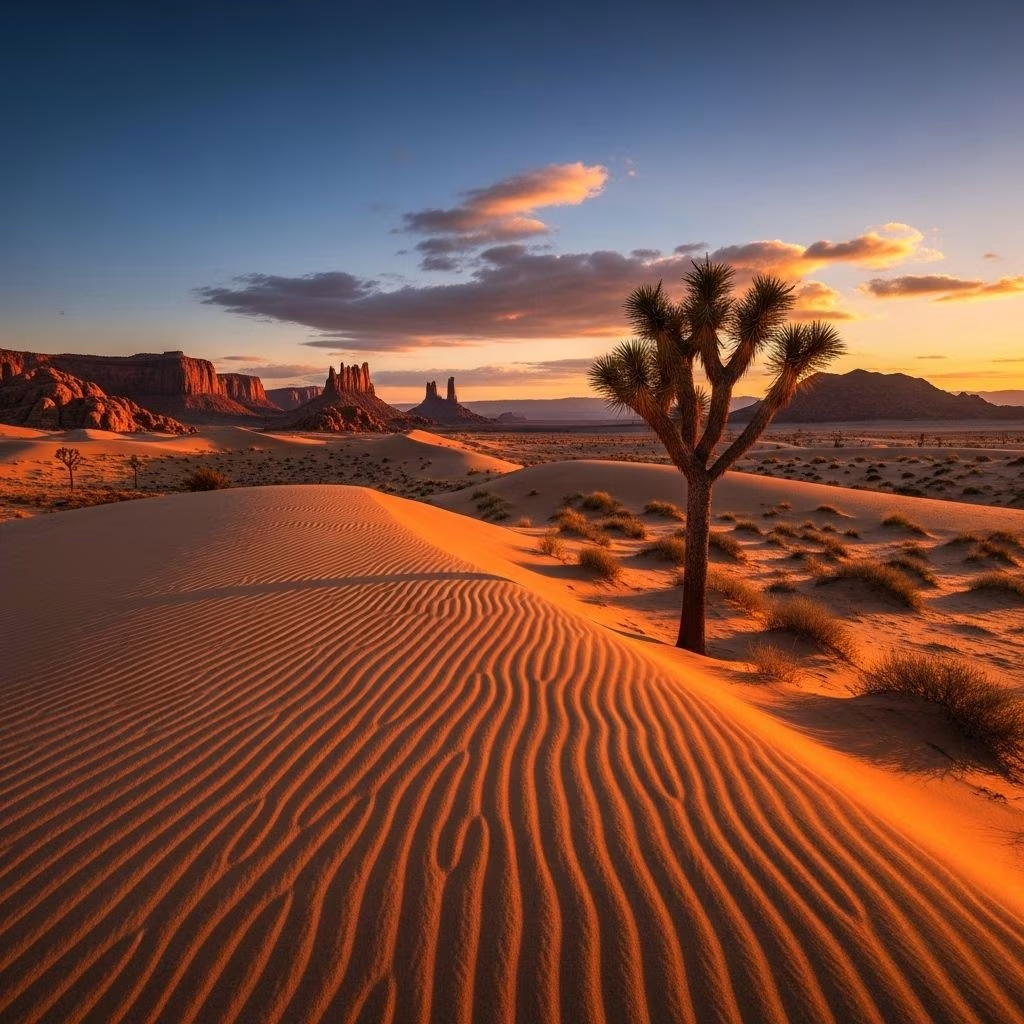
Deserts are some of the most awe-inspiring and misunderstood places on Earth. While many imagine endless sand dunes under a burning sun, deserts are far more diverse—ranging from icy arctic wastes to salt-encrusted plateaus and stony plains. Defined by their extreme aridity, less than 10 inches (25 cm) of rain per year, deserts comprise almost one-third of our planet’s land surface. Each one tells a story of resilience, adaptation, and remarkable beauty. Let’s journey through some of the world’s most incredible deserts, examining their distinct features, ecological significance, and enduring allure.
What Makes a Desert?
To be classified as a desert, a region must meet specific criteria:
- Extreme dryness: Less than 10 inches (25 cm) of precipitation annually.
- Harsh climates: Can be either scorching hot, frigidly cold, or both (varying day and night or by season).
- Poor soil and scant vegetation: Most deserts support sparse plant life, often specially adapted to minimize water loss.
Deserts fall broadly into four categories:
- Subtropical Hot Deserts (like the Sahara and Arabian deserts)
- Cold Deserts (such as the Gobi in Asia)
- Coastal Deserts (examples include the Atacama and Namib)
- Polar Deserts (Arctic and Antarctic regions)
The Namib Desert: The Oldest Desert on Earth
Stretching more than 1,200 miles (2,000 km) along the southwestern coast of Africa, the Namib Desert claims to be the world’s oldest desert, with some dunes estimated to be over 55 million years old. It is distinguished by its:
- Towering Sand Dunes: Among the highest on earth, tinted vivid reds and oranges by iron oxide.
- Vast gravel plains and barren mountains: The landscape’s stark beauty is legendary.
- Unique Flora and Fauna: Despite aridity, over 3,500 plant species grow here, as well as animals like the gemsbok, mountain zebra, and rare short-eared elephant shrew.
Fog rolling in from the Atlantic is vital for life, providing moisture in a virtually rainless environment. The stunning Sossusvlei area demonstrates dramatic contrasts—white salt pans, russet dunes, and sky-blue backdrops drawing photographers and adventurers alike.
The Sahara: The World’s Largest Hot Desert
The Sahara Desert extends across eleven North African countries and spans roughly 3.5 million square miles (9 million sq km)—about the size of the United States. Known for its:
- Sweeping sand seas (ergs): But also vast gravel plains, rocky plateaus, and volcanically active mountains.
- Nomadic cultures: Including the Tuareg and Bedouin peoples, who have adapted for millennia.
- Extreme temperature swings: Daytime can soar above 120°F (49°C), while nights quickly plunge to freezing.
Despite its size and harshness, the Sahara supports surprising biodiversity, including fennec foxes, addax antelope, and hundreds of plant species adapted to arid life. The southern reaches, known as the Sahel, mark a critical ecological transition to savanna and grassland.
Bardenas Reales: Europe’s Desert Frontier
Not all deserts are remote. In southeastern Navarre, Spain lies Bardenas Reales, one of Europe’s few true deserts. Covering nearly 100,000 acres, it features:
- Sculpted badlands: Eroded clay, chalk, and sandstone form mesas, canyons, and hoodoos.
- UNESCO Biosphere Reserve status: Recognized for unique geology and rare wildlife.
- Cultural history: Once a hideout for bandits like Sanchicorrota, it’s featured in folklore and films.
Despite the harsh landscape, migratory birds, wildflowers, and hardy sheep contribute to the fragile desert ecosystem. The ochre-colored Castildetierra formation is especially iconic.
The Gobi Desert: Asia’s Cold, Rugged Expanse
Asia’s largest desert and the world’s fifth largest, the Gobi sprawls across northern China and southern Mongolia. Unlike stereotype, much of the Gobi is:
- Stone and gravel plains: Less than 5% is classic sand dune (ergs).
- Severe climate: Snow is common in winter, and temperatures can swing from -40°C to above 45°C in summer.
- Wildlife: Habitat for the endangered snow leopard, wild Bactrian camels, and nomadic herders.
The Gobi’s harshness has shaped Mongolia’s legendary nomad culture and shelters dinosaur fossils and unique steppe ecosystems. Rainfall is sparse, but just enough to support patchy shrubs and grasses.
Mojave Desert: America’s Hottest Wilderness
Though the Mojave is the smallest of North America’s major deserts, its extremes are legendary. Spanning roughly 48,000 sq miles across California, Nevada, Utah, and Arizona, it is famed for:
- Death Valley National Park: The hottest and lowest location in North America, where temperatures can breach 134°F (56.7°C).
- Iconic flora: Joshua trees, creosote bush, and uniquely adapted cactus species.
- Dramatic scenery: Towering sand dunes, salt flats, and rugged mountains.
Despite the heat, spring brings explosions of wildflowers following rare rains, and the desert supports bighorn sheep, kit foxes, and burrowing owls.
Atacama Desert: Earth’s Driest Non-polar Desert
Located in northern Chile between the Pacific Ocean and the Andes, the Atacama is among the most Mars-like places on our planet. Its distinction:
- Minimal rainfall: Some weather stations have never recorded measurable rain.
- Otherworldly landscapes: Salt flats, eroded canyons, active volcanoes, and geysers.
- Scientific research: Used by NASA to test Mars mission instruments due to its barren soils.
Despite the near-total absence of water, extremophile microorganisms thrive, and occasional ‘desert blooms’ after rare rains create surreal pastel carpets of flowers.
Arctic Polar Desert: A Land of Ice and Snow
Not all deserts are hot. The Arctic polar desert may look like a frozen wasteland, but its precipitation—mainly as snow—is typically less than in the Sahara. Features include:
- Vast ice sheets and glaciers: Covering much of Greenland, northern Canada, and Eurasia.
- Permanent permafrost and limited life: Largely barren, though some hardy moss, lichen, and migrating animals survive during summer.
- Extreme cold: Temperatures can plunge below -50°C (-58°F).
This environment tests the biological limits of life, with polar bears, arctic foxes, and the occasional moss or microbe eking out an existence.
Wadi Rum: Jordan’s Valley of the Moon
Southern Jordan’s Wadi Rum enchants with its deep red sands and sculpted granite and sandstone mountains. Highlights include:
- Dramatic landforms: Towering cliffs, rock bridges, and canyons marked by ancient petroglyphs.
- Lawrence of Arabia’s legacy: The iconic British officer traversed these valleys during World War I.
- Starry nights and Bedouin culture: Local nomads maintain traditional hospitality under the endless desert sky.
Wadi Rum’s geological drama has made it a favorite for film-makers and trekkers seeking Martian landscapes on Earth.
Thar Desert: The Most Populated Desert
Forming a border between India and Pakistan, the Thar Desert (sometimes called the Great Indian Desert) covers an area of more than 77,000 square miles (200,000 sq km). Unique for:
- High population density: Over 80 people per square kilometer—unusual for a desert.
- Colorful culture: Home to vibrant cities like Jaisalmer, rural villages, and the famed Pushkar Camel Fair.
- Dune landscapes: Rolling sand hills, salt flats, and scattered vegetation.
Despite frequent droughts, the Thar is a mosaic of tradition and adaptation, sustaining both wildlife and human communities.
More Remarkable Deserts
- Arabian Desert: Second only to the Sahara in size among sandy deserts, stretching across the Arabian Peninsula, with famous regions like the Rub’ al Khali (Empty Quarter).
- Great Victoria Desert: Australia’s largest, marked by red sands, salt lakes, and unique fauna like the Thorny Devil lizard.
- Salar de Uyuni: The world’s largest salt flat, located in Bolivia, creates dazzling mirrored landscapes during seasonal floods.
- White Sands: In New Mexico, USA, known for its astonishing dunes of pure, white gypsum.
Frequently Asked Questions (FAQ)
Q: What is a desert?
A: A desert is a region that receives very little precipitation (under 10 inches/25 cm annually) and supports limited plant and animal life due to extreme dryness.
Q: Are all deserts hot?
A: No. While many are hot (such as the Sahara or Arabian deserts), others are cold, including the Gobi in Asia and the Arctic/Antarctic polar deserts.
Q: What kinds of animals and plants live in deserts?
A: Despite harsh conditions, many deserts support unique flora (like cacti, succulents, and tough shrubs) and fauna (such as camels, foxes, snakes, beetles, and birds) adapted to extreme dryness.
Q: Why are some deserts covered in salt instead of sand?
A: Salt deserts or flats, like Salar de Uyuni, form in basins where water evaporates, leaving minerals behind. These regions appear as vast, blindingly white patches instead of sandy dunes.
Q: Can people live in deserts?
A: Yes. Deserts like the Thar support millions, while others (such as the Mojave or Arabian) are home to Indigenous peoples, nomadic groups, or modern settlements, often clustered around water sources.
Conclusion: The Resilient Beauty of Deserts
Far from being barren wastelands, deserts are dynamic realms of inspiration, scientific intrigue, and complex ecosystems. Their stark beauty invites exploration, while their resilience in the face of extreme conditions reminds us of the adaptability of life on Earth. As the climate changes and deserts expand or transform, understanding and protecting these extraordinary landscapes is more important than ever.


