


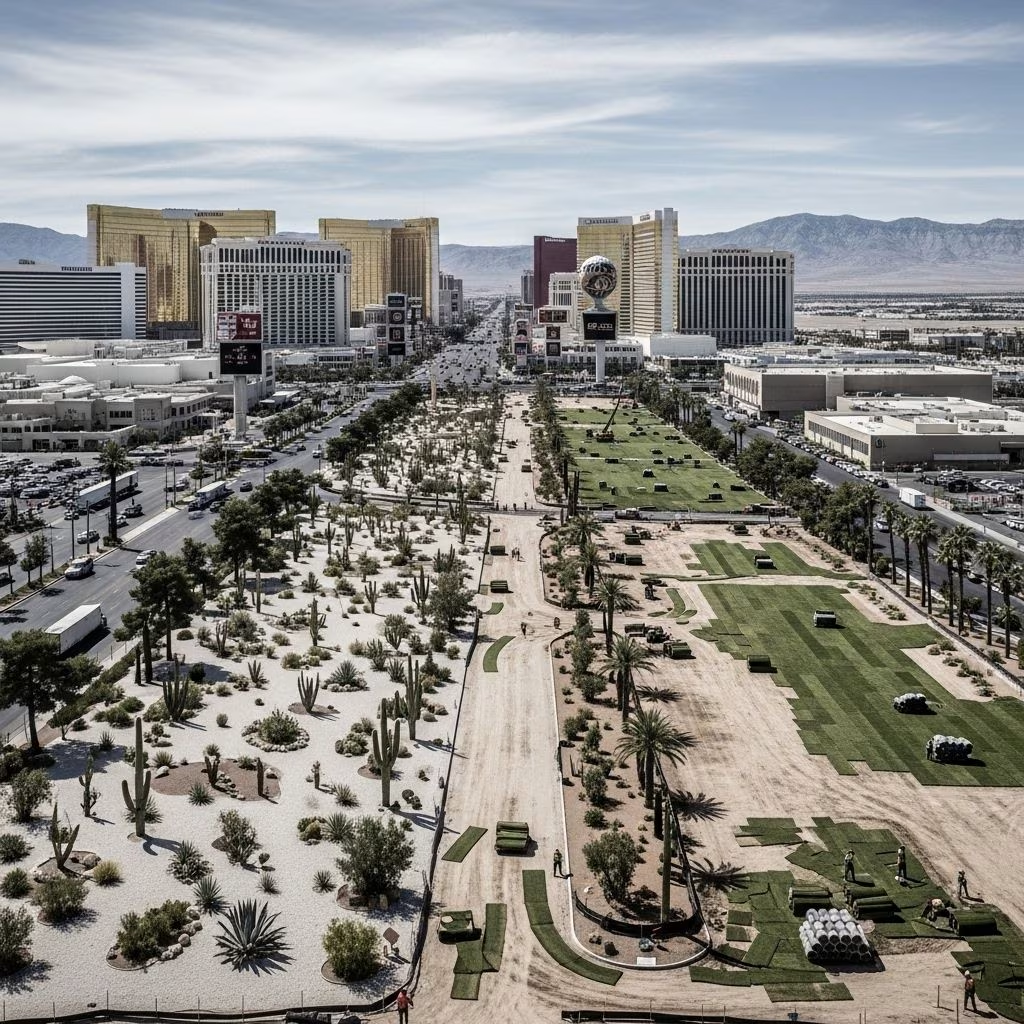
Las Vegas Bans Decorative Grass: A Drastic Step Toward Water Conservation
In a region famous for its dazzling lights and lush façades, Las Vegas is now breaking ground for a different reason: it has become the first major U.S. city to enact a ban on decorative, nonfunctional grass, marking a pivotal shift in how desert cities approach water management. Faced with a historic drought and rapidly shrinking water reserves from the Colorado River, the city and the broader Southern Nevada region are pioneering bold conservation policies that could serve as a model for drought-stricken areas throughout the American West.
Why Ban Decorative Grass?
At its heart, the new legislation – Assembly Bill 356 – is a response to decades of pressing water concerns. Ornamental lawns and patches of grass—once symbols of suburban comfort—are now being recognized as unsustainable luxuries in the desert. According to the Southern Nevada Water Authority (SNWA), so-called nonfunctional grass, such as narrow strips along roads, medians, business parks, apartment complexes, and traffic circles, consumes an outsized share of the region’s precious water allocation.
- Nonfunctional grass requires up to four times as much water as desert-adapted landscaping, like cacti and native shrubs.
- About 13,000 acres of grass in Las Vegas is classified as decorative. The ban aims to eliminate up to 30% of it.
- Nonfunctional lawns are responsible for approximately 10% of the region’s annual Colorado River water use.
This sweeping policy is intended to drastically cut outdoor water consumption and ensure a more sustainable future for the region as reserves in Lake Mead hover near historic lows.
The Scope of the Ban: What Grass Is Targeted?
Las Vegas’ decorative grass ban targets landscapes that serve no recreational or functional purpose—mostly those found outside businesses, in street medians, traffic islands, and residential common spaces. The key details include:
- Commercial properties, homeowner associations (HOAs), multifamily residential complexes, and streetscapes are required to remove nonfunctional turf by 2027.
- Single-family home lawns, parks, schools, and cemeteries are currently exempt provided they meet other water conservation requirements.
- Golf courses and large open spaces also received exemptions, though subject to separate conservation guidelines.
Only grass that is purely decorative—offering no playground, field space, or direct community benefit—is targeted. If a patch of turf cannot be demonstrated to be useful (for example, as a sports field or playground), it is subject to removal.
The Drought Emergency That Drove Radical Change
The ban comes as climate change pushes the Southwest into a crisis. Persistent drought, record-high temperatures, and depleted reservoirs have forced local governments to reevaluate every drop of water used. For Las Vegas:
- 80% of the region’s water supply comes from the Colorado River, which has seen steadily decreasing flows in recent years.
- Water levels in Lake Mead, the region’s lifeline, have reached “danger” thresholds, triggering the state’s first-ever emergency shortages declaration.
- Urban growth continues, intensifying pressure on already-stressed resources.
Authorities realized that voluntary turf removal alone wouldn’t meet conservation targets. As early as 1999, the SNWA’s “cash for grass” rebate program offered financial incentives for homeowners and business owners to tear out lawns, yet participation plateaued and further savings proved elusive.
Implementation and Deadlines
The law requires all targeted nonfunctional grass to be removed by January 1, 2027. A strict ban on using Colorado River water to irrigate decorative grass at affected properties will follow.
- So far, only a minor fraction (about 173 acres out of more than 1,000 acres covered by the policy) of the grass targeted for removal has been converted. Compliance efforts will need to significantly accelerate in coming years.
- SNWA offers rebates of up to $5 per square foot for the removal of grass and its replacement with drought-tolerant landscaping.
Local governments and property managers are responsible for overseeing the removal process, with periodic inspections and enforceable deadlines.
What Counts as Nonfunctional Grass?
The SNWA provides detailed criteria to help property owners distinguish between banned and exempt turf. Nonfunctional grass is defined as:
- Areas of turf not actively used for recreation or community benefit
- Lawns in street medians, roundabouts, business parks, commercial courtyards, and road frontage strips
- Common areas in multifamily housing that are rarely or never used by residents
Grass in single-family backyards, parks, playgrounds, golf courses, and schools remains permitted, though future development faces much stricter regulations.
Water-Saving Benefits: Will It Work?
The expectation is to save billions of gallons of water annually, addressing nearly a quarter of the water needed to accommodate Las Vegas’ projected population growth. However, the real impact may fall short of original projections due to a narrower definition of nonfunctional turf, as updated satellite imagery and on-the-ground surveys have refined estimates of how much grass will actually be removed.
- The original target: Remove as much as 3,900 acres of nonfunctional turf.
- Revised expectation: Likely only about 1,700 acres will be eliminated because of exemptions and surveying miscalculations.
- Yet, even this more modest figure represents a significant contribution to urban water savings.
Beyond water conservation, the transition will also reduce reliance on irrigation systems and eliminate the need for pesticides and fertilizers used to keep ornamental grass lush in an arid landscape.
The New Face of Las Vegas Landscaping
Urban aesthetics in Las Vegas will change dramatically. The lush, green illusion fostered by decorative turf will be replaced with more authentic, drought-adapted landscapes. Common alternatives being encouraged or adopted include:
- Native plants like desert cacti, agave, and creosote bush
- Drought-tolerant ground covers and succulents
- Decorative gravel and mulch
- Artificial turf as a water-free substitute, particularly in high-visibility commercial zones
This trend aligns with a broader movement in landscaping called xeriscaping, which prioritizes locally appropriate species and sustainable design over water-thirsty lawns.
Economic and Social Impacts
The ban comes with both opportunities and challenges:
- Some residents and business owners miss the presence of lush grass, which offers aesthetic value and comfort.
- The landscaping and lawn care industry is set to change, with potential job reductions related to natural lawn maintenance, offset by increased demand for xeriscaping and artificial turf installation.
- Businesses converting their landscapes can receive LEED credits for sustainable, water-efficient projects through the U.S. Green Building Council.
- Artificial turf, while conserving water, introduces its own environmental questions, including concern about microplastics and heat islands.
Critics note that removing turf alone won’t solve all the region’s water woes, since agriculture—outside the ban’s reach—uses the lion’s share of Colorado River water. Conversely, supporters hail the ban as a necessary step in adapting to a permanently drier climate.
Alternatives and Innovations in Landscaping
Authorities and local experts recommend that residents and property managers:
- Replace grass with desert-adapted plants to reduce water demand and help manage urban heat.
- Promote permeable landscaping to recharge groundwater and manage stormwater runoff.
- Embrace new technologies, such as irrigation sensors and efficient water containment systems for artificial turf installations.
Innovation in landscape design—focusing on aesthetics, sustainability, and local ecology—is expected to flourish in response to the new norms.
The Southwest Watches: A Model for Other Cities?
With climate models forecasting intensifying droughts and heat waves in the American Southwest, cities like Phoenix, Tucson, and Los Angeles are taking note of Las Vegas’ pioneering approach. Some are already tightening restrictions on outdoor watering and encouraging property owners to swap lawns for sustainable groundcovers.
- Southern California has limited lawn watering to once a week in some areas, spurring further interest in alternatives to traditional turf.
- The artificial turf market is rapidly expanding as more regions consider similar policies.
- Legislative momentum is building statewide and even at the federal level as river basins reach critical thresholds.
Frequently Asked Questions (FAQs)
Why did Las Vegas ban decorative grass?
Las Vegas banned decorative, nonfunctional grass to address severe water shortages during a record-breaking drought. By removing grass that serves no recreational or social purpose, the city aims to dramatically reduce outdoor water usage and preserve the region’s Colorado River supply.
What types of grass are exempt from the ban?
Lawns at single-family homes, parks, schools, cemeteries, and golf courses are currently exempt from the ban if they meet other conservation criteria. The law primarily targets ornamental turf in commercial, street-side, and HOA-managed spaces.
How will the ban be enforced?
Property owners must remove nonfunctional turf by 2027 or face penalties. The Southern Nevada Water Authority and local governments will oversee compliance, with spot checks and water usage monitoring.
Is artificial turf the best alternative?
Artificial turf is popular for its water savings, but it raises environmental concerns such as microplastics and increased heat. Drought-tolerant plants and thoughtful landscape design are often better for sustainability and local biodiversity.
Does removing grass really make a difference?
While not a cure-all, removing nonfunctional grass can save significant volumes of water—millions of gallons each year in Southern Nevada alone. However, broader efforts targeting agricultural and industrial water use are also necessary for long-term sustainability.
Looking Ahead: Is Outlawing Grass the Future of the West?
Las Vegas’ bold ban has cracked the mold for how dry cities address water scarcity, sparking debate over the balance between urban comfort and environmental necessity. While it will change city landscapes and prompt economic adjustments, it stands as a pragmatic blueprint for resilience as climate threats intensify.
As the 2027 deadline nears, eyes across the Southwest—and beyond—are watching. The transition to sustainable, regionally adapted landscapes may soon become the new normal in the battle to secure water for future generations.
References
- https://www.greenindustrypros.com/industry-updates/article/22263023/grass365-lessons-from-las-vegas-ornamental-grass-ban
- https://www.purchasegreen.com/blog/state-laws-impacting-the-landscape-industry
- https://projects.propublica.org/turf-wars/
- https://www.upr.org/utah-news/2022-11-15/new-nevada-law-bans-all-nonfunctional-turf-by-2026
- https://bigbullyturf.com/snwa-rebate-program/
- https://nevadabusiness.com/2025/06/deadline-approaches-for-businesses-to-replace-nonfunctional-grass/
- https://www.weforum.org/stories/2021/06/water-shortage-supply-drought-nevada/
- https://www.snwa.com/conservation/understand-laws-ordinances/index.html
- https://www.innova-pm.com/post/las-vegas-watering-tips-for-spring-and-summer-2025


