


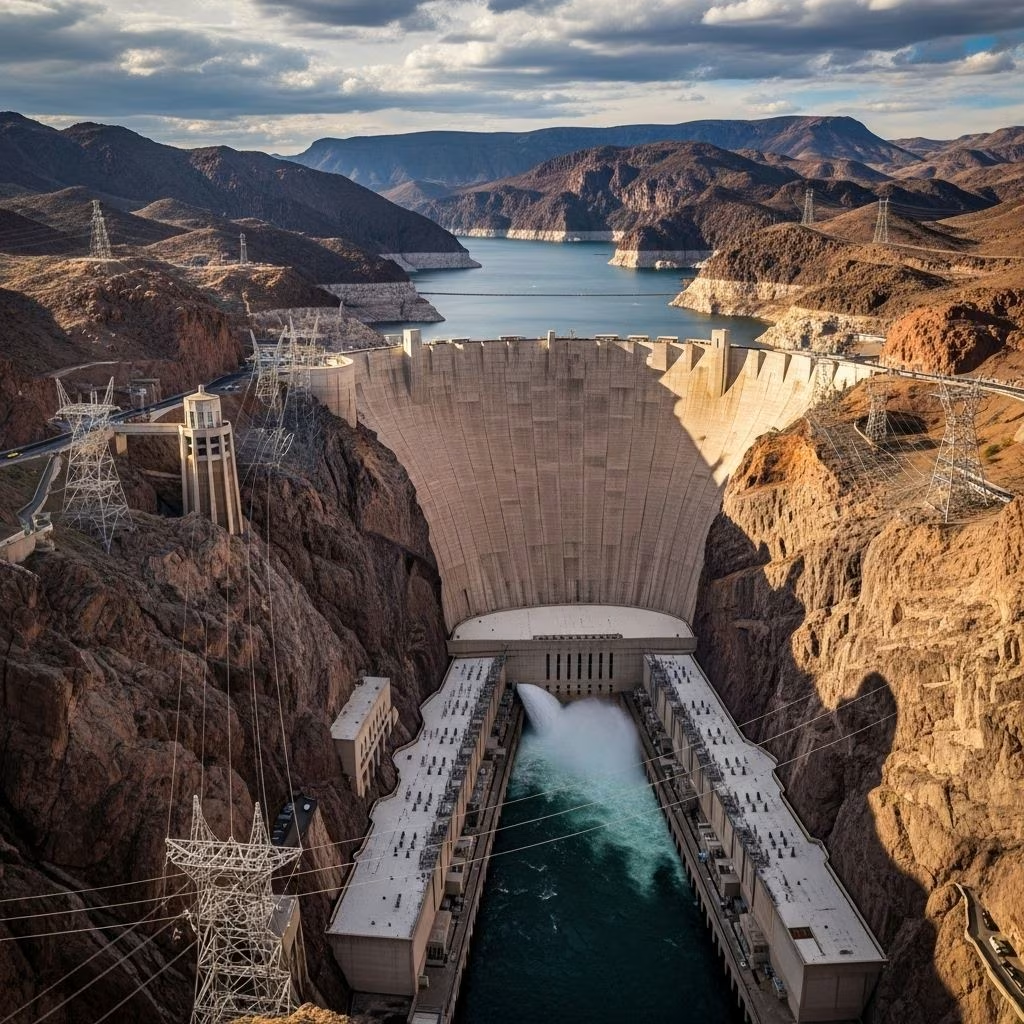
The story of America’s dams is a tale of ambition, engineering prowess, environmental change, and, more recently, a movement toward river restoration. These formidable structures have transformed landscapes, powered cities, irrigated farmland, and become enduring symbols of human ingenuity. Yet, they have also reshaped ecosystems, disrupted traditional ways of life, and sparked new debates about the future of water management and environmental restoration in the United States.
The Engineering Feats: Dams that Shaped a Nation
Across the vast expanse of the United States, dozens of extraordinary dams punctuate major rivers, representing the zenith of engineering ambition from the 20th century. Among these, a handful stand out for their historical significance, technical achievement, or sheer scale.
- Hoover Dam, straddling the Arizona-Nevada border, once held the title of the tallest dam in the world and remains an icon of American engineering.
- Grand Coulee Dam in Washington redefined what was possible in hydroelectric power production.
- Oroville Dam in California is the tallest dam in the United States.
- Glen Canyon Dam, carving a colossal reservoir out of the Colorado Plateau, became a lightning rod in environmental debates.
Each of these dams serves multiple purposes: water supply, electricity generation, industrial and municipal use, navigation, recreation, and, crucially, flood control. They have fostered economic prosperity, supported urban growth in the arid West, and shaped the daily life of millions of Americans.
An Era of Expansion: Why America Built So Many Dams
The quest to tame rivers and harness their resources unfolded in three primary phases, following population growth and shifting priorities across the continent:
- Go West, Young Men: As Americans pushed west, population growth outpaced the capacity of existing reservoirs. Easy access to water spurred rapid settlement, agricultural development, and economic expansion.
- The Hydraulic Mission: The focus shifted to securing and expanding water availability, with massive investments in dams driven by demands for irrigation, hydroelectric power, and urban growth. Market forces and technological advances encouraged larger, more complex dams, particularly in arid and semi-arid regions.
- The Plateau Phase: By the late 20th century, most prime dam sites had been exploited or protected, curbing development. Meanwhile, increasing awareness of environmental impacts and the limits of large-scale infrastructure tempered new initiatives.
This vast dam-building transformed the American landscape—and not without controversy. While they facilitated prosperity and stability, the resulting environmental impacts began to spark questions and pushbacks that resonate today.
Spotlight on the Giants: America’s Most Iconic Dams
Below are the most notable and influential dams in the United States, each a testament to a distinct era or function in American history.
Hoover Dam
The Hoover Dam, completed in 1935, stands 726 feet tall and was once the world’s tallest dam. It remains an icon of the Great Depression-era public works, taming the Colorado River and giving rise to Lake Mead, the nation’s largest reservoir. The dam provides hydroelectric power, irrigates farmland, controls floods, and supplies water to major western cities. Its Art Deco architecture and remote setting attract millions of visitors each year. While it no longer holds the record for greatest height, its significance is undiminished. Hoover Dam has a generating capacity of approximately 2,074 megawatts and supplies water and electricity across Nevada, Arizona, and California.
Grand Coulee Dam
On the Columbia River, Grand Coulee Dam dwarfs all U.S. hydroelectric plants with its 6,809 megawatt capacity. Finished in 1942 and enlarged in later decades, it fueled the war effort, powered the Northwest, and irrigated vast agricultural regions. The dam was a marvel of its day—the world’s largest concrete structure at the time—and its three powerhouses remain a central source of renewable energy in the Pacific Northwest.
Oroville Dam
California’s Oroville Dam, constructed in 1968, is the tallest dam in the United States at 770 feet. While it is an earthfill dam rather than concrete, it plays a critical part in the state’s water system, collecting and releasing supplies for drought-prone regions and serving as a key flood control barrier. It also supports hydroelectric generation and recreation. In 2017, the dam’s emergency spillway failure prompted major evacuations, underscoring the risks and responsibilities inherent in aging infrastructure.
Glen Canyon Dam
The Glen Canyon Dam was completed on the Colorado River in 1966, creating Lake Powell. Intended to ensure downstream water delivery per the Colorado River Compact, it became a focus of environmental protest. The dam’s presence has fueled ongoing debates about the ecological impacts on the Grand Canyon and the wisdom of large-scale diversions in arid climates. Nevertheless, its hydroelectric plant continues to generate electricity for millions.
Other Noteworthy Dams
- Bonneville Dam (1938): Facilitates navigation and hydroelectricity on the Columbia River.
- Shasta Dam (1945): Forms California’s largest reservoir, providing critical water to the Central Valley.
- San Luis Dam (1968): Supports industrial-scale agriculture in California, marking a shift from family farms to agribusiness water supply.
- Friant Dam (1942): Transports water to parched southern San Joaquin Valley, changing California’s agricultural destiny.
The Environmental Cost: Dams and Their Impact
The construction of immense dams fundamentally altered natural river systems, with consequences for wildlife, water quality, and entire ecosystems. Major concerns include:
- Blocked Fish Migration: Dams prevented salmon and other anadromous fish from reaching historic spawning grounds, devastating traditional fisheries—especially for native tribes.
- Altered Water Flows: Regulated flows led to changes in water temperature, sediment delivery, and habitat vital for aquatic species.
- Flooded Landscapes: Reservoirs inundated canyons, forests, and archaeological sites, permanently changing the landscape.
- Ecosystem Disruption: New lakes and changed flows spurred blooms of harmful algae, as behind the Klamath dams.
While dams delivered clear economic and safety benefits, their environmental and cultural costs escalated over time. Native communities, commercial fishermen, and conservationists increasingly argued for new approaches to water management that would balance economy, society, and nature in more equitable ways.
The Dawn of Dam Removal: The Klamath River Renewal
By the 21st century, a movement to restore rivers to a more natural state gained momentum. The most ambitious example is the Klamath River dam removal project, which will restore 420 miles of river habitat and carry major ecological and cultural significance.
A River Reborn
The Klamath River, once home to the third-largest salmon run in the lower 48 states, saw its vital runs dwindle as dam construction from 1918 to 1966 closed off hundreds of miles of upstream spawning habitat. Tribal communities, dependent on these fisheries, suffered both cultural and economic losses, punctuated by mass fish die-offs in the early 2000s due to low flows below the dams.
After years of legal battles and negotiations among tribes, agencies, and the power company PacifiCorp, the Klamath River Renewal Corporation assumed control of four dams, launching the largest dam removal project in history.
- Three major dams were breached and reservoirs drained, reconnecting the river with its historic channel for the first time in over a century.
- This project opens 420 miles of river to salmon and other migrating species, with ecological benefits expected for generations.
- The removal improves water quality, reduces algae blooms, increases oxygen levels, and decreases the risk of salmon-killing diseases.
Restoration crews and Indigenous community members describe the breaching of the final dams as both “emotional” and “transformative,” marking a historic shift toward healing rivers and revitalizing salmon culture in the region.
Benefits and Challenges: Weighing America’s Dams
| Benefit | Challenge |
|---|---|
| Hydroelectric power for millions | Blocked fish migration and habitat loss |
| Water storage and drought protection | Altered river flows and water quality |
| Flood control for river communities | Flooded lands and cultural sites |
| Support for agriculture and industry | Disruption of Indigenous ways of life |
| Recreational opportunities and reservoirs | Reservoir-induced warming and algae blooms |
The Future: Balancing Power, Ecology, and Restoration
The American dam story is not merely about scale or horsepower—it is ultimately a reflection of shifting values. Engineering grandiosity is now tempered by ecological awareness, with calls for sustainable management, retrofitting fish passages, and in selected cases, full removal. Advocates are re-examining the role of dams in a changing climate, considering:
- The need for clean, renewable energy versus preserving wild rivers
- Modernizing infrastructure for safety in light of aging dams
- Comprehensive water planning to support both people and nature
- Reconciliation with Indigenous communities through environmental justice and restoration
With major removals like the Klamath underway and continued debate about the fate of Glen Canyon and others, the future of America’s dams is defined by both their enduring strengths and the promise of return to natural river systems. The nation’s grandest dams will remain vital—some as bulwarks of civilization, others as reminders of a bygone era, and many as sites of ecological renewal.
Frequently Asked Questions (FAQs)
What is the tallest dam in the United States?
The tallest dam in the U.S. is the Oroville Dam in California at 770 feet (235 meters). Though Hoover Dam is perhaps more famous, Oroville stands taller, but it is an earthfill dam, whereas Hoover is a concrete structure.
Which dam generates the most hydroelectricity in the United States?
Grand Coulee Dam in Washington is the largest U.S. hydroelectric plant by capacity, producing up to 6,809 megawatts of power and supplying, on average, about 21 billion kilowatt-hours annually.
Why are some dams being removed rather than repaired?
Aging dams, high maintenance costs, changes in energy needs, and the drive to restore natural river ecosystems (especially key fish habitats) have prompted the removal of select dams, with the Klamath River project exemplifying this approach.
What are the main environmental downsides of dams?
Dams disrupt fish migration, transform habitats, alter water flow and quality, and flood large areas, impacting biodiversity and Indigenous cultural heritage.
Can dams be made more environmentally friendly?
Technologies such as fish ladders, retrofitted passages, improved flow management, and selective removals can mitigate many impacts—but cannot fully restore original river ecosystems.


