


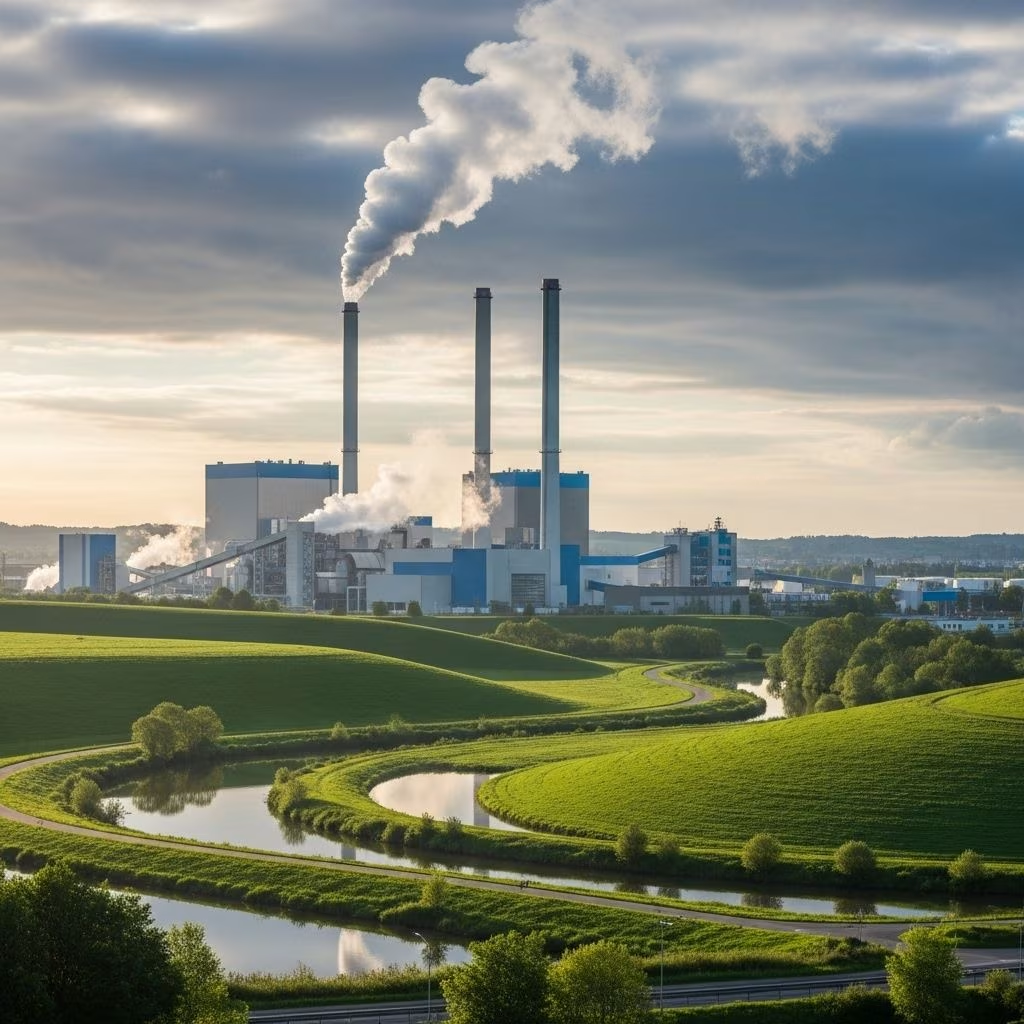
Europe Questions Waste-to-Energy: New Directions for Circularity and Climate Goals
As the European Union forges ahead with ambitious climate targets and its vision of a circular economy, the role of Waste-to-Energy (WtE) incineration is under fresh scrutiny. Once seen as a pragmatic alternative to landfilling, incineration now faces complex debates: Can it truly support zero-waste objectives, or is it holding back the continent from reaching higher recycling rates and cutting emissions? This article explores Europe’s evolving stance on Waste-to-Energy, its environmental implications, policy shifts, and the nuanced interplay between technology, infrastructure, and sustainability.
Overview: What is Waste-to-Energy?
Waste-to-Energy is the process of converting non-recyclable household and industrial waste into usable forms of energy, typically electricity and district heating, through incineration or similar technologies. This approach is intended to reduce landfill use, recover valuable resources, and produce stable, local energy supplies for urban populations.
- Electricity Generation: European WtE plants generated 43 billion kWh of electricity in 2019.
- Heat Production: WtE delivered 99 billion kWh of heat, supporting district heating networks for over 17 million citizens.
- Material Recovery: Metals and minerals are extracted from ash, reducing the need for virgin resources.
By treating non-recyclable waste and offering an alternative to landfilling, WtE aims to address both energy security and resource recovery priorities.
WtE’s Role in the Circular Economy
The concept of a circular economy aims to minimize waste and maximize resource reuse. In this vision, WtE is evolving from being seen as a last resort for waste management to an integral part of Europe’s circular infrastructure. Key arguments in favor include:
- Tackling Non-Recyclable Waste: Many products—such as composite packaging, contaminated items, or those containing persistent pollutants like PFAS—are rejected by recycling systems. WtE safely destroys such materials, preventing their accumulation in landfills and the environment.
- Secondary Raw Materials: The process recovers metals, minerals, and other valuable materials from waste that cannot be recycled, thus supporting the circular use of materials.
- Protecting Public Health: Modern WtE plants achieve high destruction rates for toxic substances, safeguarding air, water, and soil quality.
Proponents argue that the sector’s innovations in emissions reduction and material recovery align with circularity principles, especially for the subset of waste that recycling cannot address.
Landfill Reduction: A European Priority
Landfilling has long been considered the least sustainable waste management option. The EU has set strict targets for reducing landfilled municipal waste, driven by the environmental impacts:
- Methane Emissions: Landfills are the largest source of methane—the potent greenhouse gas—in the EU waste sector.
- Persistent Pollutants: Hazardous materials leach from landfills, threatening ecosystems and public health.
- Uncontrolled Risks: Odors, fires, and vermin are common, while microplastics and toxic leachate escape containment.
Waste-to-Energy diverts millions of tonnes of waste from landfills annually, directly helping the EU meet its landfill reduction and climate goals.
Table: Comparing Waste-to-Energy and Landfilling
| Criteria | Waste-to-Energy | Landfilling |
|---|---|---|
| GHG Emissions | Mitigates methane and recovers energy, lowers net emissions | Major source of methane and climate pollutants |
| Resource Recovery | Recovers metals, minerals, and energy | Loss of resources, minimal recovery |
| Public Health | Controls toxic substances, prevents contamination | Risk of leachate, odor, fires, and pests |
| Environmental Liability | Managed, limited long-term impact | Decades of monitoring and remediation required |
Regional Disparities & Implementation Challenges
Europe’s approach to waste management is not uniform. Some regions and countries have made rapid progress, while others lag due to infrastructure, policy, and public engagement gaps.
- Spain: Landfilling rates remain high, especially in regions without WtE plants. Success stories like Mallorca show that targeted investment in WtE, sorting, and anaerobic digestion led to a 64% reduction in GHG emissions from the waste sector.
- Nordic Countries: Countries like Sweden, Denmark, and the Netherlands combine high recycling rates with robust WtE infrastructure, using both approaches to minimize waste and support district heating.
- Eastern Europe: Some states struggle with insufficient infrastructure and financing, hampering landfill reduction.
Such disparities highlight the need for context-sensitive policies and balanced investment across the waste hierarchy.
Climate, Methane and Decarbonisation
Europe’s climate goals and drive toward decarbonisation place additional pressure on waste policy. WtE is credited with helping to:
- Offset Fossil Fuels: By generating stable, local energy, WtE reduces reliance on volatile fossil fuel markets.
- Lower Net Emissions: Avoiding landfill methane and replacing fossil-based energy with recovered energy from waste is a net positive in many cases.
- Methane Reduction: The European Environment Agency recognized WtE’s role in mitigating methane emissions from the waste sector.
However, incineration itself produces CO2 emissions, mostly from the burning of plastics and other fossil-derived materials. Policy makers are increasingly critical of facilities that do not recover heat or electricity efficiently, and those whose emissions profiles are seen as inconsistent with net-zero targets.
WtE vs. Recycling: Conflict or Complementarity?
One persistent debate is whether Waste-to-Energy undermines recycling—and therefore the circular economy. Critics worry that incineration can discourage the development of better recycling systems, or create financial incentives to burn recyclable material. In response:
- Complementary Roles: Data shows that countries with high recycling rates often also have the highest WtE use (Germany, Sweden, Netherlands).
- Streamlining Recycling: WtE provides a safe outlet for recycling rejects—such as contaminated or unrecyclable waste—enabling overall higher recycling performance.
- Technology Advances: Modern incinerators are designed to burn only non-recyclable residual waste, with strict controls and material recovery built in.
The consensus among European policy makers is that recycling, reuse, and reduction should always be prioritized, and WtE should only be applied to truly non-recyclable waste.
District Heating and Energy Security
Waste-to-Energy plants are crucial suppliers of heat, especially in northern and urban regions. District heating networks powered by WtE have offered some of the lowest heat prices per gigajoule, even as global energy prices spike.
- Stable Supply: WtE delivers consistent, locally-controlled heat to cities, regardless of international energy disruptions.
- Decarbonisation Potential: The sector is working towards lowering GHG emissions and becoming carbon-negative through technology improvements and carbon capture initiatives.
The reliability and affordability of district heating underline WtE’s value to energy security, especially as Europe aims to end fossil fuel dependency.
Policy, Funding and Regulation
European policy makers are reshaping the way Waste-to-Energy is funded and regulated. Key issues include:
- Conditional Funding: The European Commission and the European Investment Bank have tightened criteria for WtE investments; only the most efficient, environmentally sound projects are supported.
- Regulatory Pressure: New rules focus on restricting WtE to non-recyclable waste, optimizing energy and material recovery, and minimizing environmental impact. Cap-and-trade systems and landfill bans are among tools under consideration to accelerate transition.
- Waste Hierarchy: EU law mandates priority for waste reduction, followed by reuse and recycling; energy recovery sits only above disposal.
Controversially, some argue for stricter limits—or even phaseouts—of WtE in regions with advanced recycling capacities, citing the need for full circularity and maximal climate benefits.
The Future of Waste-to-Energy in Europe
With the Circular Economy Act in preparation and climate goals tightening, the future of Waste-to-Energy in Europe will depend on ongoing innovation, investment, and policy adaptation:
- Innovation: Research into carbon capture, emissions reduction, and material recovery is driving next-generation WtE facilities.
- Local Solutions: Policy experts stress the need for tailored approaches, reflecting regional disparities in infrastructure, waste composition, and economic capacity.
- Balanced Pathways: Achieving zero landfill and maximizing recycling will require both carrot and stick: financial incentives, legal enforcement, and community engagement.
The outcome will affect not only Europe’s waste policy but also its energy security, public health, and climate leadership for decades to come.
Frequently Asked Questions (FAQs)
Q: Does Waste-to-Energy undermine recycling in Europe?
A: Evidence shows that countries with the highest recycling rates also use WtE extensively. WtE complements recycling by handling non-recyclable waste and recycling rejects, enabling overall higher recycling performance.
Q: What environmental risks are associated with landfilling compared to WtE?
A: Landfilling releases methane, contaminates air and water, and creates long-term liabilities. WtE mitigates methane, recovers energy, and destroys persistent pollutants, reducing environmental and public health risks.
Q: Is it possible for Europe to achieve zero landfill without WtE?
A: Current evidence suggests that WtE is essential for managing non-recyclable waste and achieving zero landfill. Without WtE, some regions may face public health and environmental challenges.
Q: How is the EU regulating Waste-to-Energy moving forward?
A: The EU is tightening funding and regulations, mandating best available technologies and restricting WtE to residual, non-recyclable waste. Policymakers are considering enhanced enforcement and balanced investment across the waste hierarchy.
Q: What role does WtE play in district heating?
A: WtE plants are central to district heating in Europe, offering affordable, reliable heat and helping reduce fossil fuel dependence, especially during energy crises.
Key Takeaways
- Waste-to-Energy remains a vital tool for landfill reduction, energy supply, and circular resource recovery in Europe.
- Ongoing innovation, stricter regulation, and nuanced regional policies are shaping Europe’s evolving waste landscape.
- The balance between recycling, WtE, and landfill bans will determine how close Europe comes to its zero-waste and climate ambitions.
References
- https://eswet.eu/waste-to-energy-crucial-to-clean-industrial-deal/
- https://eswet.eu/setting-the-record-straight-about-waste-to-energy/
- https://waste-management-world.com/resource-use/europes-waste-to-energy-sector-embraces-circular-economy-future/
- https://www.eea.europa.eu/en/europe-environment-2025/thematic-briefings/circular-economy-and-other-enablers-of-transformative-change/waste-recycling
- https://www.cewep.eu/cewep-notebook-2025/
- https://environment.ec.europa.eu/news/new-rules-boost-recycling-efficiency-waste-batteries-2025-07-04_en
- https://europeanenergy.com/wp-content/uploads/2025/01/waste-management-policy.pdf
- https://envea.global/blog-post/2025-changes-to-environmental-rules-and-regulations/
- https://www.enhesa.com/resources/article/eu-green-deal-waste-management/


