Why Species Extinction Matters
The loss of a species may sound like a distant tragedy, but its ripple effects are real and deeply consequential. Extinction is not just about the disappearance of animals or plants—it sets off a chain of environmental, economic, and ethical consequences that threaten the stability of natural systems and the future of human societies.
Introduction: The Sixth Mass Extinction
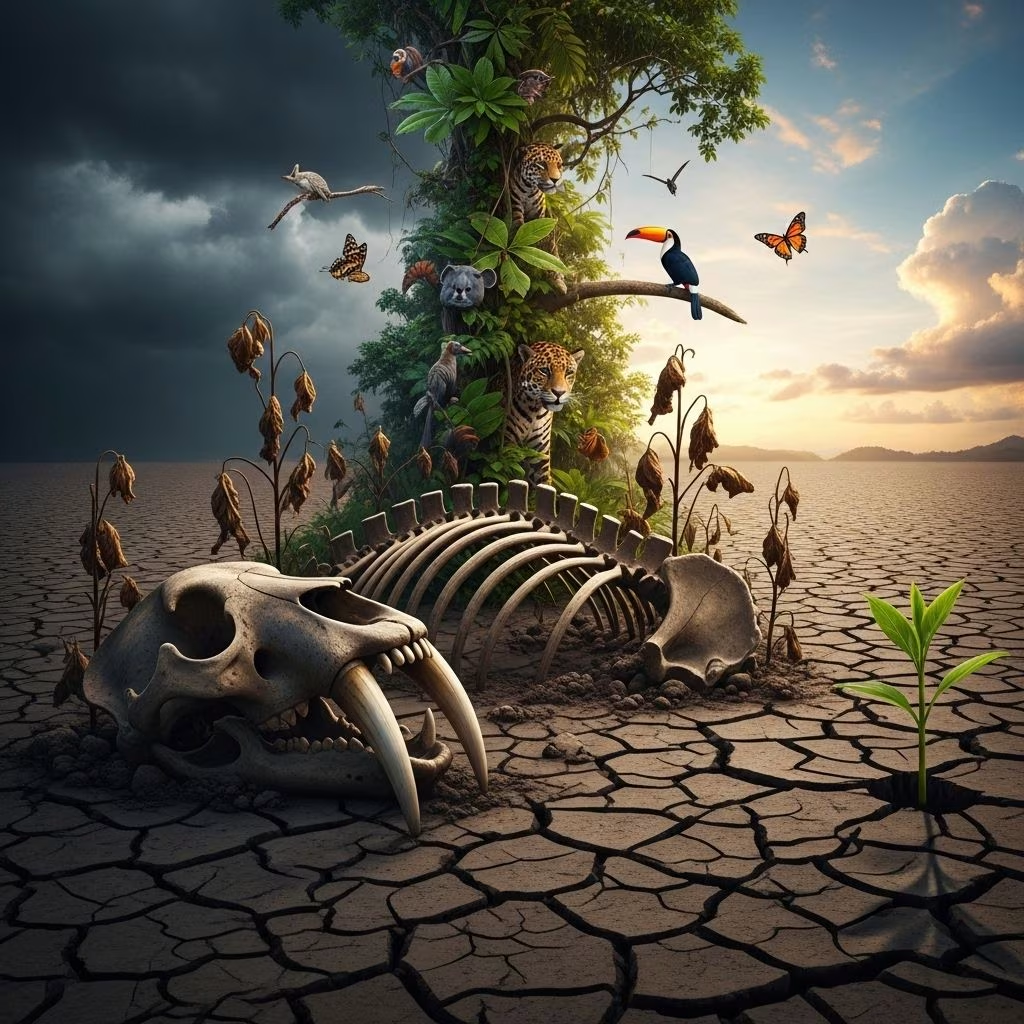
Earth has witnessed five mass extinction events, each reshaping the planet’s diversity and structure. Many scientists now warn that human-driven activity is accelerating a sixth mass extinction—a pace of disappearance that is hundreds of times quicker than expected from natural processes. This phenomenon isn’t limited to rare creatures; it encompasses entire genera, or higher branches of the tree of life, in what researchers call a “biological annihilation”.
The Scope of the Crisis: Beyond Individual Species
The focus of conservation has often been on individual species, but recent insights reveal a much deeper crisis. Entire genera (the plural of genus, a group that contains related species) are vanishing, slicing away entire branches of evolutionary history. Since 1500 AD, at least 73 genera of land-dwelling vertebrates have gone extinct, a rate never previously recorded in the last million years.
- Birds have suffered the heaviest losses—44 genera since 1500.
- Mammals, amphibians, and reptiles also face ongoing losses.
- Under natural conditions, only two genera would have disappeared in the past 500 years; instead, human impact has caused a loss that would have spanned 18,000 years.
A Crisis for the World’s Trees
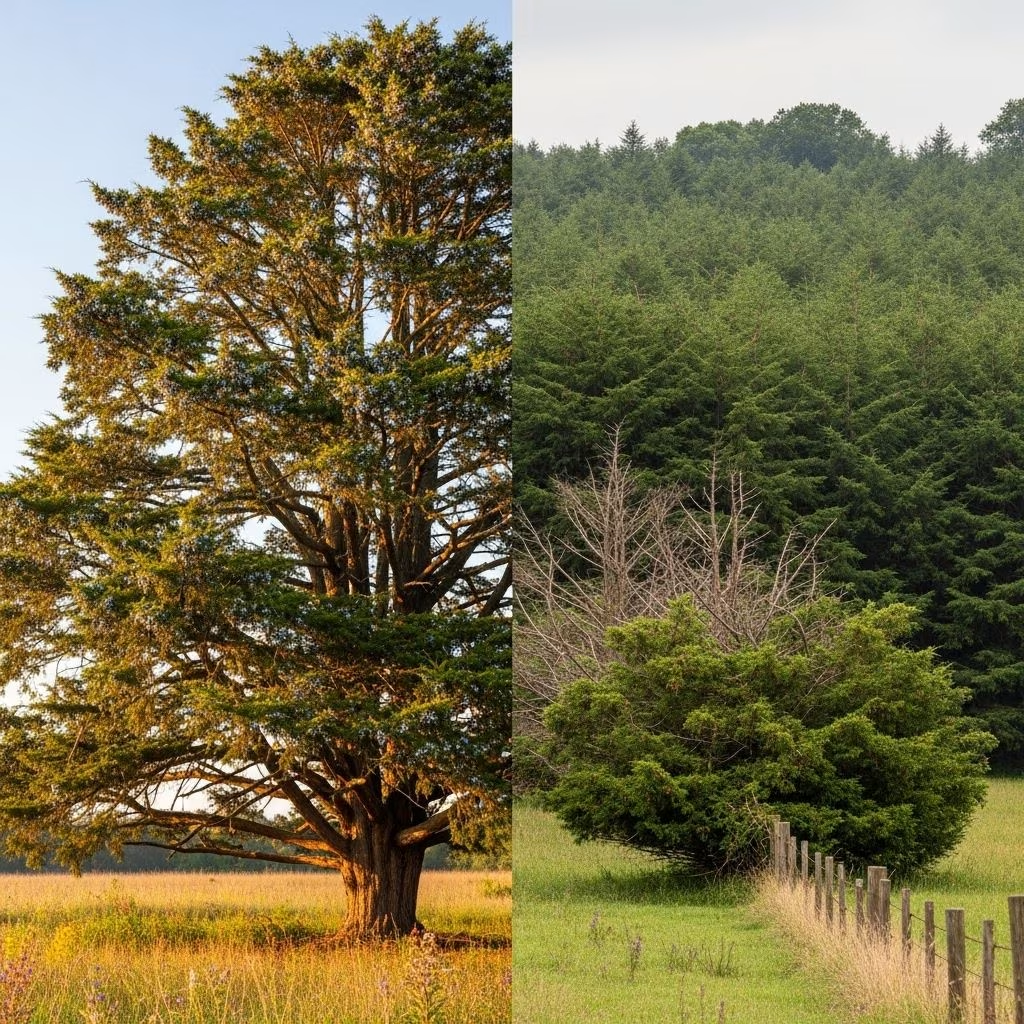
Tree species underpin the health of ecosystems, carbon cycling, and human livelihoods. Yet almost a third of the world’s tree species are now at risk of extinction. According to Botanic Gardens Conservation International (BGCI), some 17,500 tree species—about 30% of all tree species—face the risk of extinction.
- 440 tree species have fewer than 50 individuals left in the wild.
- This number of threatened trees is double the combined total of threatened mammals, birds, amphibians, and reptiles.
- Magnolias, dipterocarps (rainforest trees of Southeast Asia), oaks, maples, and ebonies are among the most at risk.
What Drives Species Extinction?
Modern extinctions are overwhelmingly caused by human activities rather than natural events. The top threats to both animal and tree species include:
- Agricultural Expansion: Responsible for up to 29% of tree species threats.
- Timber Logging: Overexploitation for wood products affects about 27%.
- Livestock Farming: Encroaches on wild habitats, threatening 14% of tree species.
- Urban Development: Destroys and fragments natural habitats.
- Fire Regime Changes: Alters natural ecosystems, sometimes leading to decline or loss.
- Invasive Species: Introduction of non-native species can outcompete or prey upon native ones.
- Climate Change: Shifting temperatures and weather patterns can make habitats uninhabitable.
Deforestation and habitat loss are especially severe, sometimes causing tree cover to decline by more than 6% annually in high-risk areas.
Why Does It Matter When Species Go Extinct?
Biodiversity Loss Threatens Ecosystem Stability
Biodiversity refers to the variety and variability of life forms within a given ecosystem. When a species vanishes, it disrupts complex interactions among organisms and the functions required for healthy ecosystems. Each lost species can:
- Break ecological links—predator-prey relationships, pollination, nutrient cycles.
- Make ecosystems less resilient to disease, climate shocks, and invasive species.
- Reduce ‘ecosystem services’: clean air and water, fertile soils, climate regulation, and more.
Some ecological consequences may occur subtly or over decades, making them hard to reverse once set in motion.
Impacts on Human Survival
Humans rely on biodiversity for food, medicine, shelter, and countless other essential needs. Extinction erodes natural support systems and diminishes the resources available for future generations.
- Loss of pollinators—like bees or certain birds—can lower crop yields.
- Medicinal plants and animals may disappear before their benefits are discovered.
- Deforested landscapes can lead to soil erosion, water shortages, and increased vulnerability to disasters.
Economic Costs
Biodiversity supports industries such as agriculture, forestry, and fisheries. Its loss can result in:
- Reduced crop and timber productivity.
- Increased costs for flood and disaster protection.
- Loss of eco-tourism, which is a vital source of income for many communities.
Restoring damaged ecosystems often costs far more than conserving them in the first place.
Irreversible Loss of Evolutionary History
The extinction of a species is a loss not just for today but for all future generations. Every species and genus holds valuable genetic diversity accumulated over millions of years. Once lost, this evolutionary heritage cannot be replaced.
- Passenger pigeons, Tasmanian tigers, and Yangtze river dolphins are examples of lost evolutionary branches.
- With extinction, we lose unique adaptations and behaviors that may hold answers to environmental challenges.
Ethical and Cultural Dimensions
Beyond science, many argue that humans have an ethical responsibility to other life forms. Species’ extinction means the loss of our only known companions in the universe and diminishes the richness of our cultures, stories, and beliefs.
- Indigenous cultures, spiritual beliefs, and traditional knowledge are often tied to local species.
- Recovering lost species is not just about ecology—it’s about protecting cultural heritage.
Key Impacts of Species Extinction
| Impact Area | Description | Example |
|---|---|---|
| Ecosystem Balance | Loss disturbs food chains, nutrient cycles, ecosystem services | Extinction of predators leads to overpopulation of prey |
| Economic Effects | Costly restoration, reduced agricultural and tourism income | Deforestation impacts crop yields, local jobs, tourism revenue |
| Human Health | Loss of medical resources, clean air/water, increased disease risk | Disappearance of medicinal plants before they are studied |
| Cultural/Ethical | Reduction in cultural identity, stories, ethical responsibility | Indigenous names, tales, beliefs tied to extinct animals |
What Can Be Done?
Extinction is not inevitable. There is still time to act, but reversing the trend will require significant commitment and global cooperation. Efforts must focus on:
- Protecting and restoring habitats
- Regulating exploitation of wild resources
- Controlling invasive species
- Mitigating climate change impacts
- Promoting sustainable agriculture and forestry
- Supporting conservation organizations and policies
Over 70 genera lost since 1500 AD may seem daunting, but much of the world’s biodiversity still remains to be protected—the window is closing, but it has not shut yet.
Frequently Asked Questions (FAQs)
Q: Why are tree species at such high risk of extinction?
A: Tree species face extreme risks due to agricultural expansion, logging, livestock farming, and urban development, which collectively fragment and reduce their habitats. Many tree species are highly specialized or have limited distributions, making them especially vulnerable.
Q: Is the extinction rate really as bad as past mass extinction events?
A: Current extinction rates are far higher than naturally expected due to human activity and may represent the onset of a sixth mass extinction, but most scientists believe we have not yet reached the total magnitude of the five great historic events.
Q: Can lost species ever be recovered?
A: While some movements aim to revive extinct species through new technologies or conservation of close relatives, true recovery is extremely limited and cannot restore lost ecological roles or evolutionary history.
Q: How does extinction affect humans directly?
A: Extinction affects humans through decreased ecosystem services (clean air, water, pollination), increased costs of lost productivity, and the loss of potential scientific, medical, and cultural resources essential for health and well-being.
Q: What can individuals do to help prevent extinctions?
A: Support conservation organizations, reduce resource consumption, choose sustainably produced products, promote local habitat restoration, and advocate for stronger environmental policies.
Conclusion
The extinction of species matters profoundly—not just as a scientific concern but as a threat to the future of all life, including our own. The consequences of losing biodiversity are felt in our health, economies, cultures, and planetary stability. Protecting what remains is one of the most urgent tasks facing current and future generations.
References
- https://news.stanford.edu/stories/2023/09/human-driven-mass-extinction-eliminating-entire-genera
- https://www.weforum.org/stories/2021/09/tree-species-extinction-endangered-deforestation-environment-nature/
- https://www.nature.com/articles/s41467-023-44321-9
- https://skepticalscience.com/print.php?n=619
- https://www.treehuggerpod.com/episodes/recovering-lost-species
- https://nph.onlinelibrary.wiley.com/doi/full/10.1002/ppp3.10314
- https://theecologist.org/2019/jan/10/most-endangered-animals-world