


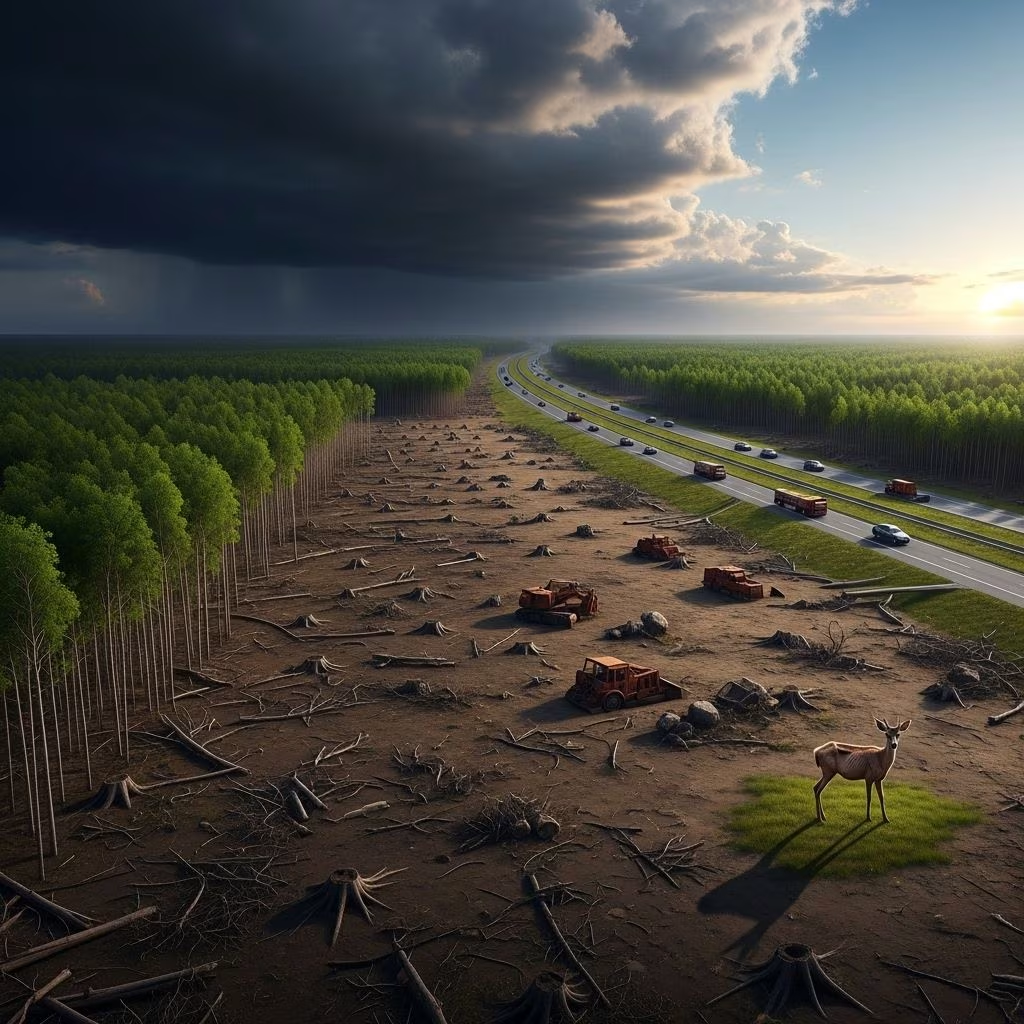
Habitat Loss, Fragmentation, and Destruction: Causes, Consequences, and Solutions
Across the globe, rapid habitat loss, fragmentation, and outright destruction have emerged as leading drivers of the planet's biodiversity crisis. Driven largely by human activities, these processes unravel the fabric of ecosystems, threatening plants, animals, and the ecological functions on which we all depend. Understanding the causes, consequences, and potential solutions to habitat degradation is key to developing effective strategies for conservation and sustainable living.
What Is Habitat Loss?
Habitat loss refers to the process by which natural habitats become incapable of supporting the species present within them. In its most severe forms, it leads to the extinction of local populations or entire species. Importantly, habitat loss rarely occurs in isolation—it is often accompanied by habitat fragmentation and degradation, exacerbating negative outcomes for biodiversity and ecosystem health.
- Destruction: The complete removal of a habitat, such as when a forest is cleared for agriculture or urban development.
- Degradation: The reduction in quality of a habitat due to factors like pollution, invasive species, or resource extraction that make it less suitable for its native organisms.
- Fragmentation: The breaking up of a large, continuous habitat into smaller, isolated pieces—many of which may be too small or too separated to support viable populations.
Major Causes of Habitat Loss and Fragmentation
Human Activities
Most habitat loss and fragmentation worldwide results from direct and indirect human actions. Key drivers include:
- Urban Development: Expansion of cities, towns, and infrastructure (roads, highways, buildings) transforms and divides landscapes, converting wildlife habitats into built environments and creating barriers that fragment previously connected areas.
- Agricultural Expansion: The conversion of forests, wetlands, or other natural habitats into cropland, pasture, or aquaculture is a primary driver of habitat loss—especially in biodiversity-rich regions like the tropics.
- Resource Extraction: Mining, logging, and oil/gas operations not only destroy habitats outright but also contribute to fragmentation by creating isolated remnants or altering landscape structure.
- Pollution: Chemical contamination from industry, agriculture, and urban runoff can degrade habitat quality, sometimes rendering entire ecosystems uninhabitable to sensitive species.
- Infrastructure: The construction of dams, water diversions, and transportation networks can separate populations, block migratory routes, and alter ecosystem hydrology.
- Introduction of Invasive Species: Non-native species can disrupt local food webs, outcompete native species, and change habitat structure.
Natural Processes
- Wildfires
- Floods
- Earthquakes, Volcanic Eruptions, Changing River Courses
Though natural events historically contributed to cycles of habitat change, today's rates and scales of loss are unprecedented and primarily anthropogenic in origin.
Exacerbating Factors
- Climate Change: Altered temperature and precipitation patterns, more frequent and severe extreme weather events, rising sea levels, and shifting biomes all disrupt habitats.
- Human Conflict: Warfare can fragment landscapes, decrease enforcement against poaching and illegal extraction, and displace wildlife as well as people.
What Is Habitat Fragmentation?
Habitat fragmentation is the process by which large, continuous areas of habitat are broken into smaller, isolated patches (or fragments), often separated by the built environment or altered landscapes such as farmland or roads. This not only shrinks the total available habitat but also increases the amount of edge habitat—areas that experience different environmental conditions from the core—affecting both species composition and ecosystem processes.
- Edge Effects: Fragmented habitats have more edges, where microclimate, sunlight, wind, and predator-prey interactions may differ from core areas.
- Isolation: Populations in isolated patches are less likely to encounter mating partners, more vulnerable to genetic bottlenecks, and less able to recolonize after extinctions.
- Connectivity Loss: Interruptions in animal migrations, seed dispersal, and other ecological flows have cascading effects on biodiversity and ecological function.
Causes of Habitat Fragmentation
- Development and Construction: Roads, highways, urban sprawl.
- Resource Extraction: Mining, logging, oil and gas pipelines.
- Agriculture: Conversion of habitats to cropland or pasture.
- Dams and Water Diversions: Severing aquatic habitats, preventing fish migration.
- Climate Disasters: Wildfires, severe storms, flooding—often intensified by climate change.
Consequences of Habitat Loss and Fragmentation
Biodiversity Loss
The most immediate and notable effect is the reduction of biodiversity, as species lose the space and resources they need to survive. This includes:
- Species Extirpation and Extinction: As suitable habitat shrinks or disappears, local populations vanish, and many species are pushed to extinction.
- Specialist Species Vulnerability: Organisms with narrow habitat requirements (specialists) tend to vanish first, leading to a more homogenized and less resilient ecosystem.
- Trophic Cascades: Loss of keystone species, large predators, or ecosystem engineers (e.g., elephants, beavers) destabilizes food webs, impacting many other species.
Disruption of Ecological Processes
Connected ecosystems allow for processes such as pollination, seed dispersal, nutrient cycling, and animal migration. Fragmentation can interrupt these, with far-reaching effects:
- Pollination Disruption
- Seed Dispersal Constraint
- Altered Predator-Prey Relationships
- Reduced Resilience to Invasive Species and Disease
Genetic Erosion
Populations confined to small, isolated fragments are more likely to suffer inbreeding and genetic drift. This reduces genetic diversity, making populations less able to adapt to environmental changes and more susceptible to disease, ultimately increasing the risk of extinction through what's known as extinction debt.
Edge Effects and Microclimate Alterations
Edges created by fragmentation expose interior species to invasive predators, increased sunlight, wind, or other stresses. Edge-loving species may temporarily increase, while core-dependent species decline. This change in community composition often lowers the overall stability and function of an ecosystem.
Human-Wildlife Conflict and Societal Impacts
As animals lose access to food and water, they may be forced to venture into human settlements, leading to crop raiding, livestock predation, and direct conflict that can threaten both wildlife and human safety.
Long-term and Lagged Outcomes
- Extinction Debt: Some species persist for years or decades after fragmentation but are doomed to eventual local extinction due to declining reproduction or genetic viability. Losses often accelerate over time, especially in small or highly isolated patches.
- Ecosystem Function Debt: Fragmented habitats lose their capacity for nutrient cycling, productivity, and carbon storage. The full impacts can take many years to become apparent, and recovery can be extremely slow.
Examples of Habitat Loss and Fragmentation
| Region/Ecosystem | Cause | Impacts |
|---|---|---|
| Amazon Rainforest | Deforestation for soy production, cattle ranching | Massive biodiversity loss, altered rainfall patterns |
| US Midwest | Prairie conversion to agriculture | Grassland bird declines, soil erosion |
| Southeast Asia | Expansion of palm oil plantations | Loss of orangutan, tiger, and rhino habitat |
| Coral Reefs Globally | Pollution, coastal development, climate change | Coral bleaching, collapse of reef fisheries |
| Wetlands | Urbanization, dam construction | Migratory birds lose stopover and nesting sites |
How Fragmentation Affects Animals
The impacts on wildlife are especially severe and diverse:
- Direct Injury and Mortality: Roadways and infrastructure increase the risk of vehicle collisions, which can kill animals attempting to cross between fragments.
- Starvation and Dehydration: Fragmented animals may be unable to access seasonal or distant food and water resources, especially during harsh conditions.
- Migratory Disruption: Many migratory species (birds, fish, mammals) rely on large, interconnected habitats for safe passage. Barriers such as dams or urban areas block routes and reduce breeding success.
- Forced Human Interaction: Wildlife pushed into human areas may suffer persecution, bringing risk to both animals and people.
- Limited Breeding Opportunities: Isolated populations face declines due to lack of mates, reduced gene flow, and genetic deterioration, which may push them closer to extinction.
Mitigating Habitat Loss and Fragmentation: Solutions and Conservation Strategies
Protected Areas
- Establishing nature reserves, parks, and protected corridors to serve as refuges for species and promote habitat connectivity.
Habitat Restoration
- Rehabilitating degraded areas through tree planting, invasive species control, and restoration of natural processes to rebuild ecosystem function and connectivity.
Sustainable Land Use and Resource Management
- Promoting agricultural, forestry, and resource extraction practices that minimize habitat conversion and degradation.
- Implementing urban design measures such as green spaces, ecological corridors, and wildlife crossings to reduce infrastructure impacts and restore connectivity.
Conservation Policy and Planning
- Enacting and enforcing regulations that protect vulnerable habitats and limit destructive development.
- Coordinating conservation at landscape and regional scales to maintain ecosystem integrity beyond the boundaries of protected areas.
Community Engagement and Education
- Involving local communities in conservation planning and providing sustainable livelihood options.
- Raising awareness about the interdependence of human wellbeing, ecosystem services, and biodiversity.
Frequently Asked Questions (FAQs)
Q: Why is habitat fragmentation such a serious problem for biodiversity?
A: Habitat fragmentation isolates animal and plant populations, reducing gene flow, increasing extinction risks, and disrupting ecological functions like pollination, seed dispersal, and migration. This leads to declines in species richness and ecosystem resilience.
Q: How does urbanization contribute to habitat loss?
A: Urbanization transforms natural habitats into cities, towns, and infrastructure, directly destroying or fragmenting landscapes. Expansion of roads and suburban areas further splits remaining habitats and creates barriers to wildlife movement.
Q: Can habitat loss and fragmentation be reversed?
A: While completely restoring lost habitats may be impossible, many degraded habitats can be rehabilitated through active restoration efforts, rewilding, and improved land management, helping species recover and reestablish connectivity.
Q: What role does climate change play in habitat destruction?
A: Climate change alters the suitability of existing habitats, causes more frequent and intense wildfires, droughts, and storms, and forces species to migrate to survive—further fragmenting already challenged landscapes.
Q: How can individuals help reduce habitat loss?
A: Supporting sustainable agriculture, reducing consumption of resource-intensive products, advocating for conservation policies, participating in local restoration projects, and raising public awareness are some effective actions individuals can take.
Summary Table: Habitat Loss and Fragmentation at a Glance
| Aspect | Details |
|---|---|
| Main Causes | Urbanization, agriculture, resource extraction, pollution, infrastructure, invasive species, climate change |
| Key Effects | Biodiversity loss, interrupted ecological processes, genetic erosion, human-wildlife conflict, lagged extinctions |
| Vulnerable Species | Specialists, large predators, migratory species, endemics, species with narrow habitat requirements |
| Solutions | Protected areas, restoration, sustainable land use, ecological corridors, community involvement, policy reforms |
Tackling habitat loss, fragmentation, and destruction requires a multifaceted approach—including global policy, local action, scientific research, and public engagement—to protect the diversity of life on Earth for present and future generations.
References
- https://fiveable.me/conservation-biology/unit-2/consequences-habitat-loss/study-guide/dcqFCSz6Un4C7PHI
- https://www.jouav.com/blog/habitat-fragmentation.html
- https://www.ifaw.org/journal/habitat-fragmentation-affects-animals
- https://pmc.ncbi.nlm.nih.gov/articles/PMC4643828/
- https://ugc.berkeley.edu/background-content/habitat-loss-restoration/
- https://www.nwf.org/Educational-Resources/Wildlife-Guide/Threats-to-Wildlife/Habitat-Loss
- https://earth.org/lost-species-the-impact-of-habitat-destruction-in-the-us/
- https://www.worldanimalprotection.org/latest/blogs/how-habitat-loss-increases-animal-stress-suffering/
- https://www.britannica.com/science/biodiversity-loss


