


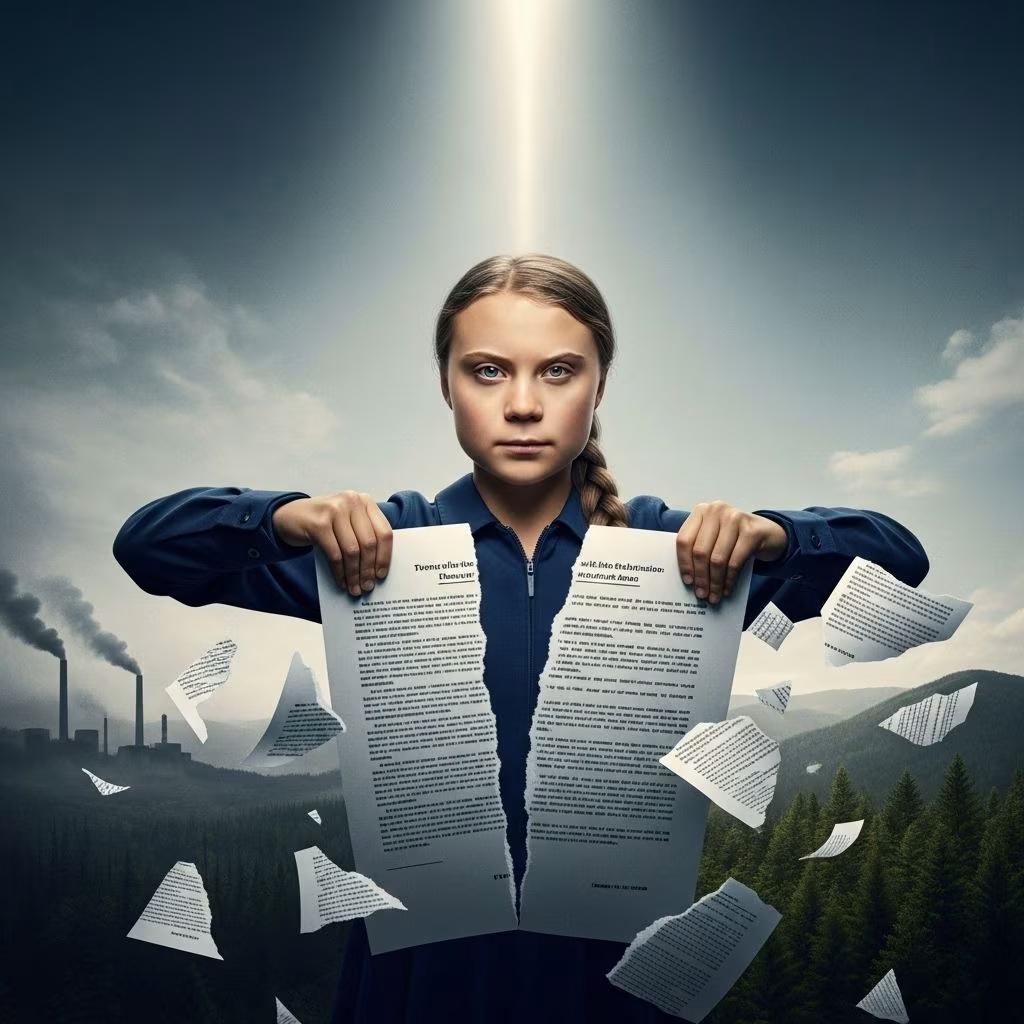
In July 2020, Swedish climate activist Greta Thunberg, alongside prominent Fridays for Future members and thousands of supporters worldwide, issued a powerful open letter to global leaders that reverberated across political corridors and environmental movements. The letter, distributed under the hashtag #FaceTheClimateEmergency, represented not just another plea for incremental change, but a radical call to fundamentally restructure the systems governing our approach to the climate crisis.
The timing of this letter was particularly significant, arriving amid the global COVID-19 pandemic when world leaders had demonstrated their capacity for swift, decisive action in response to an emergency. Thunberg and her co-signatories drew a stark parallel between the rapid mobilization for pandemic response and the persistent inaction on climate change, highlighting a critical disconnect in how crises are perceived and addressed by those in power.
The Core Message: Systems Must Change
At the heart of Thunberg’s open letter lies a provocative assertion that challenges conventional approaches to climate policy. Rather than advocating for reforms within existing frameworks, the letter declares that the current system is functioning exactly as designed—and therein lies the problem. The activists argue that our economic and political structures are inherently incompatible with the urgent action required to prevent climate catastrophe.
The letter explicitly states that the system “can no longer be fixed” and instead requires complete replacement. This represents a significant escalation in climate rhetoric, moving beyond calls for policy adjustments to demands for systemic transformation. Thunberg and her fellow activists contend that world leaders must be prepared to “tear up old deals and contracts” to meet green targets, recognizing that commitments made within the framework of business-as-usual will prove insufficient.
This radical stance reflects a growing frustration among climate activists with decades of incremental progress that has failed to bend the emissions curve downward at the pace and scale required by climate science. The letter emphasizes that pretending we are on a reliable path to lower emissions while maintaining existing systems wastes precious time that humanity can ill afford to lose.
Lessons from the Pandemic Response
The open letter opens by acknowledging the horror of the COVID-19 pandemic and the suffering it inflicted globally. However, it quickly pivots to draw a crucial lesson from the crisis response. Thunberg notes that during the pandemic, many world leaders and citizens “stepped up and acted for the greater good of society,” demonstrating that rapid, comprehensive action is indeed possible when a crisis is recognized as such.
This observation serves as a damning indictment of climate inaction. If governments can mobilize unprecedented resources, implement sweeping restrictions, and fundamentally alter economic activity in response to a pandemic, why has similar urgency been absent from climate policy? The letter argues that the climate crisis has “never once been treated as a crisis” by politicians, media, business, or finance sectors, despite its existential threat to civilization.
The pandemic response revealed the capacity of governments to act decisively when faced with immediate danger. It demonstrated that economic considerations, while important, can be subordinated to public health and safety when necessary. The climate activists argue that this same framework should apply to the climate emergency, which poses threats of equal or greater magnitude over slightly longer timescales.
Specific Demands to European and Global Leaders
The open letter, sent to all European Union leaders and heads of state, contained a series of concrete demands that go far beyond typical climate policy proposals. These demands reflect a comprehensive vision for addressing the climate crisis that extends beyond emissions reductions to encompass justice, democracy, and fundamental economic restructuring.
Halt Fossil Fuel Investments: The letter demands an immediate end to all investments in fossil fuel exploration and extraction. This represents a direct challenge to the financial interests underpinning much of the global economy and requires governments to prioritize long-term planetary stability over short-term economic gains from fossil fuel exploitation.
Criminalize Ecocide: Among the most ambitious demands is the call for EU member states to establish ecocide as an international crime at the International Criminal Court. This would create legal accountability for environmental destruction at the highest levels, treating severe ecological damage with the same gravity as crimes against humanity.
Comprehensive Emissions Accounting: The activists demand that all figures and targets include total emissions, encompassing consumption indexes, international aviation, and shipping. This addresses a critical gap in current climate accounting, where countries often exclude significant sources of emissions from their national inventories, creating an incomplete picture of their actual climate impact.
Science-Based Carbon Budgets: The letter calls for establishing annual, binding carbon budgets based on the current best available science. This approach would replace aspirational long-term targets with concrete, enforceable limits on emissions that decrease year by year, ensuring accountability and preventing the postponement of meaningful action.
Democratic Safeguards: Recognizing that climate action must not come at the expense of democratic principles, the letter demands measures to safeguard and protect democracy. This acknowledges the potential for authoritarian responses to the climate crisis and insists that solutions must be developed through democratic processes.
Just Transition: The activists call for climate policies that protect workers and the most vulnerable populations while reducing all forms of inequality. This reflects an understanding that climate action cannot be separated from social justice, and that solutions must address both environmental and human needs simultaneously.
The Power of Collective Action
The open letter was not merely a document from a handful of prominent activists; it represented a massive collective effort that garnered extraordinary support in remarkably short order. Within the first three hours of publication, more than 20,000 individuals had added their signatures to the letter. This rapid mobilization demonstrated the depth of public concern about climate change and the appetite for bold action.
The signatories included thousands of activists, scientists, representatives of civil society, and influential figures from various fields. High-profile supporters such as Leonardo DiCaprio and Malala Yousafzai lent their names to the cause, amplifying its reach and legitimacy. More than 30 Right Livelihood Award laureates joined Thunberg in calling on EU leaders to treat climate change as the genuine crisis it represents.
On social media platforms, the letter generated massive engagement, with Greta Thunberg’s Instagram post receiving 360,000 likes within the first 24 hours. This digital mobilization reflected a broader shift in public consciousness, particularly among younger generations who recognize that they will bear the consequences of today’s climate decisions.
Challenging the Narrative of Incremental Progress
One of the letter’s most significant contributions to climate discourse is its rejection of the narrative that gradual, market-based solutions will prove sufficient to address the crisis. The activists argue that believing “we can solve a crisis without treating it like one” is a dangerous delusion that merely delays the inevitable reckoning with climate reality.
This challenges the comfortable assumption held by many policymakers and business leaders that technological innovation and market mechanisms, operating within existing structures, will generate the necessary solutions. While not dismissing the importance of clean technology and market incentives, the letter insists that these tools alone cannot overcome the structural barriers to rapid decarbonization embedded in current economic and political systems.
The emphasis on tearing up old contracts and systems reflects a recognition that many existing commitments—whether international trade agreements, fossil fuel concessions, or financial arrangements—actively obstruct the transformative change required. Honoring these agreements while simultaneously pursuing aggressive climate action represents an impossible contradiction that must be resolved in favor of planetary stability.
The Burden of Youth Leadership
Throughout her activism, Greta Thunberg has consistently emphasized the absurdity of young people needing to lead the charge on climate action. As she stated in a TIME magazine piece shortly before the open letter’s release, “The fact that the responsibility to communicate this falls on me and other children should be seen for exactly what it is—a failure beyond all imagination”.
This sentiment underscores a fundamental critique embedded in the letter: that established institutions and leaders have abdicated their responsibility to future generations. The climate crisis is not a problem that young people created, yet they are forced to invest enormous energy into demanding that adults in positions of power take the threat seriously and act accordingly.
The letter represents both an accusation and a challenge to current leadership. It accuses them of having “practically given up on the possibility of handing over a decent future to coming generations” while simultaneously challenging them to prove this assessment wrong through immediate, comprehensive action.
From Letter to Action: Ongoing Engagement
The open letter was not intended as a one-time statement but as the foundation for ongoing engagement with political and business leaders. Thunberg announced that throughout the summer of 2020, the activists would meet with leaders and heads of state to deliver the accumulated signatures and reiterate their demands.
This strategy of sustained engagement reflects a sophisticated understanding of political change. Single letters or protests rarely generate lasting transformation; instead, consistent pressure, repeated articulation of demands, and persistent public attention are necessary to move institutional actors toward meaningful action.
The activists continued to collect signatures beyond the initial launch, recognizing that demonstrating growing public support strengthens their negotiating position with leaders. The open letter became a living document, accumulating endorsements and maintaining relevance through its connection to ongoing climate activism.
Broader Context of Thunberg’s Climate Leadership
The open letter must be understood within the broader context of Greta Thunberg’s remarkable rise as a climate leader. Beginning with her solitary school strike outside the Swedish parliament in 2018, Thunberg catalyzed a global youth movement that brought millions of people into the streets demanding climate action.
Her 2019 speech at the United Nations Climate Action Summit, where she declared “you are failing us” and warned that “we will never forgive you” if leaders choose to fail young people, established her as an uncompromising voice for climate justice. The open letter represents a continuation and evolution of this message, moving from accusation to specific demands and from individual voice to collective action.
Thunberg’s activism has consistently emphasized the disconnect between the rhetoric of climate commitment and the reality of climate action. UN Secretary-General António Guterres’s statement at the 2019 Climate Action Summit that “we have had enough talk” and that “this is not a climate negotiation summit” because “you don’t negotiate with nature” echoes themes that Thunberg has persistently highlighted.
The Economics of Climate Action
The open letter’s call to tear up contracts and restructure systems has significant economic implications that warrant careful examination. Thunberg and her co-authors argue that an “economic overhaul” is necessary to have any chance of beating climate change. This position challenges the widespread assumption that climate action and economic prosperity are fundamentally compatible within current structures.
The fossil fuel industry represents trillions of dollars in investments, infrastructure, and anticipated future profits. Contracts governing exploration rights, extraction operations, and fuel supply extend decades into the future, creating powerful financial incentives to continue business as usual. The letter’s demand to halt these activities requires confronting these economic realities head-on.
However, the activists would argue that the economic costs of climate inaction far exceed the costs of transformation. Climate-related disasters, agricultural disruption, mass migration, and ecosystem collapse pose existential threats to economic stability that dwarf the write-offs required to strand fossil fuel assets. The question is not whether economic disruption will occur, but whether we choose to manage that disruption proactively or allow it to unfold chaotically.
International Response and Implementation Challenges
While the open letter generated significant public attention and support, translating its demands into policy action remains a formidable challenge. The structural changes it advocates require coordination across multiple levels of governance, from local to international, and face opposition from entrenched interests with substantial political influence.
The demand for annual, binding carbon budgets, for example, requires countries to surrender some sovereignty over economic planning to meet collectively determined emissions limits. The call to criminalize ecocide necessitates international legal agreements that have proven difficult to achieve even on less controversial issues. Halting fossil fuel investments demands overcoming the lobbying power of one of the world’s most profitable industries.
Despite these challenges, the letter succeeded in shifting the terms of climate debate. By articulating a vision of necessary change that extends beyond incremental reforms, it created space for more ambitious policy discussions. Even proposals that seem politically impossible today may become feasible as climate impacts intensify and public demand for action grows.
Legacy and Continued Relevance
The July 2020 open letter remains relevant years after its publication because the fundamental tensions it identified persist. The gap between climate commitments and climate action has not closed sufficiently to prevent dangerous warming. Systems that perpetuate fossil fuel dependence remain largely intact. The political will to implement transformative change at the necessary scale remains elusive in many countries.
Greta Thunberg has continued her activism beyond this letter, including subsequent efforts such as the “cease and desist” letter delivered to oil and gas CEOs at the World Economic Forum in Davos, demanding they halt all new fossil fuel projects. These ongoing actions demonstrate that the core message of the 2020 letter—that fundamental system change is necessary—continues to guide climate activism.
The letter’s insistence that the climate crisis must be treated as an actual crisis, rather than a problem to be managed within normal political and economic parameters, has influenced how many people understand and discuss climate change. It challenged the comforting notion that we can address this existential threat without disrupting comfortable assumptions about economic growth, consumption, and political priorities.
Frequently Asked Questions
Q: What was the main demand in Greta Thunberg’s open letter?
A: The main demand was for world leaders to treat the climate crisis as an actual emergency and fundamentally restructure economic and political systems rather than seeking solutions within existing frameworks. This included halting all fossil fuel investments and being prepared to tear up old contracts that perpetuate environmental destruction.
Q: How many people signed the open letter initially?
A: Within the first three hours of publication, more than 20,000 people had added their signatures to the letter. The number continued to grow significantly, with support from activists, scientists, civil society representatives, and high-profile figures like Leonardo DiCaprio and Malala Yousafzai.
Q: Why did Thunberg reference the COVID-19 pandemic in the letter?
A: The pandemic reference highlighted that world leaders demonstrated their capacity for rapid, comprehensive action when faced with an emergency. This served to emphasize that the climate crisis has never been treated with similar urgency despite being an existential threat, revealing a fundamental failure of political priorities.
Q: What did the letter mean by calling for ecocide to be criminalized?
A: The letter demanded that EU member states work to establish ecocide as an international crime at the International Criminal Court. This would create legal accountability for severe environmental destruction, treating it with the same gravity as crimes against humanity and enabling prosecution of those responsible for massive ecological damage.
Q: What does tearing up contracts mean in the context of climate action?
A: Tearing up contracts refers to the willingness to break or renegotiate existing agreements—such as fossil fuel concessions, trade deals, or financial arrangements—that obstruct rapid decarbonization. The activists argue that honoring commitments made before recognizing the full severity of the climate crisis cannot take precedence over planetary survival.
Q: How did the letter propose protecting workers during climate transition?
A: The letter called for designing climate policies that specifically protect workers and the most vulnerable populations while reducing inequality. This reflects recognition that climate solutions must address both environmental and social justice concerns simultaneously, ensuring that the transition to a green economy doesn’t leave working people behind.
References
- https://www.designboom.com/design/greta-thunberg-open-letter-world-leaders-climate-crisis-07-16-2020/
- https://climateemergencydeclaration.org/open-letter-from-greta-thunberg-facetheclimateemergency/
- https://www.un.org/pl/desa/greta-thunberg-tells-world-leaders-%E2%80%98you-are-failing-us%E2%80%99-nations-announce-fresh
- https://thestoryexchange.org/4-women-climate-activists-pen-cease-and-desist-letter-to-oil-and-gas-ceos/
- https://time.com/6248578/greta-thunberg-climate-disappointment-davos-wef-2023/
- https://galyarok.co.il/letter-to-greta-thunberg-one-sided-support-for-gaza-1023
- https://www.commondreams.org/news/fossil-fuel-ceos-davos


