The World’s Most Polluted Places: An Urgent Global Challenge
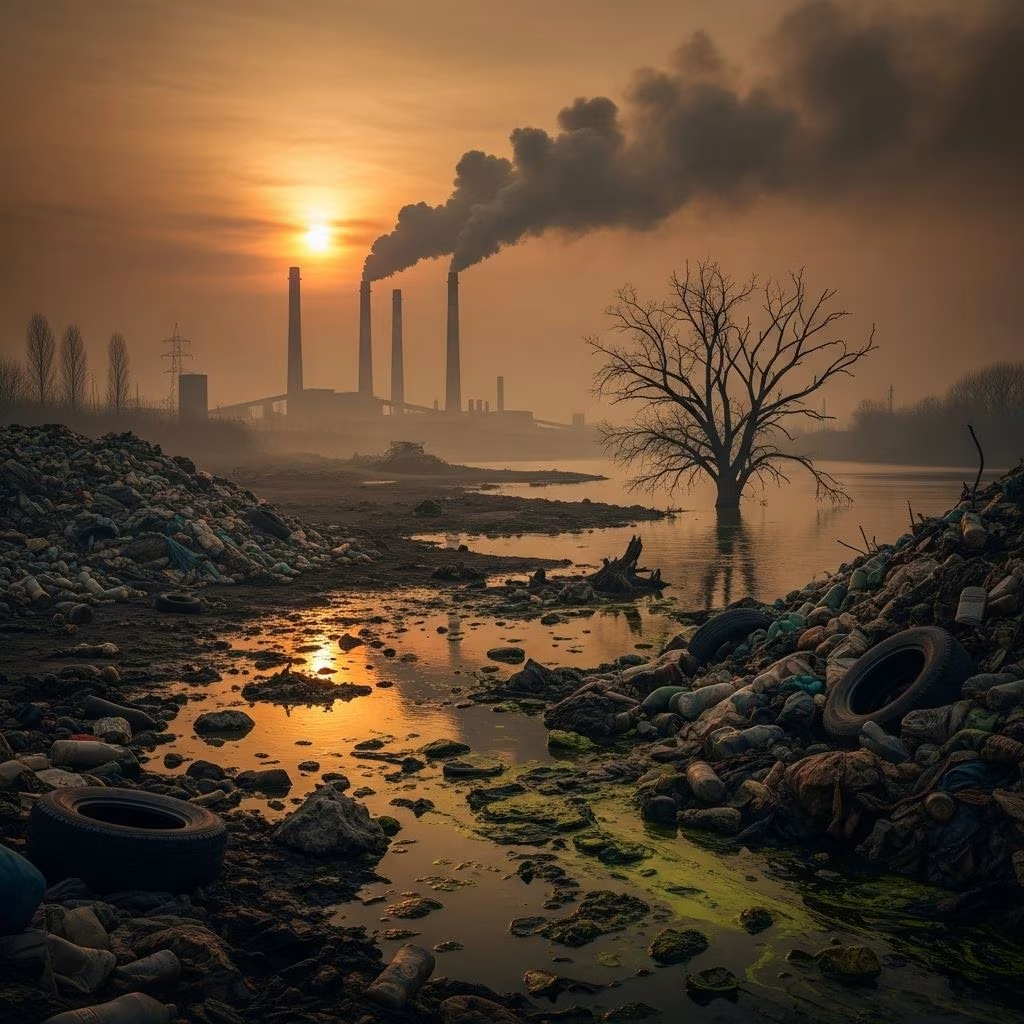
Pollution is one of humanity’s most pressing and persistent challenges, reaching crisis levels in some of the world’s most industrialized and densely populated regions. Across continents, toxic waste, industrial emissions, and poor environmental governance have created hotspots where human health and ecological systems are at constant risk. These places are often hidden from global view, yet their impacts are felt worldwide as pollution crosses borders through air, water, and trade.
Understanding Global Pollution Hotspots
Certain places on Earth have become infamous for their catastrophic environmental contamination. The causes are complex, often combining rapid industrialization, inadequate infrastructure, weak enforcement of environmental laws, and legacies of toxic industry. In these pollution hotspots, everyday life is shaped by smoggy skies, polluted water, and hazardous soils — making survival a struggle against invisible threats.
The annual PM2.5 concentration—an air quality metric measuring fine particles less than 2.5 micrometers in diameter—serves as a key indicator for air pollution’s severity. These microscopic particles can penetrate deep into the lungs and enter the bloodstream, causing a range of severe health disorders.
Key Types and Causes of Extreme Pollution
The sites recognized as the world’s worst polluted places often share several features:
- Heavy industrial activity (mining, metallurgy, chemical manufacturing)
- Poor waste management and dumping practices
- Vehicular emissions in rapidly growing urban areas
- Burning of fossil fuels, including coal, for energy and industry
- Legacy contamination from past wars, industrial disasters, or nuclear incidents
These drivers result in major pollutants such as:
- Lead, mercury, and other heavy metals in water, soil, and air
- Fine particulates (PM2.5 and PM10) from combustion, dust, and industry
- Volatile organic compounds (VOCs) and persistent organic pollutants (POPs)
- Radioactive substances from nuclear activities or waste
Notorious Pollution Hotspots Around the Globe
While pollution is a global concern, several regions stand out for the extraordinary scale and persistence of their environmental crises. The following locations, ranked frequently in studies and environmental risk assessments, illustrate the underlying causes and devastating effects of unchecked pollution.
Asia’s Toxic Zones
- Linfen, China: Known as the “coal capital,” Linfen has, for decades, suffered from hazardous levels of air pollution due to numerous coal-powered plants, coke factories, and lax regulation. At its worst, daily life involved skies shrouded in smoke and a constant, metallic taste in the air. Children growing up here have faced increased risks of respiratory illness and developmental delays.
- Hotan, China: Once relatively isolated, Hotan now ranks among the world’s most polluted cities for PM2.5. Though close to the vast Taklamakan Desert, much of the particulate matter comes from rapid industrialization and agricultural expansion, in addition to natural dust. Urban greening and shelterbelts are being introduced to curb dust, but pollution remains at crisis levels.
- Lahore, Pakistan: As the world’s most air-polluted city by PM2.5 in 2022, Lahore’s choking smog results from vehicle emissions, industrial effluents, and crop burning. Winter months are especially dire, with air quality indices surging to hazardous levels for weeks on end.
- Ghaziabad, India: Bordering Delhi, Ghaziabad consistently posts some of the world’s highest PM2.5 concentrations. Sources include traffic, waste burning, industrial emissions, and significant cross-border pollution from surrounding agricultural states where crop residue is burned each autumn, sending plumes of smoke into already burdened urban atmospheres.
- Delhi and New Delhi, India: The sprawling Indian capital is notorious for witnessing hazardous air pollution episodes during the winter. Major contributors include vehicular exhaust, construction dust, industrial emissions, and seasonal agricultural fires in neighboring states.
- According to a 2023 report, New Delhi had an average PM2.5 concentration of 92.7 μg/m³—over 18 times the World Health Organization’s recommended safe guideline.
- Health consequences include increased respiratory diseases, cardiovascular problems, and profound impacts on childhood lung development.
African and Middle Eastern Hotspots
- N’Djamena, Chad: As one of the top ten cities globally for PM2.5, its pollution involves both natural dust storms and emissions from vehicle traffic and burning fossil fuels.
- Baghdad, Iraq: Conflict, rapid unplanned urbanization, and energy production have led to severe air pollution and degraded water supplies.
- Cairo, Egypt: Dense population, traffic, industrial activity, and burning of agricultural waste make Cairo a critical hotspot for hazardous air pollution and chronic health complaints.
- Abuja, Nigeria: Urbanization outpaces infrastructure, resulting in unregulated emissions and frequent exposure to air and waterborne toxins.
Other Infamous Sites with Specialized Pollution Issues
- Chernobyl, Ukraine: While not currently the most air-polluted, this site of the 1986 nuclear disaster remains one of the world’s most radioactive landscapes. The surrounding exclusion zone presents long-term, invisible threats to wildlife and, occasionally, to illicit human visitors, due to lingering isotopes in soil and water.
- Dzerzhinsk, Russia: Once a Cold War chemical weapons production center, this city faces chronic chemical pollution from decades of improper chemical waste disposal, including dioxins and phenols, which have contributed to abnormally short average life expectancies.
- Kabwe, Zambia: Home to a massive, long-abandoned lead mine, large portions of the town’s population, especially children, suffer dangerously elevated blood lead levels, causing irreversible cognitive and physical harm.
- La Oroya, Peru: An Andean town dominated by a large metal smelting facility, La Oroya’s air, soil, and water are contaminated with high levels of lead, cadmium, arsenic, and sulfur dioxide. Children display some of the world’s highest blood lead concentrations.
- Norilsk, Russia: A remote Arctic city, Norilsk is home to one of the world’s largest nickel and palladium mining and smelting complexes. For decades, industrial emissions have led to acid rains, thick smogs, and widespread soil and water contamination.
- Citarum River, Indonesia: Labeled the world’s most polluted river, the Citarum is inundated with plastic debris, untreated sewage, industrial chemicals, and heavy metals, posing grave risks to all communities—over ten million people—living along its banks.
Table: Twenty Most Polluted Cities by Average 2022 PM2.5 Concentration
| Rank | City | Country | 2022 Avg. PM2.5 (μg/m³) |
|---|---|---|---|
| 1 | Lahore | Pakistan | 97.4 |
| 2 | Hotan | China | 94.3 |
| 3 | Bhiwadi | India | 92.7 |
| 4 | Delhi | India | 92.6 |
| 5 | Peshawar | Pakistan | 91.8 |
| 6 | Darbhanga | India | 90.3 |
| 7 | Asopur | India | 90.2 |
| 8 | N’Djamena | Chad | 89.7 |
| 9 | New Delhi | India | 89.1 |
| 10 | Patna | India | 88.9 |
| 11 | Ghaziabad | India | 88.6 |
| 12 | Dharuhera | India | 87.8 |
| 13 | Baghdad | Iraq | 86.7 |
| 14 | Chapra | India | 85.9 |
| 15 | Muzaffarnagar | India | 85.5 |
| 16 | Faisalabad | Pakistan | 84.5 |
| 17 | Greater Noida | India | 83.2 |
| 18 | Bahadurgarh | India | 82.2 |
| 19 | Faridabad | India | 79.7 |
| 20 | Muzaffarpur | India | 79.2 |
Human and Environmental Consequences
Living in heavily polluted environments generates serious health threats:
- Elevated rates of respiratory disorders (asthma, bronchitis, lung cancer)
- Cardiovascular disease due to exposure to particulate matter and heavy metals
- Neurological damage, especially in children, from lead and mercury exposure
- Shortened life expectancy; studies link high PM2.5 exposure with lifespans up to 5 years shorter in the most affected regions
- Increased occurrence of waterborne diseases where rivers and groundwater are contaminated
- Ecosystem collapse, including the loss of plant and animal life unable to survive toxic loads
These effects are particularly acute for:
- Children and the elderly
- Low-income or marginalized communities without access to healthcare or clean resources
- Local wildlife and biodiversity, often disappearing from highly contaminated sites
Paths Forward: Action and Remediation Efforts
Addressing the world’s worst pollution hotspots is a monumental task, requiring action across multiple levels:
- International cooperation and financing for pollution monitoring, cleanup, and technology transfer
- Stricter enforcement of environmental laws and investment in cleaner production methods
- Public health interventions including access to screening, treatment, and education on risks
- Community-led initiatives for waste management, urban greening, and river cleanups
- Global and national efforts to phase out lead from gasoline, control crop burning, and implement air quality standards
While the challenge is daunting, progress is visible where governments and organizations work hand in hand with local people, NGOs, and scientists to restore hope to places long burdened by pollution.
Frequently Asked Questions (FAQs)
Q: What is the most common cause of severe pollution in these hotspots?
A: The primary causes vary, but typically involve heavy industry, poorly regulated mining, burning of fossil fuels, and mismanaged waste and chemicals. In densely populated cities, vehicle emissions and seasonal crop burning also play major roles.
Q: How does air pollution in these places compare to global health guidelines?
A: In the worst hotspots, PM2.5 concentrations can be 10–20 times higher than the World Health Organization’s recommended annual guideline of 5 μg/m³, exposing millions to extremely hazardous air quality year-round.
Q: What health conditions are linked to living in polluted areas?
A: Common health impacts include respiratory problems (asthma, bronchitis), heart disease, cancer, neurological damage (especially in children), and premature death. Some regions also experience high rates of waterborne illnesses and developmental disabilities due to lead and mercury exposure.
Q: Are there successful examples of cleanup efforts?
A: Yes. After global campaigns, lead was removed from gasoline, reducing blood lead levels in many cities. River cleanups, soil remediation, and regulatory reforms have also provided relief in some regions, though challenges persist where action is slow or resources are lacking.
Q: Can local communities make a difference?
A: Absolutely. Community-led initiatives—ranging from urban greening to grassroots river cleanups and pollution monitoring—often achieve significant improvements, especially when supported by government and NGOs.
References
- https://www.youtube.com/watch?v=9weDZooOW08
- https://elements.visualcapitalist.com/ranked-the-20-most-air-polluted-cities-on-earth/
- https://www.greenpeace.org/static/planet4-india-stateless/2024/03/44a856c8-2023_world_air_quality_report.pdf
- https://earth.org/the-biggest-environmental-problems-of-our-lifetime/