


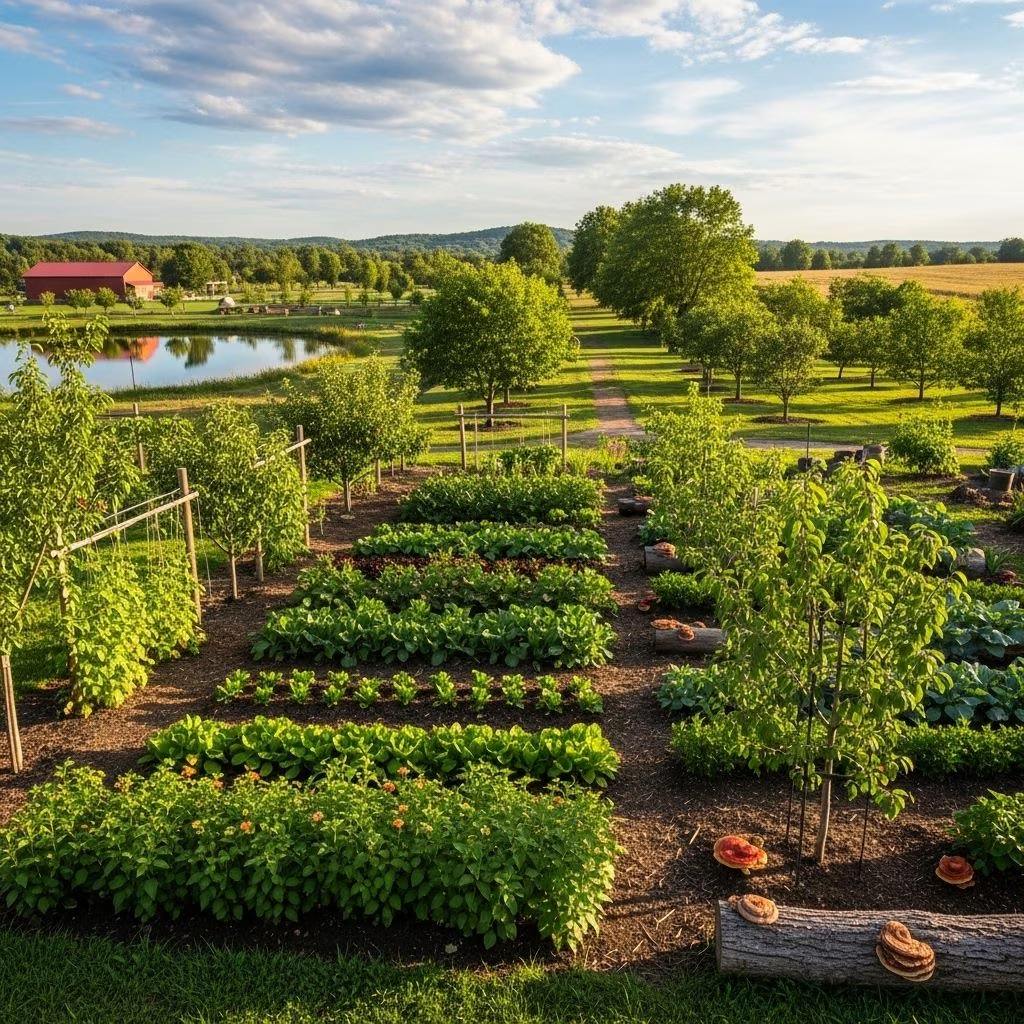
Agroforestry Approaches for Gardens and Small Farms
Agroforestry is the practice of integrating trees, shrubs, and perennials with crops, livestock, or both, developing a resilient and sustainable system that reflects nature’s diversity. For gardeners and small-scale farmers, agroforestry offers a pathway to enrich soils, diversify harvests, boost yields, and nurture the environment—all within manageable plots of land. This article explores essential agroforestry techniques suitable for gardens and small farms, their benefits, and considerations for successful implementation.
Understanding Agroforestry
Agroforestry is an ancient practice experiencing renewed interest among smallholders and sustainability advocates for its ability to mimic ecological processes, boost productivity, and provide numerous environmental advantages. By incorporating trees and multi-layered plantings into agricultural landscapes, farms become more diversified and resilient to climate, pest, and market shocks.
- Enhances soil fertility through nutrient cycling and organic matter accumulation.
- Protects against soil erosion and water loss by stabilizing soil with deep-rooted plants.
- Supports biodiversity by creating habitats for beneficial organisms and wildlife.
- Enables carbon sequestration and mitigates greenhouse gas emissions by storing carbon in trees and soil.
- Improves food security and nutrition by providing a range of edible crops, fruits, nuts, and animal products throughout the year.
- Offers additional income sources from timber, fruits, medicinal plants, and ecosystem services.
Common Agroforestry Approaches for Small Spaces
Several agroforestry systems can be adapted for gardens and small-scale farms. Each approach leverages the interdependence of diverse plant and animal species, capitalizing on complementary growth habits and ecological functions.
Forest Gardening
Inspired by natural woodlands, forest gardening creates a multi-tiered system that mimics a forest’s vertical structure. It typically incorporates:
- Canopy trees (fruit or nut trees)
- Small trees and shrubs (berries, medicinal plants, nitrogen-fixers)
- Herbaceous plants (vegetables, herbs, groundcovers)
- Vines (grapes, climbing beans)
- Root crops (tubers)
- Fungi or mushrooms (decomposers)
This approach maximizes productive use of vertical and horizontal space, encourages biodiversity, and builds healthy soils while yielding a diverse array of food, medicine, and other products.
Silvopasture
In silvopasture, trees are deliberately integrated with pasture and livestock.
- Animals benefit from shade and shelter, reducing heat stress and improving welfare.
- Trees can be pruned for fodder, firewood, or timber.
- Manure from livestock enriches soil fertility, and careful rotational grazing supports vigorous grass and tree regrowth.
This system increases land utilization efficiency compared to separate forestry and livestock operations.
Alley Cropping
Alley cropping involves planting rows of trees or shrubs with alleys of crops or forage between. Common configurations include:
- Nut or fruit trees with vegetable crops in between
- Hardwoods (for timber or biomass) with annual cash crops
Trees protect crops from wind, improve microclimates, and their leaf litter returns nutrients to the soil. Over time, the trees become a secondary harvest while annuals provide short-term yields.
Windbreaks and Living Fences
Windbreaks, or shelterbelts, are rows of trees or shrubs strategically placed to buffer wind, reduce erosion, and protect crops or livestock. Living fences use densely planted, often thorny species as boundaries, offering protection and habitat for wildlife in addition to their barrier function.
- Windbreaks lessen soil moisture loss and temperatures extremes for crops and livestock.
- Living fences may provide edible fruits, medicinal products, or fuelwood.
Riparian Buffers
Trees and shrubs planted along waterways stabilize streambanks, filter runoff, and create wildlife corridors. This improves water quality and reduces flooding risk while yielding potential harvests of nuts, fruits, or timber in marginal zones.
Agroforestry for Home Gardens
Home garden agroforestry adapts tree-based systems to the scale of the backyard, urban plots, or smallholdings. Distinct features include:
- Dense planting of perennial, annual, and tree species in layered arrangements
- Year-round harvests from a mix of seasonal crops and resilient perennials
- Enhanced household nutrition through access to diverse fruits, vegetables, and herbs close to the kitchen
- Local food security and reduced need for off-farm inputs
Common tree choices for gardens include fruit trees (apple, pear, citrus), nut trees, berry bushes (currants, gooseberries, blueberries), nitrogen-fixing species (acacia, alder), and fast-growing fuel plants. Interplanting with leafy greens, root crops, culinary and medicinal herbs, and climbing beans or peas completes the system.
Benefits of Agroforestry for Small Gardens and Farms
- Sustainable food production: Trees and ground layers allow for continuous harvests, crop rotation, and ecological pest management.
- Productivity and economic resilience: Yields are diversified, protecting against crop failure and providing multiple income streams from fruits, nuts, timber, fodder, honey, and specialty crops.
- Wildlife habitat: Structural diversity creates refuges for pollinators, birds, small mammals, and predatory insects, enabling natural pest control and ecosystem health.
- Improved soil health: Perennial roots cycle nutrients, add organic matter, reduce erosion, and boost water infiltration and retention.
- Climate adaptation: Agroforestry systems buffer temperature, humidity, and wind, supporting crops and livestock through weather extremes and building resilience to climate change.
- Carbon sequestration: Trees capture atmospheric carbon and enhance soil carbon pools, supporting climate mitigation goals.
Challenges and Considerations in Agroforestry Adoption
Despite its promise, agroforestry requires careful planning and management, especially on small plots where space is limited.
- Competition: Roots and canopies may compete for water, nutrients, and sunlight if not properly spaced and selected.
- Establishment time: Trees, especially for timber or fruit, require years to mature before providing full returns.
- Technical know-how: Farmers and gardeners must learn new cultivation, pruning, and harvest techniques.
- Investment: Initial labor and ongoing management may be higher than monocultures, but returns are also more resilient and diverse.
- Species selection: Choosing appropriate trees, crops, and livestock for local conditions and household needs is critical for system success.
Implementing Agroforestry: Practical Steps
To establish an agroforestry system in gardens or on small farms:
- Assess site conditions (climate, soil, water availability, sunlight, microclimates).
- Define your goals: Food production, timber, fuelwood, animal integration, biodiversity, etc.
- Select compatible species: Layered combinations of trees, shrubs, perennials, and annuals that serve multiple purposes.
- Design the layout: Consider mature sizes, sunlight patterns, root zones, and access routes.
- Prepare the site: Amend soil, manage weeds, and establish irrigation if needed.
- Plant in phases: Start with key structural trees, then add understory layers and annuals as canopies develop.
- Observe and adapt: Monitor performance, adjust plantings and management to optimize growth and productivity.
Case Example: Small Farm Forest Garden
| Layer | Example Plants | Functions |
|---|---|---|
| Canopy | Apple, Chestnut | Fruit, nuts, shade |
| Sub-Canopy | Pear, Plum | Fruit, biodiversity |
| Shrub | Currant, Blueberry | Berries, bird habitat |
| Herbaceous | Comfrey, Mint | Groundcover, pollinator forage |
| Ground | Strawberry, Clover | Living mulch, nitrogen fixation |
| Root | Jerusalem Artichoke, Garlic | Edible roots, pest management |
| Vine | Grape, Hardy Kiwi | Fruit, vertical space use |
Key Principles for Success
- Diversity: Aim for a wide range of species and functions to build resilience.
- Layering: Mimic natural ecosystems by stacking canopy, shrub, herbaceous, and ground layers.
- Soil health: Prioritize organic matter and living roots for continuous nutrient cycling.
- Observation: Adjust plant selections and designs over time based on results and needs.
- Community learning: Engage with local agroforestry practitioners, extension resources, or permaculture groups for ongoing support and shared knowledge.
Economic and Environmental Impacts
Agroforestry systems help reduce reliance on chemical inputs, lower production risks, and generate year-round income streams for smallholders. Environmentally, these systems contribute to climate change resilience, wildlife restoration, and improved watershed health.
- Income diversification reduces the impact of market or crop failures.
- Resilient production systems are less susceptible to drought, pests, or disease outbreaks.
- Agroforestry supports community food security and expands ecological services like pollination and pest control.
Frequently Asked Questions (FAQs)
What are the main types of agroforestry suitable for small farms?
Forest gardening, silvopasture, alley cropping, windbreaks, living fences, and riparian buffer plantings are all adaptable to small-scale plots and gardens.
How does agroforestry improve food security?
Agroforestry increases and diversifies harvests by producing food from multiple layers and species throughout the year, buffers against crop loss, and enhances soil health for sustained yields.
Are there challenges to starting agroforestry on a small farm or garden?
Initial setup can be labor-intensive, and it takes time for trees to mature. Careful planning, species selection, and ongoing management are critical for success.
Can smallholders earn income from agroforestry?
Yes; farms can earn from selling fruits, nuts, timber, honey, specialty crops, and ecosystem services, increasing financial security and resilience.
Does agroforestry require chemical fertilizers or pesticides?
Agroforestry often reduces or eliminates the need for chemical inputs by building fertile soils, fostering beneficial species, and enhancing ecosystem resilience.
Conclusion
Agroforestry is a highly practical and ecologically sound approach for gardens and small farms seeking to blend productivity, resilience, and environmental care. By combining a diversity of plants and integrating livestock where appropriate, smallholders can create thriving landscapes that yield abundant, healthy food while conserving nature for future generations.
References
- https://www.ifad.org/en/w/explainers/how-agroforestry-can-empower-farmers-and-protect-our-planet
- https://www.developmentaid.org/news-stream/post/198468/advantages-and-limitations-of-agroforestry
- https://www.soilassociation.org/causes-campaigns/agroforestry/agroforestry-what-are-the-benefits/
- https://growahead.org/agroforestry-food-security/
- https://www.propagateag.com/blog/agroforestry-advantages-economical-environmental
- https://agroforestry.org/the-overstory/317-overstory-258-the-benefits-of-agroforestry-systems-for-food-and-nutritional-security
- https://www.youtube.com/watch?v=iO0ycMkr8lo


