


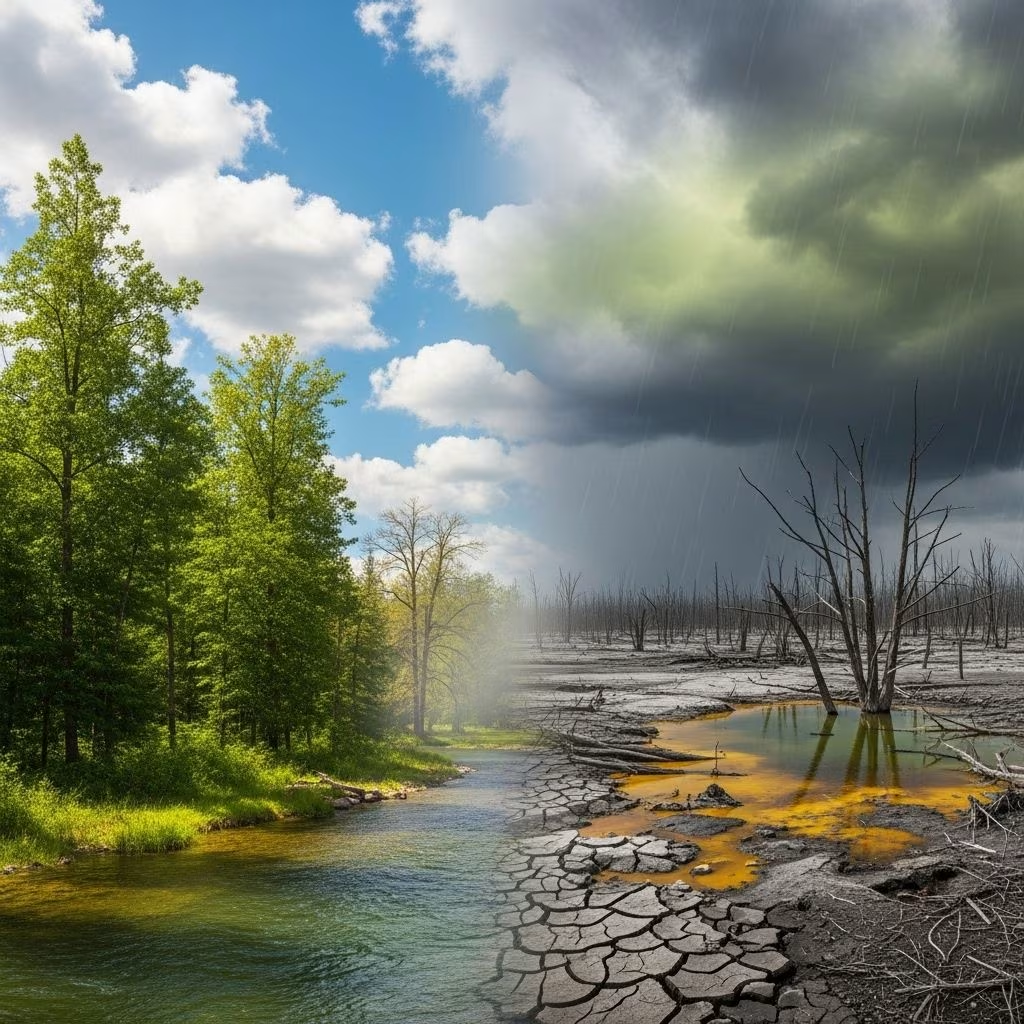
Acid Rain: Causes, Effects, and Prevention Strategies
Acid rain represents a major environmental threat, with profound impacts on ecosystems, infrastructure, and human health. Originating from specific air pollutants, acid rain alters the chemistry of our planet’s soil and water, accelerates the decay of buildings and monuments, and contributes to long-term public health risks. Through increased awareness and strategic intervention, significant progress can be made to combat this environmental challenge.
What Is Acid Rain?
Acid rain refers to any form of precipitation – including rain, snow, sleet, or fog – that is unusually acidic, possessing elevated concentrations of hydrogen ions (low pH). Naturally, rain is slightly acidic, but rainfall with a pH lower than 5.6 is typically classified as acid rain.1
The primary agents responsible for acidification are sulfur dioxide (SO₂) and nitrogen oxides (NOₓ). These pollutants react with atmospheric moisture to form sulfuric and nitric acids, which then fall to earth as acid precipitation.6
How Acid Rain Forms
Acid rain is a result of complex chemical processes involving anthropogenic (human-caused) and natural sources.
- Anthropogenic Sources: Burning fossil fuels in power plants, industrial facilities, vehicles, and residential heating produces large quantities of SO₂ and NOₓ.2
- Natural Sources: Volcanic eruptions and lightning can emit sulfur and nitrogen compounds, but these contribute far less than human activity.
Once airborne, SO₂ and NOₓ travel significant distances on wind currents. When they encounter water vapor in the atmosphere, chemical reactions occur, resulting in acid formation:
- SO₂ + H₂O → H₂SO₄ (sulfuric acid)
- NOₓ + H₂O → HNO₃ (nitric acid)
The resultant acids lower the pH of precipitation, causing greater acidity when the rain, snow, or fog reaches the ground.6
Measuring Acidity: The pH Scale
The pH scale ranges from 0 (highly acidic) to 14 (highly alkaline), with 7 being neutral. Pure water has a pH of 7, while normal rain is slightly acidic, averaging around 5.6. Acid rain, however, can have a pH as low as 4.3 or below, indicating a much higher acidity.
| Substance | pH Value |
|---|---|
| Pure Water | 7.0 |
| Normal Rain | 5.6 |
| Acid Rain | 4.3 or lower |
Main Causes of Acid Rain
Understanding the causes of acid rain is essential for finding long-term solutions. While both natural and human-made processes can generate acid rain, most acid deposition today is tied to human industry and transportation.
Human Causes
- Industrial Emissions: The burning of coal, oil, and heavy fuel in power plants and factories releases large amounts of SO₂ and NOₓ, especially where emission controls are weak.2
- Vehicle Exhaust: Cars, trucks, buses, and other vehicles produce NOₓ through internal combustion engines.2
- Residential Heating: Wood and oil burning for heat, especially in high-density urban areas, contributes to acid-forming pollution.2
- Waste Incineration: Burning waste materials containing sulfur can also generate acid rain-causing emissions.
Natural Causes
- Large volcanic eruptions that emit sulfur-rich gases.
- Lightening and soil microbial processes that release nitrogen oxides.
Despite these natural sources, industrial-era acid rain is overwhelmingly fueled by human-generated emissions.26
Environmental Impact of Acid Rain
Acid rain has severe consequences for both natural and built environments, with effects cascading through ecological systems, water and soil chemistry, infrastructure, and even human health.
Effects on Ecosystems
- Soil Acidification: Acid rain leaches essential minerals—such as calcium and magnesium—from the soil, reducing fertility and harming plant growth.3
- Release of Aluminum: Increased acidity mobilizes aluminum compounds in the soil, which are toxic to plant roots and aquatic life.4
- Degradation of Vegetation: Trees and plants suffer nutrient deficiencies, weakened resistance to disease, stunted growth, and greater susceptibility to cold or pests.4
Impact on Water Bodies and Aquatic Life
- Freshwater Acidification: Streams, rivers, and lakes receive direct acid input and runoff, reducing pH and threatening aquatic organisms.3
- Aluminum Toxicity: Leached aluminum disrupts fish gill function and can be lethal to aquatic organisms, particularly species sensitive to acid levels.
- Reproductive Failure: Fish eggs may not survive in more acidic waters, disrupting population renewal and endangering entire species.
Episodic events, such as melting acidic snow or heavy rain after dry periods, can produce sudden pH drops, harming aquatic life unexpectedly.4
Effects on Forests and Plant Life
- Acid rain damages foliage, impairs photosynthesis, and makes trees more vulnerable to drought, insects, disease, or freezing temperatures.
- Loss of nutrients in the soil stunts plant growth or prevents reproduction entirely.
- Some forests—especially high-altitude or already-degraded ones—are highly sensitive and show visible dieback with prolonged acid exposure.4
Impacts on Human Health
- Acid rain itself is too diluted to cause direct health issues, but the precursor pollutants—SO₂ and NOₓ—persist as fine particulates and gases in the air.
- Inhalation of these pollutants causes or worsens respiratory problems such as asthma, bronchitis, and increases the risk of heart disease.31
- Contaminants leached from soil into water bodies can accumulate in crops and fish, potentially entering the food chain.1
Damage to Human-Made Structures and Materials
- Corrosion of Buildings: Acid rain accelerates the decay of limestone, marble, concrete, and metal structures.9
- Endangered Heritage Sites: Historic monuments and gravestones suffer irreversible surface loss or flaking due to chemical reactions with acidic precipitation.9
- Infrastructure Damage: Increased maintenance and restoration costs are required for bridges, pipelines, and outdoor artwork.
Can Acid Rain Be Stopped? Solutions and Prevention
Tackling acid rain requires both large-scale policy action and individual efforts to decrease emissions of SO₂ and NOₓ. Over recent decades, numerous regions have succeeded in reducing the threat, proving that progress is possible.
Regulatory and Policy Solutions
- Stricter Emission Standards: Implementation of government regulations—such as the U.S. Clean Air Act and European environmental directives—limits industrial and vehicular emissions.12
- Mandated Emission Controls: Requiring factories and power plants to retrofit smokestacks with scrubbers and catalytic converters dramatically reduces pollutants released.12
- International Agreements: Cross-border pollution requires treaties to standardize emission limits among countries.
Technological Innovations
- Transition to Clean Energy: Switching from coal and oil to renewable power such as wind, solar, hydro, and geothermal reduces the generation of SO₂ and NOₓ.13
- Vehicle Improvements: Advanced catalytic converters and low-emission engine designs in vehicles minimize NOₓ output.2
- Cleaner Industrial Processes: Industries can use filtration, green chemistry, and cleaner combustion to lower emissions.
Restoration and Remediation Approaches
- Lime Application: Adding lime (calcium carbonate) to acidified lakes and soils can temporarily neutralize acidity, helping ecological recovery.5
- Aquatic Remediation: Restoration programs can raise pH in streams and lakes to protect at-risk wildlife during periods of high acid input.
- Building Repairs: Specialized coatings and cleaning methods extend the lifespan of threatened monuments, though prevention remains more effective.
How Individuals Can Help
- Conserve Energy: Turn off lights, electronics, and appliances when not needed. Energy savings curb the demand for electricity from fossil fuel sources.3
- Choose Sustainable Transport: Opt for public transport, cycling, walking, or carpooling to reduce vehicle emissions.2
- Switch to Renewables: Install solar panels or opt for renewable-power utilities where possible.12
- Support Environmental Policy: Advocate for clean air regulations, vote for policies and representatives prioritizing emissions control.
Community and Urban Solutions
- Improving public transportation networks to provide low-emission alternatives for commuters.
- Promoting walkable cities and cycling infrastructure to decrease car dependency.2
- Facilitating the adoption of energy-efficient appliances and home upgrades via incentives or co-financing programs.
Frequently Asked Questions (FAQs)
Q: Is acid rain still a problem today?
A: Yes. Although emissions have declined in North America and Europe due to environmental regulations, acid rain still affects some regions and remains a concern in parts of Asia and the developing world where fossil fuel use is high and environmental controls may be lacking.
Q: Can acid rain be reversed?
A: Acidified lakes and soils can sometimes be restored using lime and remediation techniques. However, preventing new acid rain by reducing emissions is more effective than trying to reverse existing damage.
Q: What is the main cause of acid rain?
A: The leading cause is the emission of sulfur dioxide and nitrogen oxides from the burning of fossil fuels in power generation, industry, and transportation.
Q: Does acid rain directly harm people?
A: The acidity of the rain itself is not directly harmful to humans. However, the air pollutants that contribute to acid rain can cause respiratory diseases and exacerbate heart and lung conditions.
Q: How can schools and organizations help prevent acid rain?
A: Educational programs can raise awareness about air pollution, and institutions can reduce their environmental footprint by improving energy efficiency, using renewables, and supporting strong environmental policies.
Key Takeaways
- Acid rain is driven mainly by human activities that emit sulfur dioxide and nitrogen oxides.
- The environmental consequences are far-reaching, impacting ecosystems, aquatic life, vegetation, infrastructure, and human health.
- Prevention relies on a combination of policy, technology, conservation, and individual action.
- Progress has been made, but ongoing vigilance and adaptation remain necessary to protect our environment for future generations.
References
- https://www.actenviro.com/about-acid-rain/
- https://airly.org/en/acid-rain-causes-consequences-the-ways-to-fight-it/
- https://www.tiredearth.com/articles/acid-rain-causes-effects-and-solutions
- https://www.geeksforgeeks.org/biology/acid-rain-definition-effects-causes/
- https://www.livescience.com/63065-acid-rain.html
- https://www.epa.gov/acidrain/what-acid-rain
- https://www.iberdrola.com/sustainability/acid-rain
- https://dec.ny.gov/environmental-protection/acid-rain
- https://www.britannica.com/science/acid-rain/Effects-on-human-made-structures


