Cutting Out Beef: Halving Global Agricultural Land Use
The world faces rapidly rising environmental challenges largely driven by food production systems. Of all foods, beef accounts for a disproportionate share of environmental impacts, from land use to greenhouse gas emissions and biodiversity loss. Recent studies highlight that eliminating beef from our diets and embracing plant-based alternatives could cut global agricultural land in half—a transformative shift with wide-reaching implications for our planet’s future.
How Much Land Does Beef Really Use?
Globally, livestock production>—especially for beef—accounts for an outsized portion of land use. Approximately 26% of the Earth’s ice-free land is used for grazing livestock, with an additional third dedicated to growing animal feed crops like corn, soy, and oats.
- More than 70% of soy, 80% of corn, and 95% of oats grown in the U.S. are fed to livestock.
- Livestock grazing and feed production utilize two and a half times more land compared to plant-based diets.
- Beef is especially land-intensive, requiring vast tracts for both pasture and feed crops.
The inefficiency is stark: producing a kilogram of beef demands multiples more resources than the same caloric value in plant-based foods. Replacing beef with plant-based diets, therefore, offers an unprecedented opportunity to liberate enormous areas of agricultural land.
The Environmental Toll of Industrialized Beef
Beyond land use, industrial beef farming exerts a heavy toll on ecosystems and the climate. Three dominant impacts stand out:
- Soil erosion and degradation. Overgrazing by cattle leads to rampant soil erosion; in the U.S., industrialized livestock production is directly responsible for 85% of all soil erosion. Severely eroded soils lose fertility and water retention, fueling further environmental decline.
- Monoculture and overfarming. Demand for animal feed pushes farmers to adopt monocultures—primarily corn, soy, and oats—on enormous scales. This strips soils of nutrients, increasing reliance on fertilizers and pesticides, which contribute to water pollution and loss of pollinators.
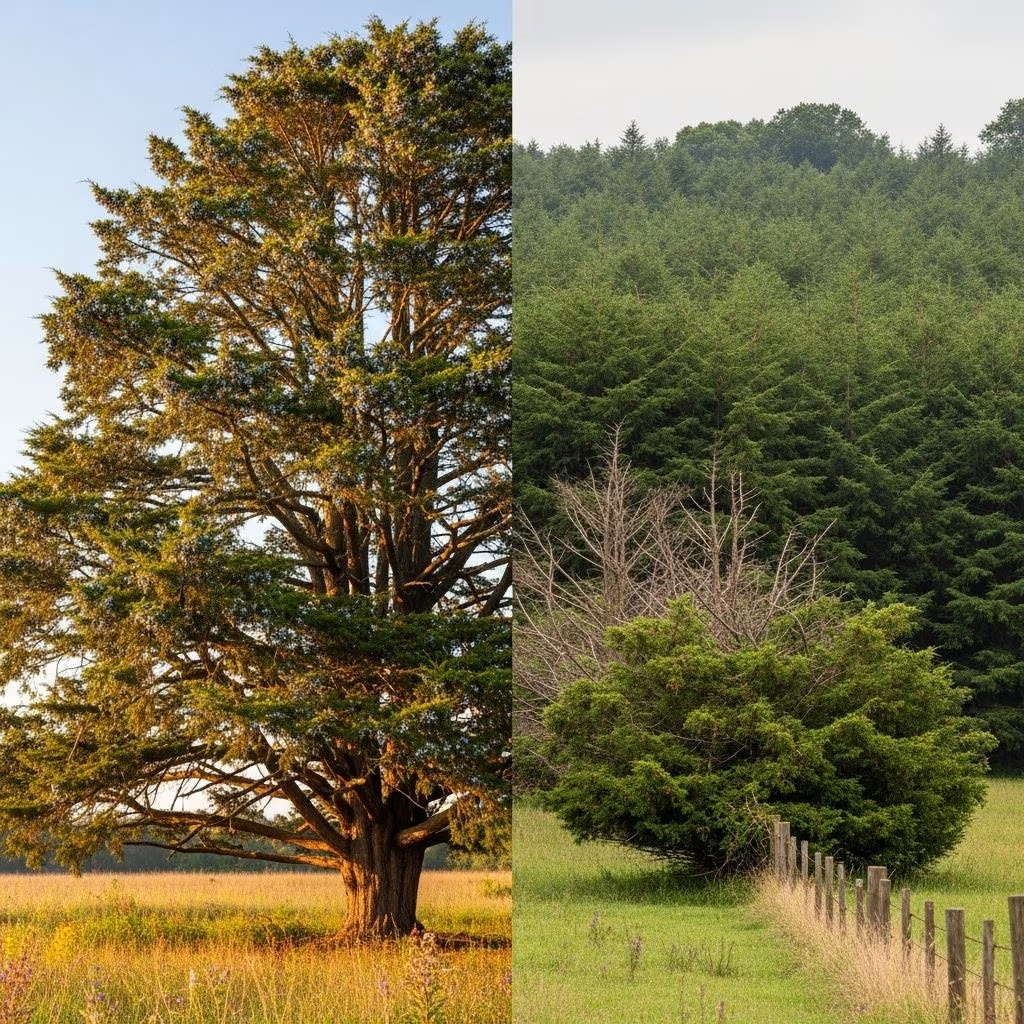
- Deforestation. Increased demand for beef drives deforestation in biodiversity-rich areas, notably the Amazon, where millions of hectares of forest are cleared for grazing each year, eroding ecosystems and releasing stored carbon.
Beef vs. Plant-Based Diets: Land Use Comparison
| Diet Type | Land Required (Ratio) | Main Environmental Impacts |
|---|---|---|
| Beef-based diet | High (2.5x plant-based) | Deforestation, soil erosion, high GHG emissions |
| Plant-based diet | Low (baseline) | Lower land use, reduced pollution, improved biodiversity |
This comparison focuses on the aggregate effects of dietary patterns: beef-heavy diets result in wider environmental harm relative to plant-based ones.
Climate Impacts: The Role of Beef in Greenhouse Gas Emissions
Beef is the most greenhouse gas-intensive major food product.
- Livestock farming causes 18% of global greenhouse gas emissions, including 37% of methane, a particularly potent gas.
- Cattle belching alone produces more methane in the U.S. than the entire natural gas sector.
Methane emissions from cattle contribute profoundly to rapid warming. Plant-based alternatives—often made from legumes, grains, and other crops—require much less land and result in substantially fewer methane and carbon emissions.
Global Impacts of Substituting Beef with Plant-Based Alternatives
A landmark study indicates that if just 50% of animal products (beef, pork, chicken, and milk) in global diets were replaced by novel plant-based alternatives, the net reduction of forest and natural land would be nearly fully halted by 2050, and agricultural emissions would decline by 31% compared to 2020. The climate and biodiversity benefits are even greater if spared agricultural land is restored to forests.
- GHG emissions would fall by 2.1 gigatons of CO2 equivalent per year (a reduction of 31% in 2050).
- Restoring agricultural land to forests could double climate benefits, achieving 92% of the previously estimated land sector mitigation potential.
- The restoration would also help meet international biodiversity targets (Kunming-Montreal Global Biodiversity Framework).
The Domino Effect: Restoring Land, Biodiversity, and Ecosystem Integrity
When agricultural land is freed from beef production, vast new possibilities open for environmental recovery:
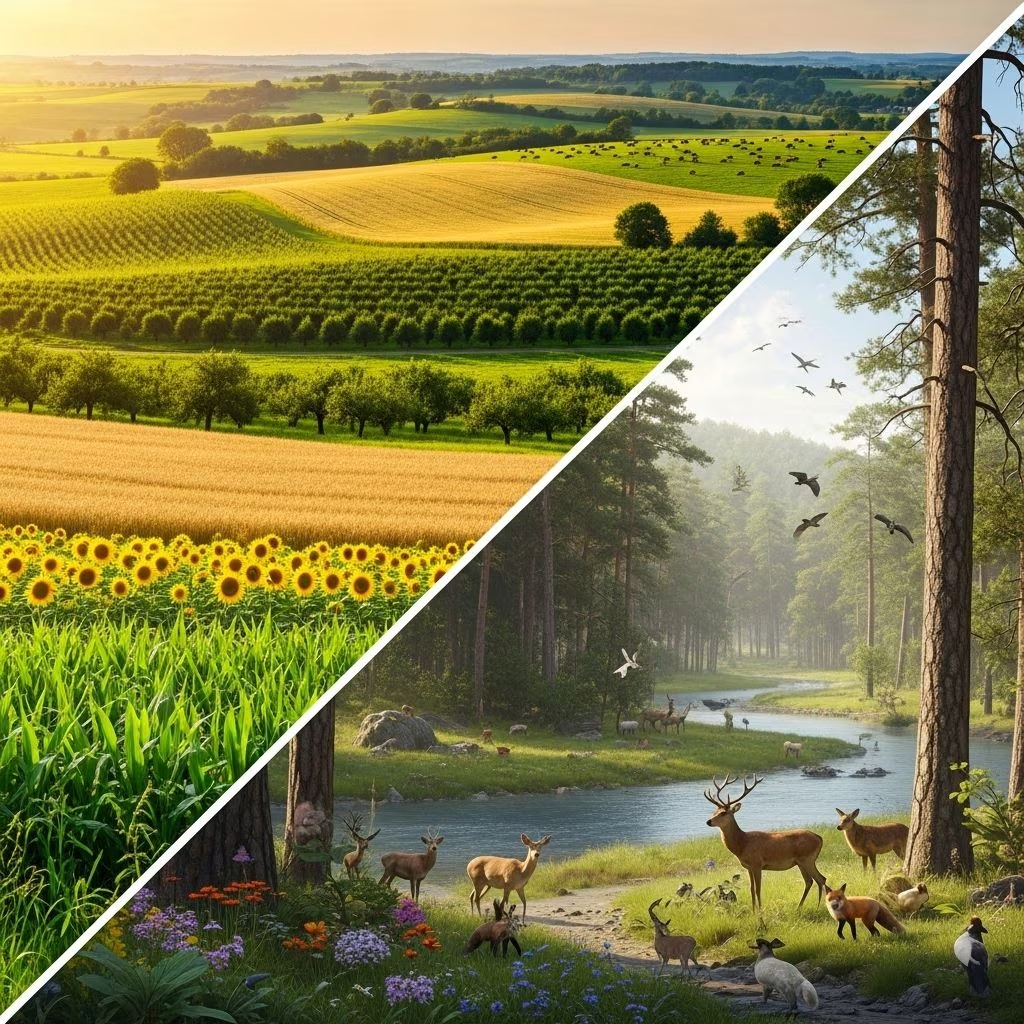
- Restoring natural ecosystems. Abandoned farmland can be rewilded or reforested, supporting carbon sequestration and biodiversity regeneration.
- Halting deforestation. With reduced demand for beef, rainforest loss—especially in South America—can be substantially curbed.
- Protecting freshwater and pollinators. Less monocropping and fewer pesticides mean healthier rivers and pollinator populations.
Thus, a shift away from beef ripples outward, enabling systemic improvements in climate, water quality, wildlife habitat, and ecosystem resilience.
Barriers and Potential of Dietary Change
Why Isn’t Everyone Making the Shift?
Despite clear environmental gains, several barriers slow widespread adoption of plant-based diets:
- Cultural preferences for beef, which is viewed as desirable or status-enhancing in many societies.
- Economic dependence on livestock farming in rural communities.
- Food industry inertia and lack of large-scale investment in plant-based alternatives.
- Perceived protein needs and doubt about nutritional adequacy of plant-based diets.
Emerging Solutions
- Advances in plant-based meat. Modern alternatives are increasingly realistic and nutritious, often combining pea, soy, or wheat proteins for flavor and texture.
- Policy incentives and education programs promote dietary changes for both health and sustainability.
- Land restoration strategies incentivized by government and private sector to maximize climate and biodiversity payoffs.
According to modeling studies, replacing beef with realistic plant-based alternatives produces synergistic reductions in land use, greenhouse gases, and biodiversity loss. The effects are especially potent in regions like Sub-Saharan Africa and South America, where beef-driven deforestation is most acute.
FAQ: Frequently Asked Questions About Beef, Land Use, and Plant-Based Diets
Q: How much land could be spared if everyone stopped eating beef?
A: Cutting out beef could immediately halve global agricultural land use, freeing up millions of square miles for restoration, climate benefits, and other food crops.
Q: Does switching to plant-based diets really make a difference for climate change?
A: Yes. A partial shift—just 50% substitution—can slash agricultural greenhouse gas emissions by nearly a third by 2050, and potentially much more if restored lands are reforested.
Q: What environmental impacts are associated with beef production?
- Deforestation: Forests cleared for grazing.
- Soil erosion: Overgrazing removes vegetative cover, accelerating erosion.
- Water pollution: Fertilizers and pesticides for feed crops run off into waterways.
- Greenhouse gases: Cattle produce methane, an extremely potent greenhouse gas.
Q: Are plant-based diets nutritionally complete?
A: Modern plant-based diets, when balanced and adequately planned, provide all essential nutrients. Many plant-based meat alternatives are fortified with vitamins and minerals to ensure nutritional equivalence.
Q: What is the difference in land use between a beef-based and a plant-based diet?
A: On average, a beef-based diet uses about 2.5 times more land than a plant-based diet, primarily due to feed crop production and pasture requirements.
Action Steps: Moving Toward Sustainable Diets
To realize the land, climate, and ecological benefits outlined above, several steps can help individuals, communities, and policymakers accelerate the dietary shift:
- Choose plant-forward meals more often, reducing beef consumption in favor of legumes, grains, and vegetables.
- Support policies that subsidize plant-based proteins, promote sustainable agriculture, and fund land restoration projects.
- Encourage food industry innovation to improve the taste, availability, and nutritional quality of plant-based meat alternatives.
Each dietary choice scales up to global impact, offering the promise of a planet with less land degradation, healthier soils, and restored forests.
Summary Table: Environmental Impact Comparison
| Metric | Beef-Based Diet | 50% Plant-Based Substitution | Full Plant-Based Diet |
|---|---|---|---|
| Agricultural Land Use | High | Halved | Minimal |
| GHG Emissions | High (methane, CO2) | Down 31% | Down >50% |
| Deforestation Rate | Rapid loss | Halts conversion | Potential for reforestation |
| Biodiversity Loss | High | Halved | Low |
SEO-Optimized Frequently Asked Questions
What are the main causes of agricultural land expansion?
Expansion is primarily driven by demand for beef and other animal products, which require large areas for both grazing and feed production.
How can restoring agricultural land benefit climate and biodiversity?
Restored land sequesters carbon, rebuilds habitat for wildlife, and supports resilient ecosystems, dramatically enhancing both climate stability and species preservation.
Is it realistic to expect 50% substitution in global diets?
While challenging, technological advances in plant-based foods, government incentives, and growing consumer awareness are accelerating progress toward this goal.
Where will dietary shifts have the greatest environmental impact?
Regions such as Sub-Saharan Africa and South America—where beef drives significant deforestation—will experience the largest benefits from reduced beef consumption.
How do monoculture farming practices affect environmental sustainability?
Monocultures deplete soil nutrients, increase reliance on chemical inputs, and degrade local biodiversity, amplifying negative impacts of livestock feed production.
Conclusion: The Future of Food and the Planet
Scientific evidence shows that eliminating beef from our diets, or even substituting half with plant-based alternatives, offers an unparalleled opportunity to reverse land degradation, arrest climate change, and secure biodiversity. The shift challenges ingrained food practices but promises outsized ecological and public health returns. Reimagining our meals heralds a new age for agriculture—not only more sustainable, but profoundly restorative for both people and planet.
References
- https://populationeducation.org/industrialized-meat-production-and-land-degradation-3-reasons-to-shift-to-a-plant-based-diet/
- https://www.nature.com/articles/s41467-023-40899-2
- https://woods.stanford.edu/news/meats-environmental-impact
- https://earthjustice.org/experts/peter-lehner/pathways-to-climate-friendly-food-agriculture-a-preliminary-analysis