Experience the Majestic Stone Forest of Madagascar
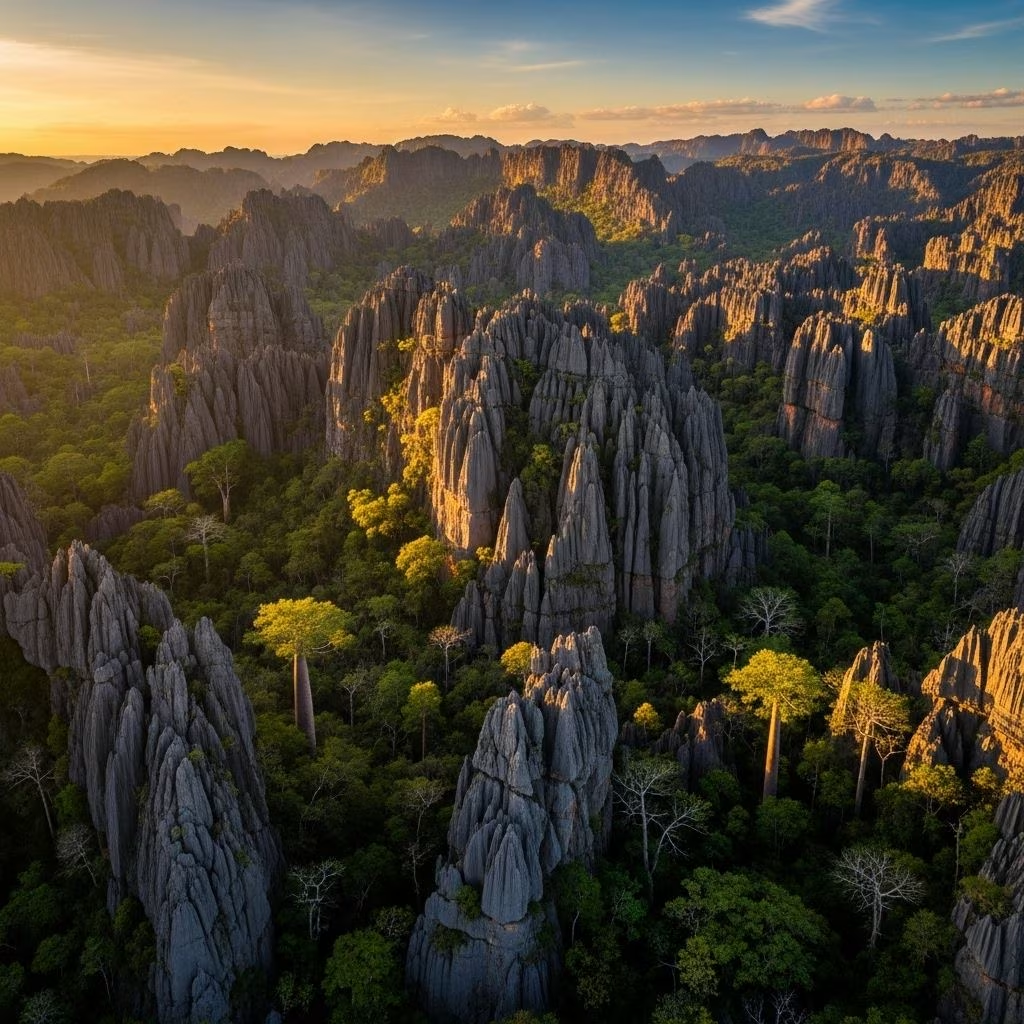
Tsingy de Bemaraha rises from the heart of western Madagascar like a petrified fortress, sculpted by time and water into a jagged expanse of limestone pinnacles. Often referred to as the “Stone Forest,” this UNESCO World Heritage Site is both a testament to the forces of nature and a sanctuary for some of the planet’s rarest creatures. Here, generations of erosion have carved a dramatic landscape that beckons adventurers, geologists, and wildlife enthusiasts alike.
What Makes Tsingy de Bemaraha Unique?
- Home to the world’s largest stone forest of razor-sharp limestone pinnacles, up to 100 meters (330 feet) tall.
- Unparalleled biodiversity: nearly 85% of its flora and fauna are endemic, found nowhere else on Earth.
- Spectacular hiking across suspended walkways, ladders, and natural bridges.
- Rich Malagasy culture and deep ancestral significance to local communities.
The Meaning of “Tsingy”
In the Malagasy language, tsingy means “where one cannot walk barefoot.” This poetic phrase encapsulates the park’s essence: a seemingly impassable labyrinth of jagged stone that challenges and enthralls those brave enough to explore its depths.
Ancestral History and the Formation of Tsingy
The story of Tsingy de Bemaraha stretches back over 200 million years, when the region was submerged beneath the Tethys Sea. Layers of limestone were deposited, and as the sea retreated, rainwater began etching away at the rock, sculpting what would become a sprawling karst landscape of pinnacles, canyons, caves, and ravines.
- Rainwater dissolved the limestone, creating a fortress of natural spires and towers.
- Grottos, underground rivers, and deep canyons formed below the forest of stone, fostering microhabitats for specialized flora and fauna.
- Ancestral Malagasy communities attribute spiritual significance to Tsingy, considering many areas sacred and using caves as places of worship and burial.
Geology: Nature’s Stone Sculpture Garden
Tsingy de Bemaraha is an exemplary showcase of karst topography, where ancient limestone plateaus have been carved into a mesmerizing array of pinnacles, crevices, and underground networks.
| Feature | Description |
|---|---|
| Karst Pinnacles | Razor-sharp limestone towers up to 100m high |
| Underground Rivers | Formed from the dissolution of limestone, feeding the Manambolo River gorges |
| Caves & Grottos | Home to ancient fossils, rare bats, and unique subterranean life forms |
| Gorges & Ravines | Deep, forested chasms traversing the plateau |
The constant interplay of water and stone continues to shape Tsingy today, supporting a fragile ecosystem uniquely adapted to its harsh, sun-baked peaks and cool, shadowed valleys.
A Biodiversity Hotspot: Life Among the Spires
The isolation and extreme conditions of Tsingy have spurred the development of endemic species found nowhere else. Scientists estimate that up to 85% of the park’s plants and animals are unique to Madagascar, with high rates of specialization in the stone forest itself.
- Lemurs: 11 species inhabit the park, including Decken’s sifaka, red-fronted brown lemur, Cleese’s woolly lemur, and dwarf lemurs.
- Birds: Over 100 species, some of which are critically endangered, such as the Madagascar fish eagle.
- Reptiles & Amphibians: Notably, 34 species, all endemic, roam the crevices, including the tiny, elusive Antsingy leaf chameleon.
- Bats: Five distinct bat families, comprising half of Madagascar’s bat species, thrive in the caves and forests.
- Plants: Unique flora include baobabs and succulents clinging to cliffs, orchids in sheltered canyons, and rare palms adapted to the limestone.
Flagship Species to Watch For
- Decken’s Sifaka (Propithecus deckenii): A nimble white lemur known for its acrobatic leaps between stone needles.
- Fossa (Cryptoprocta ferox): Madagascar’s top predator, resembling a slender, agile puma.
- Antsingy Leaf Chameleon: Renowned for its tiny size and camouflage skills—an icon of Madagascar’s reptilian diversity.
How to Explore Tsingy de Bemaraha
Accessing Tsingy de Bemaraha is not for the faint-hearted, but the rewards are unmatched. Visitors begin their adventure in the small frontier town of Bekopaka, where guided tours depart for the two main sections of the park: the Grand Tsingy and the Petit Tsingy.
The Grand Tsingy
- Home to the tallest limestone formations—up to 330 feet (100 meters).
- Features suspension bridges, ladders, wooden walkways, and viewpoints above a dizzying maze of spires.
- Requires moderate to advanced fitness and a head for heights—some circuits involve harnesses and climbing gear.
- Iconic for sunrise vistas as golden light glimmers on the stone peaks.
The Petit Tsingy
- Smaller in scale but equally dramatic, with densely packed needles.
- Offers more accessible hiking routes, suitable for families and less experienced trekkers.
- Shorter circuits with excellent wildlife viewing stops and panoramic overlooks.
Canoeing the Manambolo River
- Paddle past stone cliffs, into deep gorges lined with ancient tombs and sacred caves.
- Opportunity to observe endemic birds, bats, and lush riparian flora.
Practical Information for Visitors
| Aspect | Details |
|---|---|
| Best Time to Visit | May to October (dry season, best hiking conditions) |
| Park Size | 723–1,500 km² depending on boundaries |
| Altitude | 64–538 meters (210–1,765 feet) |
| Nearest Town | Bekopaka (accommodations, park access) |
| Accessibility | Challenging; rough roads, river crossings, and basic infrastructure |
| Facilities | No accommodations within the park; camping or hotels in Bekopaka |
| Guided Tours | Compulsory for all circuits, led by certified local guides |
- Permits must be secured in Bekopaka town before entering the park.
- Travel Tip: The park is closed in the wet season (November–April) due to flooding and impassable roads.
- Preparation: Bring sturdy footwear, sun protection, water, and be ready for physically demanding hikes.
Conservation Challenges and World Heritage Status
Tsingy de Bemaraha was inscribed as a UNESCO World Heritage Site in 1990, recognized for both its aesthetic wonders and its critical role in preserving biodiversity.
- Criteria met: (vii) aesthetic, (x) biodiversity.
- Major threats: Deforestation outside park boundaries, bushfires, habitat loss for wildlife, illegal hunting, and climate change.
- Conservation initiatives: Community-based ecotourism, research programs, and education for sustainable management.
Why is Tsingy Critical for Conservation?
- Acts as a refuge for numerous threatened and endangered species found only in Madagascar.
- Undisturbed forests, lakes, and mangroves form a delicate ecological network vulnerable to outside pressures.
- Home to rare/endemic taxa, including lemurs, chameleons, unusual birds, and more.
Top Travel Tips for Adventurers
- Physical Fitness: Some park circuits are strenuous and require climbing ladders, squeezing through tight crevices, and crossing suspension bridges.
- Cultural Respect: Follow local guide instructions and observe traditional Malagasy customs when visiting sacred caves or sites.
- Wildlife Etiquette: Avoid feeding or disturbing animals; use binoculars for bird- and lemur-watching.
- Pack Light: Bring only essentials for hiking, and keep valuables secure at your accommodation.
- Photography: Early morning or late afternoon offers the best light; always ask before photographing local people.
Frequently Asked Questions (FAQs)
Q: What is the main attraction of Tsingy de Bemaraha?
A: The park’s signature feature is its vast network of razor-sharp limestone spires, or “tsingy,” forming dramatic stone forests with canyons, caves, and suspension bridges for exploration.
Q: Which animals are unique to Tsingy de Bemaraha?
A: Notably, eleven lemur species, the fossa (Madagascar’s largest predator), rare birds like the Madagascar fish eagle, and the diminutive Antsingy leaf chameleon—many are endemic to this region.
Q: When is the best time to visit?
A: Plan your trip from May to October during Madagascar’s dry season, which offers the best weather and safe hiking conditions.
Q: Is the park suitable for families?
A: With proper planning, families can enjoy the Petit Tsingy’s easier circuits, while the Grand Tsingy is best for fit, adventurous travelers.
Q: How do I get there?
A: Most travelers begin in Antananarivo, then drive west toward Morondava and north to Bekopaka. Be prepared for long drives, rough roads, and river crossings en route to the park gateway.
Conclusion: Journey to the Edge of the World
Few destinations offer such a primal encounter with nature’s artistry as Tsingy de Bemaraha. Here, stone has been shaped into surreal cathedrals, cliffs conceal hidden sanctuaries, and every expedition feels like treading into prehistory. For those who seek adventure, discovery, and a deep connection with one of the world’s most astonishing wilderness areas, Madagascar’s stone forest awaits.
References
- https://wheretowander2024.atlasobscura.com/location/madagascar
- https://www.safaribookings.com/bemaraha
- https://www.earthtrip.co.uk/experience/tsingy-bemaraha-national-park-or-grand-tsingy/
- https://www.africanworldheritagesites.org/natural-places/strange-worlds/tsingy-de-bemaraha-madagascar.html
- https://jenmansafaris.com/attraction/tsingy-de-bemaraha-nature-reserve/
- https://www.naturalworldheritagesites.org/sites/tsingy-de-bemaraha-strict-nature-reserve/
- https://en.wikipedia.org/wiki/Tsingy_de_Bemaraha_National_Park
- https://www.tripadvisor.com/Attraction_Review-g673046-d325065-Reviews-Tsingy_de_Bemaraha_Strict_Nature_Reserve-Tsingy_de_Bemaraha_National_Park_Mahajang.html
- https://whc.unesco.org/en/list/494/