


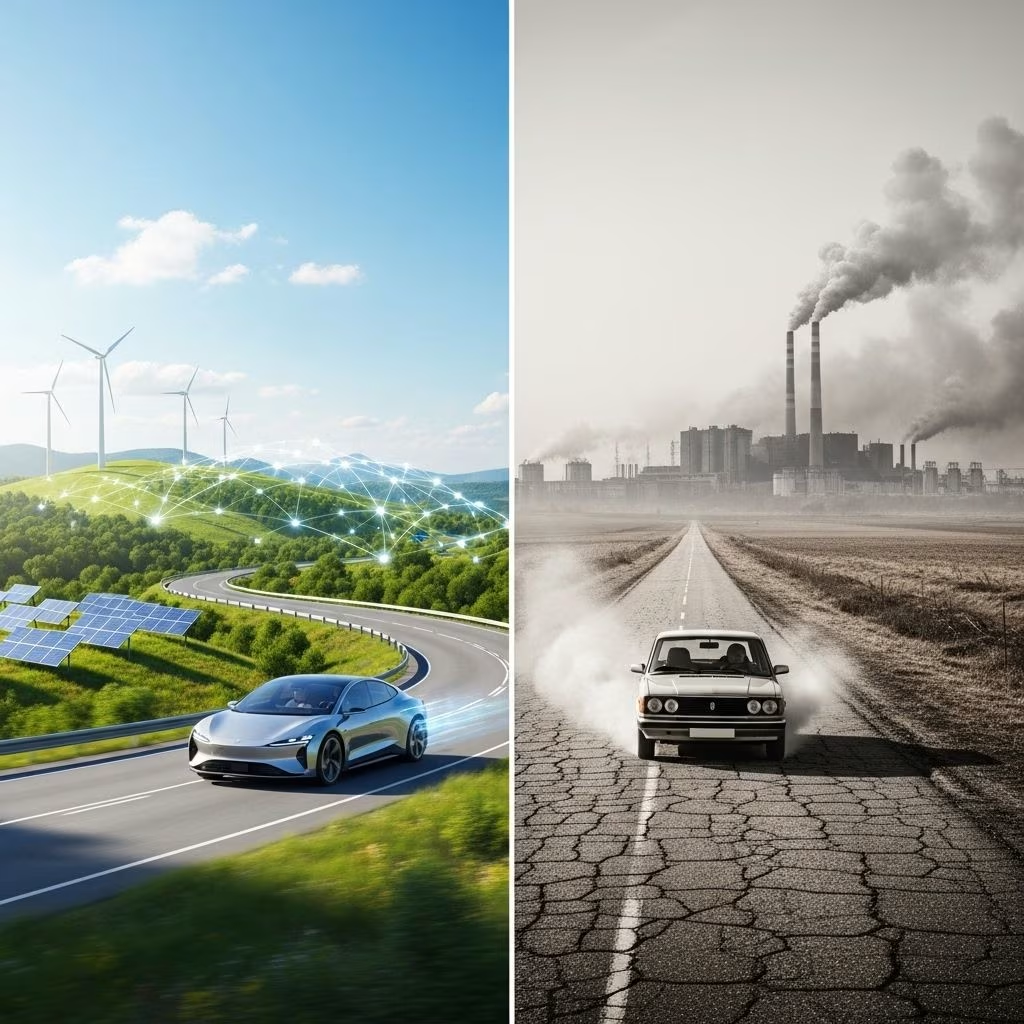
Why Electric Cars Are Significantly Greener Than Gas Vehicles
Electric vehicles (EVs) have sparked fervent debate about their true environmental impact. Critics question whether EVs are genuinely greener than gasoline cars, highlighting battery production, electricity sources, and other concerns. However, a comprehensive look at the evidence makes clear: Electric cars today—and increasingly in the future—offer undeniable environmental advantages over their fossil fuel counterparts.
Understanding Life Cycle Emissions: The Full Picture
A fair climate comparison between electric cars and gas vehicles must include the whole life cycle—from mining raw materials through manufacturing, operation, and end-of-life recycling. Focusing only on tailpipe emissions, or just manufacturing impacts, gives an incomplete and misleading picture.
- Tailpipe Emissions: Electric cars have zero tailpipe emissions. Gas vehicles release greenhouse gases, particulate matter, and toxic pollutants with every mile driven.
- Upstream Emissions: Both EVs and gas cars produce emissions in the extraction and refining of materials and fuels. The critical question is which comes out ahead over their lifespans.
- End-of-Life: Both vehicle types have environmental impacts, but battery recycling and evolving manufacturing processes are continually reducing EVs’ footprint.
Comparing Greenhouse Gas Emissions
| Vehicle Type | Life Cycle CO2 Emissions |
|---|---|
| Gasoline Vehicle | High (extraction, refining, combustion) |
| Electric Car (US grid average) | Lower (manufacturing plus cleaner in use, benefit increases as grid greens) |
| Electric Car (renewable-powered grid) | Lowest (manufacturing only, virtually zero in use) |
Extensive studies from institutions like the Union of Concerned Scientists and the International Council on Clean Transportation confirm: even when including battery production, EVs generate far fewer greenhouse gases over their lifetime compared to gasoline vehicles. The emissions gap grows as electricity grids add more renewable power.
Electricity Production and Emissions: Where Do EVs Get Their Power?
Another common myth holds that the environmental impact of EVs merely shifts from tailpipe to smokestack, especially if they’re powered by coal-fired electricity. In reality, studies show that EVs pollute less—even on coal-heavy grids. As the electricity grid cleans up, so do electric vehicles.
- US Case: In the United States, where the grid is a mix of coal, natural gas, and renewables, driving an EV produces the same emissions as a gasoline car getting over 90 miles per gallon.
- Regional Variation: In areas with cleaner grids, such as California or parts of Europe, EVs are often ten times cleaner per mile driven than similar gas cars.
- Grid is Getting Greener: Over the lifetime of an EV purchased today, significant ongoing additions of solar and wind mean the car’s electric source will only become cleaner. This compounding effect widens EVs’ environmental advantage over time.
How Clean Is Your EV? State-by-State Comparison
Emissions vary by region. The majority of US states already make electric vehicles far cleaner than gasoline cars, and every new wind turbine or solar farm improves the equation:
- Coal-Heavy States: Even in states with abundant coal, EVs perform roughly as clean or cleaner than the best hybrids.
- Renewables-Rich States: In many regions, powering an EV is cleaner than driving a gas car that gets 150+ mpg.
The Battery Question: Production Impacts and Myths
Concerns about battery manufacturing for electric vehicles often focus on energy use, mining for materials like lithium and cobalt, and recycling. While these are important issues, their environmental impact is frequently exaggerated:
- More Energy Up Front: EVs have higher emissions during manufacturing, mainly due to battery production. However, this extra impact is quickly offset after only about one to two years of average driving.
- Material Sourcing Improvements: The auto industry is rapidly adopting cleaner sources and ramping up recycling for battery minerals. Companies are investing in ethical supply chains and alternatives with less environmental impact.
- End-of-Life Recycling: Battery recycling technology is advancing fast, with new processes extracting most valuable metals for reuse, shrinking the resource footprint even further.
Across the full life cycle, the emissions from battery production are relatively small compared to the total avoided pollution and climate impact that result from driving electric instead of burning gasoline.
Environmental Advantages Beyond Carbon
- Reduced Urban Air Pollution: EVs emit no tailpipe pollutants like nitrogen oxides (NOx), particulate matter, or volatile organic compounds (VOCs), leading to better urban air quality and fewer health risks.
- Lower Noise Pollution: Electric cars are much quieter at low speeds, reducing city traffic noise and improving quality of life.
- No Upstream Oil Pollution: Gasoline production requires exploring, drilling, transporting, and refining oil—major sources of both greenhouse gases and local environmental degradation. Electric cars’ primary “fuel” can be produced cleanly and locally with renewables.
Myths and Frequently Cited Criticisms Addressed
- “EVs Aren’t Really Cleaner Once You Count Manufacturing”
- False. Leading research shows that total lifetime emissions for electric cars—even now—are vastly lower than for gas vehicles, even when battery and supply chain impacts are included.
- “Batteries Are a Big Environmental Problem”
- Batteries do have an environmental cost, but industry trends are rapidly improving sourcing, energy use, and recycling. Over a vehicle’s lifetime, a battery’s footprint is greatly outweighed by emissions avoided from cleaner driving.
- “Electricity Is So Dirty, What’s the Point?”
- Electricity for EVs is already much cleaner than burning gasoline. The grid continues to get greener every year, and so do electric cars as a result.
How Electric Cars Stack Up: Facts and Figures
Consider these key data points supported by the leading independent analyses:
- Electric vehicles, on average, produce 50%-70% fewer greenhouse gas emissions than comparable gasoline cars over their lifetimes, with even higher reductions possible in renewables-dominated regions.
- The emissions savings start soon after purchase—and will improve even more as the electric grid adds clean power every year the car is driven.
- Lifetime savings aren’t just about carbon. Air pollution from gasoline cars causes health issues and premature deaths, burdens that EVs largely avoid.
- Today’s most popular EVs offset their manufacturing emissions in the first 10,000 – 20,000 miles—well within 1 to 2 years for most drivers.
- Batteries can be repurposed for grid energy storage and eventually recycled, shrinking their lifecycle impact even further.
Barriers to Greener Cars—and the Way Forward
Despite clear environmental benefits, there remain challenges to further slashing the footprint of electric vehicles:
- Decarbonizing battery supply chains and ensuring ethical sourcing for minerals are urgent global priorities.
- Expanding renewable energy production ensures every EV gets cleaner in step with the power grid.
- Investing in robust recycling for batteries will close the loop, reducing both waste and mining.
- Policy support, research, and consumer demand are accelerating solutions for each of these challenges.
EVs and the Future: The Green Revolution on Wheels
Electric cars are not a panacea, but they represent a transformative leap forward in our fight against both climate change and urban pollution. Every year, as power grids add wind and solar, electric vehicles get cleaner—no comparable improvement can be achieved with fossil-fueled transportation. As battery technology, grid infrastructure, and recycling all advance rapidly, the green gap between EVs and gas cars will only continue to widen.
Frequently Asked Questions (FAQs)
Q: How long until an electric car becomes greener than a gas car?
A: Most modern electric vehicles offset their higher manufacturing emissions within about 1–2 years of normal driving—sometimes even less depending on the regional electricity grid.
Q: What if my electricity comes mostly from coal?
A: Even on coal-heavy grids, EVs are at least as clean as highly efficient hybrids and become cleaner every year as more renewables are added to the grid.
Q: Are battery materials for EVs sourced ethically and sustainably?
A: The auto industry is rapidly improving supply chains to minimize environmental harm and human rights issues, and new battery chemistries are being developed that use less problematic materials.
Q: What happens to EV batteries at the end of their life?
A: Many batteries are repurposed for stationary energy storage; recycling processes are advancing, enabling recovery and reuse of valuable metals.
Q: Are electric cars the only solution for sustainable transport?
A: While EVs are dramatically greener than gasoline cars, the greenest options will always include walking, biking, public transport, and reducing car use overall. But if you need a car, electric is the clear choice for a cleaner future.


