Where Are Earth’s Largest Nature Reserves?
The Earth is home to vast stretches of protected wilderness aimed at preserving biodiversity, unique landscapes, and the ecological processes that sustain life. Nature reserves are essential not just for wildlife, but also for people: they serve as crucial carbon sinks, protect watersheds, and provide recreation, education, and scientific opportunities. The largest nature reserves on the planet span continents and oceans, reflecting the scale of both the conservation challenge and commitment.
What Is a Nature Reserve?
Nature reserves are designated areas intended to protect natural habitats, wildlife, and ecological processes from human disturbance. They may take the form of national parks, wildlife refuges, biosphere reserves, or marine sanctuaries. The main purposes include:
- Biodiversity conservation: Safeguarding endangered species and habitats.
- Ecosystem services: Maintaining climate regulation, water filtration, and soil preservation.
- Scientific research: Facilitating long-term environmental studies and ecological monitoring.
- Recreation and education: Providing places for people to connect with nature and learn about the environment.
Earth’s Largest Nature Reserves: Terrestrial and Marine
The scale of the world’s largest reserves dwarfs cities, countries, and even states. Many of these protected areas are located in regions with low population density, vast wilderness, or significant environmental value. Below are some of the most noteworthy terrestrial and marine nature reserves.
Terrestrial Giants: Massive Land Reserves
- Northeast Greenland National Park (Greenland)
The world’s largest national park, spanning over 972,000 km² (375,000 square miles). This park protects Arctic tundra, glaciers, mountains, and polar wildlife, including musk oxen, walruses, and polar bears. Its vast, remote location means only a handful of researchers and military personnel visit every year. - Namib Naukluft Park (Namibia)
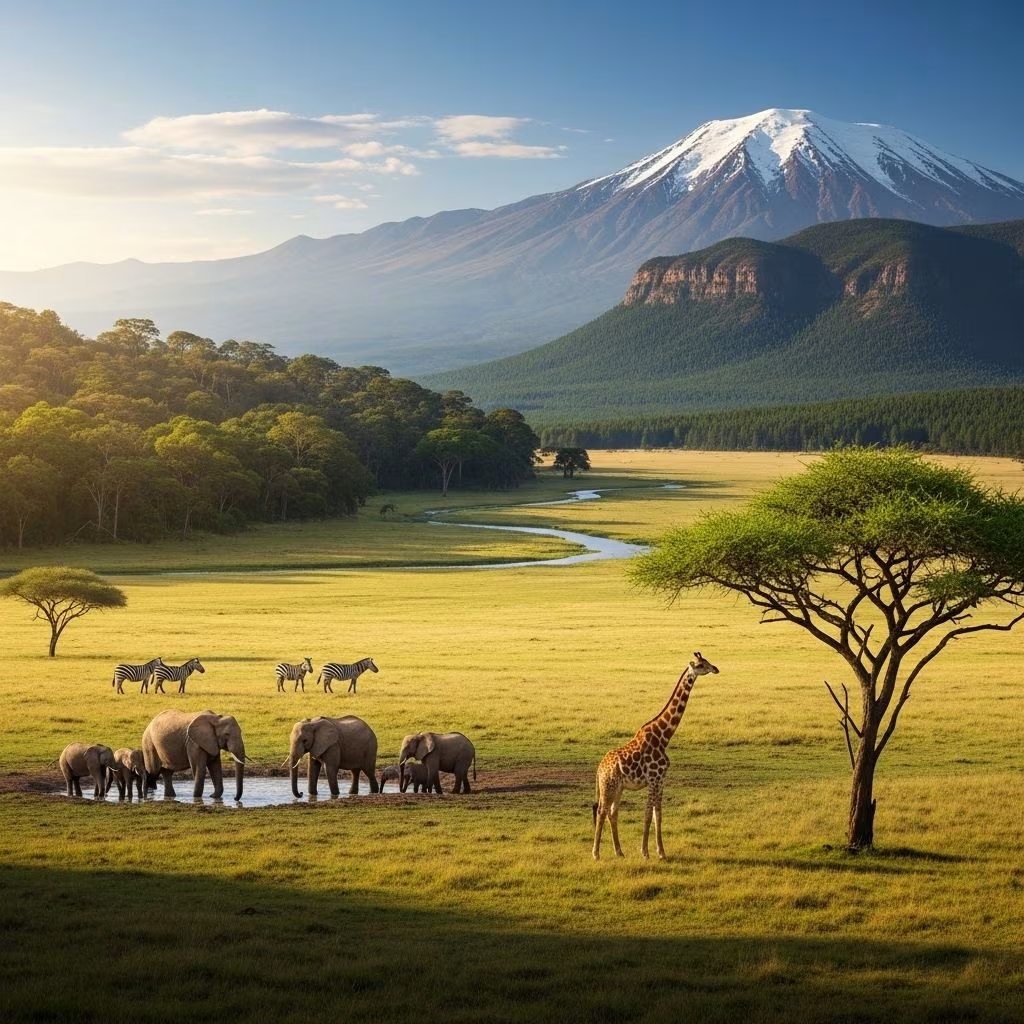
Covering 49,800 km² (19,216 square miles), it is Africa’s largest protected area and includes the famous Namib Desert and Naukluft Mountain Range. The park shelters unique desert-adapted wildlife, ancient geological formations, and spectacular sand dunes such as Sossusvlei. - Arctic National Wildlife Refuge (United States – Alaska)
With an area of 78,000 km² (30,135 square miles), this refuge protects vast tundra, coastal plains, and mountain ecosystems. It is home to polar bears, migrating caribou, and millions of birds. - Great Limpopo Transfrontier Park (Mozambique, South Africa, Zimbabwe)
This cross-border conservation area covers over 35,000 km² (13,514 square miles) and includes national parks such as Kruger (South Africa) and Limpopo (Mozambique). It supports elephants, lions, rhinos, and other large mammals while connecting historical migration routes. - Central Suriname Nature Reserve (Suriname)
At 16,000 km² (6,178 square miles), this reserve contains untouched Amazonian rainforest and is recognized as a UNESCO World Heritage Site, home to jaguars, giant river otters, and hundreds of bird species.
Marine Marvels: Oceanic Sanctuaries
- Ross Sea Marine Protected Area (Antarctica)
Covers 1,550,000 km² (almost 600,000 square miles) and is the world’s largest marine protected area. Established by international agreement, it safeguards rich underwater ecosystems and Antarctic species from fishing and resource exploitation. - Papahānaumokuākea Marine National Monument (U.S. – Hawaii)
Spanning 1,510,000 km² (583,000 square miles), this vast ocean reserve protects diverse coral reefs, sharks, sea turtles, and nesting seabirds across the remote Northwestern Hawaiian Islands. - South Georgia and the South Sandwich Islands Marine Protected Area (United Kingdom)
Encompassing 1,070,000 km² (413,000 square miles), this reserve preserves cold-water ecosystems, penguin colonies, and rich fisheries. - Australian Antarctic Marine Reserve
With nearly 960,000 km² (370,000 square miles), this network of protected waters conserves marine life adapted to extreme cold and nutrient-rich waters.
Table: Top 5 Largest Nature Reserves By Type
| Nature Reserve | Country/Region | Type | Area (km²) | Main Features |
|---|---|---|---|---|
| Northeast Greenland National Park | Greenland | Terrestrial | 972,000 | Arctic tundra, glaciers, polar wildlife |
| Ross Sea MPA | Antarctica | Marine | 1,550,000 | Penguins, whales, protected ocean ecosystem |
| Papahānaumokuākea M.N.M. | United States | Marine | 1,510,000 | Coral reefs, sea turtles, seabirds |
| Namib Naukluft Park | Namibia | Terrestrial | 49,800 | Desert, sand dunes, desert-adapted wildlife |
| Great Limpopo TFP | Southern Africa | Terrestrial/Crossborder | 35,000+ | Elephants, lions, historic migrations |
Global Distribution: Where Are the Largest Reserves?
Large nature reserves are distributed across every continent and break down into land-based and marine areas. Notable concentrations and trends:
- Polar regions: Host immense terrestrial and marine reserves, including the Northeast Greenland National Park and Ross Sea MPA.
- Africa: Features vast parks such as Namib Naukluft and transfrontier parks bridging multiple countries.
- Asia and South America: Home to large rainforest reserves and areas of high biodiversity.
- Oceania and Pacific islands: Encompass massive marine monuments that protect coral reefs and migratory species.
The size and location often reflect a combination of low population density, rich biodiversity, and proactive conservation policies.
Ecological Importance of Large Nature Reserves
The world’s largest reserves support irreplaceable habitats and wildlife populations.
- Species Protection: Many endangered and endemic species, from polar bears in Greenland to African elephants in Limpopo, depend on these vast, undisturbed areas.
- Biodiversity Hotspots: Large reserves often contain diverse ecosystems, including forests, wetlands, savannahs, deserts, and oceanic habitats.
- Climate Regulation: Protected forests and oceans sequester massive amounts of carbon, buffering global climate change.
- Watershed Protection: Reserve lands safeguard rivers, lakes, and aquifers by maintaining natural vegetation cover.
Conservation Value: What Makes Large Reserves Necessary?
- Connectivity: Larger reserves provide migratory corridors and ecological linkages, ensuring wildlife can adapt to climate change.
- Resilience: Vast reserves help absorb shocks from fires, storms, diseases, and other disturbances.
- Reference for Science: Reserve areas retain near-natural conditions, offering baselines for ecological research and monitoring.
Challenges Facing Earth’s Largest Protected Areas
Despite legal status and immense scale, large nature reserves face multiple threats:
- Climate Change: Altered temperatures, precipitation patterns, and glacial melt are already impacting polar and alpine reserves.
- Poaching and Illegal Exploitation: Poaching, illegal fishing, and timber harvesting threaten wildlife in places like Limpopo and Suriname.
- Resource Extraction: Oil, gas, and mineral exploration pressures persist in Alaska, Africa, and parts of the Antarctic.
- Tourism Impacts: While tourism offers funding and awareness, unchecked visitor numbers can degrade sensitive habitats.
- Global Warming and Sea Level Rise: Marine reserves—especially small islands and atolls—are vulnerable to rising seas and coral bleaching.
Visitation, Access, and Human Connections
Protected areas receive billions of visits each year, underscoring their value to society and the environment. Access varies from highly restricted research zones in Greenland and Antarctica to world-famous destinations like Hawaii’s Papahānaumokuākea.
- Low visitation: Remote polar reserves such as Northeast Greenland and Ross Sea MPA see few visitors, primarily scientists and protected staff.
- Moderate visitation: African parks and rainforests are less frequented due to remoteness and logistical constraints, but serve ecotourists, local communities, and researchers.
- High visitation: Some reserves near major populations see millions of visitors, reflecting their cultural and recreational importance.
International cooperation and careful management are critical for balancing conservation with public access.
Frequently Asked Questions (FAQs)
Q: Why are the world’s largest nature reserves so important?
A: They protect immense ecosystems, safeguard endangered species, help regulate the global climate, and provide resources for scientific study and recreation.
Q: How are these gigantic reserves established?
A: Large reserves are often founded by national governments, international coalitions, and conservation organizations through laws, treaties, and transboundary agreements. Marine protected areas may also be created by multinational bodies.
Q: Can people visit these massive reserves?
A: Many reserves are open for eco-tourism, scientific research, and guided visits. Remote areas like Northeast Greenland or Antarctic marine reserves have strict access limitations for preservation and safety. Popular sites like Hawaii’s marine monuments and African parks offer tours and educational programs.
Q: What are the main threats to large protected areas?
A: Climate change, illegal poaching, resource extraction, invasive species, and unchecked tourism all pose significant risks to even the largest reserves.
Q: How can protected areas benefit local and indigenous communities?
A: Well-managed reserves can support sustainable livelihoods, promote traditional knowledge, and generate income through tourism and conservation partnerships, provided that local communities are granted access, participation, and fair representation.
Conclusion: The Future of Earth’s Nature Reserves
The world’s largest nature reserves represent humanity’s most ambitious efforts to protect our biosphere. As climate change accelerates and pressures mount, their role in conservation, science, and global stewardship is only growing in importance. Long-term success depends on sustained international cooperation, adaptive management, and ongoing support from both governments and citizens. Preserving these wild places ensures that nature’s wonders endure for future generations.
References
- https://www.wilderness.org/articles/article/11-americas-greatest-national-forests
- https://www.nps.gov/articles/000/saving-the-heart-of-the-american-wests-largest-landscape.htm
- https://www.unep-wcmc.org/news/worlds-protected-natural-areas-receive-eight-billion-visits-a-year
- https://www.americanforests.org/article/10-most-instagrammable-locations-for-a-treehugger/
- https://daily.jstor.org/the-tree-huggers-who-saved-indian-forests/