Lessons from Mumbai’s Urban Animals: Insights for Modern City Living
City life is often characterized by its relentless pace, noise, and human ingenuity. But tucked within the concrete jungle, a quieter set of teachers thrives—urban animals whose everyday behavior embodies values modern humans are striving to reclaim. Inspired by walks through Mumbai’s historical neighborhoods, this article explores how crows, cats, chameleons, and snails offer wisdom for self-care, adaptability, community, and patience.
Contents
- Introduction: Mumbai’s Urban Jungle
- Crows: Masters of Community & Adaptability
- Cats: Icons of Self-Care and Boundaries
- Chameleons: Embodying Adaptation
- Snails: Lessons in Patience and Slow Living
- Context: Urban Scarcity, Food and Well-being
- Practical Takeaways for City Dwellers
- Frequently Asked Questions
Introduction: Mumbai’s Urban Jungle
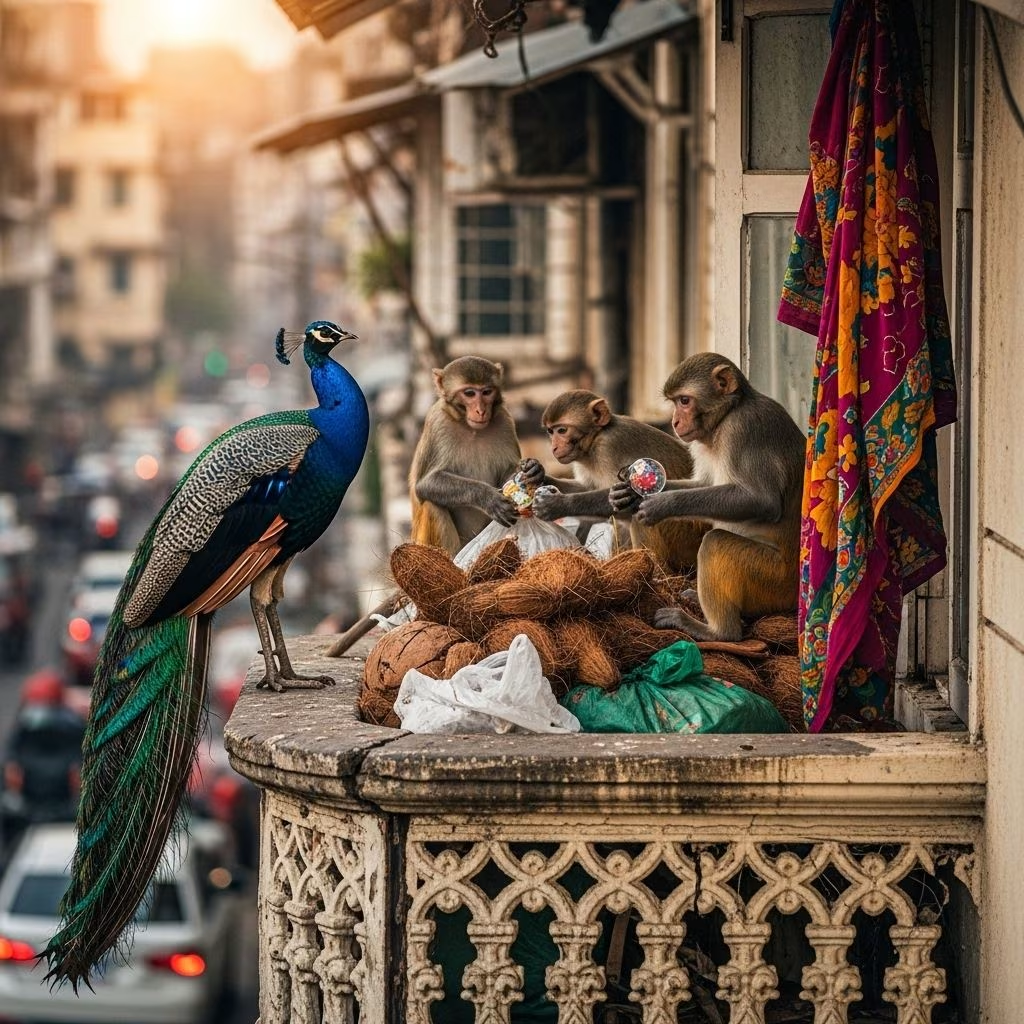
The world reopened after a challenging period of isolation, drawing many city dwellers outdoors in search of exercise, solace, and connection. In Mumbai, one of the world’s most densely populated cities, even a modest, leafy lane can serve as an oasis—a place for morning walks, reflection, and unexpected encounters with the city’s non-human inhabitants.
From crows to cats and even the elusive chameleon, these creatures thrive amid art deco buildings and colonial-era homes. Observing their lives offers essential lessons that transcend species boundaries and illuminate better ways to live in urban environments.
Crows: Masters of Community & Adaptability
Crows are ubiquitous in Mumbai’s cityscape, and their behaviors during the monsoon highlight both their intelligence and communal tendencies. These birds are highly adaptable, often seen foraging in groups—a phenomenon called a “murder” of crows. Despite food scarcity during the lockdown, crows demonstrated remarkable generosity by sharing resources and coordinating their foraging efforts.
- Intelligence: Crows problem-solve and adapt, learning to exploit new food sources and environments.
- Community Foraging: Instead of being strictly solitary, many crows rely on group strategies to increase the chances of food discovery.
- Generosity in Scarcity: Even as food waste became rare during lockdowns, crows found creative ways to share fruit rinds, modeling generosity and cooperation.
- Resilience: Their ability to thrive in rapidly changing urban landscapes speaks to their evolutionary success.
| Crow Qualities | Human Parallels |
|---|---|
| Resourcefulness | Innovating during scarcity (e.g., urban foraging, creative reuse of materials) |
| Community | Building support networks among family, friends, and neighbors |
| Adapting routines | Adjusting work, exercise, and social habits during changing circumstances |
Cats: Icons of Self-Care and Boundaries
Felines spotted on Mumbai’s quiet streets exemplify the art of self-care. Whether sunning languorously atop a Vespa or engaged in meticulous grooming, cats serve as reminders of the importance of caring for oneself—even amid stress and chaos.
During the pandemic, practicing consistent self-care routines became vital for mental health. Daily walks, boundary-setting, and small joys like massages mirrored the cats’ instinctual search for comfort and wellbeing.
- Consistency: True self-care is not a sporadic indulgence, but a daily practice.
- Setting Boundaries: Cats do not hesitate to claim their space—humans can emulate this to protect mental health.
- Rest and Healing: Allowing time for rest and recuperation is essential, especially during periods of uncertainty.
- Self-love: Small, nurturing rituals support resilience and positivity.
Just as cats groom to maintain hygiene and comfort, humans may benefit from embedding self-care as a regular ritual. Consistency matters more than extravagance—the act of “showing up for oneself” each day is powerful.
Chameleons: Embodying Adaptation
Chameleons, though less visible, are remarkable for their adaptive skills, notably camouflage. Observing a chameleon swiftly blend into its environment when threatened elevates the lesson of *adaptability*—crucial for urban life in times of rapid change.
- Flexibility: The ability to adjust one’s behaviors or expectations when circumstances change.
- Resilience Under Pressure: Chameleons adapt their color to survive threats—humans, too, can develop strategies to remain resilient in the face of hidden stresses.
- Observation: Staying alert to changes in the environment enables timely adaptation and creative problem-solving.
In the context of the pandemic and shifting city dynamics, adaptability became the survival skill—whether in work, relationships, or self-care routines. Many city dwellers, like the chameleon, learned to navigate uncertainty by blending old habits with new approaches.
Snails: Lessons in Patience and Slow Living
One Mumbai morning, a solitary snail crossing a wall during the monsoon offered a quiet, beautiful lesson: patience. Snails epitomize the wisdom in Lao Tzu’s words: “Nature does not hurry, yet everything is accomplished.” Slow, deliberate progress may lack instant gratification but often yields the best results—an important counterpoint to the city’s relentless tempo.
- Slow Progress: Achievements may take time, but steady, persistent effort is effective.
- Mindfulness: Being present and attentive to the journey, not just the destination.
- Trust in Process: Trusting that small acts, repeated over time, transform into meaningful change.
Whether cultivating a new skill, nurturing a relationship, or recovering wellness, “slow living” offers powerful psychological and practical benefits, challenging the culture of urgency so prevalent in metropolitan environments.
Context: Urban Scarcity, Food and Well-being
The pandemic drew attention to issues of scarcity, waste, and the value of sharing. According to UN reports, global hunger rose sharply in 2021, with over 828 million people affected. Meanwhile, the UNEP Food Waste Index highlights that households, retailers, and eateries discard a staggering 931 million tonnes of food annually.
Urban wildlife, ever resourceful, survive on what is discarded, reminding us of the importance of responsible consumption and redistribution. In times of hardship, sharing and reducing waste become essential, not just for ecological health but for social sustainability.
Practical Takeaways for City Dwellers
- Observe Urban Wildlife: Take time to watch animals in your locality. Each species demonstrates different survival strategies that can be mimicked for personal growth.
- Practice Daily Self-care: Build resilience by consistently engaging in activities that support mental and physical well-being.
- Cultivate Adaptability: Embrace change; be ready to revise routines and expectations as circumstances demand.
- Share and Contribute: Look for opportunities to support your community; generosity helps everyone through scarcity.
- Welcome Slow Progress: Trust that incremental improvements pay off, even if gains seem invisible at first.
Frequently Asked Questions
Q: What types of urban animals offer the best lessons for city dwellers?
Common city creatures such as crows, cats, chameleons, and snails model crucial traits—adaptability, self-care, patience, and social cooperation—that benefit humans living in urban environments.
Q: How can I apply these animal-inspired lessons to my daily urban life?
Emulating the adaptability of chameleons, practicing the self-care habits of cats, nurturing community like crows, and embracing patience as snails do can improve mental well-being and resilience, especially in challenging times.
Q: Why is community important for urban resilience?
Community, as demonstrated by crows, increases the chances of thriving during times of scarcity by pooling resources, offering support, and fostering shared solutions.
Q: How does mindful observation of urban animals enhance city living?
Observing urban wildlife cultivates mindfulness, encourages empathy, and provides practical models for adapting to the challenges of city life.
Q: What role does self-care have in an urban context?
Self-care is vital for navigating the stresses and demands of city living, supporting physical health, emotional balance, and social connectedness.
Final Thoughts
Mumbai’s animal city dwellers—crows, cats, chameleons, and snails—offer a profound rebuke to the notion that wisdom dwells only among humans. Their instinctive strategies for survival and well-being translate seamlessly into urban practices, showing that resilience, self-care, patience, and community aren’t abstract ideals but daily necessities for thriving in modern cities.