Goodbye Palladio: It’s Time for Architects to Choose Ethics Over Aesthetics
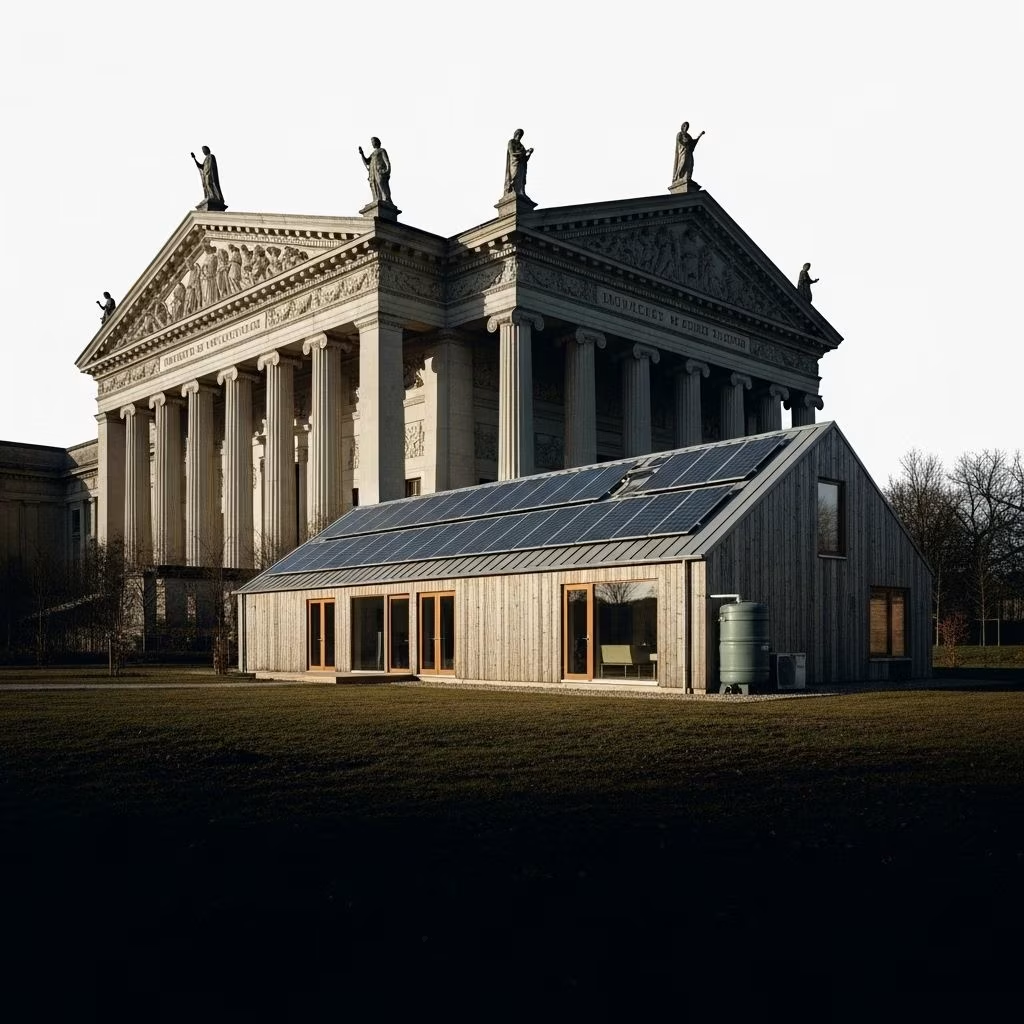
The name Andrea Palladio evokes visions of harmonious villas and stately public buildings — an architectural tradition rooted in classical ancestry and proportion. Yet, under the intense pressures of the climate crisis, social inequities, and rapid urbanization, the profession must ask whether it can continue venerating beauty as its highest goal. This article examines architecture’s historic prioritization of aesthetics, the pervasive influence of Palladian principles, and the urgent ethical imperatives now confronting the discipline.
Palladio and the Legacy of Beauty
Andrea Palladio (1508–1580) stands as one of the most influential architects in Western history. Renowned for his villas and public works in northern Italy, Palladio established a design system based on symmetry, harmony, and the proportional orders of classical antiquity. His treatises formalized an aesthetic code that would shape buildings for centuries in Europe and the Americas.
Palladian architecture is often defined by:
- Symmetry and mathematical proportion in all dimensions
- Use of colonnaded temple fronts even for secular buildings
- Reference to Roman architectural ideals — especially utility, solidity, and delight ([firmitas, utilitas, venustas])
- Belief that architecture should reflect both virtue and beauty, connecting aesthetics to moral order
Palladio’s goal was to elevate the built environment to express harmony and the virtues of his era’s elite. Even his most modest projects demonstrated an “unerring intuitive sense of design” and a geometric order that has left lasting influence on styles from English country houses to American civic buildings.
From Vitruvius to Vernacular: Changes in Architectural Priorities
The roots of Western architectural theory trace back to the Roman architect Vitruvius, who described architecture’s purpose as the successful combination of three principles:
- Commodity (spatial and functional utility)
- Firmness (solidity and durability of construction)
- Delight (the sensory pleasures and associative meanings of form)
For the centuries following, architecture was largely defined by these ideals, with a pronounced emphasis on visual “delight” or beauty.
During the Renaissance, architects like Alberti and Palladio elevated the role of aesthetics, arguing that pleasing design could inspire virtue, civic pride, and the “civilized virtues” of moderation and politeness. This marriage of moral philosophy and beauty became embedded within architectural education and practice, setting a cultural expectation that the architect’s role was to produce visual harmony as a vehicle for higher ethical ideals.
The Rise of Architectural Aesthetics
By the early modern period, the aesthetic focus of architecture had taken precedence over other concerns. The spread of Palladianism throughout Europe — particularly in Britain, where the style connoted taste, virtue, and social distinction — cemented the architect as an “artist” rather than simply a builder. Classical forms, symmetry, and proportionality became the dominant language of prestige architecture.
Yet, the rigidity of these aesthetic codes often outweighed practical and ethical considerations. For example:
- Designing buildings with uniform window sizes for the sake of façade symmetry, regardless of the functional needs or energy footprint of the spaces behind them
- Selection of site and form favoring picturesque effects or views, even at the expense of community needs or environmental context
| Architectural Priority | Palladian Tradition | Modern/Ethical Focus |
|---|---|---|
| Function | Subordinate to visual composition | Tailored for user and environmental needs |
| Material Selection | Traditional, often imported, for authentic classical effect | Sustainable, local, low-impact materials |
| Site Context | Landscaped for effect and symbolic value | Integrated with nature, low ecological impact |
With the industrial revolution and the rise of new materials, architecture split between those who clung to aesthetic traditions and innovators seeking meaning in function, new technologies, and vernacular forms.
The Climate Crisis Challenge
Today, architecture faces unprecedented challenges:
- Buildings account for nearly 40% of global carbon emissions. Construction and operation drain massive amounts of resources and energy.
- Land use for housing and cities drives biodiversity loss, fueling the global extinction crisis.
- Inequitable access to healthy, livable, and resilient dwellings underpins social injustice worldwide.
- Urban sprawl, heat islands, and adaptation for climate extremes are rapidly transforming our built environment needs.
Against this backdrop, traditional priorities of form, style, and “delight” now seem increasingly inadequate. Can architects justify maintaining standards of visual harmony while contributing to environmental degradation or social displacement? The answer, critics argue, must be a resounding “no.”
Architecture and Ethical Decision-Making
Ethics in architecture extends beyond code compliance or green certification. It encompasses responsibility for the well-being of people, communities, future generations, and the ecosystem itself.
- Choosing energy-efficient materials and structures, even if they challenge established aesthetic expectations
- Designing for affordability and accessibility, prioritizing inclusive design above visual distinction
- Considering the embodied carbon and lifecycle of construction materials, seeking to minimize negative impacts
- Participating in dialogues with marginalized groups to design for their needs, rather than imposing a top-down vision
- Building resilience to disasters and climate impacts into the very fabric of projects
In short, the ethical architect must weigh every decision by its broader effects, not only its role in upholding a stylistic legacy. Ethics can no longer be decorative — it must be fundamental.
Rethinking the Role of Beauty
Does this mean beauty is obsolete in architecture? Not at all. But architects must expand their definition beyond classical forms and visual harmony:
- Beauty can mean a building that feels safe, welcoming, and equitable for all users.
- Beauty may emerge from adaptive reuse, materials with low environmental cost, or vernacular traditions that respect place.
- Modern aesthetics can serve as a vehicle for new values: transparency may signal honesty, greenery may represent health, and adaptability suggests resilience.
Aesthetic goals should support — not undermine — environmental sustainability and social equity.
What Should Guide Architects Now?
The imperative for the profession is clear. If architecture is to play a part in solving the climate crisis, redressing inequality, and supporting the health of the planet, it must:
- Prioritize life safety, ecological health, and social justice over abstract aesthetic ideals.
- Design with humility, letting local context and future needs shape every decision.
- Emphasize transparency, stewardship, and regenerative strategies in every project phase.
- Learn from both tradition and innovation, blending lessons of the past with urgent contemporary realities.
The time has come to say “goodbye” to an era where beauty alone was architecture’s highest purpose. Ethics — and the courage to act upon them — must become the new foundation of the built environment.
Frequently Asked Questions (FAQs)
Q: Does rejecting Palladian aesthetics mean abandoning classical design entirely?
A: Not at all. Classical principles can coexist with ethical design, but should never override the imperative to build sustainably and equitably. Palladian forms may inspire, but they must be adapted to modern realities.
Q: What is meant by “ethical architecture”?
A: Ethical architecture centers the well-being of humans and the planet. It is an approach that weighs all decisions — from site selection to material use to inclusivity — against potential harm and benefit. Ethical architects commit to sustainability, fairness, resilience, and community engagement.
Q: Can beautiful buildings also be sustainable and ethical?
A: Absolutely. Many of today’s most celebrated projects marry visual delight with passive energy design, recycled materials, biodiversity support, and user equity. Beauty and ethics need not be opposites; the best examples achieve both.
Q: How can architecture education foster ethical priorities?
A: Architectural education must integrate environmental stewardship, climate adaptation, universal design, and cultural competence from the ground up — not as electives, but as core principles. Students should learn to critique established canons, recognize bias in tradition, and collaborate across disciplines toward shared solutions.
Key Takeaways
- Palladio’s legacy shaped centuries of architectural beauty but prioritized visual harmony over ethical and ecological responsibility.
- Vitruvius and Renaissance theorists placed “delight” at the core of architecture, but the world now demands a different emphasis.
- Contemporary architects face urgent moral challenges: climate crisis, resource depletion, social inequality.
- Ethical design puts people and the planet at the heart of every decision, even if that means overturning cherished aesthetic codes.
- Beauty can be redefined, emerging from resilience, inclusivity, sustainability, and context.
References
- https://ecobnb.com/blog/2022/06/vicenza-palladio/
- https://misfitsarchitecture.com/2017/07/16/architecture-myths-18-beauty-vs-everything-else/
- https://fiveable.me/key-terms/introduction-humanities/palladio
- http://melbourneblogger.blogspot.com/2012/12/palladios-architecture-inigo-jones-and.html
- https://www.wbdg.org/do/aesthetics
- https://plato.stanford.edu/archives/win2017/entries/architecture/tradition.html