


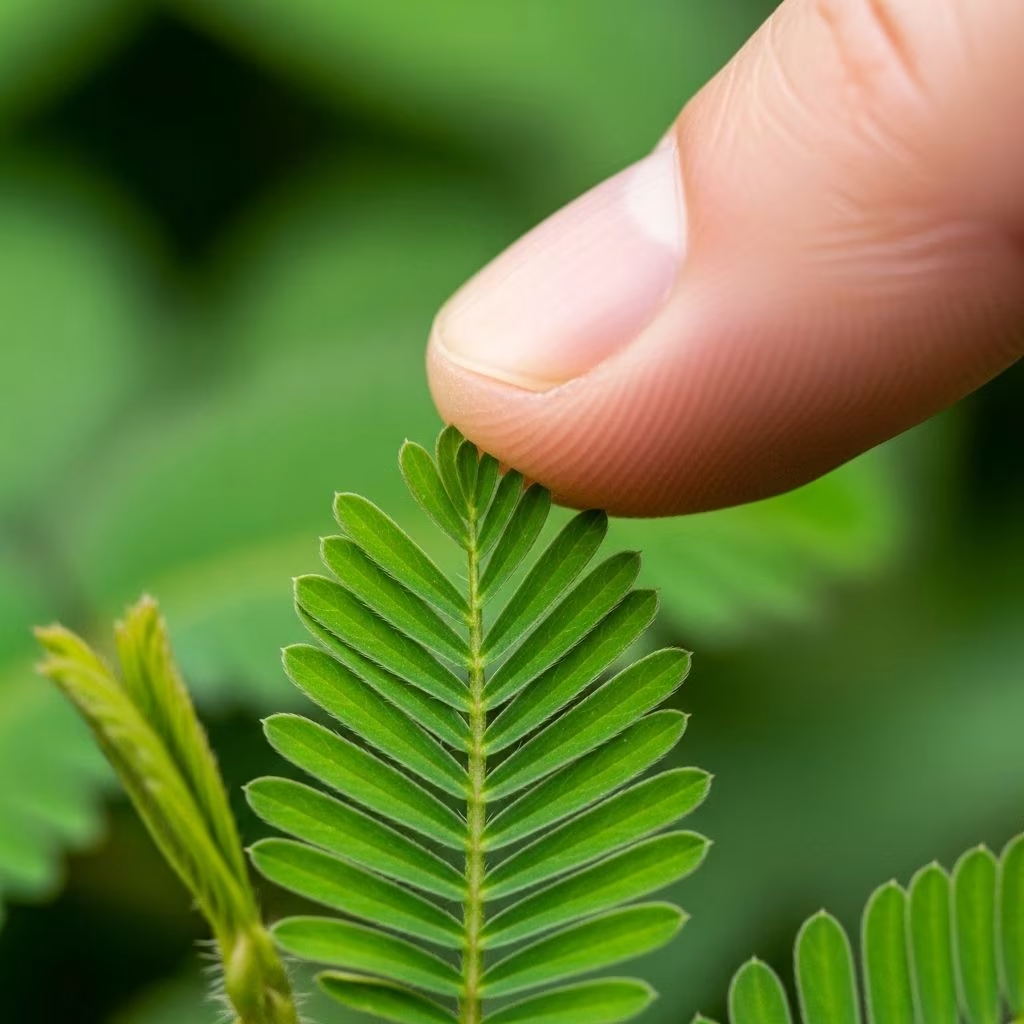
Why Plants Really Don’t Like to Be Touched
For many plant lovers, the instinct to touch, stroke, or even hug their plants can seem harmless or even affectionate. Yet a growing body of scientific evidence suggests that plants perceive and respond detrimentally to even the gentlest touch. This article explores the surprising research that reveals just how sensitive plants are, what happens when they’re touched, and what these findings mean for gardeners, horticulturists, and anyone who cares for greenery indoors or out.
The Hidden Sensitivity of Plants
Plants might lack nerves or a central brain like animals, but they are far from passive. Over recent decades, botanists have uncovered a sophisticated network of responses to environmental stimuli, including light, sound, gravity, chemicals, and touch. Known as thigmomorphogenesis, a plant’s response to touch and mechanical stimulation can profoundly change the way it grows and defends itself.
- Thigmomorphogenesis refers to a plant’s change in form or growth pattern in response to repeated mechanical stimulation, such as wind or touch.
- Even brief contact can trigger molecular and physiological processes inside the plant.
- Plants are equipped with mechanoreceptors that allow them to detect and interpret touch, swaying branches, or vibrations.
What Happens When You Touch a Plant?
When a human hand brushes a leaf or stem, something remarkable happens at the microscopic level. Touch sends a cascade of signals throughout the plant — not just in the area that was contacted. Key events include:
- Activation of signaling pathways, often involving calcium ions and specific plant hormones.
- Production and movement of ethylene, a plant hormone with a crucial role in stress and defensive reactions.
- Stimulation of gene expression, including genes directly involved in growth regulation, cellular repair, and defensive compounds.
Notably, this isn’t an isolated local response — signals can travel to distant tissues, changing the whole plant’s behavior.
The Consequences of Physical Interaction
For many species, repeated gentle touching or brushing (such as by a gardener’s hand or a passing animal) acts as a warning signal, telling the plant to be on alert for ongoing threats. Studies have demonstrated several distinct changes:
- Stunted Growth: Plants habitually exposed to touch may become shorter, with thicker stems, as if bracing for disturbance.
- Reduced Leaf or Flower Size: Sensitive species produce smaller foliage and fewer blooms when handled frequently.
- Delayed Flowering: Touch delays the onset of flowering in some plants, likely as a resource conservation strategy.
Why Plants Dislike Being Touched: The Science Explained
Although plant touch sensitivity might seem overly delicate, it makes sense from an evolutionary point of view. In natural settings, mechanical stimuli often signal immediate danger:
- Wind or rain, which can bend or damage stems and branches.
- Grazing animals, which may nibble leaves, flowers or shoots.
- Insects and pathogens, which can physically disturb plant tissues.
Therefore, when a plant perceives touch, it prepares its defenses — including chemical barriers, structural fortification, and alterations in growth — often at the expense of normal development. This built-in vigilance can be misunderstood by humans, who may think a touch is harmless or even stimulating.
New Insights from Recent Research
Groundbreaking research from the University of Western Australia and other institutions has illuminated just how sensitive plants are. In this comprehensive study, scientists discovered that:
- Even a brief, light contact caused ten percent of a plant’s genome to respond within minutes.
- This response was significantly greater than previously thought, involving hundreds of genes that orchestrate changes in metabolism, defense, and development.
- Plants triggered by touch become less efficient at growing and reproducing, focusing resources on defensive ‘lockdown’ mode rather than healthy expansion.
Lead researcher, Professor Jim Whelan, emphasized that, “unlike animals, plants can’t get up and move away, so touch is a direct warning sign to them.” This sensitivity evolved as an ancient and effective strategy for detecting and surviving environmental threats.
Plants Remember Touch
Perhaps even more astonishing is the ability of some plants to ‘remember’ and react more strongly to repeated touch events. Over time, plants may change their gene expression patterns and permanently alter their growth if continually poked or prodded:
- A plant’s response to repeated touch is heightened, not diminished.
- This repeated stimulation can eventually lead to pronounced developmental stunting and increased allocation of energy to chemical defenses.
So, plants not only react to touch — they learn from it.
Implications for Gardeners and Houseplant Enthusiasts
Many people lavish attention on their houseplants, mistaking tactile interaction for the sort of care animals require. However, the evidence is clear:
- Constant touching, stroking, or moving plants can undermine their health over time.
- Delicate species or young seedlings are especially vulnerable to the negative effects of thigmomorphogenesis.
- Washing leaves, adjusting stems, or cleaning dust can be necessary but should be handled gently and sparingly.
Best Practices for Minimal Plant Disturbance
To foster healthy, thriving plants, follow these principles:
- Limit physical interaction to only what is necessary, such as careful inspection or pruning.
- When pruning or cleaning, use sharp, sterilized tools instead of handling with bare hands.
- Avoid brushing against plants when walking past or rearranging furniture.
- Educate children and visitors about why ‘petting’ a plant isn’t beneficial.
Practical Applications in Agriculture and Horticulture
Understanding the impact of touch isn’t just academic. Commercial growers, greenhouses, and crop researchers are now considering the implications of touch sensitivity as they:
- Design automated plant handling and harvesting systems to minimize unnecessary contact.
- Reevaluate the traditional practices of ‘brushing’ seedlings to toughen them up, since benefits may be accompanied by unintended stress.
- Develop cultivation methods that reduce mechanical stress whenever possible to ensure maximum yield and robust plant health.
Beyond Touch: Senses Plants Use to Thrive
While touch is an important cue, it’s far from the only sense plants possess. Plants are in tune with a remarkable suite of environmental signals, including:
- Light intensity and direction
- Gravity
- Moisture gradients
- Nutrient concentrations
- Chemical communication (with other plants, microbes, and insects)
This high-powered sensory network allows plants to survive in complex environments. But touch, in particular, triggers especially vigilant reactions — a legacy of centuries of evolutionary pressure to respond to potentially damaging disturbances.
Touch Sensitivity: Differences Between Plant Types
Not all plants are equally sensitive to touch:
- Young seedlings are typically most affected, showing stunted growth if repeatedly touched.
- Certain species, such as Mimosa pudica (the ‘sensitive plant’), famously fold their leaves at the slightest contact — an extreme example of rapid touch response.
- Woody plants and mature trees tend to be more robust against brief contact but can still show changes if handled often.
Notable Exceptions and Adaptations
- Some plants have evolved to benefit from touch: peas, beans, and other climbing vines use mechanical cues to locate supports and anchor themselves.
- Insect-trapping plants respond to touch as a means of capturing prey, showing just how varied the use of thigmomorphogenesis can be.
The Ethical and Emotional Implications
The understanding that plants react negatively to touch might upend common human behaviors. The emotional impulse to touch or caress a plant echoes our interactions with animals and people — but for plants, such gestures can mean stress, not affection.
Mindfulness of these findings allows gardeners to cultivate healthier relationships with their plants by minimizing unnecessary stressors and focusing on what plants actually need: proper light, water, nutrients, and protection from excess physical disturbance.
Table: Plant Sensitivity to Touch
| Plant Type | Level of Sensitivity | Common Response |
|---|---|---|
| Seedlings | Very High | Stunted growth, thickened stems |
| Tender houseplants (ferns, African violets, etc.) | High | Smaller leaves/flowers, delayed flowering |
| Mature shrubs/woody plants | Medium | Localized thickening, reduced new growth |
| Mimosa pudica | Extreme | Rapid leaflet closure |
| Climbers (peas, beans) | Moderate | Curling/twining behavior |
Frequently Asked Questions (FAQs)
Q: Will touching my plant once in a while hurt it?
A: Occasional gentle contact is unlikely to have a major impact, but repeated or intense touching can trigger stress responses, particularly in young or sensitive plants.
Q: Which plants are least sensitive to touch?
A: Mature woody plants and some robust succulents are less affected by casual contact than delicate seedlings or sensitive indoor species.
Q: Should I stop cleaning dust from my indoor plants?
A: Cleaning is important, but it’s best to do so gently and infrequently, using a soft cloth or gentle water spray rather than your hands.
Q: Does touching help plants grow stronger, as some gardeners claim?
A: While some controlled mechanical stimulation can toughen seedlings, most modern research shows that frequent touching is more likely to stunt growth and harm overall health than promote resilience.
Q: How can I show care for my plants without touching them?
A: Focus on optimal light, water, nutrition, and avoiding unnecessary stress. Observation, not touch, is the best care strategy for most species.
Conclusion: A New Respect for Plant Boundaries
Plant science has dramatically altered the way we think about our green companions. Understanding their hidden sensitivity to touch helps foster more mindful and effective stewardship — and may inspire us to show affection in ways that better suit their evolutionary survival strategies. For the healthiest, happiest plants, practice a hands-off approach and let them do what they do best: grow, flourish, and bring beauty into our world.


