American Curl Cat Breed Profile
The American Curl is a striking and affectionate cat breed distinguished by its signature backward-curling ears. From its origin as a stray in 1980s California to its recognition by top cat associations, the American Curl has charmed cat lovers worldwide. This modern breed stands out not just for its looks, but also for its playful, adaptable, and gentle nature that fits well in families and among other pets.
Breed Overview
- Breed Name: American Curl
- Origin: United States (California)
- Physical Traits: Medium size, backward-curled ears, plumed tail
- Coat: Short or long; all colors and patterns
- Temperament: Affectionate, playful, friendly
- Life Expectancy: 12–16 years
- Best For: Families, singles, multi-pet households
History of the American Curl
The story of the American Curl begins in June 1981, when a stray black longhaired kitten with oddly curled ears found her way to the home of Joe and Grace Ruga in Lakewood, California. This kitten, later named Shulamith, became the foundation of the breed. Her uniquely bent-back ears caught the Rugas’ attention, and her loving personality won them over, prompting them to adopt her permanently.
Within a few months, Shulamith had her first litter. Of the four kittens, two shared her outward-curled ear shape. The straight-eared father indicated this unusual trait was not only rare, but likely dominant in genetic inheritance. Researchers and cat fanciers, intrigued by this distinct ear style, soon became involved. Breeders recognized the dominant genetic nature of the curl trait (autosomal dominant)—meaning any kitten with one copy of the gene from either parent could exhibit the characteristic curled ears.
Selective breeding began in 1983, focusing on both the unique ear structure and the affectionate temperament of Shulamith. Feline geneticist Roy Robinson’s analysis of dozens of litters confirmed the healthy nature of the mutation—he found no related genetic defects—which helped propel the breed’s acceptance among cat registries.
Breed Recognition and Development
- First accepted for registration by the Cat Fanciers’ Association (CFA) in 1986
- Championship status achieved in 1993
- Recognized globally, including by The International Cat Association (TICA)
- Today, American Curls are still relatively rare but found in the US, Europe, and Asia
All pedigree Curls trace their lineage back to Shulamith. Outcrossing—mating with non-pedigreed domestic cats that closely matched the desired traits—helped maintain genetic diversity, health, and vitality for the breed’s future.
American Curl Physical Characteristics
Distinctive Features
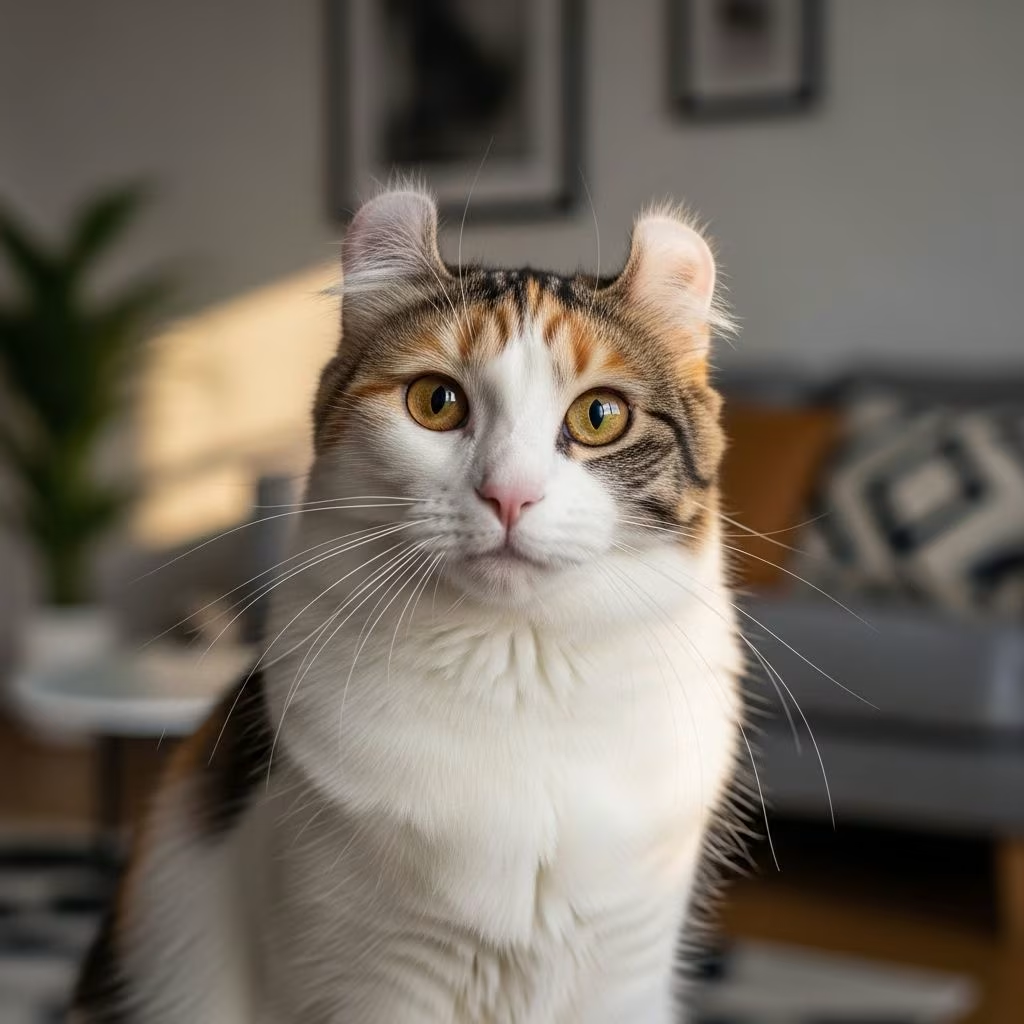
- Curled Ears: The hallmark of this breed, with ears curling back in a graceful arc ranging from 90 to 180 degrees. The curling begins within a week of birth and gradually reaches its final form by 4 months.
- Body: Medium-sized, well-balanced, and moderately muscled, with a plumed tail (especially in longhaired types).
- Eyes: Large, walnut-shaped, and expressive—often adding to their alert and curious expression.
| Feature | Description |
|---|---|
| Ears | Curled backward, flexible, varying in curl degree; never touching their head. |
| Coat | Short or long, soft and silky, lying flat; all colors and patterns accepted. |
| Size | 5–10 pounds (typical adult); males slightly larger than females. |
| Tail | Long, plume-like especially in longhair variety. |
Coat and Color
The American Curl comes in absolutely any color or pattern. Both short- and long-haired Curls are accepted, and both coat types are fine-textured, lying softly against the body. Colorpoints and rare patterns occasionally appear, reflecting the breed’s mixed domestic origins.
Comparison: American Curl vs. Other Breeds
| Characteristic | American Curl | Scottish Fold |
|---|---|---|
| Ear Shape | Curled backward in a smooth arc | Folded forward/down |
| Origin | California, USA (1980s) | Scotland (1960s) |
| Known Health Issues | Minimal ear-specific genetic issues | Prone to cartilage-related problems |
| Breed Status | Modern, rare | Widespread, established |
American Curl Personality and Temperament
The American Curl is celebrated for its sweet, playful, and endearing nature. These cats remain kitten-like in spirit well into adulthood, often earning nicknames such as “the Peter Pan of the cat world.”
- Affectionate: Bond closely with humans and enjoy gentle handling, but they are not overly demanding or clingy.
- Playful: Enjoy interactive play and mental stimulation. Many retain their playful energy well past kittenhood.
- Adaptable: Tolerate changes in routine and new environments better than many cat breeds.
- Family-friendly: Good with children and other pets due to their tolerant, gentle disposition.
- Intelligent: Often quickly learn new tricks and games, and might even open cupboard doors or learn to fetch toys.
American Curls are best known for following their owners from room to room, participating in family activities, and even “talking” with cheerful chirps and trills rather than loud meows. Their social, easygoing personality makes them a beloved choice for households of any size or activity level.
Care and Grooming of the American Curl
Caring for an American Curl is generally straightforward. Their health and happiness rely on regular grooming, good nutrition, and mental stimulation.
Grooming Requirements
- Shorthaired Curls require weekly brushing to control shedding.
- Longhaired individuals benefit from twice-weekly brushing, especially to prevent tangles in their plume-like tails.
- Both types have minimal undercoat, reducing matting risk.
- Regular ear care is crucial: check ears weekly for wax buildup, dirt, or debris without manipulating the cartilage aggressively.
- Trim claws every two to three weeks and maintain oral hygiene with regular brushing or dental treats.
Because American Curls’ ears are flexible but delicate, avoid unnecessary folding or pressure on the cartilage while grooming or playing.
Exercise and Enrichment
- Provide daily play sessions with interactive toys, wand teasers, or fetch games.
- Cat trees, window perches, and scratching posts fulfill their instinct to climb and observe.
- Puzzle feeders and treat-dispensing toys help challenge their active minds.
Diet and Nutrition
- Feed a high-quality commercial or veterinarian-recommended diet appropriate to your cat’s life stage, size, and activity level.
- Divide meals into at least two feedings per day.
- Keep fresh water available at all times.
- Monitor for obesity, as Curls can be tempted to overeat if provided unlimited food.
Health and Lifespan
The American Curl is a robust breed with no breed-specific hereditary health problems documented to date. Extensive outcrossing at the breed’s foundation helped ensure a wide, healthy gene pool. However, as with all cats, certain issues may arise:
- Ear Care: While the curling gene itself does not cause health issues, extra wax or debris may accumulate in the curled ears. Regular, gentle cleaning is advised.
- General Health: Keep up with routine veterinary care, including vaccinations, wellness checks, and parasite prevention.
Life Expectancy: 12–16 years is typical, but many American Curls lead healthy lives well beyond this range.
Where to Find an American Curl
American Curls remain relatively rare, so finding a reputable breeder is important. Responsible breeders will:
- Prioritize health and temperament
- Provide complete medical records
- Allow you to meet kittens and parent cats in a clean, loving environment
- Answer all your questions about care and socialization
Adoption is also an option. Breed-specific rescues occasionally have Curls or Curl mixes needing homes. Check with local shelters and rescue groups.
Cost of Ownership
- Purchase Price: Generally $1,000–$2,000 USD for a pedigreed kitten; pet quality may be less, and show-quality kittens more.
- Annual Costs: Include high-quality food, routine vet care, grooming supplies, toys, and pet insurance if desired.
Due to their good health, grooming and medical costs are generally moderate unless serious illness or accident occurs.
Frequently Asked Questions (FAQs)
Q: Do all American Curl kittens have curled ears?
A: All kittens are born with straight ears; the curl begins to develop within 3–7 days and reaches its mature form by 4 months. Not all kittens in a litter may have curled ears, depending on genetic inheritance.
Q: Are American Curls good for families with children or other pets?
A: Yes, Curls are very people-oriented and typically get along well with children and friendly dogs or cats. Their gentle, tolerant nature makes them an excellent family cat.
Q: How do I care for the ears of an American Curl?
A: Regularly inspect ears for cleanliness. Gently wipe with a vet-approved solution if needed, but avoid manipulating or aggressively cleaning the delicate cartilage.
Q: How active are American Curl cats?
A: They are playful and moderately active, enjoying both interactive play sessions and periods of cuddling. Provide toys and activities to keep them happy and engaged.
Q: Is the American Curl hypoallergenic?
A: No, while their low undercoat means less shedding than some breeds, they are not considered hypoallergenic. Reactions to allergens vary per person.
American Curl at a Glance
- Key Trait: Distinctive backward-curling ears present from 1 week old
- Color/Pattern: Any color, pattern, or combination
- Coat: Short or long, always silky and soft
- Temperament: Playful, adaptable, affectionate
- Special Needs: Occasional ear cleaning, gentle handling of ears
Expert Tips for Potential Owners
- Focus on gentle socialization from kittenhood for a confident, well-adjusted adult
- Monitor ears weekly; report excessive debris, odor, or redness to your vet
- Rotate toys and provide vertical spaces for enrichment
- Regularly groom the plush tail, especially in longhaired Curls
- Visit reputable breeders or rescues to meet multiple Curls and select a personality that fits your household
Summary
The American Curl is a captivating cat breed offering a rare combination of charming looks, unique ears, and a friendly, engaging nature. Originating from a single stray in California, the Curl has become a symbol of modern feline companionship—easy to care for, gentle, and always entertaining. With proper care, love, and enrichment, an American Curl will bring years of joy, curiosity, and “kitten-like” fun to any caring home.
References
- https://www.aspcapetinsurance.com/resources/american-curls/
- https://www.realesaletter.com/blog/cat-breeds/american-curl
- https://www.holistapet.com/blogs/cat-breeds/american-curl
- https://procurlharem.com/american-curl-history/
- https://cfa.org/breed/american-curl/
- https://www.purina.com/cats/cat-breeds/american-curl
- https://www.fetchpet.com/the-dig/american-curl
- https://www.petrebels.com/en/cat-breeds-american-curl/