


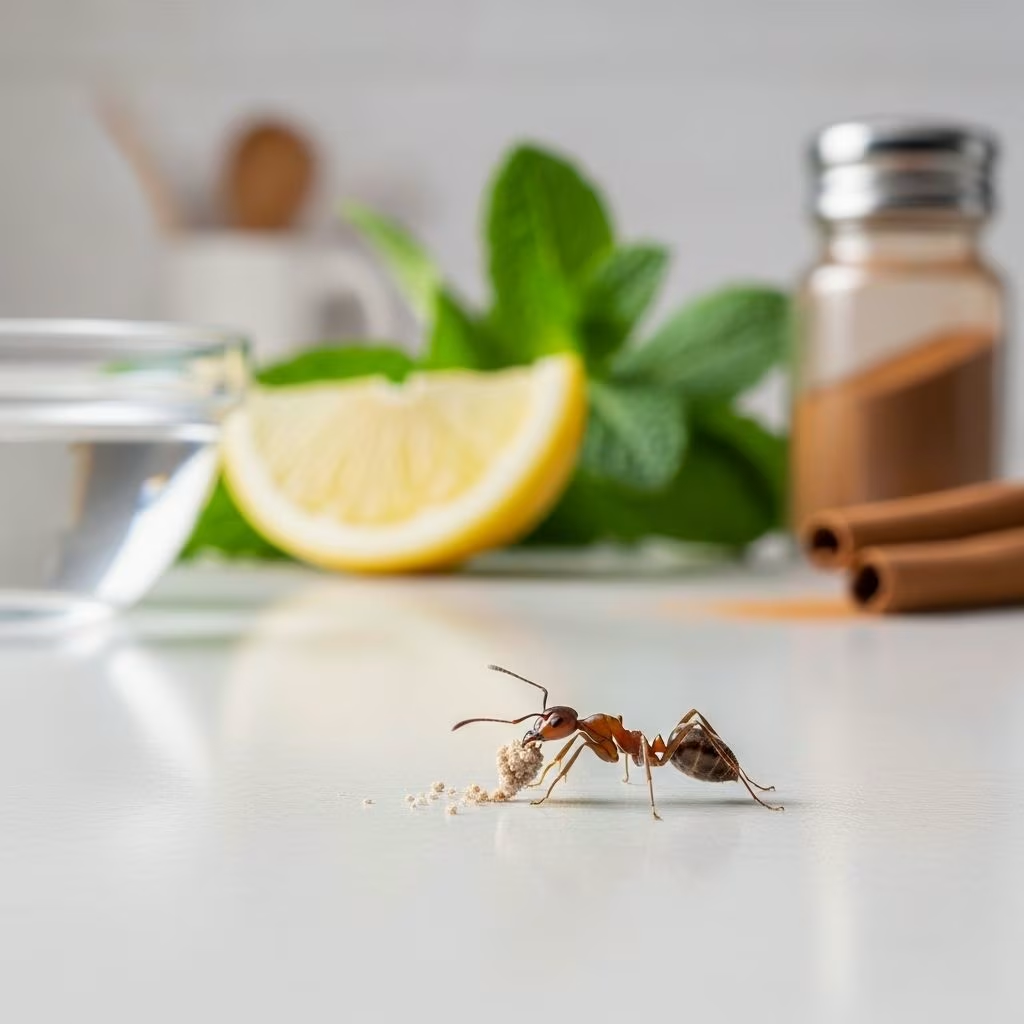
Ant invasions are one of the most common domestic problems worldwide. Whether you spot a trail of tiny sugar ants in your kitchen or a stubborn colony of carpenter ants near your garden, the frustration is universal. While commercial pesticides can be effective, many homeowners prefer natural and safe home remedies to ensure their living spaces are free from harmful chemicals. This in-depth guide covers the most trusted home remedies to get rid of ants naturally, highlighting their effectiveness, proper use, and supporting science behind each method.
Why Get Rid of Ants Naturally?
While ants play a valuable role in the ecosystem by aerating soil and aiding decomposition, indoors they become unwelcome guests. Chemical pesticides can be effective but come with risks to children, pets, and beneficial insects. Thus, choosing natural remedies is a priority for many households seeking safe and eco-friendly solutions.
- Health and Safety: Natural remedies use common household ingredients, minimizing exposure to toxic chemicals.
- Environmental Impact: Reduces introduction of toxins into the environment and local waterways.
- Cost-Effective: Most remedies use items already found at home or easily sourced inexpensively.
Understanding Ant Behavior and Infestations
A successful ant removal strategy recognizes how ants operate: they live in colonies, follow pheromone trails, and invade homes in search of food and water. Colonies can number in the hundreds of thousands, making total eradication challenging. Effective remedies target both visible ants and their hidden colonies.
- Entry Points: Cracks, doors, and windows offer easy access.
- Attractants: Food crumbs, sugary substances, and stagnant water are major lures.
- Pheromone Trails: Worker ants leave chemical paths for others to follow.
Top Home Remedies to Get Rid of Ants
The following natural strategies rank among the most effective according to pest control experts and scientific studies:
1. White Vinegar Spray
White vinegar disrupts pheromone trails that ants use to navigate, repelling entire foraging lines. Its sharp scent vanishes quickly for humans but remains intolerable to ants.
How to use: Mix equal parts white vinegar and water in a spray bottle. Spray directly on ants, their trails, and at entry points like windowsills or door gaps. Repeat daily until ants are gone.
Effectiveness: High, especially for kitchen and hard surface infestations.
2. Diatomaceous Earth (DE)
Diatomaceous earth (food-grade only) is a fine, natural powder that kills ants by damaging their exoskeleton, causing dehydration. It’s harmless to humans and pets but lethal to insects.
How to use: Sprinkle a thin layer around baseboards, behind appliances, under sinks, and along ant trails. Reapply in humid conditions—dryness is key to its effectiveness.
Effectiveness: Highly effective for persistent infestations.
3. Lemon Juice and Citrus Peels
Lemon juice’s acidity erases scent trails and acts as a mild deterrent. Fresh citrus peels such as orange or lemon rinds also contain compounds that repel ants.
How to use: Mix one part lemon juice with three parts water; spray around entry points and ant trails. Place peels in kitchen corners, cupboards, and pantries.
Effectiveness: Useful for mild infestations and preventive control.
4. Essential Oils: Peppermint, Tea Tree, Eucalyptus, and Cinnamon Leaf
Ants detest strong odors from certain essential oils. Peppermint, eucalyptus, tea tree, or cinnamon leaf oils are especially potent.
- Add 10–15 drops of oil to a cup of water in a spray bottle.
- Spray liberally along ant trails, window sills, and entry points.
- Alternatively, soak cotton balls and leave them in problem areas.
Effectiveness: Peppermint and cinnamon leaf oil are among the most effective natural deterrents, based on studies.
5. Borax or Boric Acid and Sugar Ant Baits
Borax (sodium tetraborate) and boric acid are slow-acting ant killers that can wipe out entire colonies. Ants carry poisoned bait back to the nest, where it’s shared.
DIY Ant Bait Recipe:
- Mix 1/2 teaspoon of borax (or boric acid) with 8 teaspoons sugar and 1 cup warm water to form syrup.
- Saturate cotton balls with syrup.
- Place near ant trails—but out of reach of pets and children.
Effectiveness: One of the best ways to eliminate whole ant colonies over time.
6. Baking Soda and Sugar Trap
Baking soda reacts with an ant’s digestive system, usually killing them after ingestion, while sugar lures them in.
How to use: Mix equal amounts of sugar and baking soda. Place the mixture in shallow lids near ant activity.
Effectiveness: Works for multiple species of ants; safe around pets if not consumed in large quantities.
7. Bay Leaves
The scent of bay leaves repels not only ants but also other pests such as cockroaches. Whole or crushed leaves create a protective barrier.
How to use: Place in food containers, cupboards, or anywhere ants have been observed.
Effectiveness: Mild deterrent; best used preventatively.
8. Oil of Lemon Eucalyptus (OLE)
A natural compound with proven insecticidal properties, OLE contains p-Menthane-3,8-diol (PMD), which is recognized as a safe biopesticide.
How to use: Spray OLE solution near entryways and on ant trails.
Effectiveness: Strong botanical repellent for household ants.
9. Cornstarch
Cornstarch suffocates and traps groups of ants when used properly.
How to use:
- Method 1: Pour cornstarch over ants, add water, and clean up the resulting mass.
- Method 2: Dust ants with cornstarch, then vacuum and discard outside.
Effectiveness: Best for large groups of visible ants, not for hidden colonies.
10. Boiling Water
Pouring boiling water directly onto exterior anthills destroys visible ants immediately.
How to use: Carefully pour boiling water into anthill openings.
Effectiveness: Immediate but often doesn’t reach the entire colony.
11. Neem Oil
Extracted from the neem tree, neem oil acts as a natural insecticide, disrupting the growth and reproduction of many ant species.
How to use: Spray neem oil around plants, garden beds, and entry points.
Effectiveness: Best suited for outdoor plant protection.
Essential Oils That Repel Ants
| Essential Oil | Main Compound | Effect on Ants | Best Application Areas |
|---|---|---|---|
| Peppermint | Menthol | Repels and disrupts trails | Kitchens, windows, entry points |
| Cinnamon Leaf | Trans-cinnamaldehyde | Kills and repels | Under appliances, in cabinets |
| Tea Tree | Terpinen-4-ol | Repels, kills in high concentrations | Bathrooms, pet areas |
| Eucalyptus | Eucalyptol | Repels ants | Near doorways, outdoor furniture |
| Oil of Lemon Eucalyptus (OLE) | p-Menthane-3,8-diol (PMD) | Strongest repellent | Throughout home, especially high-traffic trails |
Homemade Ant Traps and Killers
- Boric Acid + Sugar Trap: Mix boric acid and sugar with water to make syrup. Soak cotton balls and place where ants are active. Ants take the bait to their nest, gradually eliminating the colony.
- Baking Soda + Sugar Trap: Mix equal parts and set in low trays along ant trails for ants to ingest.
- Cornstarch Trap: Smother groups of ants directly; then add water or vacuum up for easy cleaning.
Always keep homemade traps out of reach of children and pets, especially those containing borax or boric acid.
Tips for Preventing Ant Infestations
- Seal Entry Points: Use caulk to close gaps around windows, doors, pipes, and foundations.
- Maintain Cleanliness: Wipe counters, sweep floors, and clean up crumbs or spills immediately.
- Secure Food Storage: Keep food in airtight containers and avoid leaving ripe fruit out.
- Remove Water Sources: Fix leaks, dry damp areas, and don’t leave standing water in sinks or trays.
- Take Out Trash Regularly: Clean garbage bins and compost containers frequently.
- Yard Maintenance: Trim foliage away from your home and remove debris where ants build nests.
Safety and Cautions When Using Natural Remedies
- Boric acid/borax is safe in diluted form but toxic if ingested—use with caution around kids and pets.
- Diatomaceous earth is safe if food-grade, but nuisance dust may irritate eyes or lungs.
- Essential oils can cause skin irritation; wear gloves and keep away from pets, as some oils are toxic to cats or dogs.
- Citrus oils may stain surfaces if not diluted properly.
Always test a small area when using a new solution, and read all safety instructions provided.
Frequently Asked Questions (FAQs)
What attracts ants to my home?
Ants seek food (especially sugars and proteins) and water. They are drawn to crumbs, spills, pet food, unsealed containers, and even damp environments.
Do natural remedies really work to eliminate ants?
Yes. Many homeowners successfully use remedies like vinegar, diatomaceous earth, essential oils, and homemade baits to control or eliminate ant infestations. Large or persistent infestations may sometimes require professional help.
Which essential oil is most effective against ants?
Peppermint oil and oil of lemon eucalyptus are consistently rated as most effective by both scientific studies and home users for repelling ants indoors.
Is borax or boric acid safe to use around pets and children?
Both are toxic if ingested. Always place baits or traps in areas inaccessible to pets and children. Consider using alternative deterrents like vinegar or essential oils in common areas.
How long does it take for home remedies to work?
Spray repellents like vinegar or oils work immediately to disrupt trails, but baits with borax may take several days to eliminate colonies, as the poison needs time to spread through the nest.
Will these remedies also work outdoors?
Many home remedies (borax traps, DE, boiling water, neem oil) are also effective in gardens or patios. However, outdoor infestations may need repeated treatments due to weather and colony size.
Can I use multiple remedies at once?
Yes, combining deterrents (sprays, essential oils) with colony-killing baits improves effectiveness, tackling both visible foragers and hidden colony members.
What if the ants keep coming back?
Persistent reinfestation usually means the main nest is still active or new trails have formed. Continue combining baits with thorough cleaning and blocking entry points for best results.
Summary: Getting rid of ants doesn’t require toxic sprays or costly chemicals. By understanding ant behavior, removing attractions, and using proven home remedies—such as vinegar, essential oils, boric acid baits, and diatomaceous earth—you can maintain a clean, pest-free environment safely and naturally.
References
- https://www.nativepestmanagement.com/blog/2025/february/10-solutions-to-get-rid-of-sugar-ants-naturally/
- https://www.kodiakpestcontrol.com/blog/home-remedies-for-getting-rid-of-ants-naturally/
- https://www.healthline.com/health/how-to-kill-ants
- https://www.pestex.ca/4-effective-home-remedies-prevent-ant-invasion/
- https://www.youtube.com/watch?v=vbjyuVDKvvA
- https://www.youtube.com/watch?v=TycvvVdvL_s


