


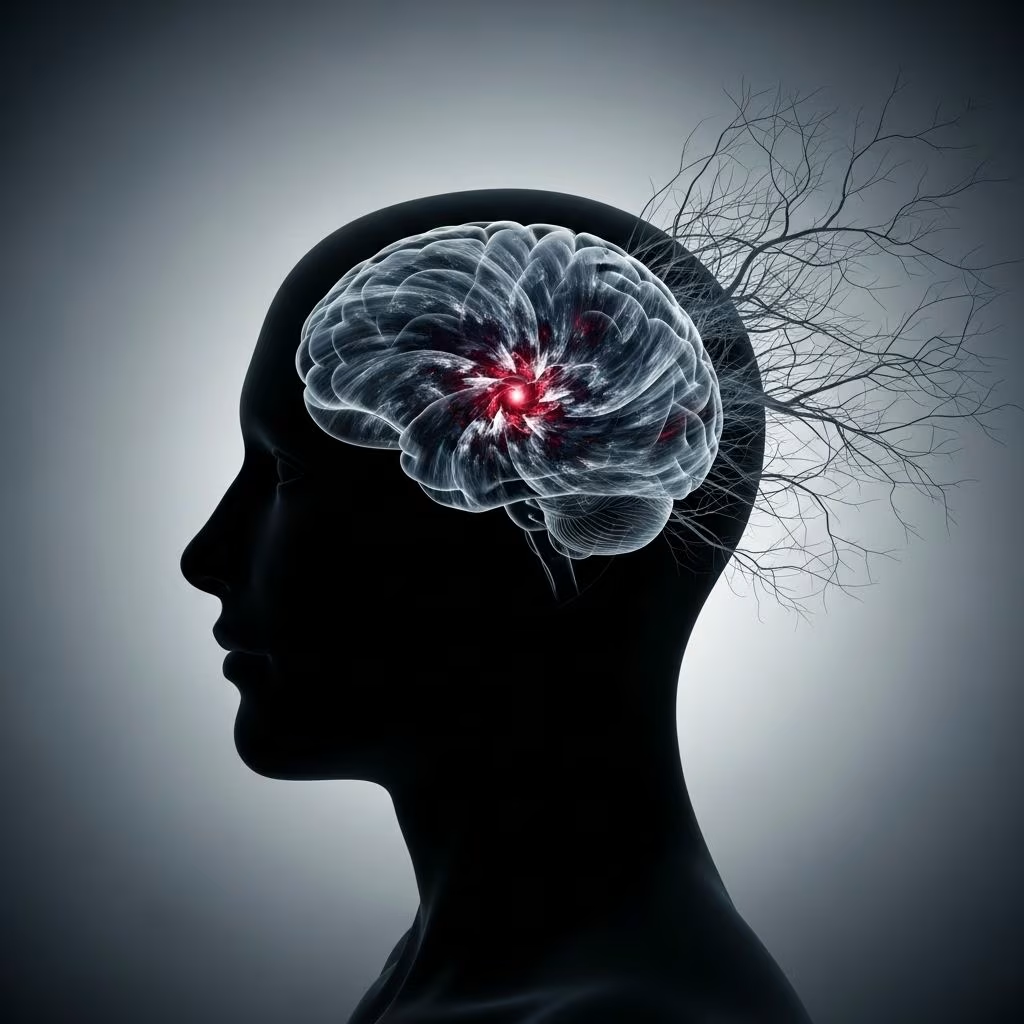
Denial as a Defense Mechanism
Denial is one of the most recognized psychological defense mechanisms, a mental process wherein individuals refuse to accept reality or facts to shield themselves from uncomfortable emotions, anxiety, or stress. By turning away from distressing truths, denial offers temporary relief at the cost of long-term growth and emotional health.
What Is Denial?
Denial is defined as a psychological defense mechanism that involves refusing to acknowledge or accept external realities, emotions, or facts. When faced with overwhelming situations or threatening emotions, a person unconsciously blocks them from conscious awareness, choosing to act as if the challenge doesn’t exist or isn’t as severe as it truly is.
- Unconscious Process: Denial usually operates beyond conscious control, making individuals unaware that they are using it as a psychological defense.
- Emotional Protection: The mechanism shields against fear, anxiety, guilt, or overwhelming stress by denying the disturbing reality.
- Temporary Relief: While denial provides short-term emotional relief, overreliance can impede healthy coping and problem-solving.
Origins: Freud and Psychoanalytic Theory
The theoretical roots of denial trace back to Sigmund Freud, who discussed the broader concept of defense mechanisms as automatic ways the ego copes with internal conflict. Freud’s daughter, Anna Freud, later expanded on these mechanisms—including denial—and described how they function to ward off unpleasant thoughts, impulses, or events from consciousness.
In psychoanalytic terms, denial protects self-esteem, emotional stability, and psychological balance, especially when traumatic or anxiety-provoking information arises.
How Denial Works
Denial operates by blocking conscious awareness of something distressing or reframing it to appear harmless. An individual might:
- Refuse to accept the existence of a problem (“That’s not happening”).
- Minimize the severity (“It’s not that serious”).
- Rationalize or excuse problematic behavior.
- Avoid situations or information that might confront them with the reality.
Denial generally serves to protect an individual from psychological distress. For example, a person may refuse to accept a medical diagnosis or ignore the evidence of a partner’s infidelity. In doing so, the individual can delay emotional pain and maintain a sense of normalcy, however fleeting that might be.
Types of Denial
Denial can manifest in several distinct forms:
- Simple Denial: Complete refusal to accept reality or fact.
- Minimization: Admitting an event occurred but downplaying its seriousness.
- Projection/Blame: Recognizing a problem, but attributing the responsibility to someone or something else.
Internal vs. External Denial
| Type | Description | Examples |
|---|---|---|
| Internal Denial | Refusal to recognize or accept one’s own feelings, thoughts, or experiences. | Ignoring emotional pain after a trauma; refusing to accept personal responsibility for behavior. |
| External Denial | Refusing to acknowledge objective events or external situations. | Insisting a medical diagnosis is wrong; denying the loss of a loved one. |
Examples of Denial in Everyday Life
Denial is a common response, especially in situations involving fear, anxiety, loss, or guilt. Below are some frequent real-world scenarios where denial becomes visible:
- Health: A person experiences severe symptoms but insists, “It’s just a minor issue,” avoiding medical attention.
- Substance Use: Someone with a drinking problem rationalizes, “I can stop whenever I want,” ignoring the mounting evidence of dependency.
- Relationship Troubles: Refusing to discuss problems, acting as though arguments or infidelities haven’t occurred.
- Loss and Grief: Insisting a deceased loved one isn’t really gone or expressing disbelief after learning bad news.
- Financial Problems: Continued spending and ignoring mounting debts rather than acknowledging and addressing financial issues.
Causes and Psychological Purpose of Denial
Denial arises as a self-protective response, often triggered in moments of crisis, loss, or when a person’s worldview is threatened. The brain unconsciously draws on denial to stave off anxiety, allowing a person time to process distressing information incrementally.
Key Reasons for Denial:
- Emotional Overwhelm: The truth feels too painful or destabilizing to accept all at once.
- Fear or Anxiety: Confrontation could provoke unbearable worry, panic, or chaos.
- Threat to Self-Esteem: Acceptance could trigger shame, humiliation, or a collapse in self-identity.
- Desire for Control: By denying the problem, a person maintains the illusion of safety, stability, or power.
Denial in Psychological Development
Denial naturally appears in childhood, when cognitive and emotional resources are still developing. As children grow, denial typically gives way to more mature coping skills, but adults may still revert to this defense under heavy stress. Persistent denial in adulthood—especially when it disrupts relationships, work, or health—may signal a deeper issue or an entrenched maladaptive coping pattern.
Is Denial Always Harmful?
Denial is not inherently negative. In some situations, it serves as a temporary buffer, offering time for gradual adjustment and preventing sudden emotional overwhelm. Examples include initial reactions to loss or trauma. However, ongoing or habitual denial can:
- Prevent timely medical diagnosis and intervention.
- Damage personal and professional relationships due to unaddressed problems.
- Lead to unresolved trauma or emotional stagnation.
- Fuel risky behaviors and prevent growth.
When denial is no longer adaptive—when it blocks needed change, deepens problems, or erodes well-being—it shifts from being protective to being harmful.
Denial in Mental Health and Illness
Denial’s impact stretches into many aspects of mental health and illness, often complicating treatment and recovery. Some conditions and behaviors particularly associated with denial include:
- Addiction: Individuals frequently deny the severity or presence of substance-related problems, citing excuses or rationalizations.
- Medical Illness: People diagnosed with cancer or chronic conditions may initially deny their diagnosis as a coping response.
- Trauma & Grief: Denial occurs in the early stages of the grief cycle, or as a response to trauma when reality is simply too much to process all at once.
- Psychiatric Disorders: Anosognosia is a medical term describing neurological denial, often seen in certain psychiatric or neurological disorders, where the individual is unaware of their condition due to brain changes.
Denial vs. Other Defense Mechanisms
| Defense Mechanism | Definition | Key Differences from Denial |
|---|---|---|
| Repression | Unconscious blocking of painful memories or feelings | Denial blocks awareness of external reality; repression blocks internal emotional experience. |
| Projection | Attributing personal unacceptable thoughts or feelings to others | Denial excludes facts; projection displaces responsibility. |
| Rationalization | Justifying behaviors or outcomes with seemingly reasonable explanations | Denial ignores reality; rationalization explains it away. |
Overcoming Unhealthy Denial
Addressing denial is critical for emotional growth and recovery. The first step is recognizing and acknowledging that denial is present, followed by gently confronting the facts and seeking support.
Steps to Overcome Denial:
- Increase Self-Awareness: Keep a journal or talk with a trusted friend or therapist to reflect on avoidance patterns.
- Educate Yourself: Learn about the issue or challenge you’re facing; information reduces fear and uncertainty.
- Build Coping Resources: Develop healthy coping strategies, such as mindfulness, support groups, or counseling.
- Seek Professional Help: Therapy can provide safe guidance in confronting fears and fostering acceptance.
- Practice Self-Compassion: Be patient and gentle as you adapt to new realities and work through discomfort.
Frequently Asked Questions (FAQs)
What is denial as a defense mechanism?
Denial is a psychological process wherein an individual refuses to recognize facts, experiences, or emotions to protect themselves from anxiety or distress.
Why do people use denial?
People unconsciously use denial to shield themselves from overwhelming stress, fear, or emotional pain, allowing them to maintain stability and protect self-esteem.
Can denial be helpful?
Denial can offer short-term emotional relief and help manage shock or grief. However, prolonged denial can delay healing and worsen outcomes if not addressed.
How can I recognize denial in myself or others?
- Refusing to discuss or acknowledge problems.
- Justifying or rationalizing harmful behaviors.
- Blaming external causes for internal issues.
- Persisting in harmful actions despite clear consequences.
- Avoiding people and situations that might challenge one’s viewpoint.
What are some practical tips to break free from denial?
- Talk openly about your feelings and fears.
- Accept support from friends, family, or professionals.
- Be honest about your circumstances, even when uncomfortable.
- Adopt a gradual approach to facing difficult truths.
Summary Table: Key Facts About Denial
| Aspect | Description |
|---|---|
| Definition | Refusal to accept reality or facts as a way to avoid discomfort. |
| Origin | First discussed by Sigmund Freud, expanded by Anna Freud. |
| Common Contexts | Addiction, illness, grief, trauma, relationship issues. |
| Purpose | Protection from anxiety and emotional pain; temporary coping. |
| Risks | Delayed problem-solving, health risks, damaged relationships. |
| Ways to Overcome | Awareness, education, professional help, self-compassion, gradual confrontation. |
Further Resources and Reading
- Understanding Defense Mechanisms – Deepen your insight into other psychological defenses and how they interact with daily life.
- Coping Skills for Anxiety and Stress – Explore healthy strategies for managing emotions without resorting to denial.
- Seeking Professional Support – Consider counseling or therapy for guidance in breaking persistent patterns of avoidance.
References
- https://www.simplypsychology.org/denial-as-a-defense-mechanism.html
- https://www.ebsco.com/research-starters/psychology/denial-cognitive-mechanism
- https://www.relationalpsych.group/articles/understanding-denial-as-a-defense-mechanism
- https://www.psychologytoday.com/us/basics/denial
- https://www.health.harvard.edu/blog/denial-how-it-hurts-how-it-helps-and-how-to-cope-202307262958
- https://www.ncbi.nlm.nih.gov/books/NBK559106/
- https://www.talkspace.com/blog/denial-coping-what-is/
- https://dictionary.apa.org/denial
- https://www.simplypsychology.org/defense-mechanisms.html


