


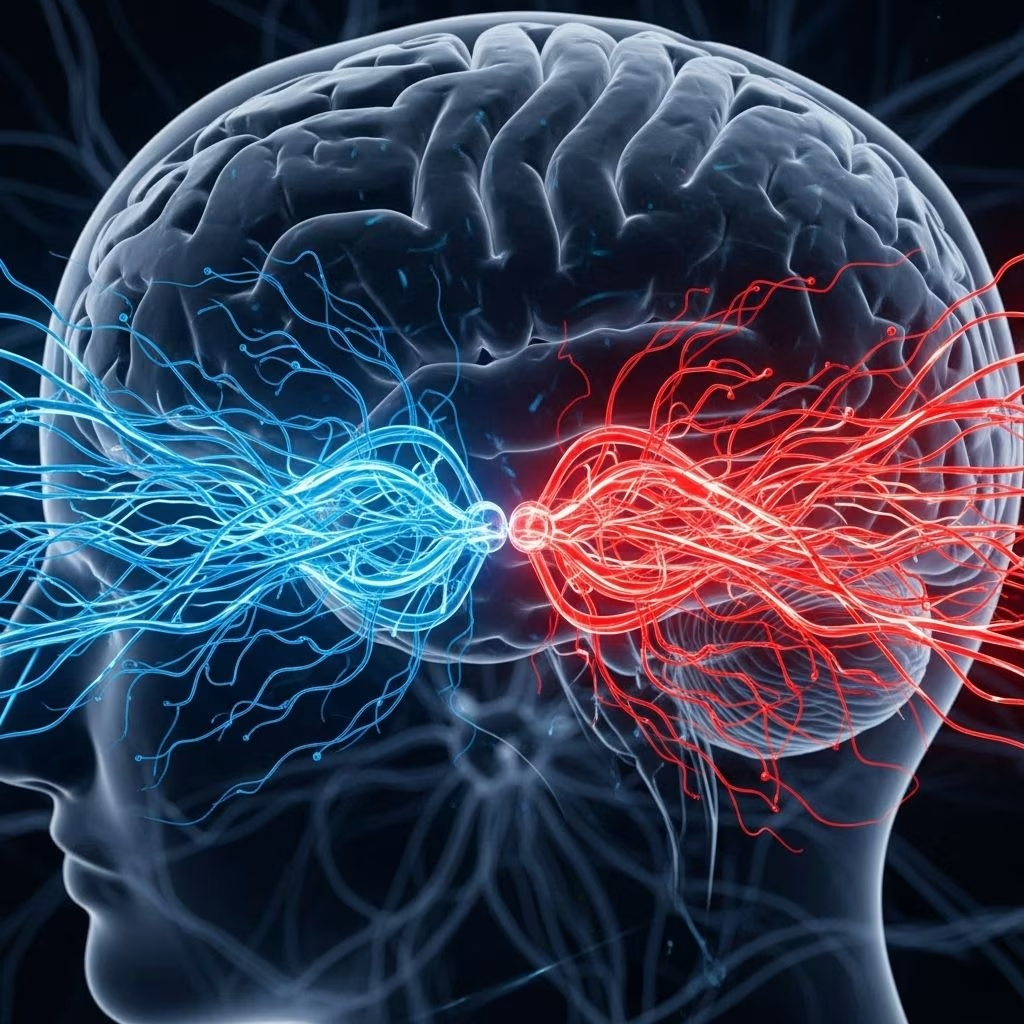
What Is Memory Interference?
Memory interference is a psychological concept explaining why we sometimes forget information, not because it has faded away, but because other memories disrupt our recall. Interference happens when some memories block or disrupt the retrieval of other related memories, leading to forgetfulness even though the memory still exists in the mind. It is a foundational idea in understanding how human memory works and why forgetting can occur regardless of the amount of time that has passed since learning.
Types of Interference: Proactive and Retroactive
Psychologists have identified two main types of interference that impact memory recall:
- Proactive Interference: Occurs when older memories hinder the recall of newly learned information. Essentially, what you’ve learned in the past makes it harder for you to remember something you’ve just learned.
- Retroactive Interference: Happens when new information interferes with the retrieval of older, previously stored memories. New learning disrupts access to what you knew before.
How Interference Affects Memory
Not all memories are equally susceptible to interference. The likelihood and impact of interference depend on many factors, including similarity between pieces of information, the length of time since learning, and the context of memory formation and recall. Interference is most likely to occur when the competing memories are similar, making it more difficult for your mind to distinguish between them.
For instance:
- Learning two foreign languages at the same time can cause interference if vocabulary words are similar.
- Changing your phone number may result in you mistakenly recalling your old number instead of the new one.
Proactive Interference: When the Past Blocks the Present
Proactive interference refers to situations where previously learned information makes it harder to learn and retrieve new information. This effect is commonly experienced in daily life. For example, after moving to a new address, people often find themselves recalling and using their old address by mistake. The memory of the old address, ingrained by years of repetition, disrupts the ability to remember and use the new one.
Another classic example occurs when changing passwords. The old password comes to mind more readily than the new one, increasing the likelihood of errors.
Why does proactive interference happen?
Older information becomes deeply embedded through frequent review and repetition, making it more resistant to being replaced in memory. When the new information is similar to old information, the interference effect becomes even stronger.
Retroactive Interference: When New Memories Overshadow the Old
In contrast, retroactive interference happens when newly acquired information makes it tougher to recall previously learned data. A typical example is learning a new phone number or PIN code, only to struggle with recalling the old one you once knew so well. As you continue to use and reinforce the new memory, retrieval of the old memory becomes increasingly challenging.
Why does retroactive interference occur?
Learning and repeatedly using new information can overwrite or obscure similar older memories, particularly if both memories share similar features or contexts.
Comparison Table: Proactive vs. Retroactive Interference
| Feature | Proactive Interference | Retroactive Interference |
|---|---|---|
| Direction of Interference | Old memories disrupt new learning | New memories disrupt old recall |
| Typical Example | Recalling an old password instead of a new one | Failing to remember your old address after learning a new one |
| Most Likely With | Similar information learned at different times | Frequent use and repetition of new similar material |
| Impact on Memory | Makes learning and recalling new information harder | Makes recalling previously learned information harder |
Factors That Influence Interference
- Similarity: Confusion is more likely when two memories are closely related in content or context.
- Amount of Practice: The more you rehearse or use a memory, the stronger it becomes, and the more likely it is to cause proactive interference.
- Time Between Learning: Longer intervals between learning similar ideas can reduce interference. Close-in-time learning of similar materials increases the chance of confusion.
- Context: Memories encoded and retrieved in different environments may interfere less than those learned in similar circumstances.
Examples of Interference in Everyday Life
- Forgetting which door your car is parked behind at a familiar parking lot because you previously parked in a different spot.
- Having trouble learning a new dance routine because previous routines use similar moves in a different order.
- Misremembering a person’s new married name by calling them by their previous last name.
Memory Interference and Forgetting
Interference is one of the central theories used to explain why people forget. Unlike decay theory, which suggests memories simply fade over time, interference theory proposes that forgetting occurs when old and new information compete in our minds. This interference can happen at the time of learning, during storage, or while trying to retrieve the memory.
Psychologist John A. McGeoch, a pioneer in interference theory, proposed that learning is always subject to possible interference from other memories. Any new memory is set against a background of previous learning, meaning that old and new memories are never entirely isolated from one another.
Interference doesn’t always mean complete loss of a memory; rather, it makes the memory less accessible, requiring specific cues or contexts to bring it out.
Scientific Evidence for Interference
Numerous experimental studies illustrate memory interference. In classic experiments, participants were asked to memorize two lists of similar words or numbers. Researchers consistently found that recalling the first list interfered with learning the second (proactive interference), while the second list impaired recollection of the first (retroactive interference). The rates of recall dropped most sharply when the lists were similar, emphasizing the key role similarity plays in the interference process.
Computational models of working memory also support the idea that interference, rather than simple time-based decay, is a major reason we forget. Such models show that competition between memories can predict actual patterns of memory performance across age groups.
Memory Interference in Working Memory
Working memory is the part of short-term memory that temporarily holds and manipulates information needed to complete ongoing tasks. Due to its limited capacity, working memory is particularly vulnerable to interference. For example, while trying to remember a phone number, thinking about other numbers or related information can cause confusion, making you forget the target number.
Research demonstrates that children and adults differ in their ability to cope with interference in working memory. Young children, whose brains are still developing the neural networks necessary to control interference, often experience more intense memory confusion, limiting their working memory capacity.
Strategies to Reduce Interference
- Separate Study Sessions: Leave more time between learning similar subjects or ideas to minimize overlap and confusion.
- Use Distinctive Cues: When learning new material, associate it with unique cues or mnemonic devices to make memories more distinguishable.
- Review Old and New Material Together: Interleaving reviews of both old and new information helps strengthen both and reduce competition.
- Avoid Multitasking: Focusing on one thing at a time reduces the potential for interference from unrelated information.
- Change Learning Contexts: By varying where and how you study, you reduce context-based interference and strengthen overall recall.
Implications of Interference in Real Life
Understanding memory interference is not just an academic exercise. This phenomenon has practical implications in daily life, education, and the workplace. Awareness of how old habits, frequent routines, or even background noises can affect learning and recall empowers you to take preventative measures. For students, designing study habits that take interference into account can improve learning outcomes. For employees, structuring tasks to avoid overlap of similar duties reduces workplace errors caused by confusion between old and new procedures.
Frequently Asked Questions (FAQs)
What causes memory interference?
Memory interference is primarily caused by the similarity between different memories, repeated rehearsal of certain information, and learning similar content in close timeframes. Environmental and contextual cues during learning can also influence the likelihood of interference.
Does interference affect everyone equally?
While the basic principles apply to everyone, individual differences—such as age, cognitive abilities, and learning strategies—can influence how susceptible a person is to interference. Children and older adults may be more vulnerable due to developing or declining working memory capacities, respectively.
How does interference differ from memory decay?
Interference involves active competition between memories, making it hard to access a particular memory because similar memories crowd it out. Decay theory suggests forgetting happens simply because memories fade over time without rehearsal, regardless of other memories.
Can emotional memories interfere with each other more?
Emotional memories can sometimes be more vivid and persistent, but they are not immune to interference. If you experience similar emotional situations repeatedly, those memories can compete just as non-emotional ones do.
Is forgetting always a bad thing?
Not necessarily. Forgetting can help our minds stay uncluttered, allowing us to focus on what’s important now. Interference helps us adapt by prioritizing the most relevant information, rather than becoming overwhelmed by every detail from our past.
Summary
Memory interference remains a compelling explanation for why we forget, especially when trying to learn or recall similar pieces of information. Both proactive and retroactive interference play vital roles in shaping the contents and accessibility of our memory. By understanding these processes, we can implement effective strategies to enhance learning, minimize confusion, and make memory work for us, not against us.
References
- https://pmc.ncbi.nlm.nih.gov/articles/PMC9640215/
- https://sites.psu.edu/intropsychf19grp7/2019/10/14/proactive-interference-ashley-niland/
- https://www.britannica.com/science/memory-psychology/Forgetting
- https://www.simplypsychology.org/automatic-processing.html
- https://cognitioninclass.swanpsych.com/tag/psychology/


