


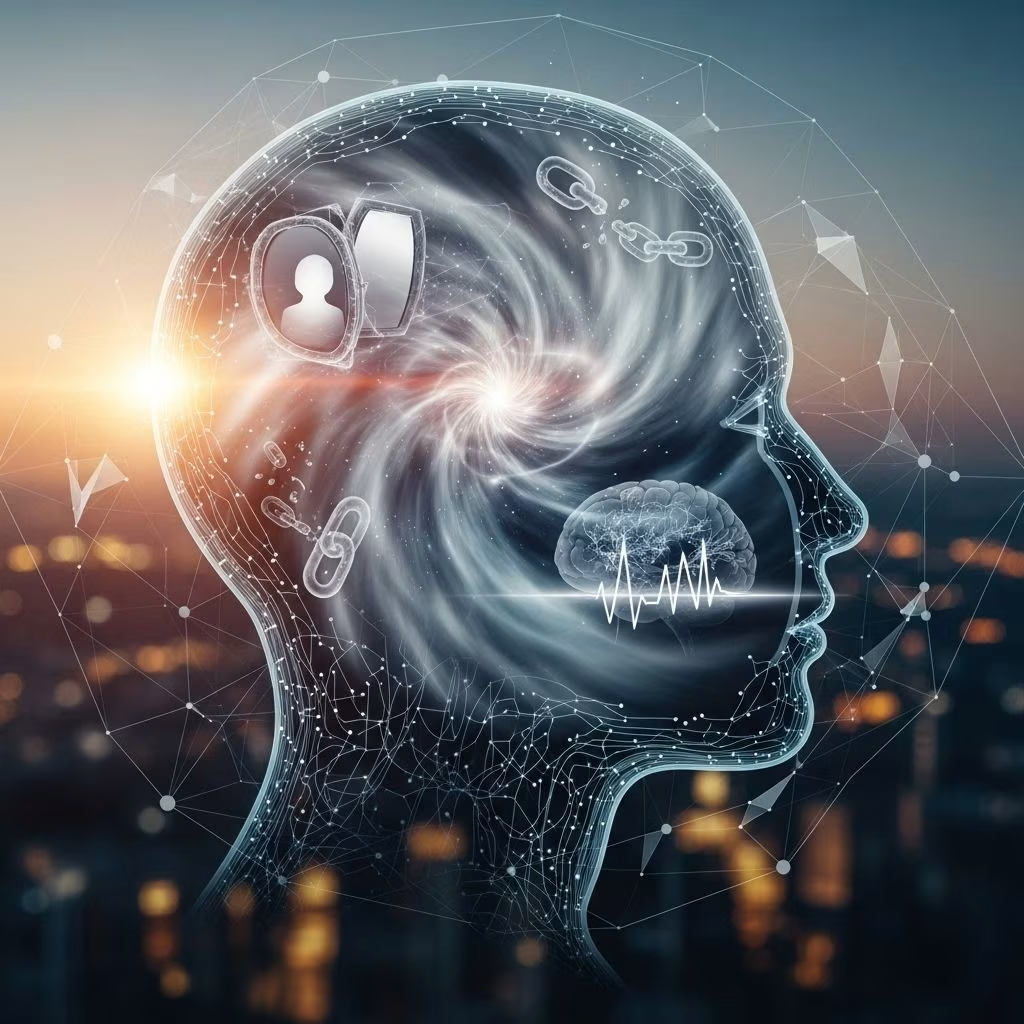
Psychopathology is the scientific study of mental disorders, exploring their symptoms, causes, development, classification, and treatment. As the foundation of abnormal psychology, psychopathology addresses critical questions about what constitutes normal and abnormal behavior, how psychological disorders are diagnosed, and which interventions are most effective.
What Is Psychopathology?
Psychopathology refers to patterns of psychological dysfunction that result in distress or interfere with daily functioning in areas such as work, relationships, and leisure. The term encompasses what are commonly known as mental illnesses or psychological disorders .
While the terms “mental illness,” “abnormal behavior,” and “emotional and behavioral disorders” are frequently used interchangeably, they all point to patterns of behavior or thought that deviate significantly from social norms and compromise a person’s well-being .
Key Concepts in Psychopathology
- Dysfunction: Significant disturbances in cognition, emotion regulation, or behavior, reflecting underlying psychological, biological, or developmental dysfunctions.
- Distress or Impairment: Psychological disturbances that lead to personal distress or interfere with everyday functioning.
- Deviance: Behavior that violates cultural or societal norms, which may not always signify a disorder unless paired with dysfunction or distress.
The Historical Context of Psychopathology
The understanding of mental disorders has dramatically evolved through history. Early societies attributed abnormal behaviors to supernatural causes, such as possession by spirits or punishment by deities. Treatments often included rituals, exorcisms, or other religious rites .
During the Classical Era, Greek physician Hippocrates challenged supernatural explanations. He argued that psychological disorders had natural causes, including heredity, brain injury, or family stress, laying the groundwork for the biological perspective. The Roman physician Galen expanded on these ideas, introducing the theory of bodily “humors,” linking imbalances to mental illness, such as melancholy (depression) being caused by an excess of black bile. Though these biological explanations were imperfect, they marked a shift away from supernatural thinking.
The 19th and 20th centuries saw rapid advancement. Emil Kraepelin, a German psychiatrist, argued that mental illnesses could be classified like physical illnesses—each with unique biological origins and symptom clusters (syndromes). His approach laid the foundation for modern diagnostic manuals.
Defining Abnormality: What Makes Behavior “Abnormal”?
Defining what is “abnormal” remains an ongoing challenge. Modern mental health professionals generally agree that a disorder is present when:
- The individual’s thoughts, emotions, or behaviors are dysfunctional (do not work as expected or cause suffering).
- The person experiences distress (is troubled by their symptoms or impaired in their ability to function).
- The behavior or experience is markedly deviant relative to cultural norms.
However, not all deviant behavior is pathological. Some individuals may act unconventionally without experiencing distress or dysfunction. Thus, current definitions emphasize a nuanced approach that considers cultural, contextual, and functional aspects .
Core Components of a Psychological Disorder
- Clinically Significant Disturbance: There is a measurable disturbance in a person’s mental faculties, as seen in thoughts, feelings, or behavior.
- Impaired Functioning: The disturbance results in a significant inability to perform daily roles.
- Cultural Relativity: Deviance depends on societal expectations, which vary by culture and era.
The Classification of Mental Disorders
Accurate diagnosis and classification are crucial for effective treatment and research. The primary tool used by mental health professionals is the Diagnostic and Statistical Manual of Mental Disorders (DSM-5), published by the American Psychiatric Association. The DSM-5 offers standardized criteria for hundreds of mental disorders, each defined by a specific cluster of symptoms (syndrome).
| Disorder Category | Examples |
|---|---|
| Mood Disorders | Major depressive disorder, bipolar disorder |
| Anxiety Disorders | Generalized anxiety disorder, panic disorder, phobias |
| Psychotic Disorders | Schizophrenia, schizoaffective disorder |
| Personality Disorders | Borderline personality disorder, antisocial personality disorder |
| Neurodevelopmental Disorders | Autism spectrum disorder, attention-deficit/hyperactivity disorder (ADHD) |
| Obsessive-Compulsive and Related Disorders | Obsessive-compulsive disorder (OCD), body dysmorphic disorder |
For each diagnosis, the DSM-5 delineates clear criteria based on symptom patterns, duration, and impact on functioning. The manual’s influence traces back to Kraepelin’s early 20th-century efforts to categorize distinct mental illnesses .
Models and Approaches to Psychopathology
Multiple theoretical models inform how professionals understand the origins and treatment of psychological disorders. Often, mental health practitioners integrate several models to address the complex nature of mental illness.
Major Approaches
- Biological Model: Focuses on genetic, neurological, and physiological factors. Mental disorders are seen as medical diseases with biological causes (e.g., neurotransmitter imbalances or brain structure anomalies).
- Psychological Models: Include the psychodynamic approach (emphasizing unconscious processes), the cognitive approach (highlighting dysfunctional thinking patterns), and the behavioral approach (focusing on learned behaviors).
- Cognitive-Behavioral Model: Integrates behavioral and cognitive perspectives to examine how interactions between thoughts and behaviors contribute to psychopathology.
- Socio-Cultural Model: Considers cultural, societal, and environmental influences. Cultural norms play a major role in shaping definitions of abnormality and influencing the manifestation and treatment of mental disorders.
No single approach fully explains all types of psychopathology. As a result, modern clinicians often adopt a biopsychosocial model, considering biological, psychological, and social factors in both diagnosis and treatment .
Causes of Psychopathology
Mental disorders are complex, with no single cause. Instead, a combination of genetic, biological, psychological, and environmental factors interact to produce symptoms. Understanding these factors can aid in effective treatment planning.
- Genetic Factors: Many mental disorders cluster in families, pointing to a hereditary influence.
- Biological Factors: Brain injury, neurotransmitter imbalances, and prenatal exposures can influence risk for psychopathology.
- Psychological Factors: Childhood trauma, negative thought patterns, and poorly developed coping skills contribute to vulnerability.
- Social and Environmental Factors: Chronic stress, poverty, discrimination, and cultural norms influence the onset and progression of mental disorders.
Common Types of Psychological Disorders
Psychopathology covers a wide array of mental health conditions, such as:
- Depressive Disorders: Characterized by persistent feelings of sadness, hopelessness, and a lack of motivation or pleasure.
- Anxiety Disorders: Marked by excessive fear, worry, or nervousness that impairs everyday life.
- Bipolar and Related Disorders: Involve dramatic shifts in mood, energy, and activity levels.
- Schizophrenia Spectrum and Other Psychotic Disorders: Defined by delusions, hallucinations, disordered thinking, and impaired reality testing.
- Personality Disorders: Enduring patterns of unstable moods, behavior, and relationships.
- Obsessive-Compulsive and Related Disorders: Patterns of unwanted thoughts (obsessions) and repetitive behaviors (compulsions).
Treatment Approaches
Effective treatment for psychological disorders is highly individualized, often involving a combination of approaches:
- Psychotherapy: Includes cognitive-behavioral therapy (CBT), psychodynamic therapy, and other evidence-based talk therapies.
- Medication: Pharmacological interventions, such as antidepressants, antipsychotics, and anxiolytics, target specific neurochemical imbalances.
- Behavioral Therapy: Focuses on changing dysfunctional behaviors through conditioning and reinforcement.
- Family and Group Therapy: Addresses interpersonal relationships and social support systems.
- Holistic and Alternative Therapies: May include mindfulness, exercise, nutrition, and lifestyle changes.
The most effective treatment plans are tailored to the individual’s diagnosis, needs, and personal goals, often integrating several methods for optimal outcomes .
Cultural Sensitivity in Psychopathology
It is essential to consider cultural context when assessing and treating psychological disorders. Cultural beliefs shape definitions of normality and influence both the experience and expression of symptoms. For example, certain symptoms may be interpreted differently across societies, affecting diagnosis and stigma .
Culturally competent care respects differences in values, language, and health beliefs, ensuring more effective diagnosis, rapport building, and treatment adherence.
Frequently Asked Questions (FAQs)
What is the difference between psychopathology and abnormal psychology?
While both fields study mental disorders, abnormal psychology is a broader term referring to the scientific study of unusual or atypical behaviors, cognition, and emotions, whereas psychopathology more specifically focuses on the study of mental disorders and their causes, symptoms, and treatments.
How are psychological disorders diagnosed?
Diagnoses are made using standardized diagnostic criteria from manuals such as the DSM-5, considering the individual’s symptoms, history, and degree of impairment in functioning, with careful consideration of cultural and contextual factors.
Can mental disorders be cured?
Many psychological disorders can be effectively managed or treated with therapy, medication, lifestyle changes, or a combination of interventions. Some conditions may be chronic but can still be successfully controlled to improve quality of life.
What role does culture play in psychopathology?
Culture shapes definitions of deviant or abnormal behavior, the expression of symptoms, stigma, and preferred treatment approaches. Cross-cultural understanding is vital for accurate diagnosis and effective care.
Why is early intervention important in psychopathology?
Early identification and treatment of mental disorders are associated with better outcomes, reduced symptom severity, and a lower risk of chronic impairment or comorbid conditions.
This article is for informational purposes only and does not constitute medical or professional advice. If you or someone you know is struggling with mental health concerns, seek guidance from a qualified professional.
References
- https://www.ebsco.com/research-starters/psychology/psychopathology
- https://www.simplypsychology.org/a-level-psychopathology.html
- https://en.wikipedia.org/wiki/Psychopathology
- https://www.scholars.northwestern.edu/en/publications/psychopathology
- https://www.saskoer.ca/abnormalpsychology/chapter/definingpsychopathology/
- https://www.youtube.com/watch?v=tdl0GDXEHU0


