


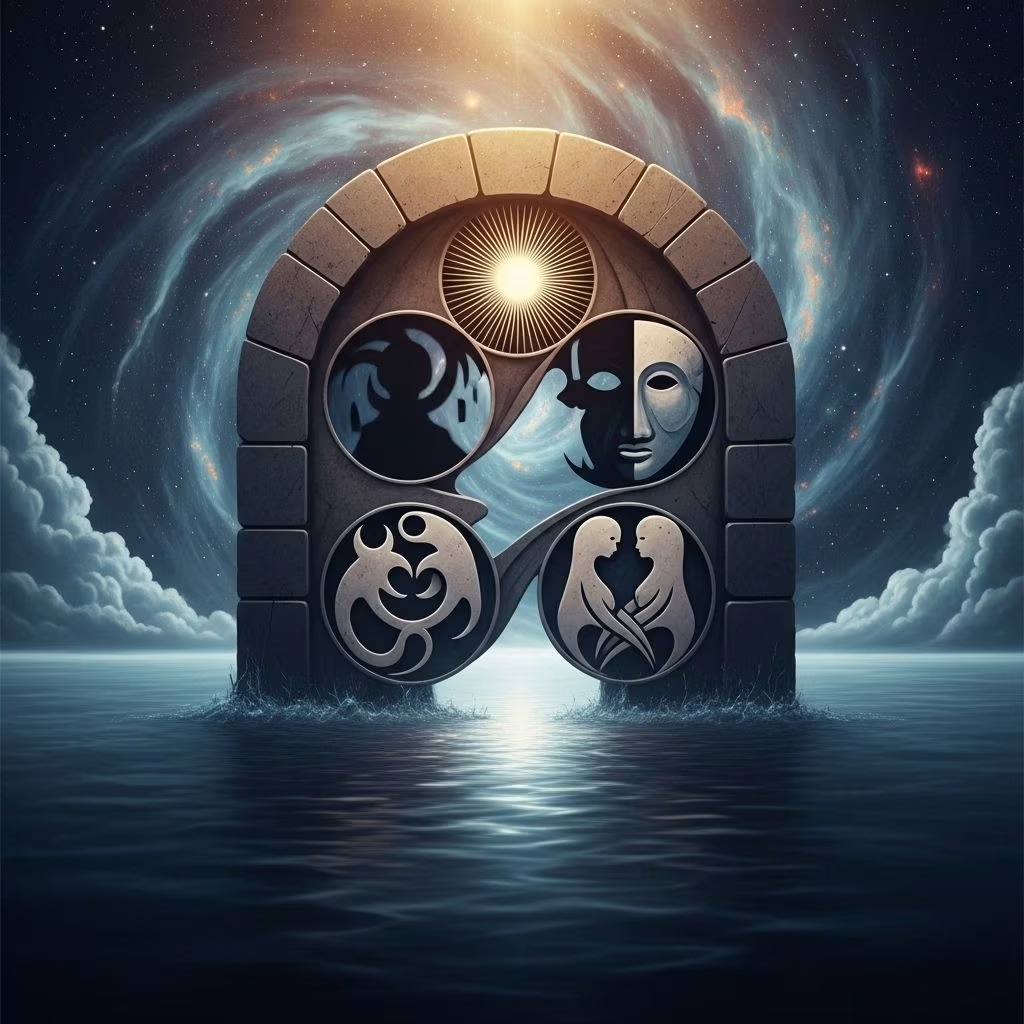
Jung’s Four Major Archetypes: Foundations of the Collective Unconscious
Carl Gustav Jung, a pioneering Swiss psychiatrist and psychoanalyst, introduced the concept of archetypes—universal, inherited patterns of behavior and character that form the underlying structure of human experience. Jung’s theory suggests that these archetypes are embedded in what he called the collective unconscious, a shared psychic substrate common to all humanity, influencing thoughts, emotions, and symbolic expression regardless of culture or epoch.
What is an Archetype?
An archetype is a fundamental, pre-existing model or pattern that manifests in recurring symbols, stories, and personalities throughout history and across cultures. Jung did not view archetypes as inherited ideas, but rather as inherited modes of functioning—psychological blueprints that shape instincts and behavior.
- Universal Themes: Archetypes are found in mythology, religion, literature, art, dreams, and day-to-day human interaction.
- Collective Unconscious: The deepest layer of the unconscious, shared genetically and not acquired individually.
- Dynamic Expression: Archetypes are empty forms seeking concrete manifestation based on lived experience.
Jung identified many archetypal images, but emphasized four as the primary foundations of personality: the Persona, the Shadow, the Anima/Animus, and the Self.
The Origins of Jungian Archetypes
Jung’s concept of archetypes was shaped by ancient philosophies, personal research, and cross-cultural studies. Influenced by thinkers like Immanuel Kant and Plato, Jung argued that archetypes differ from Platonic Forms in that they are psychological and seek active realization in the individual, not merely ideal realms.
- Scientific Foundation: Jung described archetypes as similar to the framework that governs the formation of crystals: invisible structures that direct growth but only become visible in concrete outcomes.
- Cross-Cultural Evidence: Jung’s travels to Africa and India, as well as studies of mythologies and dreams (including those of mentally ill patients), revealed universal symbols and motifs—reinforcing the existence of archetypes.
Persona Archetype: The Mask We Wear
The Persona is the outward-facing self—the social mask each individual presents to the world. Rooted in the Latin word for “mask,” it symbolizes how we tailor our appearance, behavior, and attitudes to meet societal expectations.
- Role-Playing: Each person adopts different masks in various settings (e.g., professional, familial, social).
- Conformity vs. Authenticity: While the Persona helps us function socially, over-identification can lead to loss of authenticity, limiting personal growth.
- Examples: The popular student, dutiful employee, benevolent leader—each serves as a Persona tuned to a context.
Key insight: The Persona mediates between internal reality and external demands. Healthy integration requires knowing when to shed the mask and express genuine self.
Shadow Archetype: Our Hidden Aspects
The Shadow epitomizes the darker, unconscious side of the personality—qualities and impulses we deny, repress, or deem unacceptable by societal standards.
- Personal Unconscious: The Shadow is formed by parts of ourselves we’ve neglected, forgotten, or rejected—often rooted in childhood learning and socialization.
- Projection: We often see our own Shadow traits in others, projecting our fears, prejudices, or dislikes onto them.
- Potential for Growth: Acknowledging and integrating Shadow elements unlocks creativity, resilience, and emotional maturity.
- Examples: Anger, envy, selfishness, impulsive desires—traits we conceal but which influence behavior and dreams.
Key insight: Encountering the Shadow is challenging but essential; self-awareness grows as we face our hidden aspects rather than suppress them.
Anima and Animus: The Inner Gendered Self
Jung posited that every person embodies both masculine and feminine psychological tendencies. The Anima represents the feminine inner personality in men, while the Animus symbolizes the masculine inner personality in women.
| Archetype | Represents | Function |
|---|---|---|
| Anima | Feminine qualities in men | Emotions, receptivity, intuition, empathy |
| Animus | Masculine qualities in women | Rationality, assertiveness, independence |
- Influence in Relationships: Anima/Animus shape romantic attraction, interpersonal dynamics, and perceptions of others.
- Integration: Inner balance requires acknowledging both sides, allowing flexible, holistic self-expression.
- Symbolism: Appears in dreams, myths, and works of art as figures representing the opposite gender.
Key insight: Real psychological maturity develops by harmonizing the Anima/Animus within, fostering empathy, communication, and understanding between genders.
The Self Archetype: Wholeness and Individuation
At the heart of Jung’s theory is the Self—the archetype of unity, integration, and completeness. The Self synthesizes all aspects of personality—the conscious and unconscious, the Persona, the Shadow, and the Anima/Animus—into a balanced whole.
- Center of Identity: The Self is the organizing principle of the psyche, producing feelings of cohesion and purpose.
- Individuation: Personal growth occurs through “individuation,” the lifelong process of integrating archetypes into a unique, authentic identity.
- Symbols: Mandalas, circles, divine figures—universal symbols of the Self.
Key insight: The journey toward the Self involves conscious exploration, accepting all facets of personality, and striving for harmony between opposites.
Archetypes in Myths, Dreams, and Culture
Jung’s archetypes pervade cultural phenomena, recurring as characters, symbols, and motifs in myths, legends, religions, literature, and visual art.
- Myths and Stories: Heroes, mothers, wise elders, tricksters—classic archetypes in ancient tales and modern narratives.
- Religious Symbols: Divine figures embodying universal patterns—gods as archetypes of power, wisdom, love, or chaos.
- Dreams: Archetypes surface in dreams, representing deep desires, fears, and conflicts; therapeutic work with dreams can reveal unconscious archetypes.
Broader Psychological Impact
Jung’s archetypes not only appear in symbols but guide psychological development from birth through adulthood. They explain:
- Recurring Themes in Life: Birth, death, marriage, transformation—major events linked to archetypal energies.
- Universal Characters: The father, mother, child, hero, trickster, and sage—archetypes in every culture, each with associated traits.
- Creative Inspiration: Writers, artists, and therapists utilize archetypes for character construction, plot development, and understanding psychological conflicts.
Jung’s Psychological Types and Archetypes
In addition to archetypes, Jung developed a theory of psychological types—ways people experience the world using combinations of sensation, intuition, feeling, and thinking, expressed in extroverted or introverted forms.
- Thinking vs. Feeling: Logical decisions versus values-based choices.
- Sensing vs. Intuition: Focus on present facts versus future possibilities.
- Extroversion vs. Introversion: Energies directed outward or inward.
The famous Myers-Briggs Type Indicator (MBTI) was inspired by Jung’s typology. Though helpful for understanding personality patterns, Jung stressed that human behavior is far richer than any single model can capture.
Frequently Asked Questions (FAQs)
What is the collective unconscious?
The collective unconscious is a universal dimension of the unconscious mind, containing archetypes and instincts shared across the human species, independent of individual experience.
Are there more than four Jungian archetypes?
Yes. Jung identified numerous archetypes—such as the Hero, Wise Old Man, Mother, Child, and Trickster—but prioritized Persona, Shadow, Anima/Animus, and Self as foundational elements of the personal psyche.
Can you change your dominant archetype?
Archetypes are fundamental structures, but their influence shifts with personal growth and life circumstances. The process of individuation allows deeper integration and transformation of archetypal energies.
How do Jungian archetypes influence storytelling?
Archetypes appear as recurring character types and plot motifs in literature, film, and art—such as heroes (“the Hero’s Journey”), mentors (Wise Old Man), villains (Shadow), and gendered interactions (Anima/Animus)—creating universal resonance.
Why is confronting the Shadow important?
Facing the Shadow cultivates self-awareness, emotional intelligence, and resilience. Ignoring or repressing the Shadow can lead to projection, self-sabotage, and unhealthy relationships.
Summary Table: Jung’s Four Major Archetypes
| Archetype | Description | Function | Common Symbols |
|---|---|---|---|
| Persona | Mask, public self | Social adaptation | Masks, roles |
| Shadow | Hidden, darker aspects | Growth through integration | Monsters, darkness |
| Anima/Animus | Inner gendered self | Balance masculine/feminine | Feminine/masculine figures |
| Self | Unity, wholeness | Individuation, balance | Mandalas, divine beings |
Conclusion: The Enduring Legacy of Jung’s Archetypes
Jung’s theory of archetypes provides a powerful lens for understanding personality, motivation, creativity, and the recurring patterns that unite humanity. The Persona, Shadow, Anima/Animus, and Self are not only psychological blueprints, but guiding lights for personal growth, cultural interpretation, and artistic inspiration. By exploring and integrating these archetypes, individuals embark on the transformative journey of individuation, achieving self-awareness and living with greater authenticity and purpose.
References
- https://en.wikipedia.org/wiki/Jungian_archetypes
- https://www.simplypsychology.org/carl-jung.html
- https://eternalisedofficial.com/2020/09/05/jungian-archetypes-explained/
- https://www.structural-learning.com/post/carl-jungs-archetypes
- https://www.studiobinder.com/blog/what-are-the-jungian-archetypes/
- https://positivepsychology.com/jungian-archetypes/
- https://www.youtube.com/watch?v=V8WuljiJFBI


