


Introduction to the Dunning-Kruger Effect
The Dunning-Kruger effect is a cognitive bias that describes the phenomenon where individuals with limited knowledge or skills in a particular domain tend to overestimate their abilities significantly. This bias is named after the psychologists David Dunning and Justin Kruger, who first studied and described it in the late 1990s.
Understanding the Dunning-Kruger Effect
The Dunning-Kruger effect arises because people who lack knowledge or skills in a specific area often don’t recognize their own shortcomings. This inability to recognize one’s own limitations is a key factor in the overestimation of personal abilities.
Key Aspects of the Dunning-Kruger Effect
- Overestimation of Abilities: People with limited knowledge or skills often believe they are more competent than they actually are.
- Lack of Metacognitive Ability: The ability to recognize one’s own knowledge gaps is crucial and often lacking in those who exhibit the Dunning-Kruger effect.
- Impact on Decision-Making: This bias can lead to poor choices and decisions, especially in professional or social settings.
Examples of the Dunning-Kruger Effect
The Dunning-Kruger effect manifests in various domains:
- Workplace: An employee might volunteer for tasks beyond their capabilities, believing they can handle them.
- Education: Students who perform poorly often overestimate their academic abilities.
- Politics: Individuals with limited political knowledge may express strong, uninformed opinions.
The Dunning-Kruger Curve
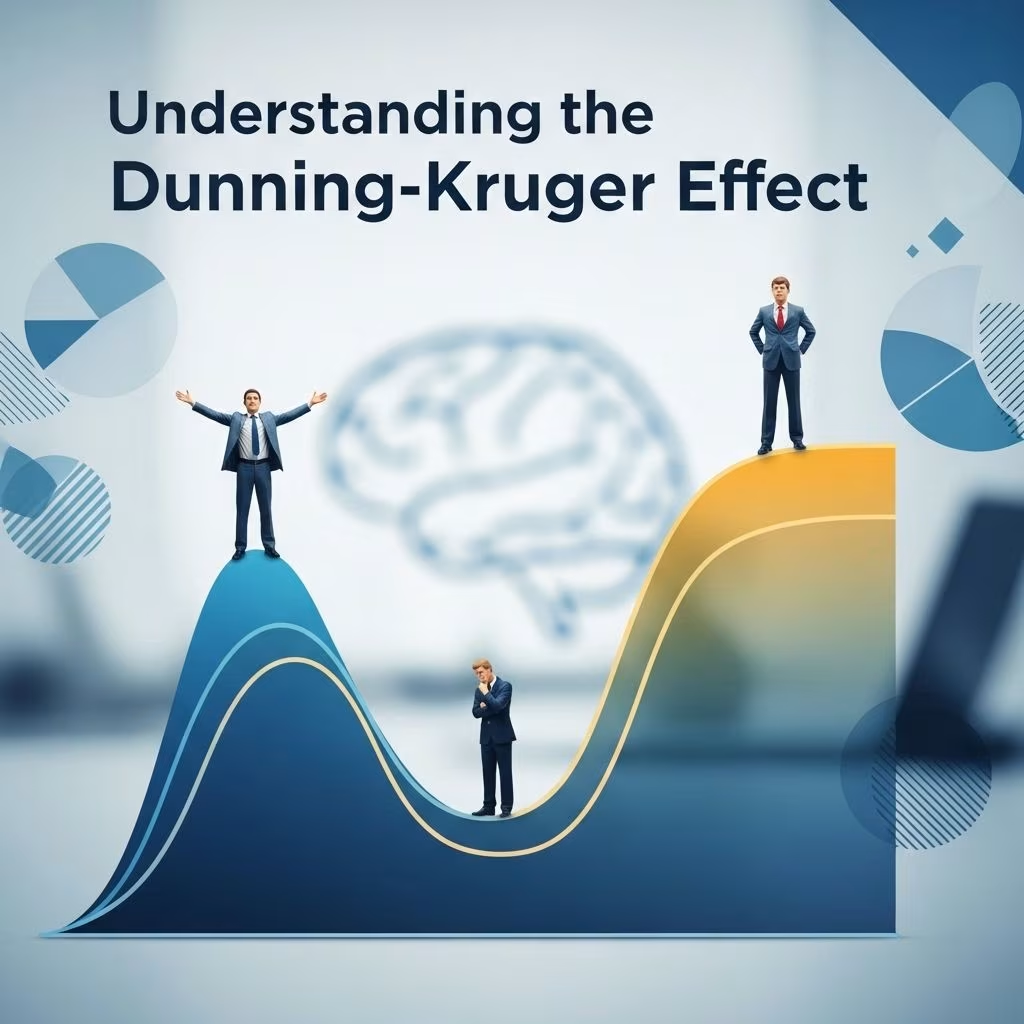
The Dunning-Kruger effect is also visualized as a curve, which illustrates how confidence changes with increasing knowledge. Initially, confidence is high despite limited knowledge. As individuals gain more knowledge, they become more aware of their limitations, and their confidence decreases before rebounding as they become more competent.
Impact of the Dunning-Kruger Effect
The Dunning-Kruger effect has significant implications in various aspects of life, including interpersonal relationships, professional settings, and personal development.
Overcoming the Dunning-Kruger Effect
To mitigate the effects of this bias, it’s essential to foster a culture of intellectual humility and continuous learning. Seeking feedback, acknowledging one’s limitations, and being open to new information can help individuals avoid the pitfalls of overconfidence.
FAQs
Q: What causes the Dunning-Kruger effect?
A: It is primarily caused by a lack of metacognitive ability, which prevents individuals from recognizing their own knowledge gaps.
Q: How does the Dunning-Kruger effect impact decision-making?
A: It can lead to poor decision-making by causing individuals to overestimate their abilities and make choices without adequate understanding or skills.
Q: Can the Dunning-Kruger effect be overcome?
A: Yes, by embracing intellectual humility, seeking feedback, and engaging in continuous learning, individuals can mitigate the effects of this cognitive bias.
References
- https://www.medicinenet.com/what_is_an_example_of_the_dunning-kruger_effect/article.htm
- https://www.britannica.com/science/Dunning-Kruger-effect
- https://www.webmd.com/mental-health/dunning-kruger-effect-what-to-know
- https://en.wikipedia.org/wiki/Dunning%E2%80%93Kruger_effect
- https://www.cognitivebiaslab.com/bias/bias-dunning-kruger/
- https://dovetail.com/research/dunning-kruger-effect-examples/
- https://thedecisionlab.com/biases/dunning-kruger-effect
- https://www.youtube.com/watch?v=h6MYgs0kyzI
- https://statisticsbyjim.com/basics/dunning-kruger-effect-definition-examples/


