


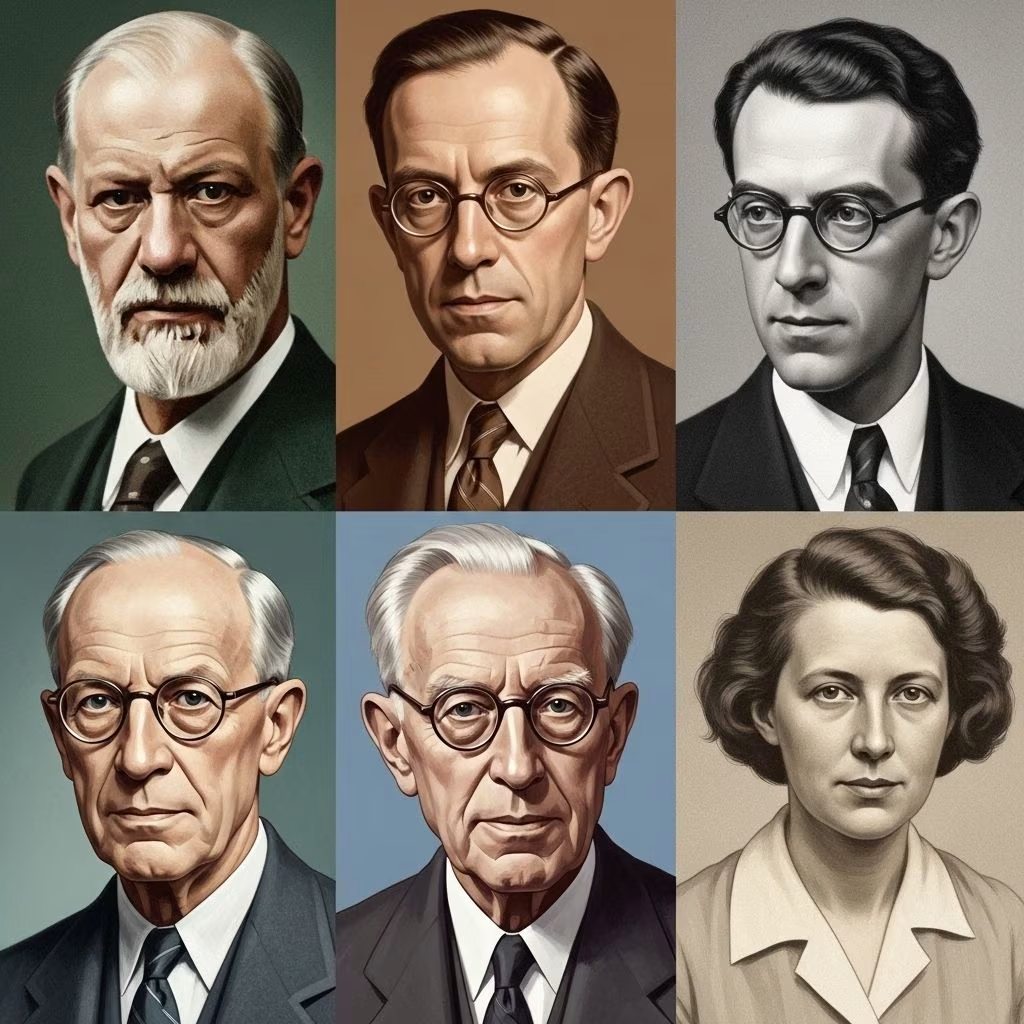
Psychology has evolved from philosophical roots into a multifaceted science, thanks to the groundbreaking work of visionaries who challenged prevailing assumptions and laid the foundations for modern understanding of the mind and behavior. This article highlights the most influential psychologists throughout history, exploring their theories, landmark discoveries, and the enduring influence they have on our daily lives, education, therapy, and scientific research.
Why Study the Pioneers of Psychology?
Understanding the contributions of key psychologists is essential for appreciating the development of psychological science. These figures not only introduced transformative ideas about perception, learning, emotion, and social interaction but also established core methods and ethical framework that continue to inform current practice and scholarship.
- Foundational Theories: Early psychologists built frameworks—such as psychoanalysis, behaviorism, and cognitive psychology—that still guide research and clinical practice.
- Methodological Advances: Innovations in experimentation, therapy, and measurement helped legitimize psychology as a scientific discipline.
- Enduring Influence: The applications of their work are felt in everything from education and counseling to organizational management and public health.
Profiles of the Most Influential Psychologists
Below, we present concise profiles of psychology’s most eminent figures. Each section details their major achievements, core theories, and the continuing legacy of their work.
1. Wilhelm Wundt
Often called the “father of experimental psychology,” Wilhelm Wundt founded the first psychology laboratory in Leipzig, Germany, in 1879. This event marks the official beginning of psychology as a distinct scientific discipline.
- Contributions: Established psychology as an experimental and systematic field, separate from philosophy and physiology.
- Key Theory: Used introspection—systematic self-observation—to analyze conscious mental processes.
- Legacy: Inspired the development of structuralism and experimental methods that shaped later psychological research.
2. William James
An American philosopher and psychologist, William James is renowned for his wide-ranging influence across psychology and philosophy, particularly through his foundational work, The Principles of Psychology (1890).
- Contributions: Developed functionalism, emphasizing the functions of consciousness and behavior in adapting to the environment.
- Key Theory: Explored how mental processes help individuals adapt to their environments, paving the way for applied psychology.
- Legacy: Influenced later approaches including behaviorism and educational psychology.
3. Sigmund Freud
Arguably the most recognizable figure in psychology, Sigmund Freud pioneered psychoanalysis and revolutionized how we understand the unconscious.
- Contributions: Developed psychoanalysis, introducing concepts such as the id, ego, and superego, as well as defense mechanisms.
- Key Theory: Believed human behavior is largely driven by unconscious motives and conflicts originating in early childhood.
- Legacy: While many aspects of Freudian theory are debated today, his focus on the unconscious, childhood experiences, and talk therapy have profoundly shaped clinical psychology, literature, and culture.
4. Ivan Pavlov
Although trained as a physiologist, Ivan Pavlov’s work with dogs led to the discovery of classical conditioning—a fundamental principle in learning theory.
- Contributions: Demonstrated that reflexive behaviors can be conditioned by associating neutral stimuli with biologically significant events.
- Key Theory: Classical conditioning, where a neutral stimulus (like a bell) becomes associated with an unconditioned stimulus (like food) to elicit a conditioned response (salivation).
- Legacy: His work laid the groundwork for behaviorism and led to practical applications in therapy and education.
5. John B. Watson
John B. Watson is credited as the founder of behaviorism, an influential school of thought that emphasized observable and measurable aspects of behavior.
- Contributions: Advocated for psychology as a science of behavior, focusing strictly on observable phenomena and rejecting introspection.
- Key Experiment: The controversial “Little Albert” experiment, which demonstrated how emotions could be conditioned in humans.
- Legacy: Major influence on experimental methods, psychological therapy, and the scientific study of behavior.
6. B.F. Skinner
B.F. Skinner expanded on Watson’s behaviorism to develop the theory of operant conditioning and became a central figure in experimental psychology.
- Contributions: Described how reinforcement and punishment shape behavior; invented the “Skinner box” to study operant conditioning in animals.
- Key Theory: Operant conditioning—learning that occurs through rewards and punishments for behavior.
- Legacy: Applications in education, behavioral therapy, and organizational behavior remain widespread.
7. Carl Jung
Originally a disciple of Freud, Carl Jung broke away to establish analytic psychology and emphasized the importance of the collective unconscious.
- Contributions: Developed the concepts of archetypes, the collective unconscious, individuation, and psychological types.
- Key Theory: Believed all humans share a universal unconscious filled with symbols and myths (archetypes), which shape personality and behavior.
- Legacy: Profound impact on psychotherapy, personality theory, literature, art, and the interpretation of dreams and myths.
8. Jean Piaget
Jean Piaget revolutionized our understanding of child development, demonstrating that children think in fundamentally different ways from adults.
- Contributions: Proposed stages of cognitive development, such as the sensorimotor, preoperational, concrete operational, and formal operational stages.
- Key Theory: Cognitive development proceeds through a series of qualitatively different stages driven by interaction with the environment.
- Legacy: Influence reaches across education, developmental psychology, and understanding of learning processes.
9. Carl Rogers
As a pioneer of humanistic psychology, Carl Rogers emphasized the importance of self-actualization and the person-centered approach to therapy.
- Contributions: Developed client-centered therapy, focusing on empathy, unconditional positive regard, and authenticity in the therapeutic relationship.
- Key Theory: Argued that a supportive environment helps people realize their full potential.
- Legacy: Person-centered therapy forms the basis for much contemporary counseling and psychotherapy.
10. Albert Bandura
Albert Bandura advanced the social learning theory, bridging behavioral and cognitive psychology by showing how people can learn by observation and imitation.
- Contributions: Emphasized modeling, self-efficacy, and observational learning.
- Key Experiment: The Bobo doll studies, which demonstrated that children imitate aggressive behavior modeled by adults.
- Legacy: Social learning theory informs education, therapy, media studies, and the understanding of aggression.
Notable Others: Expanded Influence
While the above ten are often cited as the most influential, psychology has benefited from a diversity of thought. Other notable figures include:
- Erik Erikson: Known for his theory of psychosocial development and the famous eight stages of human growth.
- Abraham Maslow: Developed the hierarchy of needs, a model illustrating motivational priorities from basic needs to self-actualization.
- Edward Thorndike: A pioneer in educational psychology and the law of effect in learning.
- Elizabeth Loftus: Leading researcher in the malleability of human memory and the reliability of eyewitness accounts.
- Mary Whiton Calkins: A prominent early psychologist, first female president of the American Psychological Association, and influential researcher in memory.
Comparative Table: Key Theories and Impact
| Psychologist | Key Theory | Major Impact |
|---|---|---|
| Wilhelm Wundt | Structuralism, Introspection | Established psychology as a scientific field |
| William James | Functionalism | Focus on mental processes for adaptation |
| Sigmund Freud | Psychoanalysis | Father of talk therapy, impact on culture |
| Ivan Pavlov | Classical Conditioning | Foundation for behaviorism |
| John B. Watson | Behaviorism | Focus on observable behavior |
| B.F. Skinner | Operant Conditioning | Behavior modification techniques |
| Carl Jung | Analytical Psychology | Archetypes, collective unconscious |
| Jean Piaget | Cognitive Development | Stages of learning in children |
| Carl Rogers | Humanistic Psychology | Person-centered therapy |
| Albert Bandura | Social Learning Theory | Modeling, self-efficacy |
Theories That Transformed Psychology
Each of these thinkers contributed fundamentally new ways of understanding human nature. Their theories have stood the test of time, either as enduring cornerstones or as catalysts for new debate and refinement:
- Psychoanalysis illuminated the power of the unconscious and early experience (Freud).
- Behaviorism established that all behavior could be measured, predicted, and modified (Watson, Skinner).
- Cognitive Development highlighted the evolving nature of the human mind from childhood onward (Piaget).
- Humanistic and Positive Psychology offered new hope about human potential and well-being (Rogers, Maslow).
- Social Learning Theory showcased the importance of social context and observation in behavior formation (Bandura).
Lasting Influence on Modern Psychology and Society
The discoveries and debates sparked by these foundational figures continue to shape:
- Clinical therapy techniques (e.g., psychoanalysis, behavior therapy, cognitive-behavioral therapy)
- Education and teaching methods (e.g., Piaget’s developmental stages, Bandura’s modeling)
- Workplace management, motivation, and training
- Understanding and addressing psychological disorders
- Our everyday concepts of personality, memory, learning, and growth
Modern schools of thought—ranging from neuropsychology to positive psychology—trace their origins to the ideas introduced by these pioneers. This legacy also underlines the continuing need for research, self-examination, and ethical development in the psychological sciences.
Frequently Asked Questions (FAQs)
Q: Who is considered the founder of modern psychology?
A: Wilhelm Wundt is widely recognized as the founder of modern psychology, having established the first laboratory dedicated to psychological research in 1879.
Q: What is the difference between classical and operant conditioning?
A: Classical conditioning (Pavlov) involves learning through association between a neutral and an unconditioned stimulus, while operant conditioning (Skinner) focuses on how consequences (reinforcements or punishments) shape voluntary behaviors.
Q: Are Freud’s ideas still considered valid in psychology?
A: While Freud’s psychoanalytic theories are less central to mainstream science today, concepts like the unconscious mind, defense mechanisms, and the importance of early childhood experiences remain highly influential.
Q: What was Jean Piaget’s most important discovery?
A: Piaget’s most important contribution is his theory of cognitive development, which posits that children progress through specific stages of mental growth, each characterized by unique ways of thinking and understanding the world.
Q: How does Bandura’s social learning theory apply today?
A: Bandura’s theory explains how people learn by observing others, a principle applied in education, media, therapy, and strategies for behavioral change worldwide.
Further Reading
- The Principles of Psychology by William James
- The Interpretation of Dreams by Sigmund Freud
- Psychology of the Unconscious by Carl Jung
- Observer–Performer Interactions in Social Cognitive Theory by Albert Bandura
- Articles on cognitive development by Jean Piaget
By engaging with the works and ideas of these remarkable minds, we gain invaluable insights into not only the science of human behavior, but our own paths to understanding, empathy, and fulfillment.
References
- https://gsis-kr.libguides.com/c.php?g=826449&p=5903157
- https://podcasts.apple.com/ca/podcast/the-verywell-mind-podcast/id1529983509
- https://positivepsychology.com/what-is-positive-psychology-definition/
- https://www.northcentralcollege.edu/news/2023/08/04/benefits-studying-psychology
- https://www.thedynamicintrovert.com/tag/very-well-mind/


