


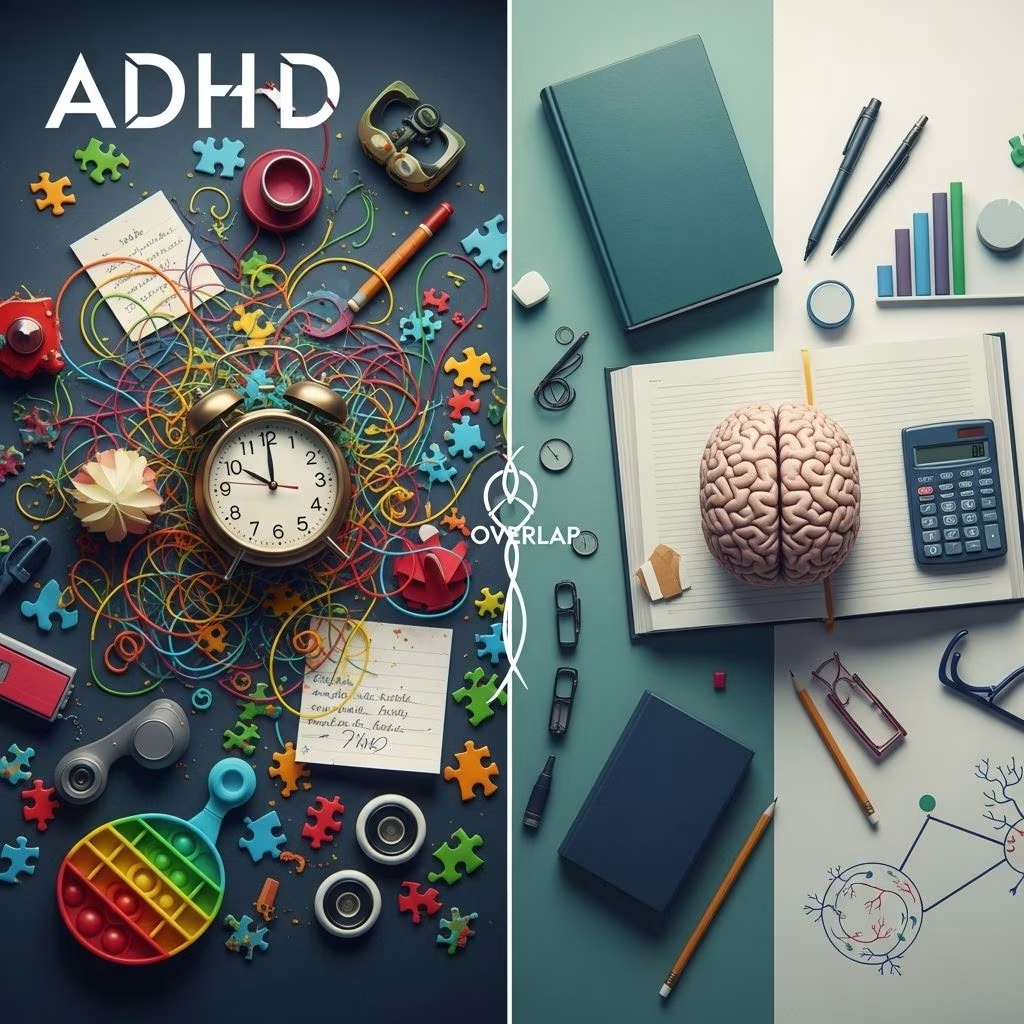
Attention-deficit/hyperactivity disorder (ADHD) affects millions of children and adults worldwide. While often misunderstood, ADHD and learning disabilities both contribute to educational challenges, but they are not the same. This comprehensive guide explores how ADHD is defined, why it is not classified as a learning disability, the ways ADHD impacts learning, and how to access support and accommodations.
What Is ADHD?
ADHD (Attention-Deficit/Hyperactivity Disorder) is a neurodevelopmental disorder characterized by ongoing patterns of inattention, impulsivity, and hyperactivity that interfere with daily functioning in academic, occupational, and home settings.
- Inattention: Difficulty sustaining focus, following through on tasks, organizing activities, and remembering details.
- Hyperactivity: Excessive movement, fidgeting, tapping, or talking at inappropriate times.
- Impulsivity: Rapid decision-making without considering consequences, interrupting others, and difficulty waiting turns.
According to the Diagnostic and Statistical Manual of Mental Disorders (DSM-5), ADHD symptoms often appear before age 12, are inconsistent with developmental level, and are evident across multiple settings such as school, work, and home.
Types of ADHD
- Predominantly Inattentive Type: Trouble focusing, distractibility, forgetfulness, poor organization.
- Predominantly Hyperactive-Impulsive Type: Fidgeting, restlessness, impulsive decisions, excessive talking.
- Combined Type: Features symptoms of both inattention and hyperactivity-impulsivity.
ADHD commonly becomes noticeable during early childhood but may continue into adolescence and adulthood if not identified and managed.
What Is a Learning Disability?
A learning disability is a neurologically-based condition that affects how a person acquires or processes specific academic skills, such as reading, writing, math, or language.
- Dyslexia: Affects reading and language processing.
- Dyscalculia: Impacts mathematical abilities and number comprehension.
- Dysgraphia: Challenges with writing, spelling, and organizing written language.
Learning disabilities are not related to intelligence. Many individuals with a learning disability possess average or above-average intelligence but need tailored instruction or support to succeed academically.
How Learning Disabilities Are Diagnosed
Learning disabilities are identified through a combination of cognitive assessments, standardized testing, and observations of persistent academic difficulties that cannot be explained by intellectual, sensory, or emotional factors.
Why ADHD Is Not Considered a Learning Disability
ADHD is commonly misunderstood as a learning disability, but it is not classified as one by medical or educational authorities.
- ADHD is a neurodevelopmental disorder that primarily affects executive function, attention, impulse control, and behavior management—rather than specific academic skills.
- Learning disabilities involve difficulties in academic skills such as reading, writing, or math, due to differences in how the brain processes specific information.
Consequently, while ADHD may impair academic performance, it does so by disrupting focus and self-regulation rather than directly impeding the ability to learn or perform particular academic tasks.
Legal and Educational Classification
| Condition | Category under IDEA | Primary Impact | Accommodations Available |
|---|---|---|---|
| ADHD | Other Health Impaired | Attention, impulse control, behavior | Yes—eligible for certain accommodations |
| Learning Disabilities (e.g., dyslexia) | Specific Learning Disability | Academic skills (reading, writing, math) | Yes—special instruction, classroom supports |
The Individuals with Disabilities Education Act (IDEA) recognizes ADHD as a disability, but under a different category from specific learning disabilities. ADHD falls under “Other Health Impaired,” while conditions like dyslexia, dyscalculia, and dysgraphia are classified as “Specific Learning Disabilities.”
How ADHD Affects Learning
Although ADHD is not a learning disability, it can significantly affect learning and academic progress.
- Difficulty maintaining focus during lessons or assignments.
- Problems with organizing materials, following instructions, and meeting deadlines.
- Frequent distractibility and forgetfulness, missing important steps or information.
- Challenges in regulating impulses and behavior, leading to classroom disruptions or incomplete work.
These difficulties make traditional learning environments more challenging for students with ADHD, often leading to underachievement despite average or above-average intellectual ability.
Key Differences Between ADHD and Learning Disabilities
| Aspect | ADHD | Learning Disability |
|---|---|---|
| Definition | Neurodevelopmental disorder affecting attention, impulse control, and activity. | Neurological disorder affecting specific academic skills (reading, writing, math). |
| Key Symptoms | Distractibility, impulsivity, hyperactivity, disorganization. | Difficulty with reading, writing, math, or language processing. |
| Core Issue | Executive function (attention/behavior regulation) | Processing of specific academic information |
| Diagnosis | Behavioral observation, clinical interview, symptom scales. | Psychoeducational testing targeting academic skills. |
| Educational Category | Other Health Impaired (IDEA) | Specific Learning Disability (IDEA) |
Comorbidity: When ADHD and Learning Disabilities Co-Occur
A significant proportion of those diagnosed with ADHD also meet criteria for one or more learning disabilities. Research suggests that 30-50% of children with ADHD also have a specific learning disability.
- This comorbidity can increase the risk of academic struggles and behavioral challenges.
- Treatment and intervention plans must address both executive function deficits from ADHD and the specific academic processing needs associated with a learning disability.
For example, a child with both ADHD and dyslexia may need instruction in reading along with behavioral supports for focus and organization.
Diagnosis and Identification
Diagnosing ADHD
ADHD is diagnosed through comprehensive clinical evaluation, including:
- Detailed history from parents/caregivers and teachers
- Standardized behavior rating scales and questionnaires
- Rule-out of other causes for attention/behavioral symptoms
Diagnosing Learning Disabilities
- Psychoeducational assessments of cognitive skills (such as memory, processing speed, language)
- Academic achievement testing in reading, writing, math, and oral language
- Analysis of discrepancies between intellectual ability and academic performance
It is important that school personnel and clinical providers collaborate to ensure both conditions are properly evaluated, especially when symptoms overlap.
Support, Accommodations, and Legal Rights
Educational Rights
Under federal laws such as the Americans with Disabilities Act (ADA) and Section 504 of the Rehabilitation Act, students with ADHD are entitled to reasonable accommodations if their symptoms significantly impact learning.
- Section 504 Plans: May include preferential seating, extended time for tests, breaks, or reduced distraction environments.
- Individualized Education Program (IEP): If ADHD co-occurs with a learning disability, a student may qualify for special education services under IDEA.
Accommodations aim to bridge the functional gap between the student and their neurotypical peers, reducing barriers to learning without altering academic standards.
Workplace Accommodations
- Flexible scheduling or break times
- Written instructions and reminders
- Desk or workspace modifications to limit distractions
Adults with ADHD can request similar workplace accommodations under the ADA if their symptoms interfere with performance of essential job duties.
Tips for Managing ADHD in School and Beyond
- Sit at the front of the classroom or in a low-distraction area.
- Break assignments and tasks into smaller, manageable steps.
- Use visual aids, checklists, and planners to help stay organized.
- Work in short bursts with scheduled breaks.
- Regular communication between teachers, parents, and students to monitor progress and adjust supports.
Frequently Asked Questions
Is ADHD a learning disability?
No. ADHD is not considered a learning disability. It is a neurodevelopmental disorder that affects attention, impulse control, and behavior but not specific academic skills.
Can ADHD and learning disabilities occur together?
Yes. ADHD and learning disabilities frequently co-occur. About 30–50% of children with ADHD also have a specific learning disability, making school and learning especially challenging.
What are the main differences between ADHD and a learning disability?
ADHD affects ability to focus, regulate behavior, and control impulses, while learning disabilities involve specific academic skills like reading, writing, or math.
Can people with ADHD get accommodations at school or work?
Yes. Individuals with ADHD may qualify for accommodations under the ADA or Section 504 if their symptoms substantially impact learning or job performance.
How can educators help students with ADHD?
Provide structured routines, clear instructions, minimized distractions, frequent feedback, and, when needed, individualized supports such as extra time or task modifications.
Key Takeaways
- ADHD and learning disabilities are distinct conditions.
- ADHD is not a learning disability, but both can impact academic performance.
- Effective diagnosis and support require understanding the differences and addressing both executive and academic challenges.
By clarifying the distinctions and overlaps between ADHD and learning disabilities, families and educators can better support the unique needs of each child and adult, enabling them to reach their full potential inside and outside of the classroom.
References
- https://chicagolandneuropsychology.com/blog/is-adhd-a-learning-disability/
- https://www.goodrx.com/conditions/adhd/is-adhd-a-learning-disability
- https://www.capitalareapediatrics.com/blog/adhd-vs-learning-disabilities-understanding-the-differences
- https://ldaamerica.org/disabilities/adhd/
- https://pubmed.ncbi.nlm.nih.gov/7751555/
- https://add.org/is-adhd-a-learning-disability/
- https://www.understood.org/en/articles/conditions-covered-under-idea
- https://www.dcjs.virginia.gov/sites/dcjs.virginia.gov/files/part_04_ldaamerica.org-types_of_learning_disabilities.pdf
- https://www.human.health/blog/is-adhd-a-learning-disability


