


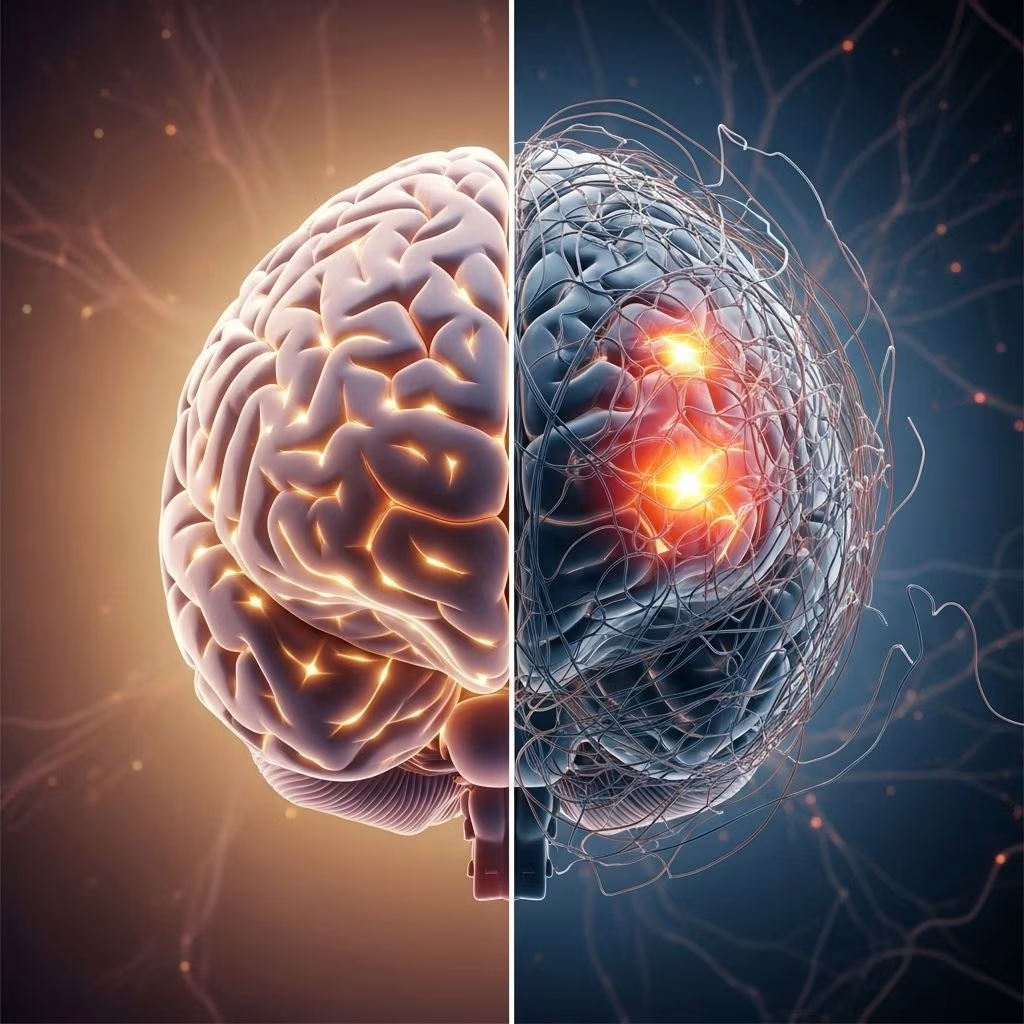
Inappropriate affect is a psychological term describing emotional expressions that are incongruent with the social context or a person’s internal state. While most people’s emotional displays align with their circumstances—such as sadness at loss or joy at celebration—some individuals show affect that appears misplaced or out of sync with what is expected. This article provides an in-depth exploration of inappropriate affect, including its symptoms, causes, related conditions, diagnosis, coping strategies, and treatment options.
What Is Inappropriate Affect?
Inappropriate affect encompasses outward emotional reactions that either do not match the current situation or do not represent the person’s genuine internal feelings. This phenomenon goes beyond simple social awkwardness or holding back emotions; it represents a fundamental disconnect between feeling, context, and expression.
- Definition: Inappropriate affect refers to noticeable mismatches between felt or expected emotions and their actual behavioral display. For example, someone may laugh at tragic news or remain indifferent during a celebration.
- Clinical Significance: It is recognized in clinical psychology as a symptom that may signal underlying physical, neurological, or psychiatric disorders—and, in rare cases, as a disorder in itself.
- Differentiation: Not all unusual emotional expressions qualify; the key feature is a persistent pattern of incongruence that disrupts social connection or reflects underlying pathology.
People with inappropriate affect may act in ways that confuse others or inadvertently create discomfort in social interactions. Understanding the nature of inappropriate affect is key to recognizing, diagnosing, and treating the underlying conditions.
Symptoms of Inappropriate Affect
The presentation of inappropriate affect largely depends on its cause, but several key symptoms are commonly observed. These may involve facial expressions, gestures, tone of voice, and verbal content.
- Emotional Outbursts Misaligned with Context: Such as laughing at bad news, crying during a happy event, or remaining stoic at a time of crisis.
- Self-Awareness of Incongruity: Some individuals recognize their responses as inappropriate yet struggle to control them.
- Extreme or Absent Emotional Reactions: Overreacting (e.g., becoming angry without cause) or underreacting (showing no affect when one is expected).
- Uncontrollable Emotions: Crying, laughing, or other displays without clear external triggers or internal logical reason.
- Emotion-Agnostic Demeanor: Flat or blunted affect, where expected emotional responses are diminished or absent.
Severity can range from mild social awkwardness to marked disruptions in daily functioning and relationships.
Types of Inappropriate Affect
Inappropriate affect is not a single, uniform entity; it encompasses several subtypes based on how emotion is expressed or suppressed. Its classification helps in differential diagnosis and treatment planning.
| Type | Description | Example |
|---|---|---|
| Blunted Affect | Significantly reduced expression of emotional intensity. | Describing a traumatic event with detachment, monotone speech, and minimal facial expression. |
| Flat Affect | Near or total absence of emotional expression. | Maintaining a neutral face, regardless of circumstances joyful or tragic. |
| Labile Affect | Rapid, unpredictable, and extreme mood shifts. | Switching quickly from laughter to tears without apparent reason. |
| Inappropriate Affect | Emotional reactions that actively contradict the social or contextual expectation. | Laughing at a funeral, or showing anger at a gift. |
| Broad Affect | Normal range and intensity of emotional expressions—used as a reference point. | Appropriate sadness at loss, joy at a wedding, restraint at work, etc. |
| Restricted Affect | Limited variability or range of emotional display. | Responding to events with consistently mild emotions, no matter the circumstance. |
What Causes Inappropriate Affect?
The phenomenon of inappropriate affect can have a variety of roots. It is typically not a primary disorder but a symptom or sign of broader issues—ranging from psychiatric, neurological, to developmental conditions.
- Psychiatric Disorders:
- Schizophrenia: Commonly features inappropriate affect, especially as negative symptoms, where outward emotion does not match experience or situation.
- Bipolar Disorder: Manic or depressive episodes may include out-of-place laughter, irritability, or apathy.
- Borderline Personality Disorder: Rapid and disproportionate mood swings, inappropriate anger, or extreme emotional displays in response to minor stimuli.
- Autism Spectrum Disorder: Emotion may not synchronize with social norms, often due to challenges in reading social cues.
- Neurological or Medical Conditions:
- Brain Injury/Tumor: Damage to areas such as the limbic system, prefrontal cortex, or anterior cingulate cortex—regions closely linked to emotion regulation.
- Dementia, Alzheimer’s Disease: Affect may become unpredictable or mismatched as disease progresses.
- Post-Traumatic Stress Disorder (PTSD): Emotional numbness, outbursts, or inappropriate responses can occur as trauma responses.
- Stroke/Seizures: Disruption in brain functioning can lead to emotional dysregulation.
- Other Causes:
- Developmental Delays: Difficulties with understanding and displaying socially appropriate emotions.
- Substance Intoxication/Withdrawal: Can temporarily disrupt normal emotional responses.
- Medication Side Effects: Some psychiatric or neurological medications may influence affect regulation.
It is important to remember that what appears as inappropriate affect may, in some cases, be culturally or individually normative—context and history matter in assessment and diagnosis.
Diagnosis and Assessment
Diagnosing inappropriate affect involves a comprehensive evaluation by a trained mental health professional. Since it commonly signals underlying neurological or psychiatric illness, accurate diagnosis is crucial.
- Clinical Interview: Includes observation of behavior, self-reported experiences, and context-specific questioning.
- Medical and Psychiatric History: Review of previous diagnoses, treatments, medications, and significant life events.
- Neuropsychological Tests: To rule out neurological disorders or damage affecting emotional centers in the brain.
- Physical Examination and Imaging: MRI, CT scans, or EEGs may be used to check for brain injury or anomalies.
- Collateral Information: Input from family, friends, or caregivers to help map patterns of affective display across settings.
Given the complexity of its causes and expressions, a multipronged approach is often needed for a clear diagnosis, ruling out medical causes before establishing psychiatric origins.
Associated Disorders and Conditions
Inappropriate affect is not a solitary diagnosis but is most commonly associated with several recognized disorders. Awareness of these associations aids early recognition and targeted intervention.
- Schizophrenia: Inconsistent or flat affect is a hallmark, often part of the ‘negative symptoms’ spectrum. May include smiling or laughing without cause, or lack of expected sadness or joy.
- Bipolar Disorder: Affective incongruence occurs during manic (euphoria, irritability in inappropriate settings) and depressive episodes (emotional numbness).
- Autism Spectrum Disorder: Challenges with social reciprocity and reading environmental cues can produce responses seen as inappropriate.
- Dementia and Alzheimer’s Disease: Affective unpredictability increases as cognitive impairment worsens.
- Borderline Personality Disorder: Emotional dysregulation often produces expressions of affect that are swiftly changing and disproportionate.
- Traumatic Brain Injury: Physical disruption of emotion-regulating brain regions.
- PTSD: Emotional lability, outbursts, or detachment.
Less common associations may also be present, including mood disorders, major depressive disorder, substance use disorders, and neurodevelopmental conditions such as intellectual disabilities.
Coping Strategies
Living with, or caring for someone with, inappropriate affect requires patience, understanding, and support. While treatment target underlying causes, coping skills can alleviate distress in day-to-day life.
- Seek Professional Support: Consult a mental health professional for accurate diagnosis and personalized coping plans.
- Educate and Communicate: Learning about the nature of inappropriate affect and communicating openly with friends, family, and caregivers.
- Develop Emotional Awareness: Keep emotion journals; practice mindfulness to help recognize emotional triggers and patterns.
- Social Skills Training: Designed to help those who struggle to read or respond appropriately to social cues.
- Practice Self-Care: Adequate sleep, nutrition, exercise, and stress management.
Treatment Options
Treatment focuses on managing underlying causes and improving emotion regulation and social functioning. Interventions are individualized, depending on diagnosis and severity.
- Psychotherapy:
- Cognitive-Behavioral Therapy (CBT): Helps increase emotional awareness, address thought distortions, and develop new behaviors.
- Dialectical Behavior Therapy (DBT): Especially for emotional regulation in borderline personality disorder.
- Social Skills Training: To improve social judgment and emotional expression.
- Medication:
- Antipsychotics, mood stabilizers, or antidepressants as indicated by underlying conditions like schizophrenia, bipolar disorder, depression.
- Careful monitoring for side effects that may alter affect.
- Education and Family Support: Psychoeducation for patient and caregivers to build understanding, empathy, and techniques for management.
- Occupational or Speech Therapy: For those whose neurological condition impacts communication or emotional regulation.
Treatment outcomes are best with interdisciplinary collaboration—combining psychiatric, medical, neurological, and social support systems.
When to Seek Help
It is important to seek professional advice when emotional reactions are frequently incongruent with reality, disrupt daily functioning, affect relationships, or cause distress. Early intervention can prevent further complications and improve quality of life.
- Notice persistent or severe mismatches between expressed and expected emotion.
- Behavior causes significant embarrassment, misunderstandings, or isolation.
- Associated with changes in behavior, cognition, or neurological signs (e.g., memory loss, confusion).
A qualified healthcare provider can offer guidance, assessment, and treatment tailored to each individual’s needs.
Frequently Asked Questions (FAQs)
Q: Can inappropriate affect occur in people without a diagnosed disorder?
A: While most often linked to neurological, developmental, or psychiatric conditions, occasional mismatched affect can appear in high-stress situations or after trauma. Persistent or socially disruptive patterns usually signal an underlying condition.
Q: Is inappropriate affect the same as flat affect?
A: No. Flat affect refers to a near-total absence of emotional expression, while inappropriate affect refers to emotional displays that do not fit the context—both are symptoms of disrupted emotional regulation, but each has specific features.
Q: What role does culture play in judging emotional appropriateness?
A: Cultural background significantly shapes expectations for emotional expression. What may seem inappropriate in one culture may be normal in another, so clinicians always factor in cultural context during assessment.
Q: Can inappropriate affect be treated effectively?
A: Treatment is possible and often effective, especially when a clear underlying cause is identified and addressed. Therapy, medication, education, and family support all play roles in improvement.
Q: Do children display inappropriate affect differently from adults?
A: Children may show mismatched emotions for developmental reasons, but persistent or severe inappropriate affect in childhood often signals underlying issues similar to adults, though the assessment and approach may differ.
Final Thoughts
Inappropriate affect is a complex symptom that disrupts the harmony between internal experience, behavioral display, and situational context. Though often a sign of deeper psychological, neurological, or developmental conditions, it can be effectively managed with early, comprehensive intervention. Education, support, and a multidisciplinary approach remain central to successful outcomes for individuals and their families.
References
- https://russcounseling.com/understanding-the-inappropriate-affect/
- https://manourja.com/mental-health/inappropriate-affect-and-incoherence/
- https://www.betterhelp.com/advice/personality-disorders/inappropriate-affect-symptoms-and-signs/
- https://helpfulprofessor.com/types-of-affect/
- https://www.intuitivepathwaysrecovery.com/understanding-inappropriate-affect/
- https://dictionary.apa.org/inappropriate-affect
- https://www.webmd.com/mental-health/flat-affect
- https://study.com/academy/lesson/affect-in-psychology-definition-types.html


