


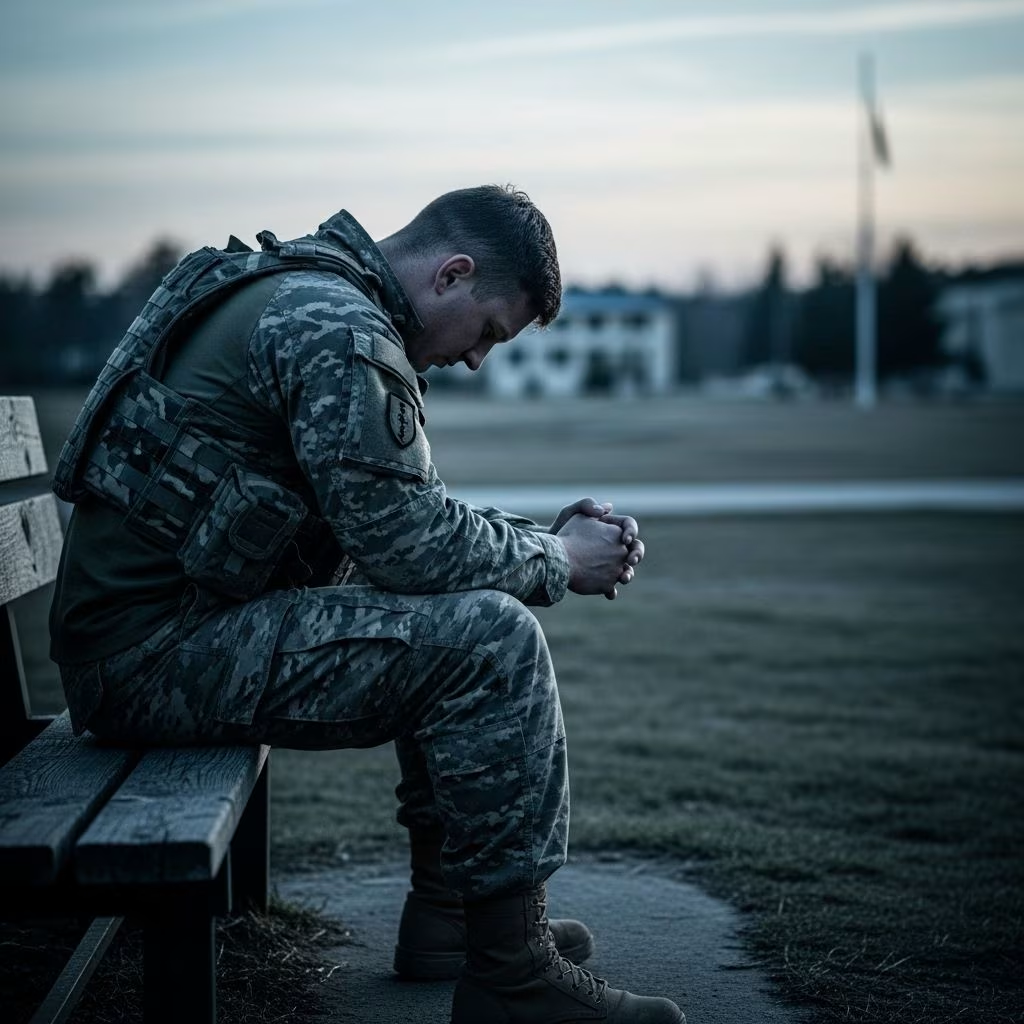
Mental health plays a crucial role in the selection, readiness, and overall well-being of U.S. military personnel. The military has specific mental health standards that not only affect the ability to enlist but also impact eligibility for deployment, ongoing service, and post-service adjustment. The demands and stressors of military life can pose serious challenges to mental health, making awareness, diagnosis, and support more important than ever. This article provides a comprehensive overview of how mental illnesses intersect with military service, recent trends, eligibility criteria, diagnostic procedures, and available support resources.
Overview: Military Service and Mental Health
The U.S. military requires all service members to be ready for the physical and psychological challenges they may face during training, deployment, or combat. Mental health disorders, if not well-managed, can affect operational performance, decision-making, and personal safety. As such, the Department of Defense establishes medical standards that stipulate which mental health conditions may disqualify individuals from joining or continuing service.
- Prevalence: From 2019 to 2023, over 541,000 active-duty members received a mental health diagnosis. The most common disorders were anxiety, depression, and PTSD.
- Incidence Trends: Diagnoses rose by about 40% over five years, with the sharpest increases in anxiety and PTSD, especially since the start of the COVID-19 pandemic.
- Severity and Impact: In 2023, mental health disorders became the leading cause of hospital bed usage among active-duty troops, accounting for the majority of hospital bed days.
Mental Health Conditions: Common Diagnoses in the Military
Active-duty troops experience a variety of mental health challenges. The most frequently diagnosed mental illnesses include:
- Adjustment Disorders – Emotional or behavioral symptoms in response to stress such as relocation, deployment, or combat.
- Anxiety Disorders – Including generalized anxiety disorder, panic disorder, and phobias. Rates of anxiety disorders have nearly doubled among service members from 2019 to 2023.
- Depressive Disorders – Major depressive disorder, persistent depressive disorder (dysthymia), and others are prevalent. Depression is noted as a significant cause of medical appointments and hospitalizations.
- Post-Traumatic Stress Disorder (PTSD) – Often associated with combat, post-traumatic events, or sexual assault. PTSD diagnoses have likewise nearly doubled in the past five years.
- Acute Stress Disorder – Acute reactions to trauma or significant stress, sometimes preceding PTSD.
- Substance Use Disorders – Including problematic use of alcohol, prescription, or illicit drugs. These are often comorbid with anxiety or depression.
- Bipolar Disorders – Characterized by mood swings between mania and depression.
- Schizophrenia and Other Psychotic Disorders – Relatively rare but significant when present.
The military recognizes that mental wellness is critical not only for the individual but for unit cohesion and mission success. As understanding has grown, so has investment in prevention, diagnosis, and treatment.
Mental Health Diagnosis Trends: Recent Data and Demographic Patterns
Surveillance by the Defense Health Agency and other sources reveals substantial increases in mental health diagnoses among active-duty personnel:
- Diagnoses of mental health disorders among active-duty troops increased nearly 40% between 2019 and 2023.
- Anxiety and PTSD rates almost doubled during this period, with the COVID-19 pandemic identified as a potential contributing factor.
- The Army accounted for the highest share of service members with at least one mental health care visit, followed by other branches.
- Women were more likely to be diagnosed with mental health conditions, particularly PTSD (at twice the rate of men), and this risk increased with age.
- The Navy led in diagnoses of depressive, bipolar, and personality disorders.
| Branch | Most Common Diagnoses |
|---|---|
| Army | Anxiety, Adjustment, Depression, PTSD |
| Navy | Depressive, Bipolar, Personality Disorders |
| Air Force | Anxiety, Depression |
| Marines | Adjustment, Anxiety, Substance Use |
These trends underscore the importance of accessible care and the need to address stigma around seeking mental health services in the military environment.
Eligibility: Can You Join the Military with a Mental Illness?
Meeting mental health requirements is a fundamental part of qualifying for U.S. military service. The Department of Defense has established disqualifying conditions to ensure all entrants are prepared for the demands of service and not at disproportionate risk for lapse in safety or performance.
Disqualifying Mental Health Conditions
Certain mental health diagnoses are considered disqualifying for enlistment unless waivers are granted under specific circumstances. These typically include:
- Schizophrenia and Other Psychotic Disorders
- Bipolar Disorder
- Current or Recent Major Depressive Episodes – usually within the past year
- Anxiety Disorders – such as OCD, panic disorder, and generalized anxiety disorder (recent or severe cases)
- PTSD and Acute Stress Disorder
- Personality Disorders
- Substance Use Disorders – ongoing or recent abuse/dependence
- History of Suicide Attempt or Self-Harm
Applicants with a history of the above conditions, even if well-controlled, may be barred from enlistment unless they receive a waiver. The reasoning is based on both risk to individual and mission effectiveness.
Possible Waivers
The military may consider waivers on a case-by-case basis. Factors that increase waiver approval include:
- Symptoms fully resolved without medication for a specified period (usually 1–3 years)
- No hospitalization or suicidal behavior in the recent past
- Low risk of recurrence and favorable psychological evaluations
However, the military is generally more restrictive when it comes to waivers for severe conditions, recent episodes, or comorbid substance use.
Assessment and Disclosure: How Mental Health Conditions Are Evaluated
Military applicants undergo an extensive medical examination that includes mental health screening. Disclosure of prior diagnoses, treatments, or medications is required during the enlistment process. The process typically involves:
- Medical History Review: Candidates must provide a complete health history, including mental health.
- Interview and Physical: Conducted at a Military Entrance Processing Station (MEPS); may include psychiatric evaluation if there are concerns.
- Additional Documentation: If prior diagnoses are disclosed, applicants may need to furnish evaluation summaries, treatment records, or letters from treating professionals.
- Final Determination: Medical personnel make a recommendation. If a disqualifying condition is present, a waiver request process may be triggered.
Important: Failure to disclose a prior mental health diagnosis can have serious consequences. If discovered after entering service, individuals may face discharge or other administrative penalties.
Mental Health Challenges During Service: Deployment, Stressors, and Care
The military recognizes that service brings significant stress, and even those with no prior diagnosis of mental illness may develop symptoms due to:
- Combat or deployment exposure
- Separation from family and support systems
- High operational tempo and unpredictability
- Sexual assault or harassment
- Adverse events such as injury, loss of comrades, or disaster response
Ongoing mental health care is available during and after service. Early intervention is promoted, and there is increasing awareness about reducing stigma. Diagnosed conditions during service can affect eligibility for deployment or continued service, especially if severe or impairing function.
Treatment, Support, and Resources
Service members experiencing mental health symptoms have access to several support avenues:
- Military Treatment Facilities: Offer in-person and telehealth psychological care. Approximately 33% of active-duty personnel had at least one mental health–related visit between 2019 and 2023.
- Military OneSource and Chaplain Services: Confidential counseling, crisis support, and spiritual guidance.
- Chain of Command: Leaders are increasingly trained to recognize and address mental health concerns.
- DoD and VA Crisis Lines: Includes the 988 Suicide & Crisis Lifeline and 838255 text service, as well as walk-in urgent mental health clinics.
Despite these resources, some barriers to care persist, such as stigma, concerns about privacy, and limited access in remote locations. Policies continue to evolve to improve care accessibility and encourage help-seeking behavior.
Veterans and Ongoing Mental Health Needs
Veterans may be at particularly high risk for certain mental health issues:
- Veterans are nearly twice as likely as civilians to die by suicide. The suicide rate among former service members has remained troublingly high, rising 6% in 2023.
- About 1 in 3 veterans experience symptoms of depression, and 1 in 5 develop serious depressive symptoms.
- The VA and other organizations have greatly expanded mental health and substance use treatment resources for veterans, offering a range of programs and crisis services.
Reducing Stigma and Promoting Mental Wellness in the Military
Efforts within the military are focused on promoting help-seeking behaviors, de-stigmatizing mental illness, and taking a holistic approach to psychological health. Leaders and peers are encouraged to:
- Discuss mental health openly and supportively
- Encourage early intervention and regular wellness checks
- Fight misconceptions that seeking help damages one’s career
- Emphasize confidentiality and respect
Such efforts are essential for ensuring the long-term health and effectiveness of the force.
Frequently Asked Questions (FAQs)
Can someone with a mental health diagnosis enlist in the U.S. military?
Most current or recent severe mental health conditions such as schizophrenia, bipolar disorder, major depression, PTSD, and ongoing substance use disqualify an applicant. However, in some cases, applicants whose symptoms have resolved and who meet other stability criteria may apply for a waiver. All waivers are considered on a case-by-case basis and are not guaranteed.
Is it mandatory to disclose prior mental health treatment or diagnosis when enlisting?
Yes, full disclosure is required on all medical screening forms. Concealing a mental health diagnosis can result in disqualification, discharge, or future loss of benefits.
What mental health care resources are available to active-duty troops and veterans?
Resources include military treatment facility care, confidential counseling via Military OneSource, chaplain services, and crisis support lines (including the 988 Suicide & Crisis Lifeline). Veterans can access care through the VA, community providers, and specialty programs for PTSD, depression, and substance use.
How common are mental health diagnoses among active-duty service members?
Between 2019 and 2023, over 541,000 active-duty service members—nearly one in four—received at least one mental health diagnosis, with anxiety and PTSD showing the greatest increases.
Does a mental health diagnosis mean a service member will be discharged?
Not automatically. The outcome depends on the severity, diagnosis, functional impact, and treatment response. Some may return to full duty after successful intervention; others may be restricted from deployment or separated if found unfit for service.
Takeaway: The Evolving Relationship Between Mental Health and Military Service
Mental health is inseparable from military readiness and well-being. The Department of Defense continues to refine policies governing enlistment, retention, and deployment to reflect evolving understanding of psychological health. As diagnostic rates climb—driven partly by improved awareness and external stressors like COVID-19—the need for compassionate, effective, and accessible care across the service lifespan has never been greater.
If you or someone you know in the military or veteran community is struggling with mental health issues, support is available 24/7 through the Suicide & Crisis Lifeline at 988 or via text at 838255.
References
- https://pubmed.ncbi.nlm.nih.gov/39736156/
- https://www.militarytimes.com/news/2025/01/03/40-rise-in-mental-health-diagnoses-among-troops-report-finds/
- https://jamanetwork.com/journals/jama-health-forum/fullarticle/2810203
- https://www.health.mil/News/Articles/2024/12/01/MSMR-Mental-Health-Update-2024
- https://www.ncbi.nlm.nih.gov/books/NBK572092/
- https://www.research.va.gov/topics/mental_health.cfm
- https://www.samhsa.gov/blog/supporting-behavioral-health-needs-our-nations-veterans
- https://veteranaddiction.org/mental-health/


