


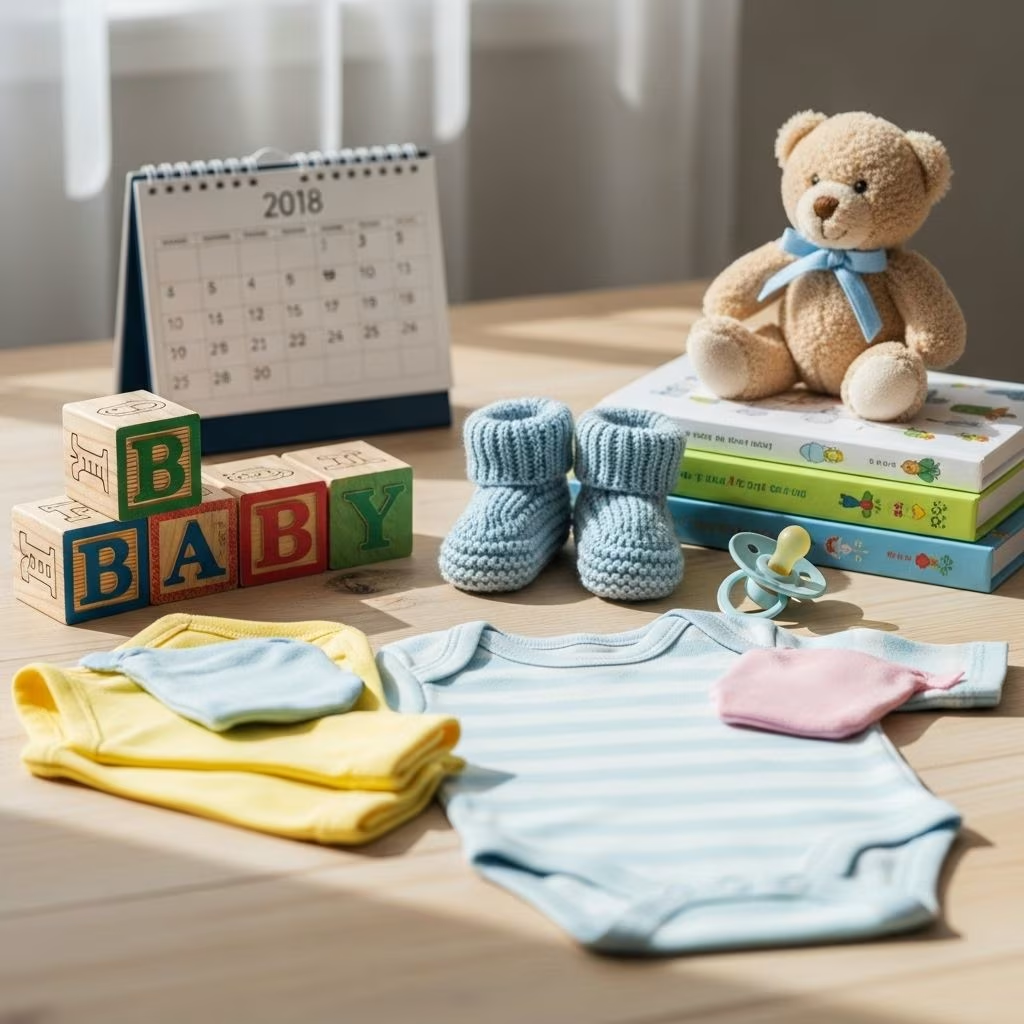
Choosing the perfect name for your baby is one of the most significant decisions expectant parents face. The name you select will become an integral part of your child’s identity, shaping how they see themselves and how others perceive them throughout their lives. In 2018, naming trends revealed fascinating insights into what parents valued most when selecting names for their little ones, from timeless classics to fresh new entries that captured the zeitgeist of the era.
The year 2018 saw a continuation of established favorites alongside exciting newcomers that reflected cultural influences, celebrity choices, and royal connections. Understanding these trends provides valuable context for parents navigating their own naming journey while offering a glimpse into the broader patterns that influence how societies choose names across generations.
The Reigning Champions: Oliver and Charlotte
At the pinnacle of 2018’s baby naming landscape stood two names that had captured the hearts of parents across Australia and beyond. Oliver maintained his stronghold as the most popular boys’ name, a position he had held since 2013, demonstrating remarkable staying power in an ever-changing naming landscape. This classic name, with its English origins meaning “ancestor’s descendant” or associated with the olive tree symbolizing peace, resonated deeply with parents seeking a name that balanced tradition with contemporary appeal.
For girls, Charlotte continued her reign for the third consecutive year, having overtaken Olivia in 2015. The name Charlotte, with its sophisticated yet approachable quality, embodied elegance and strength in equal measure. Its popularity surge coincided with the birth of Princess Charlotte in 2015, demonstrating how royal influences continue to shape naming preferences in modern Australia. The name’s French origins, meaning “free man” in its feminine form, added a layer of empowerment that appealed to contemporary parents.
These two names represented more than just popularity; they symbolized a broader trend toward names that felt both established and fresh, classic yet not stuffy, sophisticated without being pretentious. Oliver and Charlotte struck the perfect balance that parents in 2018 were seeking.
Top Ten Contenders and Their Meanings
Beyond the number one positions, the top ten baby names of 2018 revealed a diverse array of choices that reflected different cultural influences and preferences. For boys, the list included strong, traditional names alongside more contemporary options. Jackson, celebrating its sixth year at or near the top, represented a trend toward surnames as first names, literally meaning “son of Jack” with its strong English heritage.
Liam, the Irish diminutive of William, continued its meteoric rise in popularity, offering parents a name that felt both international and accessible. Noah, with its Hebrew origins meaning “rest” and “comfort,” provided biblical gravitas while remaining gentle and approachable. Aiden, another Irish favorite meaning “fiery” or “little fire,” captured the spirited energy parents hoped to see in their sons.
The girls’ top ten showcased equally compelling choices. Sophia, remarkably spending its ninth consecutive year at the pinnacle of Baby Centre’s data from 750,000 parents, demonstrated extraordinary endurance with its Greek meaning of “wisdom.” Olivia, Emma, and Ava formed a trio of classic names that had dominated lists for years, each bringing their own distinctive character—Olivia with its Shakespearean literary connections, Emma with its German origins meaning “universal,” and Ava with its Latin roots suggesting “life” or “bird.”
Isabella, the Hebrew name meaning “God is my oath,” offered parents a name rich in religious significance, while Aria brought a musical quality, referencing the solo performed by an opera’s leading character while also carrying Hebrew meanings of “lioness.” These names collectively represented a preference for names with depth, meaning, and cross-cultural appeal.
Fresh Faces: New Entries to the Top 100
One of the most exciting aspects of analyzing yearly baby name trends involves identifying which names broke into the prestigious top 100 for the first time. In 2018, seven new boys’ names made this significant leap, each bringing its own unique appeal and reflecting evolving parenting preferences.
Arthur emerged at 83rd position, representing a revival of vintage Victorian-era names that had fallen out of favor for decades. This return to heritage names suggested parents were mining history for inspiration, seeking names with gravitas and distinguished pedigrees. Bodhi, entering at 93rd, reflected Australia’s multicultural landscape and growing interest in names with spiritual significance, as this Sanskrit name means “awakening” or “enlightenment” in Buddhist tradition.
Jude at 94th offered a short, punchy alternative to longer traditional names, while Asher at 97th brought Hebrew heritage meaning “happy” or “blessed.” Leon rounded out the new entries at 100th, representing a European sophistication that appealed to cosmopolitan parents. Aaron at 98th and Harley at 99th completed the lineup of fresh male names, the latter representing the continued trend of using surnames and word names as given names.
For girls, five new names crashed the top 100 party. Freya at 66th brought Norse mythology into the mix, naming daughters after the goddess of love, beauty, and fertility. Luna at 83rd reflected the celestial naming trend, with its Latin meaning of “moon” capturing imaginations. Harlow at 85th, Elena at 94th, and Millie at 96th rounded out the newcomers, each bringing distinct qualities—Harlow’s vintage Hollywood glamour, Elena’s international elegance, and Millie’s sweet, approachable charm.
These new entries displaced previously popular names, demonstrating the dynamic nature of naming trends as names rise and fall in collective favor based on cultural moments, celebrity influences, and shifting aesthetic preferences.
Royal Influence on Baby Names
Perhaps no cultural force shaped 2018’s baby naming landscape more significantly than the British Royal Family. The younger generation of royals, particularly Prince William and Catherine, Duchess of Cambridge, resonated powerfully with Australian parents in their family-forming years. The births of Prince George in 2013 and Princess Charlotte in 2015 created naming ripples that extended far beyond British shores.
George’s trajectory exemplified this royal influence perfectly. The name jumped from 71st position in 2012 to 35th by 2017, a remarkable ascent directly correlating with Prince George’s birth. Charlotte’s story proved even more dramatic—the name not only entered the top rankings but actually claimed the number one position in 2015, the year of the princess’s birth, and maintained that crown through 2018.
The birth of Prince Louis in 2018 positioned this name for a similar surge, with predictions that it would climb from its 73rd position as parents embraced this royal connection. The name Louis, with its French and German origins meaning “famous warrior,” offered parents a name steeped in European royal history while feeling fresh and accessible.
Prince Harry’s increased visibility around his May 2018 wedding to Meghan Markle elevated the name Henry—Harry’s formal given name—which entered the top ten for the first time in over six years. This steady climb from 32nd in 2011 to 8th in 2017 demonstrated how sustained positive media coverage of royal figures translated directly into naming preferences. The royal wedding also raised questions about whether Meghan would experience a renaissance, though the name had been absent from the top 100 for over six years.
Other royal names maintaining strong positions included William, Edward, Charles, Elizabeth, Zara, and Victoria—a roster of names that connected modern babies to centuries of royal tradition while remaining thoroughly contemporary in their appeal.
Cultural and Celebrity Influences
While royals dominated much of the conversation around naming influences, broader celebrity culture and entertainment also shaped parents’ choices in 2018. The rise of names like Aria reflected not only musical associations but also the influence of popular television series where characters bore these names, introducing them to millions of viewers and normalizing them as baby name options.
The trend toward using surnames as first names—evident in choices like Mason, Jackson, and Grayson—reflected a broader cultural shift toward names that projected strength, uniqueness, and a sense of heritage. Mason, meaning “maker” or “a person who works with stone,” offered occupational name appeal, while Grayson’s meaning of “son of a grey-haired one” provided intergenerational connection.
International influences also played a significant role. Luca, a unisex name with Italian origins meaning “a person from Lucania,” demonstrated parents’ increasing comfort with names from diverse cultural backgrounds. This reflected Australia’s multicultural society and parents’ desire to honor various heritages or simply embrace the global village of contemporary life.
The continued popularity of Irish names—Liam, Aiden, Riley—spoke to the enduring appeal of Celtic heritage and the melodic quality these names brought. Riley, meaning “a person who dwelled near a meadow or field,” offered versatility as a unisex option, reflecting growing comfort with gender-neutral naming practices.
Naming Trends and Patterns
Analyzing the 2018 baby name data revealed several overarching patterns that provided insight into what parents valued when naming their children. First, there was a clear preference for names with strong historical roots and meaningful etymologies. Parents weren’t simply choosing names based on sound alone; they wanted names with substance, stories, and significance that they could share with their children as they grew.
Second, the balance between uniqueness and familiarity proved crucial. While parents wanted their children to have distinctive identities, they also gravitated toward names that were recognizable, pronounceable, and unlikely to cause their children difficulties. This explained the enduring popularity of classics like Oliver and Charlotte—they were well-known enough to avoid constant spelling corrections yet popular enough to feel current rather than dusty.
Third, international influences had become thoroughly normalized. Parents felt comfortable drawing from Greek, Hebrew, Irish, Italian, Arabic, and Norse traditions, reflecting both cultural diversity and the globalized nature of contemporary society. Names like Amelia (Latin), Layla (Arabic), and Bodhi (Sanskrit) sat comfortably alongside traditionally English names in the top rankings.
Fourth, there was a notable trend toward shorter names or names with obvious short forms. In an increasingly informal society, names like Mia, Ava, Noah, and Liam offered simplicity and directness. Even longer names often came with built-in nicknames—Charlotte becoming Charlie, Isabella becoming Bella or Izzy, and Oliver becoming Ollie.
Regional Variations and Data Sources
It’s important to note that baby name popularity could vary significantly depending on the data source and geographic region analyzed. Baby Centre’s data, drawn from nearly 750,000 parents in 2018, represented one of the most comprehensive collections but focused primarily on their user base, which might skew toward certain demographics.
Australian state registries, such as Victoria’s births, deaths, and marriages department, provided official government data that captured every registered birth, offering a complete picture of naming trends within specific regions. These official sources often showed slight variations from private company data, with some names ranking differently based on local preferences and cultural compositions.
The McCrindle research focusing specifically on Australian data highlighted regional preferences that might differ from global English-speaking trends. While Oliver and Charlotte dominated in Australia, other English-speaking countries might show different patterns based on their unique cultural influences and celebrity landscapes.
Understanding these variations proved valuable for parents seeking to gauge how common or unique their chosen name might be in their specific community, rather than relying solely on national or international rankings.
The Pressure and Joy of Naming
Behind every statistic and ranking stood real parents grappling with the weighty responsibility of naming another human being. The pressure to find something original yet not bizarre, meaningful yet not pretentious, honoring family traditions yet not feeling dated, created genuine anxiety for many expectant parents.
Questions swirled constantly: Would the child like their name? Would it suit them as both a baby and an adult? Would people be able to pronounce and spell it correctly? Would they face teasing? Would the name help or hinder them professionally in adulthood? These concerns explained why many parents gravitated toward the safety of popular names—they were popular precisely because they successfully navigated these various considerations.
Yet there was also profound joy in the naming process. Selecting a name represented parents’ first major decision on behalf of their child, the first gift they could give before birth. It embodied their hopes, dreams, values, and vision for their child’s future. Whether choosing a family name to honor beloved relatives, selecting a name from their cultural heritage, or simply picking something they found beautiful, parents invested enormous emotional energy in getting it right.
The 2018 naming data validated many parents’ choices by showing they weren’t alone in their preferences, while also highlighting distinctive options for those seeking the road less traveled. Understanding these trends helped parents make informed decisions, whether choosing to embrace popularity or deliberately seek alternatives.
Frequently Asked Questions
Q: Why do baby name trends change over time?
A: Baby name trends evolve due to multiple factors including celebrity and royal influences, popular culture and media exposure, generational cycles where old names become new again, immigration patterns bringing diverse names into mainstream consciousness, and parents’ desire to balance uniqueness with familiarity. Names that feel fresh and meaningful to one generation may feel dated to the next, creating constant evolution in naming preferences.
Q: Should I avoid popular names for my baby?
A: The decision to choose or avoid popular names depends entirely on personal preference. Popular names offer advantages like easy pronunciation and spelling, positive associations, and your child likely encountering others with the same name which can create connection. However, some parents prefer more unique options to help their child stand out. Consider what matters most to your family—there’s no objectively right answer.
Q: How much do royal families actually influence baby naming?
A: Royal influence on baby names is statistically significant and well-documented. Names like George and Charlotte showed dramatic ranking increases directly following royal births, with Charlotte even claiming the top position. This influence stems from the positive associations royals create, extensive media coverage normalizing these names, and the aspirational quality royal families hold for many parents seeking elegant, timeless options.
Q: What makes a good baby name?
A: A good baby name successfully balances several considerations: it has positive meaning and associations, ages well from childhood through adulthood, pairs appropriately with the surname, reflects the family’s values and heritage, and feels right to the parents. The best name is ultimately one that the family loves and can imagine calling their child for a lifetime, regardless of its popularity ranking.
Q: How can I find a unique baby name that isn’t too unusual?
A: To find a balanced unique name, consider exploring names from your cultural heritage, looking at names ranked between 100-500 rather than the top 10, considering traditional names with unique spellings cautiously, exploring vintage names due for revival, or looking at names popular in other countries but uncommon in yours. This approach helps you find distinctive options that still have recognition and positive associations.
References
- https://mccrindle.com.au/article/blog/the-2018-baby-names-report-is-here/
- https://www.nowtolove.com.au/lifestyle/parenting/most-popular-baby-names-2018-52755/
- https://www.zinio.com/publications/marie-claire-australia/2988/issues/395636
- https://www.bdm.vic.gov.au/popular-baby-names-victoria-2018
- https://en.wikipedia.org/wiki/Marie_Claire


