


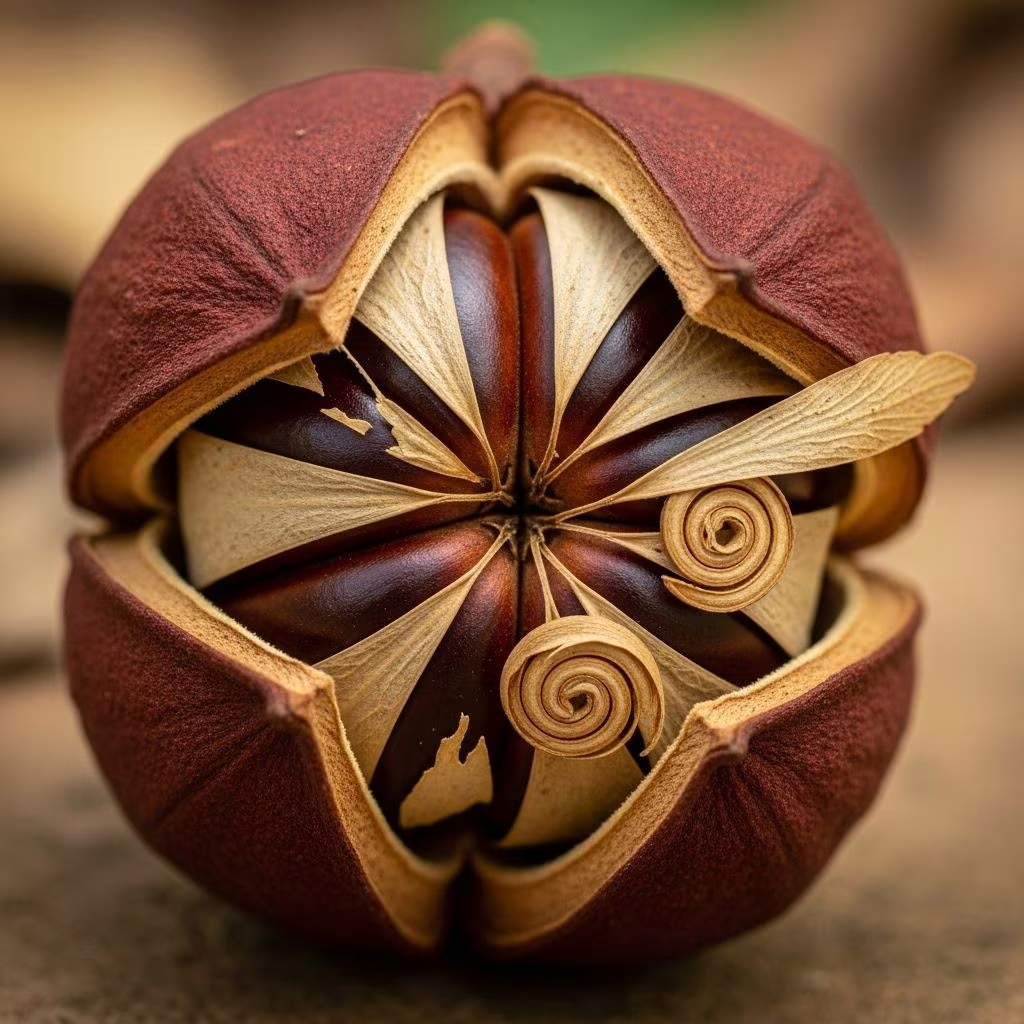
Known scientifically as Afzelia quanzensis and commonly called African Mahogany Pod or Pod Mahogany, this remarkable tree is valued for its hardwood, ecological role, medicinal uses, and occasional culinary applications. Native to Eastern and Southern Africa, Afzelia quanzensis stands out in the genus Fabaceae and is sometimes confused with other mahogany species due to its timber’s quality and appearance. This in-depth guide covers its origin, ecological significance, uses, health benefits, and the unique taste of its edible parts.
Introduction and Origin
Afzelia quanzensis is a striking deciduous tree recognized for its robust form, lush foliage, and clusters of fragrant flowers. Known regionally as Rhodesian Mahogany (not to be confused with true mahogany of the Khaya genus), it is locally referred to as lucky bean tree or Mambakofi in Swahili, and peulmahonie in Afrikaans.
The tree is indigenous to the savanna woodlands and open forests of eastern and southern Africa, thriving in various countries including Kenya, Tanzania, Mozambique, Zimbabwe, and parts of South Africa. Its large, woody seed pods are a distinctive feature, inspiring the common name “Pod Mahogany”.
Botanical Description
- Height: Typically grows 12–20 meters, but may reach up to 35 meters under prime conditions. The crown is wide and rounded, providing extensive shade.
- Bark: Smooth, grey-green to creamy grey, often patterned with raised rings and circular patches where bark flakes off.
- Leaves: Bright green and glossy when young, turning dark green as they mature. The leaves are alternately arranged, up to 300 mm long, and divided into 4–7 pairs of leaflets.
- Flowers: Fragrant, reddish to orange with clusters of upright stems. The flowers attract bees and other pollinators, typically blooming at the end of the dry season.
- Seed Pods: Large, woody, flat pods (10–25 cm). When mature, these turn brown and split open to release black seeds encased in bright orange-red arils.
Distribution and Habitat
Afzelia quanzensis thrives in:
- Savanna woodlands and open forests
- Well-drained, sandy soils
- Drought-prone environments once established
This species is adapted to a wide range of elevations (up to 1800 m) and rainfall (about 1000 mm per year) with a temperature tolerance of 17–30°C. It remains especially prominent around lakes or in open fields and is considered rare in some South African regions.
Timber: Properties and Uses
The heartwood of pod mahogany is highly prized for its
- Durability: Extremely resistant to rot and termite damage
- Appearance: Golden to reddish-brown, similar to classic mahogany. Sapwood is pale yellowish white, and the color deepens with age
Physical Properties
| Property | Value |
|---|---|
| Specific Gravity (12% MC) | 0.70–0.84 |
| Janka Hardness | 1,850 lbf (8,230 N) |
| Average Dried Weight | 835 kg/m³ |
| Modulus of Rupture | 109.0 MPa |
| Shrinkage (Volumetric) | 8.2% |
Main Timber Applications
- Furniture and cabinetry
- Flooring
- Doors and stairs
- Windows and paneling
- High-grade firewood
Due to the mahogany-like appearance, pod mahogany is a substitute for true mahogany in markets where strength and appearance are both required. Its resistance to pests and environmental stress makes it ideal for outdoor structures.
Medicinal Benefits and Traditional Uses
- Bark and Roots: Traditionally used externally in poultices for kidney problems, snake bites, and chest pains
- Leaves: Young leaves are edible (fresh or steamed) and can be used as a vegetable. Mature leaves and roots are toxic if ingested
- Pods: Sometimes the pods are utilized for cattle fodder, offering nutritional value to livestock
Note: Direct ingestion of roots is dangerous; medicinal practice focuses on external application only. Always consult a knowledgeable herbalist before use.
Agroforestry and Ecological Role
- Shade Canopy: Its large and dense crown creates a microclimate favorable to understory vegetation and livestock
- Nitrogen Fixation: Contributes soil fertility, making it a vital component in agroforestry plots
- Drought Resistance: Once established, can survive extended dry periods
- Biodiversity Support: Flowers attract bees and pollinators; pods feed birds like hornbills, baboons, and squirrels
Edible Parts and Taste Profile
The culinary use of Afzelia quanzensis is limited to its young leaves. The pods and older leaves are primarily considered inedible due to toxicity or toughness. Here is a summary of the edible profile:
- Fresh or Steamed Young Leaves: These are occasionally consumed as a leafy vegetable in local diets
- Taste: Mild, slightly earthy flavor profiles reminiscent of other legume vegetables. Generally tender when young and becomes fibrous as leaves mature
The seeds, covered in an orange-red aril, are attractive and sometimes utilized in local crafts but are not widely consumed due to uncertain edibility and potential toxicity.
Cultivation and Propagation
- Soil Requirements: Deep, sandy, well-drained soils
- Rainfall: Approximately 1000 mm annually
- Temperature: 17°C–30°C tolerated
- Elevation: Up to 1800 m
- Propagation: From seed—germination occurs in 2–3 weeks. Can be grown directly or in pots then transplanted
Young plants grow slowly, especially in cooler climates, but accelerate in ideal conditions. For seed collection:
- Wait until pods turn brown, 10–25 cm in length
- Harvest, dry in the sun, and break open to access 6–10 seeds per pod
- Remove aril and store seeds in airtight containers at room temperature for longevity
Sustainable Harvesting and Environmental Impact
- Ecological Value: As a component of native African woodlands, pod mahogany helps maintain ecological balance, combating erosion and supporting wildlife
- Threats: Overharvesting for timber, seed predation by baboons, squirrels, and birds. Caterpillar infestations may affect foliage
- Best Practices: Monitor pod maturity for timely harvesting. Emphasize reforestation and careful resource management to prevent decline in wild populations
Efforts to propagate and protect Afzelia quanzensis are key to sustainable use and conservation in an era of growing timber demand and habitat change.
Frequently Asked Questions (FAQs)
Q: Can humans eat the seeds of African Mahogany Pod?
No, the seeds are generally not eaten. Only the young leaves are consumed as a vegetable in some local diets. The roots and older leaves are toxic.
Q: Why is Pod Mahogany so highly valued in timber markets?
Its wood ranks near mahogany in appearance and durability, resisting rot, termites, and environmental stresses—making it desirable for furniture, floors, and construction.
Q: Is Pod Mahogany endangered?
It is considered rare in parts of South Africa, but not globally endangered. Conservation through sustainable forestry is vital.
Q: Can Pod Mahogany be grown outside Africa?
While adaptable, its growth is best in climates mimicking African savannas. Drought resistance and soil requirements must be met for healthy cultivation.
Q: What wildlife uses Pod Mahogany?
Baboons, squirrels, butterflies, and many bird species feed on pods, flowers, and foliage; bees pollinate the flowers.
Conclusion
Afzelia quanzensis, the African Mahogany Pod, stands as a pillar of both ecological health and local economies in its native range. Its wood is durable and beautiful; the tree enriches soils via nitrogen fixation, offers medicinal value, and plays a critical role in supporting biodiversity. While direct edibility is limited, its young leaves contribute to human nutrition, and its presence in agroforestry systems ensures sustainability.
Proper management and conservation of Pod Mahogany—balancing timber use with ecological stewardship—will maintain its legacy as an African resource for future generations.
References
- https://www.beyondforest.org/post/afzelia-quanzensis-aka-the-pod-mahogany
- https://www.echocommunity.org/en/resources/f64f4cd6-cd95-47b0-b666-929b28721a3c
- https://www.wood-database.com/chanfuta/
- https://pza.sanbi.org/afzelia-quanzensis
- https://growbilliontrees.com/blogs/tree-stories/african-mahogany-tree-the-ultimate-guide-to-its-beauty-benefits-and-sustainable-harvesting
- https://www.rarewoodsusa.com/species/mahogany-pod/
- https://tropical.theferns.info/viewtropical.php?id=Afzelia+quanzensis
- https://pfaf.org/user/Plant.aspx?LatinName=Afzelia+africana


