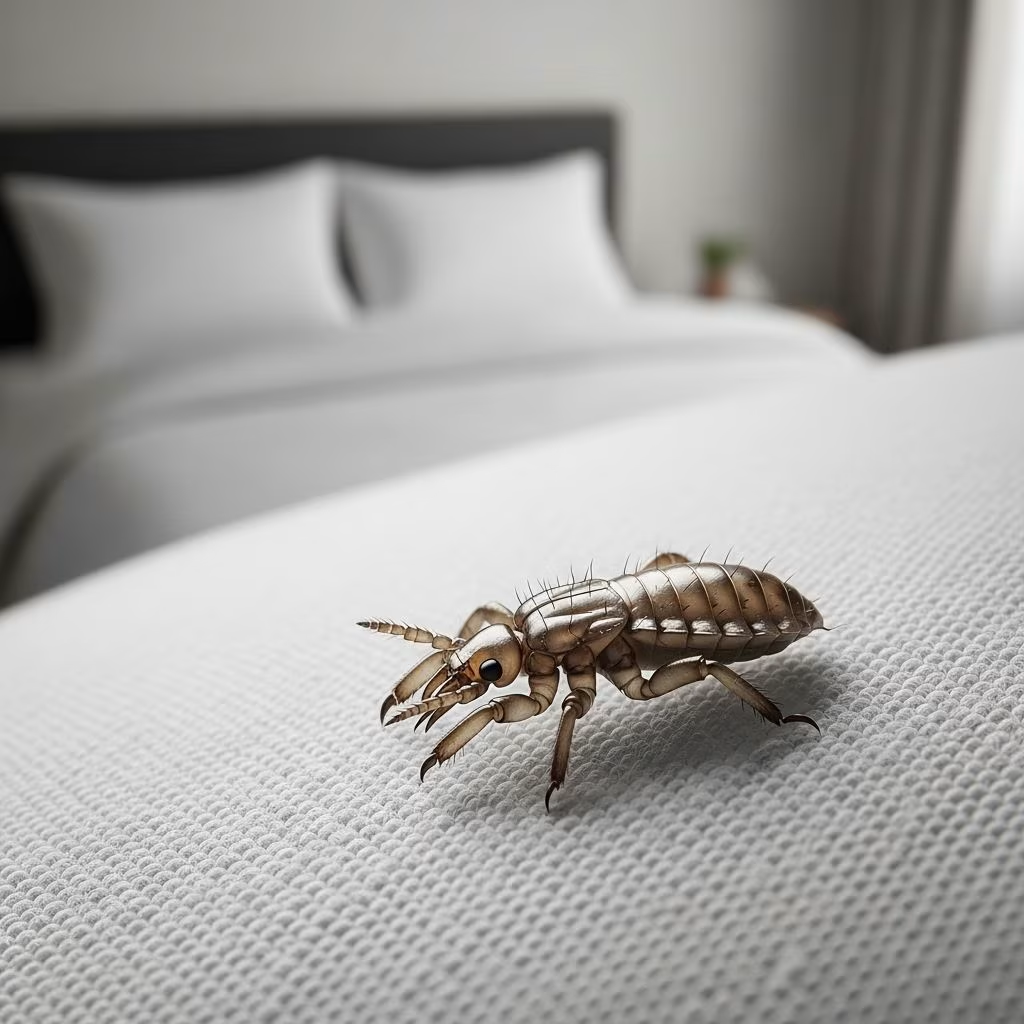
Can Head Lice Live on Pillows and Sheets? Understanding the Risk
Head lice infestations can cause considerable stress and confusion, especially for parents, caregivers, and anyone sharing a home with an affected individual. One of the most pressing concerns is whether head lice can survive on household items like pillows, sheets, and other bedding, potentially leading to repeated outbreaks. This comprehensive guide examines the science on lice survival outside the scalp, the likelihood of transmission via bedding, and the most effective cleaning and prevention measures for your home.
How Head Lice Spread
The primary way head lice spread is via direct head-to-head contact. The parasites are specially adapted for gripping human hair using their hook-like claws and cannot jump or fly. While it’s technically possible for lice to wind up on fabric surfaces, such cases are far less common than person-to-person transfer.
- Primary transmission: Direct contact between heads is the main driver of lice outbreaks, especially in environments like schools, camps, or sleepovers.
- Secondary transmission: Lice may transfer through shared personal items (combs, hats, scarves) or infrequently from fabrics (pillows, bedding, furniture) if conditions permit.
- Key point: The risk posed by bedding and pillows is real but very low compared to direct contact.
The Life Cycle of Head Lice & Their Survival Needs
Lice are obligate ectoparasites; their entire existence depends on the warmth, moisture, and blood supply of the human scalp. Understanding their life cycle helps clarify their survival prospects off the head.
- Nits (Eggs): Nits are tiny, oval eggs (approx. 0.8 mm long) laid at the base of shafts near the scalp. They require warmth and humidity from the scalp to mature; if they fall onto a surface, they rarely hatch.
- Nymphs: After hatching, these immature lice must feed within hours. Detached nymphs are unlikely to survive more than a few hours away from the head.
- Adult Lice: Adults are the most likely to temporarily wind up on pillows or linens, but once off the scalp, they become lethargic and usually perish within 24–48 hours without human blood.
Summary Table: Lice Survival Compared to Bedbugs & Fleas
| Parasite | Main Habitat | Survival Time Off Host | Bedding Transmission Risk |
|---|---|---|---|
| Head Lice | Human scalp/hair | 24–48 hours (adults) | Very Low |
| Bedbugs | Mattresses/bedding/furniture | Up to several months | High |
| Fleas | Animals, carpets, bedding | Several days to weeks | Moderate |
How Long Can Lice Survive on Pillows and Sheets?
Lice are ill-equipped to survive away from human hosts. According to clinical studies:
- On average, adult head lice perish within 24–48 hours when removed from the scalp, primarily due to lack of food and suitable environment.
- Nits (eggs) that fall onto bedding usually do not hatch because they require ongoing warmth and humidity supplied by the scalp.
- Occasionally, a louse may briefly persist on a pillow or sheet, but most become sluggish and are unlikely to cause new infestations unless immediate contact with a new host occurs.
Scientific Study: Lice Incidence on Pillowcases
A study monitoring pillowcases from infested individuals found that just 4.2% of pillowcases had any live lice after use. Typically, only a single, weakened louse or nymph was occasionally found hours after exposure. The proportion of the lice population ending up on pillowcases was less than 0.11%. Most pillowcases showed no evidence of lice at all. The chance of re-infestation is therefore considered quite minimal.
Signs of Lice on Pillows and Sheets
If you suspect lice may have been present on your bedding, look for these signs:
- Tiny white nits (lice eggs) – usually found stuck to hair but can sometimes be seen adhered to fabric fibers.
- Dark specks or tiny moving bugs – adult lice are about the size of a sesame seed and may appear brownish or gray.
- Small blood spots or fine dust – possibly from bites or shed lice exoskeletons (rarely visible).
- Musty odor – in cases of heavy infestation, though this is not common on bedding itself.
However, these signs are more readily visible on the scalp and hair than on bedding. It’s uncommon to notice a visible infestation directly on pillows or sheets.
Why the Risk of Getting Lice from Bedding is Low
- Lice prefer hair over fabric: Their claws are built to cling to hair, making them less likely to survive or move across smooth surfaces.
- Lice don’t jump or fly: Movement is by crawling only, which limits how far they can travel off the human host.
- Most lice off the head are weak or dying: If they do land on a pillow or sheet, they typically do not live long enough to pose a substantial risk.
- Direct head-to-head contact is always the main risk: Even after a lice treatment, new outbreaks almost always stem from renewed contact, not contaminated bedding.
When Could Pillows and Sheets Become a Source of Reinfestation?
Though rare, the following situations could theoretically lead to lice transmission:
- If a live louse falls onto a pillow and another person rests their head there within 24–48 hours, the parasite could transfer before it dies.
- If bedding is shared immediately after exposure (e.g., siblings sharing pillows the same night).
Still, even under these scenarios, risk remains much lower than through direct scalp-to-scalp contact.
How to Properly Clean Pillows and Sheets After a Lice Infestation
Proper cleaning of bedding is essential for peace of mind and hygiene, even if the risk is low. The following steps offer effective protection against the small possibility of lice surviving on sheets or pillowcases:
- Heat is most effective: Wash pillowcases, sheets, and recently used blankets in hot water (at least 60°C or 140°F).
- Dry on high heat: Place clean laundry in a hot dryer for at least 15–30 minutes, as the high temperature will kill any remaining lice or nits.
- Vacuum mattresses and upholstered furniture: Pay attention to areas where hair might have collected. Vacuuming is usually sufficient; no need to spray or deep-clean entire pieces.
- Non-washable items: Seal non-washable bedding items in a plastic bag for at least 48 hours (lice cannot survive this long off the scalp).
- Avoid over-cleaning: Extensive chemical treatments on furniture or excessive laundering are unnecessary; lice are unlikely to survive, and most reinfestations come from head contact, not surfaces.
Comparison Table: Lice Elimination Methods for Bedding
| Method | Effectiveness | Notes |
|---|---|---|
| Hot Water Wash (60°C+) | Highly Effective | Kills lice and nits; standard wash cycle is sufficient |
| Hot Dryer (15–30 min) | Highly Effective | Especially useful for items that can’t be washed at high temperatures |
| Cold Wash / Line Dry | Ineffective | Lice can survive being washed in cold water or simply hung to dry |
| Sealing in Plastic Bag (48hr+) | Effective | Kills lice by starvation for non-washable bedding |
| Vacuuming | Moderate | Removes stray hairs that might contain nits or dead lice |
Prevention Tips: Reducing the Risk of Lice Infestation in the Home
- Educate household members about not sharing hats, combs, hair accessories, and bedding during an outbreak.
- Encourage children to avoid head-to-head contact during play, photos, or group activities.
- Check and treat all infested individuals simultaneously to break the lice life cycle and prevent reinfestation.
- Maintain regular cleaning practices but focus efforts on personal hygiene and scalp management rather than whole-home environmental treatments.
Frequently Asked Questions (FAQs)
Can head lice live in mattresses?
Lice cannot burrow into mattresses. While it’s possible for a louse to fall off the scalp onto a mattress, it typically dies within 24–48 hours. Routine vacuuming and use of bedding protectors after a lice infestation will eliminate any risk.
Should I throw away pillows or bedding after a lice outbreak?
There is no need to discard bedding or pillows. Washing and drying at high temperatures, or sealing in a plastic bag for 48 hours, is sufficient to kill any lice or eggs present.
Can lice eggs (nits) survive on sheets and hatch?
Nits require the constant warmth and humidity of the scalp to mature. If they are dislodged from the hair and end up on fabric, they usually die and do not hatch.
How do I reduce the chances of reinfestation?
Focus on treating affected heads, limiting direct head-to-head contact, and washing bedding and personal items once during the outbreak. Routine or repeated deep cleaning of the home is not necessary.
Do lice prefer clean or dirty bedding?
Lice do not distinguish between clean or dirty bedding—they rely solely on the presence of a human scalp for survival. Bedding hygiene is important for comfort, not for lice prevention alone.
Takeaway: What You Really Need to Know
While the idea of lice infesting pillows and sheets is understandably alarming, the direct risk of transmission through bedding is minimal compared to head-to-head contact. Following simple cleaning routines—washing and drying bedding and heat-treating non-washable items after discovering a lice problem—goes a long way toward preventing repeat infestation. Focus on breaking the lice life cycle on the human host for effective long-term control.
References
- https://www.licedoctors.com/blog/can-head-lice-live-on-pillows-and-sheets
- https://pubmed.ncbi.nlm.nih.gov/12890107/
- https://puffy.com/blogs/best-sleep/lice-on-pillow-guide
- https://www.lyclear.co.uk/can-head-lice-live-pillows-and-sheets
- https://www.cdc.gov/lice/about/head-lice.html
- https://www.licedoctors.com/blog/linens-and-lice-or-what-do-i-do-with-the-bedding-if-my-child-has-head-lice
- https://www.baystatehealth.org/articles/treatment-for-drug-resistant-head-lice
- https://www.liceclinicsofamerica.com/how-lice-live-understanding-head-lice-can-help/