


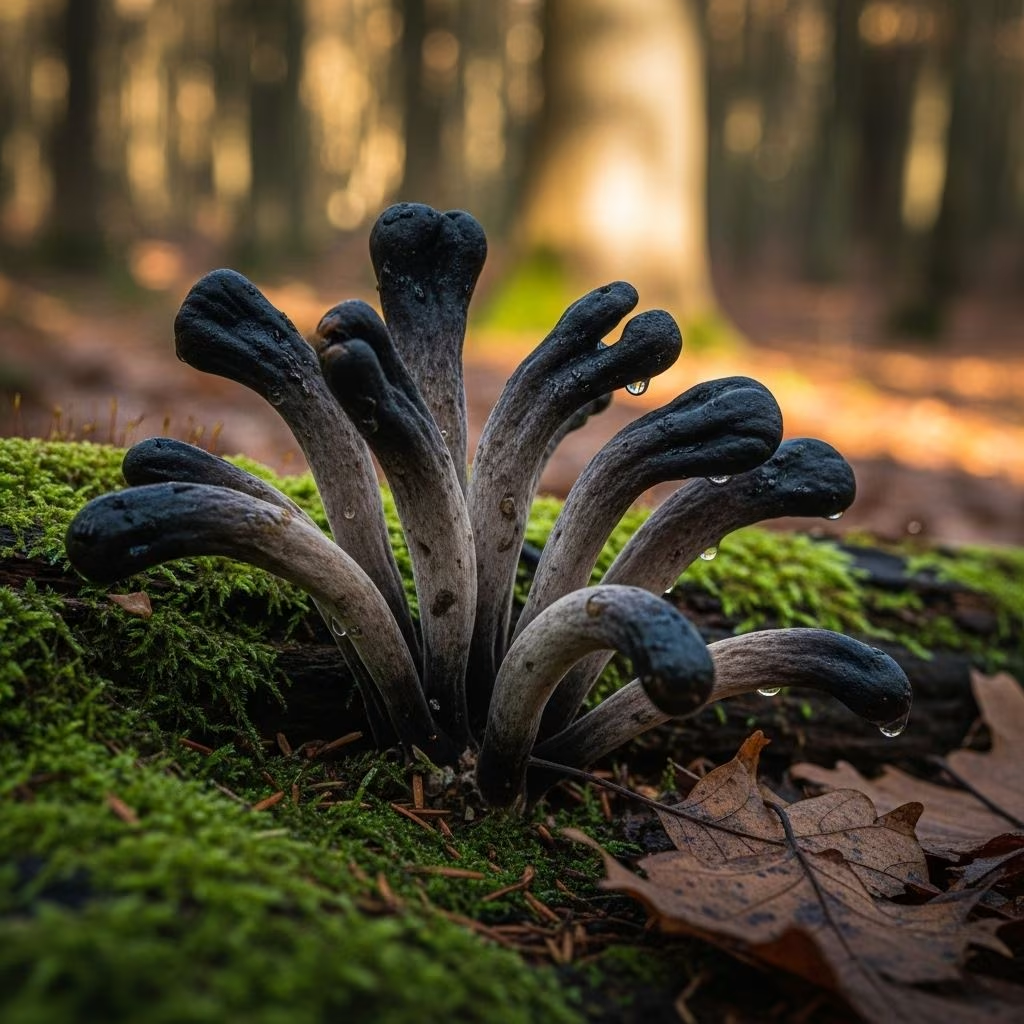
Dead Man’s Fingers (Xylaria polymorpha) is a remarkable and unmistakable woodland fungus that captures the imagination with its eerie, fingerlike appearance. Despite its unsettling look, this fungus plays an important role in forest ecosystems, and its life cycle and appearance intrigue mycologists and nature enthusiasts alike. This comprehensive guide explores what Dead Man’s Fingers are, their biological profile, ecological benefits, traditional and modern uses, and their taste characteristics.
What Are Dead Man’s Fingers?
Dead Man’s Fingers is the common name for the fungus Xylaria polymorpha, a species belonging to the family Xylariaceae. Its macabre moniker hints at its visual resemblance to decomposing fingers emerging from soil or leaf litter. This visual is not a mere coincidence: the mature fruiting bodies often appear clustered together, dark and contorted, resembling the digits of a buried hand.
- Scientific Name: Xylaria polymorpha
- Common Names: Dead Man’s Fingers, Dead Moll’s Fingers (occasionally for a related species)
- Classification:
- Kingdom: Fungi
- Order: Xylariales
- Family: Xylariaceae
This species is found predominantly in temperate forests across the Northern Hemisphere, especially in Europe, North America, and parts of Asia.
Identifying Features of Dead Man’s Fingers
The distinctive appearance of Dead Man’s Fingers sets it apart from other fungi. Key identifying features include:
- Shape: Irregularly clublike, finger-shaped, or blunt cylindrical. Can also be knobby, branched, or lobed.
- Color: Pale gray to blue-tinged when young, gradually turning dark brown to black as it matures.
- Surface: Finely wrinkled, roughened, sometimes with pimply or scaly texture. A whitish or bluish tip may be visible when immature due to a coating of asexual spores.
- Size: Typically 2.5–10 cm in height and up to 4 cm thick, occasionally larger.
- Grouping: Frequently appears in clusters at the base of rotting hardwoods and stumps.
- Interior Flesh: White and very tough, reminiscent of wood grain.
| Trait | Description |
|---|---|
| Scientific name | Xylaria polymorpha |
| Common names | Dead Man’s Fingers, Dead Moll’s Fingers |
| Shape | Clublike, finger-shaped, sometimes knobby or branched |
| Color | Pale gray/bluish when young, black when mature |
| Habitat | Bases of decaying hardwoods, stumps |
| Edibility | Not edible |
Life Cycle and Habitat
Dead Man’s Fingers has a fascinating life cycle tied to forest decomposition processes.
- Substrate: Prefers decaying hardwood (oak, beech, sycamore, maple), growing from the bases of stumps, fallen trunks, and sometimes buried wood.
- Life Cycle:
- Mycelium Stage: Most of the fungus exists unseen as a mycelial network within wood, slowly breaking down the lignin and cellulose.
- Fruiting Bodies: In spring or summer, the fungus sends up fruiting bodies (“fingers”) through the soil and decaying wood. This is the visible part that releases spores for reproduction.
- Spores: Young fruiting bodies are dusted with white or bluish spores. As these mature, spore production moves beneath the surface, and the structure darkens.
- Persistence: The tough fruit bodies often remain visible all year, even after spore dispersal.
- Geographic Range: Common in temperate woodlands throughout the UK, Ireland, mainland Europe, and much of eastern North America.
- Seasonality: Appears from late spring to fall, but fruit bodies can persist longer.
Ecological Benefits and Significance
Though Dead Man’s Fingers are not edible and cannot be used like culinary mushrooms, their presence is vitally important to woodland health.
- Decomposer Role: Xylaria polymorpha is a saprobic fungus, meaning it breaks down dead plant material—especially wood. By decomposing tough, hard wood in forests, it helps return vital nutrients to the ecosystem and maintains biodiversity.
- Soil Fertility: The breakdown of cellulose and lignin fosters fertile soil, supporting plant regeneration and forest health.
- Microhabitat Creation: Decomposition by Dead Man’s Fingers helps create microhabitats for invertebrates and other fungi, expanding biodiversity.
- Indicator of Forest Health: Finding this species often shows the presence of well-established, mature woodlands with active decay processes.
Summary of Ecological Benefits
- Nutrient cycling
- Habitat provision for soil invertebrates
- Promotion of woodland succession
- Support of overall forest ecosystem function
Traditional and Modern Uses
While Dead Man’s Fingers do not have a history as an edible or medicinal mushroom, they capture attention in several other contexts.
- Natural History and Education: Their distinctive look makes them a staple in mycology classes and nature education, used to teach fungal diversity and woodland ecology.
- Research: As decomposers, Xylaria species are studied for their enzymes that break down lignin and cellulose—complex plant polymers of interest for biotechnological applications.
- Traditional Folklore: In some cultures, these fungi are surrounded by eerie tales and superstitions due to their macabre appearance, making them a feature in folklore and storytelling.
- Art and Photography: Nature artists and macro photographers are often drawn to Dead Man’s Fingers for their dramatic and unusual form.
There is little evidence that Dead Man’s Fingers have been used for medicinal or culinary purposes, as their tough structure and chemical composition render them inedible and unpalatable.
Taste Profile and Edibility
Dead Man’s Fingers are classified as inedible mushrooms. Several reasons account for this status:
- Tough and Woody Texture: The fruiting bodies are hard, fibrous, and do not soften with cooking.
- Lack of Pleasant Flavor: Descriptions of the taste are almost nonexistent, as the few accounts largely describe the interior as woody, bland, and unpalatable.
- Poor Nutritional Value: Unlike edible mushrooms, these offer no culinary or nutritional benefits.
- Potentially Harmful: While not definitively toxic, their tough, indigestible nature could cause gastric discomfort if consumed.
| Property | Description |
|---|---|
| Edibility | Not edible |
| Texture | Woody, tough, fibrous |
| Flavor | Bland, unremarkable, sometimes described as woody |
| Preparation | No culinary uses. Not recommended for consumption. |
As such, Xylaria polymorpha is of scientific, ecological, and aesthetic interest—never a foraging target for food.
Dead Man’s Fingers in Folklore and Culture
Dead Man’s Fingers carries a heavy load of folklore, partly due to its startling form and evocative name.
- In some local traditions, these fungi were seen as omens or tokens of haunting, linked to the presence of spirits or death beneath the woodland floor.
- Literature on ‘dark woods’ and gothic tales occasionally references these mushrooms to enhance the mood of dread or mystery.
- In educational contexts, their dramatic shape helps engage children with nature and inland woodland conservation.
Lookalikes and Foraging Safety
While Dead Man’s Fingers has a unique form, a few less common fungi can be mistaken for it:
- Xylaria longipes – Known as Dead Moll’s Fingers; less club-like and more elongated.
- Earth-tongues (Geoglossum spp.) – These grow in grasslands, not on dead wood, and have a thinner, more tongue-like shape.
- Devil’s Urn (Urnula craterium) – When young, this species can have rounded ‘finger’ forms before maturing into a cup shape.
Foragers are strongly advised never to consume any fungi that cannot be confidently identified as edible by an expert—a caution reinforced by the tough inedible nature of Dead Man’s Fingers.
Frequently Asked Questions (FAQs)
Q: What exactly are Dead Man’s Fingers?
A: Dead Man’s Fingers are the fruiting bodies of the fungus Xylaria polymorpha, easily recognized by their black, clublike, finger shaped appearance at the base of rotting trees.
Q: Are Dead Man’s Fingers poisonous or toxic?
A: There is no strong evidence of toxicity, but these fungi are classified as inedible due to their hard, woody texture and lack of palatable flavor. They are unsuitable for consumption and may cause discomfort if eaten.
Q: What ecological role do Dead Man’s Fingers play in nature?
A: They break down dead wood and help recycle nutrients back into the forest ecosystem, supporting soil health and woodland biodiversity.
Q: Where and when can I find Dead Man’s Fingers?
A: Look for them in woodland areas with plentiful decaying hardwoods. They typically appear from late spring through autumn but may be found year-round.
Q: Do Dead Man’s Fingers have any uses in medicine or cuisine?
A: No; there are no known medicinal or culinary uses for this fungus. Its value is primarily ecological and educational.
Q: Why are they called Dead Man’s Fingers?
A: Their ghoulish, fingerlike appearance gives the impression of decayed fingers reaching up through the ground, inspiring the common name and associated folklore.
Conclusion
While Dead Man’s Fingers may not grace the table or medicine chest, their presence enriches the forest world by recycling nutrients and providing a striking reminder of nature’s complexity and visual drama. Admired by naturalists and often used as an educational talking point, they serve as a testament to the diversity and importance of fungi in the woodland web of life.
References
- https://mdc.mo.gov/discover-nature/field-guide/dead-mans-fingers
- https://www.naturespot.org/species/dead-mans-fingers
- https://www.mushroomexpert.com/xylaria_polymorpha.html
- https://www.woodlandtrust.org.uk/trees-woods-and-wildlife/fungi-and-lichens/dead-mans-fingers/
- https://hort.extension.wisc.edu/articles/dead-mans-fingers/
- https://forum.inaturalist.org/t/xylaria-polymorpha-dead-mans-fingers-identification/16115
- https://picturemushroom.com/identify/Xylaria_polymorpha.html
- https://www.youtube.com/watch?v=u5n7KduyPD8


