


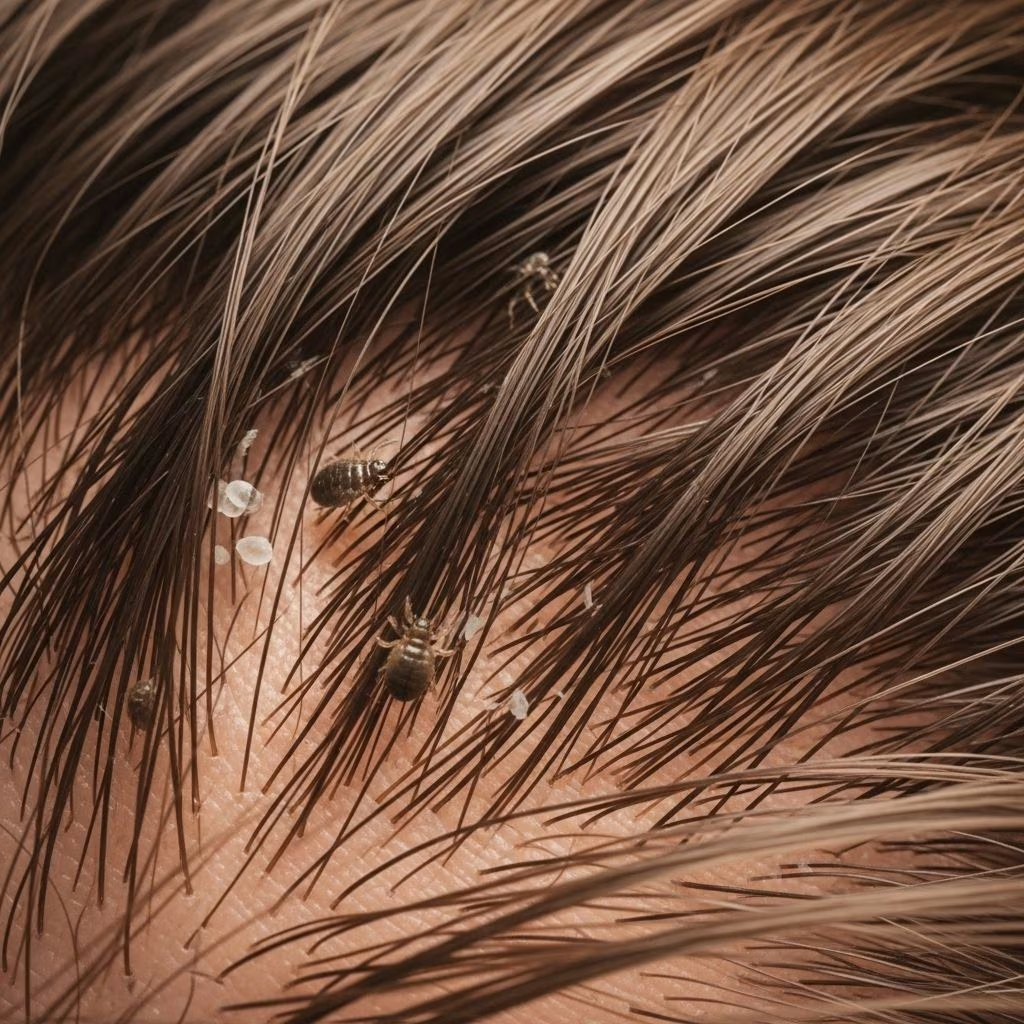
Do Home Remedies for Lice Removal Work? Evidence & Expert Advice
Head lice infestations are a common issue, especially among school-aged children, and the desire to avoid harsh chemicals often leads parents to try popular home remedies. But do these treatments actually work? This article will review the science behind the most-talked-about home remedies, evaluate their effectiveness, and provide expert guidance on safe and proven lice removal methods.
Common Home Remedies for Lice Removal: What Are They?
Several home remedies have been tried for lice removal over the years. Some of the most frequently cited include:
- Petroleum Jelly (Vaseline): Applied thickly to smother lice and nits.
- Mayonnaise: Used similarly to petroleum jelly, intended to suffocate lice.
- Olive Oil and Coconut Oil: Applied to coat and potentially suffocate lice.
- Tea Tree Oil and Other Essential Oils: Used for their purported insecticidal properties.
- Vinegar: Sometimes added to help loosen nits from hair shafts.
- Isopropyl Alcohol: Occasionally suggested as a disinfectant and lice-killing agent.
It’s important to note that while these remedies are widespread in popular culture, not all are backed by scientific evidence.
What Does the Research Say About Home Remedies?
Petroleum Jelly (Vaseline)
Petroleum jelly has been shown in some studies to have a modest effect on both live lice and nits. One study found that while it caused significant louse mortality, it did not completely prevent lice from laying eggs and only allowed about 6% of nits to hatch, making it one of the more promising options among home remedies. However, it is messy, difficult to apply, and difficult to remove, posing practical challenges for parents.
Mayonnaise and Oils
Mayonnaise, olive oil, and coconut oil are popular because they are thick and may suffocate lice if applied generously and left on the hair for an extended period. However, scientific studies generally have not found these remedies to be effective or reliable. For example, a review of several home remedies found no significant impact on louse mortality for olive oil, mayonnaise, or melted butter, and none prevented lice from laying eggs. Thus, while these products may provide some temporary relief, they do not reliably eliminate lice infestations
Essential Oils
Tea tree oil, lavender oil, and anise oil are sometimes touted as effective treatments. Some research and anecdotal reports suggest that certain essential oils, particularly anise oil and tea tree oil, may have some effect in killing lice and may be more than twice as effective as other natural options. However, evidence is not conclusive, and there are safety concerns, especially for children, as essential oils can cause allergic reactions or skin irritation. They should never be ingested and should be properly diluted before application.
Other Remedies
Vinegar is sometimes used to loosen the glue that attaches nits to the hair shaft, but there is no good evidence it kills lice. Isopropyl alcohol may kill lice on contact, but it is dangerous due to its flammability and risk of absorption through the scalp, especially in children. Neither method has been shown to be effective or safe.
The Limitations of Home Remedies
Most home remedies share several important limitations:
- Inconsistent Effectiveness: While some remedies may kill some lice, they rarely eliminate eggs (nits), leading to reinfestation.
- Mess and Practicality: Many remedies are greasy, hard to apply, and difficult to wash out—posing a challenge for families, especially those with young children.
- Safety Concerns: Some remedies (like essential oils and alcohol) can be irritating or even toxic if misused or ingested.
- Lack of Scientific Support: Most home remedies do not have robust evidence to back up their claims.
The bottom line is that while home remedies may sometimes help, they are not a reliable or complete solution for lice infestations.
Evidence-Based Alternatives to Home Remedies
Wet-Combing
Wet-combing with a fine-toothed nit comb is a proven, non-chemical method for removing lice and nits. It involves saturating the hair with conditioner and systematically combing through small sections to remove lice and eggs. When done thoroughly and repeatedly, this method can be highly effective, though it is labor-intensive and requires patience and persistence.
Over-the-Counter Treatments
Permethrin and pyrethrin-based products remain the first-line, over-the-counter treatments recommended by pediatricians and public health authorities. These are generally safe and effective, though resistance is increasing in some areas. It is important to follow instructions carefully and retreat as needed, typically 7–10 days later, to catch any newly hatched lice.
Prescription Treatments
When over-the-counter options fail, prescription medications such as ivermectin, spinosad, and benzyl alcohol lotion are available. These are especially useful for drug-resistant lice or for individuals who cannot use over-the-counter products due to allergies.
Cetaphil Cleansing Method
The Cetaphil cleansing method involves applying Cetaphil skin cleanser to the scalp and hair, drying it with a hair dryer, and allowing it to remain for at least 8 hours before washing out. A study found this method had a 96–97% success rate and is sometimes used for resistant lice.
Hot Air Treatment
Some devices use heated air to dehydrate and kill lice and nits. Studies suggest this method can be effective, especially for killing eggs, though it may be less practical for large infestations or young children.
Prevention and Household Management
Lice do not survive long off the scalp, so environmental measures are less critical than once believed. However, the following steps can help reduce the risk of reinfestation:
- Wash bedding, hats, and clothing in hot water and dry on a high heat setting.
- Soak combs and brushes in hot water for at least 10 minutes.
- Vacuum furniture and floors.
- Avoid sharing hairbrushes, hats, or headphones.
- Regularly check all household members if an infestation is found.
Remember, lice infestations are not a reflection of poor hygiene and are extremely common among children. Panic or excessive cleaning is unnecessary.
FAQs: Frequently Asked Questions About Lice and Home Remedies
Q: Can mayonnaise or mayonnaise-based products kill lice?
A: There is no scientific evidence that mayonnaise is an effective lice treatment. While it may temporarily smother some lice, it does not kill eggs and is unlikely to resolve an infestation.
Q: How effective are essential oils like tea tree oil or anise oil?
A: Some studies suggest certain essential oils may have limited effectiveness, but results are inconsistent, and safety concerns exist, especially for young children. Never use undiluted oils, and always test for skin reactions first.
Q: Is petroleum jelly (Vaseline) a good home remedy for lice?
A: Petroleum jelly may be more effective than many other home remedies, but it is messy, hard to remove, and only partially effective—especially against eggs.
Q: Can lice be killed by swimming or submerging hair in water for a long time?
A: No, lice can survive extended periods underwater and cannot be drowned this way.
Q: How often should I treat my child for lice?
A: Most lice treatments should be repeated after 7–10 days to catch any newly hatched lice. Always follow product instructions or your healthcare provider’s advice.
Q: Do lice spread disease?
A: No, lice are not known to transmit disease. They are a nuisance but not a health threat to the general population.
Conclusion
The allure of home remedies for lice removal is understandable, especially for parents seeking to avoid harsh chemicals. However, the reality is that most popular home remedies—like mayonnaise, olive oil, and essential oils—are not scientifically proven to be effective or safe for treating head lice infestations. While petroleum jelly and the Cetaphil cleansing method show promise in some studies, they are not foolproof and are often impractical.
The most reliable approaches remain medicated over-the-counter or prescription treatments, thorough wet-combing, and, in stubborn cases, the Cetaphil method or hot air devices. Prevention focuses on regular checks, prompt treatment, and avoiding the sharing of personal items—not excessive cleaning or isolation.
If you are struggling with persistent head lice, consult a healthcare provider for safe, effective, and evidence-based treatment options. When it comes to lice, a little patience and persistence—with the right tools—go a long way.
References
- https://www.baystatehealth.org/articles/treatment-for-drug-resistant-head-lice
- https://pubmed.ncbi.nlm.nih.gov/15637580/
- https://www.medicalnewstoday.com/articles/325844
- https://www.healthline.com/health/lice-home-remedies
- https://www.mayoclinic.org/diseases-conditions/head-lice/diagnosis-treatment/drc-20356186
- https://www.cdc.gov/lice/treatment/index.html
- https://www.healthychildren.org/English/health-issues/conditions/from-insects-animals/Pages/Head-Lice-Treatment-Myths-Realities.aspx
- https://www.scripps.org/news_items/4316-how-to-get-rid-of-head-lice
- https://www.aafp.org/pubs/afp/issues/2007/0315/p910.html


