


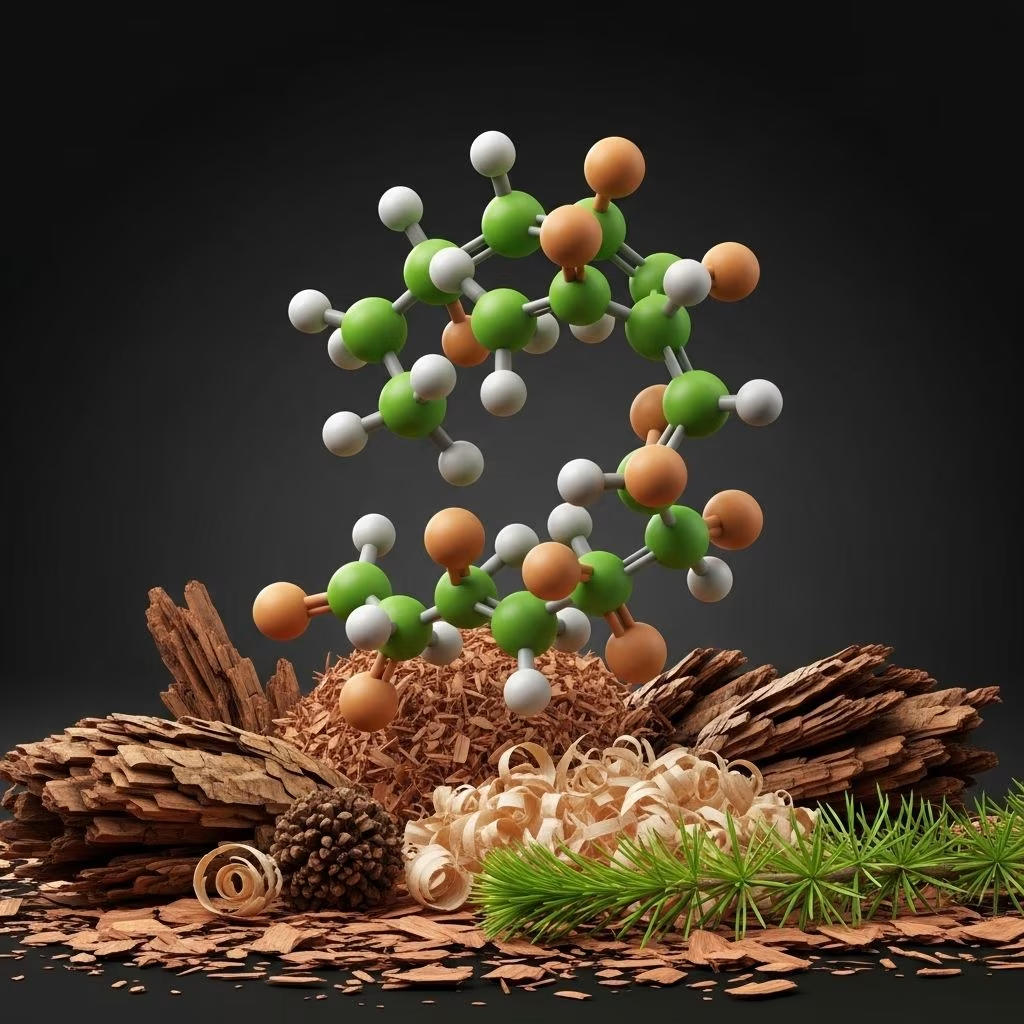
Galactoarabinan is a plant-derived polysaccharide gaining recognition across health, beauty, and food industries for its unique functional properties. This comprehensive guide unpacks galactoarabinan’s origins, molecular structure, benefits for wellness and cosmetics, industrial applications, flavor profile, safety considerations, and frequently asked questions.
Introduction: What is Galactoarabinan?
Galactoarabinan (sometimes called arabinogalactan) is a naturally occurring polysaccharide, a type of carbohydrate comprised of repeating sugar units. Predominantly sourced from Larch trees of the genus Larix in North America, it is used in both natural medicine and modern industry due to its impressive functionality and safety profile.
Galactoarabinan is:
- Composed primarily of the sugars galactose and arabinose in a roughly 6:1 ratio
- Water-soluble, making it easy to incorporate into a variety of product formulations
- Traditionally used by indigenous peoples in food and medicine, and now common in skin care, supplements, and food processing industries
Plant Origins and Extraction Process
The most significant natural source of galactoarabinan is the larch tree (Larix species), which grows natively in the cold latitudes and high elevations of the Northwest United States and Canada. These trees are traditionally well-adapted to harsh environments, and their polysaccharides play a protective, structural role within the plant cell wall.
Extraction Process:
- Galactoarabinan is harvested from already felled larch trees, making use of the entire tree and promoting sustainability.
- The extraction process is typically water-based, employing heat and pressure. No chemical solvents are used, preserving the natural and eco-friendly profile of the ingredient.
- The resulting substance is of a high purity, biodegradable, and ready for wide-ranging applications.
Molecular Structure and Physical Properties
Galactoarabinan is classified as a heteropolysaccharide—it contains two distinct sugars:
- Galactose (primary component)
- Arabinose (secondary component)
The molecular weight of galactoarabinan is approximately 20,000 Daltons. This gives it the favorable properties of high solubility and low viscosity in solution, which are highly desirable in both cosmetic and food formulations.
The arrangement of galactose and arabinose units, as well as branching and linkage patterns in the molecule, determine:
- Its film-forming abilities
- Moisturizing and water-retention capacities
- Interaction with skin cells and other ingredients
- Digestibility and prebiotic properties
Galactoarabinan is classified by chemists and cosmetic scientists as an antioxidant, humectant (moisture retainer), and a plant extract with a clean safety profile.
Key Biological Functions
- Hydration and Moisture Retention: Forms a breathable, flexible film on the skin and scalp, limiting moisture loss (also known as reducing transepidermal water loss or TEWL).
- Exfoliation Enhancer: Increases skin cell turnover, revealing fresher, more youthful skin by efficiently bringing new cells to the surface.
- Emulsion Stabilizer: Reduces the particle size in emulsions (mixtures of oil and water) and increases stability in formulations like creams and lotions.
- SPF Booster: Improves the dispersion of pigments, so it acts as a natural SPF-enhancing ingredient in sun care products.
- Prebiotic Effects: As a fermentable polysaccharide, galactoarabinan can act as a prebiotic fiber, potentially supporting beneficial gut bacteria (more relevant for its food and supplement uses than topical application).
Health and Cosmetic Benefits
Galactoarabinan’s biochemical versatility delivers several documented benefits, especially in personal care and wellness:
1. Skin Moisturization and Barrier Support
- Reduces transepidermal water loss (TEWL): Galactoarabinan forms a lightweight, invisible film on the skin, locking in moisture for a smoother and plumper appearance.
- Improves the look of fine lines and wrinkles: Clinical studies have observed a reduction in the visible signs of aging, often attributed to the combination of exfoliation, improved hydration, and subtle skin tightening effects after repeated topical application.
2. Exfoliation and Radiance Enhancement
- Exfoliant enhancer: Boosts the effectiveness of alpha- and beta-hydroxy acids (AHAs and BHAs) and other exfoliants in skin care formulas.
- Promotes radiant, even skin: Regular use can help brighten the complexion and reduce dullness by encouraging natural cell turnover.
3. Anti-inflammatory and Calming Effects
- Its film-forming properties and potential to support skin’s natural barrier function may lead to reduced irritation and improved tolerance of active ingredients in complex formulations.
4. Sunscreen and Color Cosmetic Improvements
- SPF enhancement: Improves the distribution and dispersion of pigments and UV filters, supporting more stable and effective sunscreens.
- Emulsion stability: Reduces emulsion droplet size, leading to silkier, more uniform creams and lotions.
- Minimal effect on viscosity, pH, and salt content—making it easy to formulate broad-spectrum topical products.
5. Hair and Scalp Benefits
- Moisturizes hair and scalp: Locks in moisture without undesirable residue or heaviness.
- Can promote softening and manageability in hair care formulations.
6. Food and Dietary Supplement Uses
- Dietary fiber and prebiotic: Ingested galactoarabinan (as larch arabinogalactan) is recognized for supporting digestive health and regularity, and may aid the growth of beneficial intestinal bacteria.
- Medical support: Some products marketed in the US highlight immune-modulating effects and potential as a gentle, well-tolerated source of dietary fiber (both in human and pet nutrition).
Industrial and Consumer Applications
Galactoarabinan is a multi-functional, eco-friendly ingredient, widely used for its combination of safety, biodegradability, and performance.
| Application Area | Functions | Examples |
|---|---|---|
| Skin Care | Moisturizer, TEWL reduction, fine line improvement, exfoliation enhancer, SPF booster | Moisturizers, serums, BB/CC creams, exfoliating products |
| Color Cosmetics | Emulsion stabilizer, pigment disperser, smooth texture | Foundations, tinted moisturizers, sunscreens, pressed powders |
| Hair Care | Scalp moisturizer, combability, manageability | Shampoos, conditioners, scalp serums |
| Supplement & Nutrition | Dietary fiber, prebiotic, digestive support | Fiber blends, immune support powders, functional beverages |
| Food Processing | Thickening, gelling, moisture retention | Bakery, sauces, gluten-free products, pet food |
- Personal Care: Hundreds of international skin and hair care products now use galactoarabinan for its functional and texture-enhancing properties.
- Food Industry: Used as a stabilizer, dietary fiber, and even sweetness modulator (albeit with a very low intrinsic sweetness).
- Other uses include pharmaceuticals (as an excipient), paper manufacturing, and as a natural glue or binder in plant-based applications.
Taste Profile of Galactoarabinan
One of the notable features of galactoarabinan, especially in food and supplement settings, is its very mild, neutral taste. Here are the key attributes:
- Mild sweetness: Unlike some other plant gums and polysaccharides, galactoarabinan has a subtle, slightly sweet taste, but lacks the strong or lingering aftertaste of certain artificial fibers or sugar alcohols.
- Neutral flavor: Its molecular profile means it does not overwhelm or mask the flavors of other food ingredients.
- No bitterness: Pure galactoarabinan generally carries no detectible bitterness and is preferred in food processing when a bland, invisible texture improvement is sought.
In beverages, supplements, and functional foods, galactoarabinan contributes body and viscosity, without imparting undesirable flavors or aftertaste.
Safety, Side Effects, and Environmental Impact
Cosmetic and Topical Use
- Considered safe for all skin types, including sensitive and reactive skin, as per assessments by the Cosmetic Ingredient Review (CIR) panel.
- No known risk in pregnancy or lactation when used in topical formulations. Reported allergy or irritation is very rare and generally mild.
- It is biodegradable and eco-friendly, supporting sustainable product development.
Food and Supplement Use
- When consumed within the limits commonly encountered in supplements (up to 15 grams/day for adults), generally recognized as safe (GRAS) by global food safety authorities.
- Some individuals may experience mild digestive discomfort at higher doses, consistent with the effects of most prebiotic fibers.
Environmental Impact: Galactoarabinan is renewable, non-toxic, and utilized from sustainable forestry practices, making it an attractive choice for green product formulation across industries.
Summary Table: Galactoarabinan at a Glance
| Aspect | Key Details |
|---|---|
| Source | Larch trees (Larix species), North America |
| Main Functions | Moisturizing, exfoliation enhancement, emulsion stabilization, fiber supplement |
| Typical Uses | Skin care, hair care, nutritional supplements, functional foods, sunscreen, color cosmetics |
| Molecular Composition | Primarily galactose and arabinose sugars (6:1 ratio) |
| Taste | Mildly sweet, neutral, no bitterness |
| Allergy/Sensitivity | Rare; generally safe for all populations |
Frequently Asked Questions (FAQs)
Q: Is galactoarabinan safe for sensitive skin?
A: Yes, galactoarabinan is widely regarded as safe and non-irritating, even for sensitive and reactive skin types. It’s often used specifically to help calm and reinforce delicate skin barriers.
Q: Does galactoarabinan provide sun protection on its own?
A: Galactoarabinan does not offer SPF on its own, but it acts as a natural SPF enhancer by improving the uniform dispersion of UV filter particles within sunscreen formulas for greater efficacy.
Q: Can galactoarabinan be consumed as a supplement?
A: Yes, when labeled as “arabinogalactan,” it is included in natural fiber and digestive wellness supplements, offering prebiotic benefits and supporting gut health. Always use within the recommended dosage.
Q: Is it vegan and environmentally friendly?
A: Galactoarabinan is plant-based, contains no animal derivatives, and is harvested from sustainable forestry. Its extraction and degradability are considered eco-friendly.
Q: Does it interact with other ingredients in formulations?
A: Galactoarabinan is prized precisely for its compatibility—it is stable within a broad pH range, is resistant to salt and ionic changes, and helps to stabilize emulsions and disperse particulate materials.
References
- Lotioncrafter. “Galactoarabinan.” (Properties and cosmetic uses overview.)
- Ayelet Naturals. “Galactorabinan For Youthful Looking Skin.”
- OSKIA Skincare. “Galactoarabinan – Source, history, science and cosmetic benefit.”
- Wikipedia. “Arabinogalactan.”
- Motherfigure. “Galactoarabinan and pregnancy or breastfeeding.”
References
- https://lotioncrafter.com/products/galactoarabinan
- https://ayeletnaturals.com/blogs/news/galactorabinan-for-youthful-looking-skin
- https://www.oskiaskincare.com/blogs/news/galactoarabinan
- https://en.wikipedia.org/wiki/Arabinogalactan
- https://motherfigure.com/safe-skincare/galactoarabinan/
- https://www.paulaschoice-eu.com/galactoarabinan/ingredient-galactoarabinan.html
- https://www.sunumbra.com/galactoarabinan.html
- https://www.cosmeticsandtoiletries.com/formulas-products/sun-care/article/21833944/galactoarabinan-as-a-natural-spf-booster
- https://trulux.com/products/galactoarabinan/
- https://www.absolution-cosmetics.com/en/pages/lexique/galactoarabinan


