


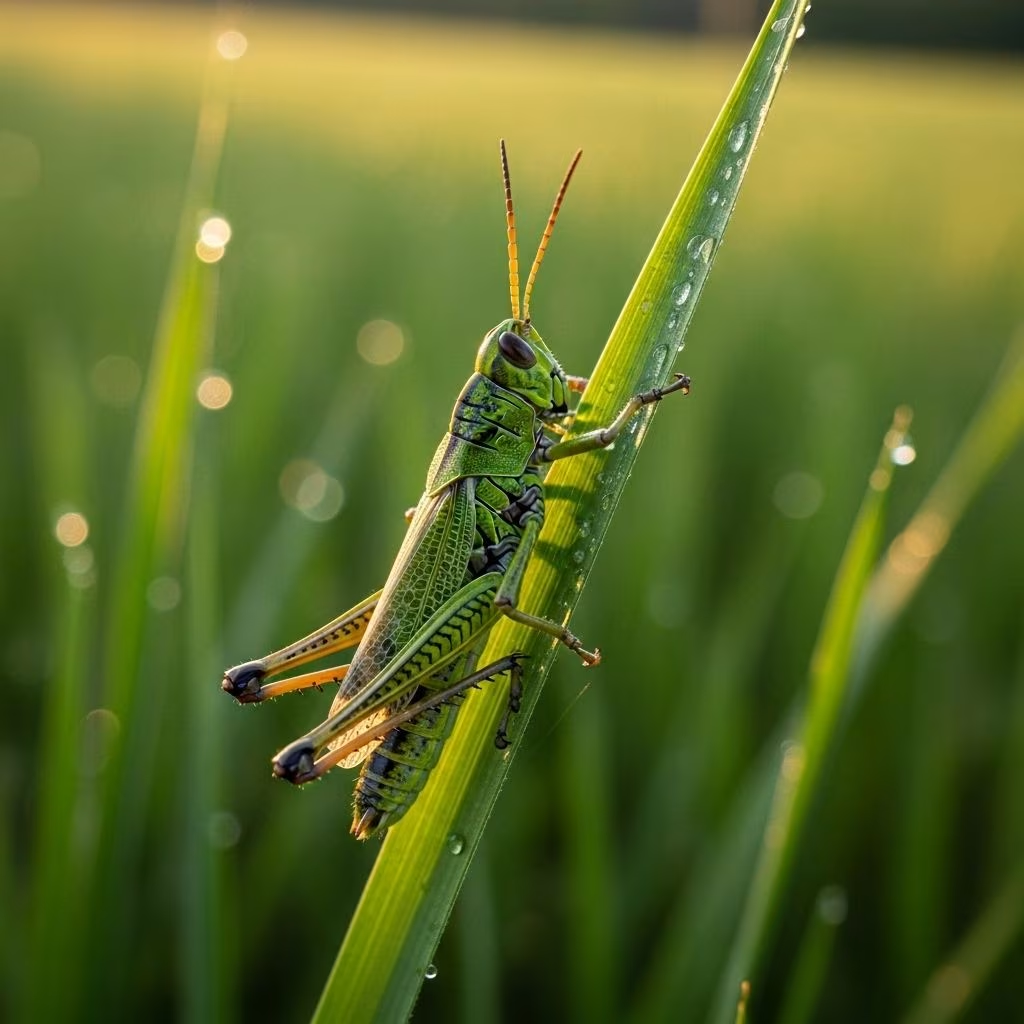
Grasshoppers are more than just the soundtrack of summer meadows or the inspiration for children’s fables—they are ancient, fascinating insects that play vital roles in ecology, human culture, and even cuisine. This in-depth guide explores what grasshoppers are, their unique characteristics, surprising benefits, diverse uses (from ancient remedies to modern food trends), and the distinct taste experience they offer.
Introduction to Grasshoppers
Grasshoppers are ground-dwelling insects renowned for their powerful hind legs, which allow them to jump impressively long distances relative to their body size. They belong to the suborder Caelifera within the order Orthoptera, a group which also includes crickets and locusts. With an ancient lineage stretching back to the early Triassic period 250 million years ago, grasshoppers are among the oldest groups of chewing herbivorous insects known to science.
Biology and Physical Characteristics
Grasshoppers display several distinct physical features:
- Body Structure: Like other insects, grasshoppers have three main body segments: head, thorax, and abdomen. Their large heads support powerful chewing mouthparts (mandibles), two compound eyes for wide-angle vision, and thread-like antennae for touch and smell.
- Limbs: The most prominent feature is their hind legs, which are highly muscular and adapted for jumping. The front and middle pairs of legs are for walking and manipulating food.
- Wings: Most grasshoppers possess two pairs of wings: leathery forewings (tegmina) that protect the delicate, membranous hindwings responsible for flight. When not in use, hindwings fold beneath the forewings.
- Size and Colors: Adult grasshoppers can range from 1 to 8 inches. Coloring can vary dramatically—green, red, olive, brown—sometimes shifting with humidity or season for camouflage.
- Life Cycle: Grasshoppers undergo incomplete metamorphosis: from eggs to nymphs (miniature, wingless versions), to adults. Their nymphs molt five times before adulthood, each time growing larger and more resembling adults.
Table: Grasshopper Morphology Overview
| Body Part | Description | Function |
|---|---|---|
| Head | Compound eyes, antennae, mouthparts | Vision, sensing, chewing |
| Thorax | Pronotum, three pairs of legs, wings | Movement, jumping, flight |
| Abdomen | Segments, reproductive organs | Digestion, egg laying |
| Hind Legs | Massive femurs, spines | Leaping and defense |
| Wings | Forewings & hindwings | Protection and flying short distances |
Ecological Importance
Grasshoppers are key herbivores in many terrestrial ecosystems, consuming leaves, stems, and sometimes flowers and seeds. Their population dynamics can dramatically affect the landscape:
- In moderate numbers, they contribute to nutrient cycling and serve as essential prey for birds, reptiles, spiders, and small mammals.
- Pest outbreaks, especially when grasshoppers form swarms (locusts), can devastate crops and pastures over vast regions, sometimes leading to major economic and food crises.
- Predators, parasitoids, and pathogens all help regulate grasshopper populations, maintaining ecological balance.
Grasshoppers in Human History and Culture
Human interactions with grasshoppers have long been complex and conflicted:
- Historical Impact: Swarms of locusts have been feared for millennia, destroying entire harvests and resulting in famines—a motif found in religious texts, folklore, and art.
- Cultural Symbolism: Grasshoppers symbolize agility, luck, and transformation in various cultures.
- Traditional Uses: In several societies, grasshoppers have been valued as food, medicine, and even objects for entertainment and as musical inspiration (their songs or stridulation patterns).
Grasshoppers as Food
Eating insects (entomophagy) is practiced by over two billion people worldwide, and grasshoppers are a major edible species in parts of Africa, Asia, the Middle East, and Latin America:
- Mexico: Grasshoppers known as chapulines have been eaten since pre-Columbian times, usually toasted, seasoned with garlic, chili, and lime, and served as snacks or taco fillings.
- Thailand & Southeast Asia: Grasshoppers are a street food staple, deep-fried and seasoned for crunch and flavor.
- Uganda & other African countries: Grasshoppers are enjoyed roasted or sautéed, providing seasonal protein boosts.
In Western countries, grasshoppers are gaining attention as a sustainable protein source, often appearing in high-end restaurants and food innovation labs.
Health Benefits of Eating Grasshoppers
Grasshoppers are more than just an emergency food—they are a nutritional powerhouse with several advantages:
- High-Quality Protein: Grasshoppers typically contain 60-70% protein by dry weight, providing all essential amino acids.
- Micronutrients: They are rich in vitamins (B-vitamins, especially riboflavin and B12), minerals (iron, zinc, magnesium), and antioxidants, supporting whole-body health.
- Low in Fat and Carbohydrates: They offer lean nutrition with minimal saturated fat and little to no sugar.
- Digestibility: Insect protein is generally easy to digest and can be less likely to cause inflammatory reactions than some traditional animal proteins.
- No Hormones or Antibiotics: Unlike conventional livestock, wild-caught or responsibly farmed grasshoppers don’t require hormone supplementation or antibiotics.
Table: Nutrition Comparison (per 100g, dry weight)
| Food Source | Protein (g) | Fat (g) | Iron (mg) | B12 (µg) |
|---|---|---|---|---|
| Grasshoppers | 60-70 | 6-13 | ~12 | >8 |
| Beef (lean) | 50-55 | 15 | 2.6 | 2.5 |
| Chicken | 60 | 7 | 1.3 | 0.4 |
Grasshoppers also contain chitin (a natural dietary fiber found in their exoskeleton), which may have prebiotic and cholesterol-lowering effects, though it is not digested by humans in large amounts.
Other Uses and Applications
- Animal Feed: Because of their high protein content, grasshoppers and locusts are being explored as potential ingredients in animal, poultry, and fish feeds, offering an alternative to conventional fishmeal and soy.
- Natural Fertilizer: The remains of grasshopper processing (often called “frass”) can be composted and used as a nutrient-rich fertilizer, promoting sustainable agriculture.
- Traditional Medicine: Some cultures use grasshoppers in folk remedies for conditions ranging from fever to digestive issues, although scientific support is limited.
- Educational & Scientific Uses: Grasshoppers are classic teaching specimens for insect anatomy, physiology, and developmental biology due to their size and relative ease of study.
Taste Profile and Culinary Experience
The taste of grasshoppers is often described as mild, nutty, and earthy, with a crunchy texture when roasted or fried. Their flavor can be influenced by both their species and diet, as well as the cooking method:
- Freshly roasted or fried: Slightly similar to toasted sunflower seeds or popcorn, with a subtle grassy undertone.
- Seasoned preparations: Their absorbent nature makes them excellent vehicles for spices and flavorings; common combinations include chili, garlic, lime, soy, and even chocolate coatings.
- Texture: When prepared well, grasshoppers are crispy yet tender on the inside, without being tough or chewy. Overcooking can make them hard.
How Are Grasshoppers Prepared and Served?
- Toasted whole as snacks or taco fillings (e.g., Mexican chapulines).
- Deep-fried and seasoned (common in Thai street markets).
- Pounded into powder and used in protein bars or baking mixes.
- Added to salads, stir-fries, or as crunchy toppings for soups.
Grasshoppers and Sustainable Food Systems
Grasshoppers are increasingly championed as a sustainable protein solution for a growing global population:
- Resource-Efficient: Compared to cattle and chicken, grasshoppers require less land, water, and feed to produce the same amount of protein.
- Low Greenhouse Emissions: Insect farming produces a fraction of the methane and CO2 associated with traditional livestock.
- Quick Breeding Cycle: Grasshoppers mature quickly and can be farmed year-round with minimal environmental impact.
- Reduction in Overfishing: When used for aquaculture, insect-based feed can reduce pressure on wild fish stocks.
Despite these benefits, widespread adoption in Western countries faces hurdles due to psychological and regulatory barriers, as well as concerns over allergenic potential in people sensitive to shellfish (due to related chitin content).
Frequently Asked Questions (FAQs)
Q: Are all grasshoppers edible?
A: Most species are edible, but not all. It’s vital to avoid grasshoppers from regions where pesticides or pollutants are common. Always eat insects sourced from reputable suppliers.
Q: How do you cook grasshoppers?
A: Common methods include toasting, roasting, frying, or baking. In many cuisines, they’re seasoned before serving. Always remove legs and wings for easier eating, as these can be sharp or tough.
Q: Are there any risks in eating grasshoppers?
A: Allergic reactions are possible (especially in those sensitive to shellfish). Ensure the insects are fully cooked to avoid any risk of parasites or bacterial contamination.
Q: What do grasshoppers contribute to a balanced diet?
A: They offer lean, complete protein, micronutrients including iron, zinc, and vitamin B12, and minimal fat, making them a healthy snack or meal addition.
Q: Where can I buy grasshoppers for eating?
A: Specialty stores, online retailers, and international markets sell edible grasshoppers—fresh, dried, or in processed forms. Only purchase from sources that comply with food safety regulations.
Conclusion
Grasshoppers are much more than a summertime curiosity. As resilient survivors, ecological keystones, and nutritious food, their story stretches from prehistoric landscapes to the cutting-edge of sustainable cuisine. Whether experienced as street food in Oaxaca, a classroom teaching specimen, or a protein bar ingredient, grasshoppers offer a story of adaptation, abundance, and the evolving relationship between humans and their environment.
References
- https://en.wikipedia.org/wiki/Grasshopper
- https://www.ebsco.com/research-starters/zoology/grasshoppers
- https://www.amentsoc.org/insects/fact-files/orders/orthoptera.html
- https://a-z-animals.com/animals/grasshopper/10-incredible-grasshopper-facts/
- https://www.ars.usda.gov/plains-area/sidney-mt/northern-plains-agricultural-research-laboratory/pest-management-research/pmru-docs/grasshoppers-their-biology-identification-and-management/id-tools-apps/field-guide/fg-external-anatomy
- https://entnemdept.ufl.edu/ghopper/intro1.pdf
- https://www.wildlifetrusts.org/wildlife-explorer/invertebrates/grasshoppers-and-crickets/common-field-grasshopper
- https://www.uwyo.edu/entomology/grasshoppers/field-guide/index.html
- https://australian.museum/learn/animals/insects/grasshoppers-crickets-katydids-and-locusts-order-orthoptera/


