


Introduction
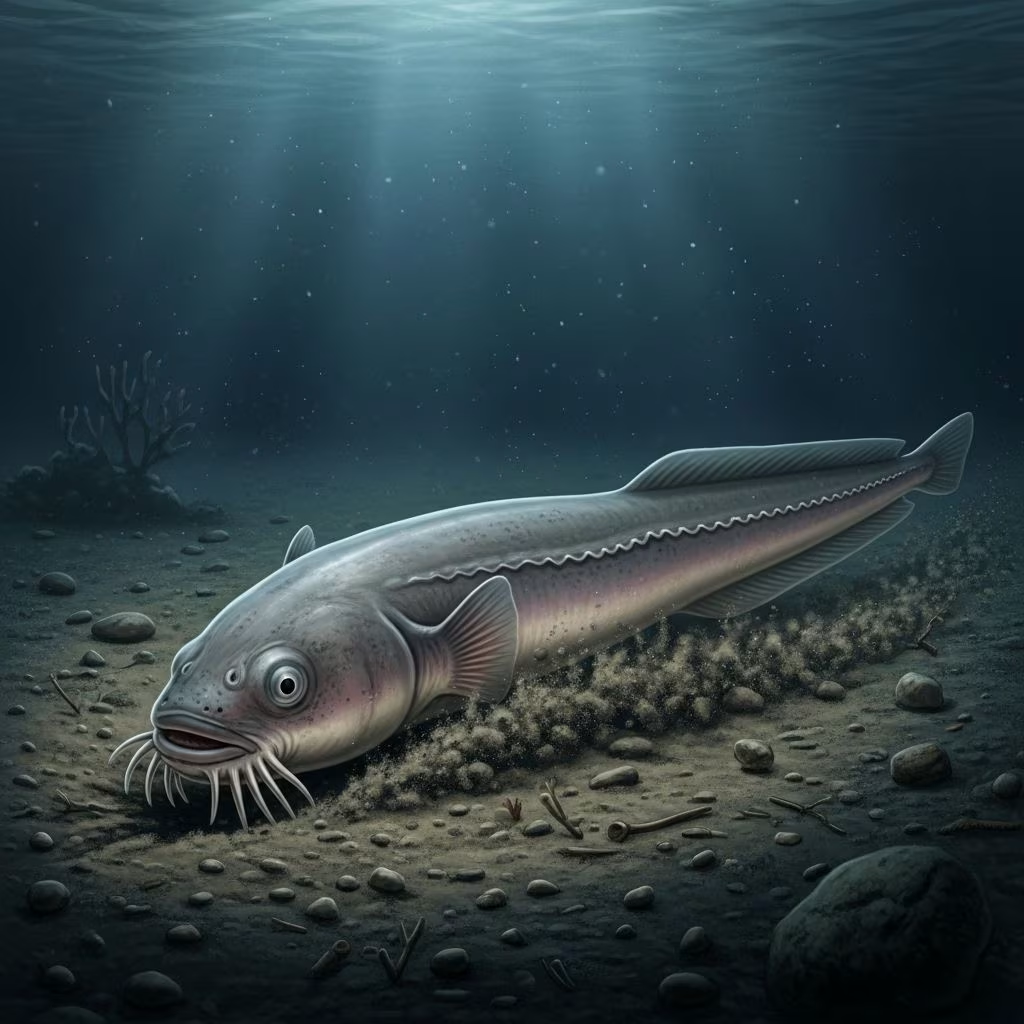
Hagfish are one of the most mysterious and misunderstood creatures of the deep ocean. Renowned for their unique ability to produce copious amounts of slime and their bizarre anatomical features—including possessing a skull with no true vertebral column—hagfish play an important role in the ecological balance of marine environments and offer a variety of surprising benefits and uses.
Biology and Physical Characteristics of Hagfish
Classification and Species Diversity
Hagfish belong to the family Myxinidae, with roughly 76 recognized species distributed globally. Their evolutionary lineage is deeply rooted, often regarded as living fossils due to their primitive anatomical traits and minimal evolutionary changes over millions of years.
Body Structure
- Length: Most hagfish range from 4 cm (1.6 in) to 127 cm (4 ft 2 in), with average specimens around 50 cm (19.7 in).
- Weight: They typically weigh between 0.85 and 1.4 kg (1.8–3.1 lb).
- Appearance: Hagfish have elongated, eel-like bodies, paddle-like tails, and naked skin ranging from dull pink to blue-grey, sometimes speckled with black or white spots.
- Eyes: Simple eyespots, not true lensed eyes—with poor visual capabilities.
- Teeth and Feeding: Instead of jaws, they sport tooth-like keratinous structures, which protract and retract from a cartilaginous plate. This enables them to rasp flesh from carcasses and prey.
- Hearts: Possess three accessory hearts and a sinus system for blood absorption.
- Respiratory System: Unique systems for blood and gas exchange; they can absorb nutrients directly through their skin.
- Tentacles: Multiple pairs of tentacles serve as sensory appendages.
Unique Adaptations
- The hagfish’s skin is attached mostly along its dorsal ridge and at slime glands, filling with blood and providing protection against predators.
- Lack of a true stomach; they envelop food in a permeable membrane for absorption.
- No paired fins, only a caudal (tail) fin.
Habitat and Ecological Role
Hagfish inhabit the ocean floor worldwide, particularly favoring muddy or sandy substrates at depths ranging from shallow coastal waters to well over 1,300 meters. They are largely nocturnal, venturing out in darkness to hunt and scavenge.
- They are seen at the bottom of the Pacific, Atlantic, and Indian Oceans in various climates.
- Prefer polychaete worms and invertebrates but are well-known as scavengers feeding on decomposing carcasses.
- Play a vital role in nutrient recycling on the seafloor by breaking down dead material.
- Have slow metabolism, surviving months without food.
Hagfish Slime: Nature’s Marvel
One of the most fascinating features of hagfish is their ability to discharge huge amounts of slime nearly instantaneously when threatened or feeding.
- The slime is produced from over 100 glands positioned along their flanks.
- Composed of mucin fibers and protein threads, it expands massively with contact to seawater, forming a sticky gel capable of suffocating predators or fouling fishing equipment.
- Hagfish can tie themselves into knots to shed the excess slime or to tear at food.
This unique substance is so remarkable it has become the basis of study for potential human uses, ranging from eco-friendly bioplastics to surgical materials, due to its strength, flexibility, and biodegradability.
Benefits of Hagfish
Ecological Benefits
- Nutrient Recycling: By feeding on decaying matter, hagfish facilitate nutrient cycling in marine ecosystems, ensuring the breakdown and redistribution of organic matter.
- Pest Control: Their scavenging behavior helps keep the ocean floor clean and controls potential disease vectors from decaying tissue.
Scientific and Industrial Potential
- Biomedical Applications: Hagfish slime is being explored for its similarities to spider silk, potentially useful for wound dressings, medical scaffolds, and bioengineered materials.
- Environmental Solutions: Research is ongoing into using hagfish slime proteins for sustainable, biodegradable plastics.
- Genetic and Evolutionary Insights: Hagfish’s primitive anatomy offers clues to the early evolution of vertebrates, benefitting evolutionary biology and comparative anatomy.
Industrial and Commercial Uses
- Leather: Hagfish skin is surprisingly strong and flexible. It is harvested for the production of “eel-skin” leather goods, including wallets, boots, and purses—especially in Asian markets.
- Slime-Based Products: Ongoing research aims to scale up the production of hagfish slime for use as eco-friendly fibers, bio-glues, and medical materials.
- Fishing Bait: Hagfish are routinely used as bait in commercial crabbing and fishery operations, particularly in East Asia.
While hagfish fisheries exist, there is limited data on population sustainability and fishing impacts.
Culinary Uses and Taste Profile
Cultural Significance
Despite their unappetizing appearance and defensive slime, hagfish are considered a delicacy in some cultures, particularly Korea and parts of Japan. Known as “gomjangeo” in Korea, hagfish dishes are prized for their texture and purported health benefits.
Preparation Methods
- Preparation usually involves skinning and thoroughly washing to remove slime residue.
- Common cooking methods include grilling, stir-frying, and seasoning with spicy sauces.
- Hagfish is typically served as thick, chewy filets, sometimes marinated in garlic, chili, and soy-based sauces.
Taste Profile
- Texture: Firm, dense, and chewy—similar to squid or octopus but with a richer mouthfeel.
- Flavor: Mild and slightly sweet, with a subtle hint of oceanic brininess and a touch of earthiness. It readily absorbs the flavors of seasonings and sauces.
Hagfish flesh is high in protein and lauded for its potential medicinal benefits, believed to aid in stamina, sexual health, and skin vitality in Korean traditional medicine. However, scientific evidence is limited, and these claims should be viewed with caution.
Popular Dishes
- Grilled Hagfish: Charcoal-grilled, brushed with spicy gochujang or soy-based glaze.
- Stir-Fried Hagfish: Sautéed quickly with vegetables and pepper paste.
- Hagfish Soup: Used as a protein supplement in brothy traditional stews.
Due to the gelatinous nature of hagfish, its preparation is often labor-intensive, requiring specialized culinary skills.
Nutritional Value
| Nutrient | Amount per 100g | Health Benefits |
|---|---|---|
| Protein | Up to 16g | Supports muscle growth and repair |
| Fat | Moderate (~2-8g, depending on cut) | Essential fatty acids for brain health |
| Minerals | Iron, Calcium, Magnesium | Vital for blood, bone, and nerve function |
| Calories | ~90 kcal | Balanced energy source |
Although limited comprehensive nutritional studies exist, hagfish is valued for its high protein content and trace minerals, making it a nutritious (if somewhat niche) seafood option.
Conservation Issues
- Status: Most species are listed as “Data Deficient” by the IUCN, with little known about their population dynamics or long-term viability.
- Threats: Overfishing for skin and food markets, bycatch, and habitat degradation.
- Management: More research and regulatory oversight are needed to ensure sustainable hagfish fisheries and protect deep-sea biodiversity.
Frequently Asked Questions (FAQs)
Q: Why do hagfish produce slime?
A: Hagfish produce slime as a defense mechanism against predators and to aid in feeding and locomotion. The slime can clog the gills of attacking fish, serving as an effective deterrent.
Q: Are hagfish dangerous to humans?
A: Hagfish pose no direct threat to humans and are usually harmless. Their slime can damage fishing gear but is not toxic.
Q: How are hagfish used outside of food?
A: Hagfish skin is widely used for leather, and their slime is being researched for high-performance biomaterials in medicine and industry.
Q: What does hagfish taste like?
A: Hagfish has a mild, slightly sweet flavor with a chewy, gelatinous texture. It absorbs seasonings well, making it popular in barbecue and spicy dishes.
Q: Why is hagfish called a “living fossil”?
A: Hagfish retain many ancient anatomical features and represent a lineage close to the early evolution of vertebrates, making them important to evolutionary studies.
Conclusion
Hagfish are among the ocean’s most captivating and ecologically important creatures. Their impressive slime-producing ability, scavenging habits, and ancient anatomy highlight not only their evolutionary significance but also their emerging role in industrial, biomedical, and culinary fields. Though not well-known outside of specialist circles, continued research and responsible fisheries management are key to unlocking further secrets—and sustainable benefits—from these remarkable animals.
References
- https://en.wikipedia.org/wiki/Hagfish
- https://a-z-animals.com/animals/hagfish/
- https://www.aquariumofpacific.org/onlinelearningcenter/species/pacific_hagfish
- https://www.adfg.alaska.gov/index.cfm?adfg=hagfish.main
- https://www.montereybayaquarium.org/animals/animals-a-to-z/pacific-hagfish
- https://www.britannica.com/animal/hagfish
- https://oceanconservancy.org/blog/2021/05/21/hagfish/
- https://www.nps.gov/subjects/fishing/jawless-fish.htm


