


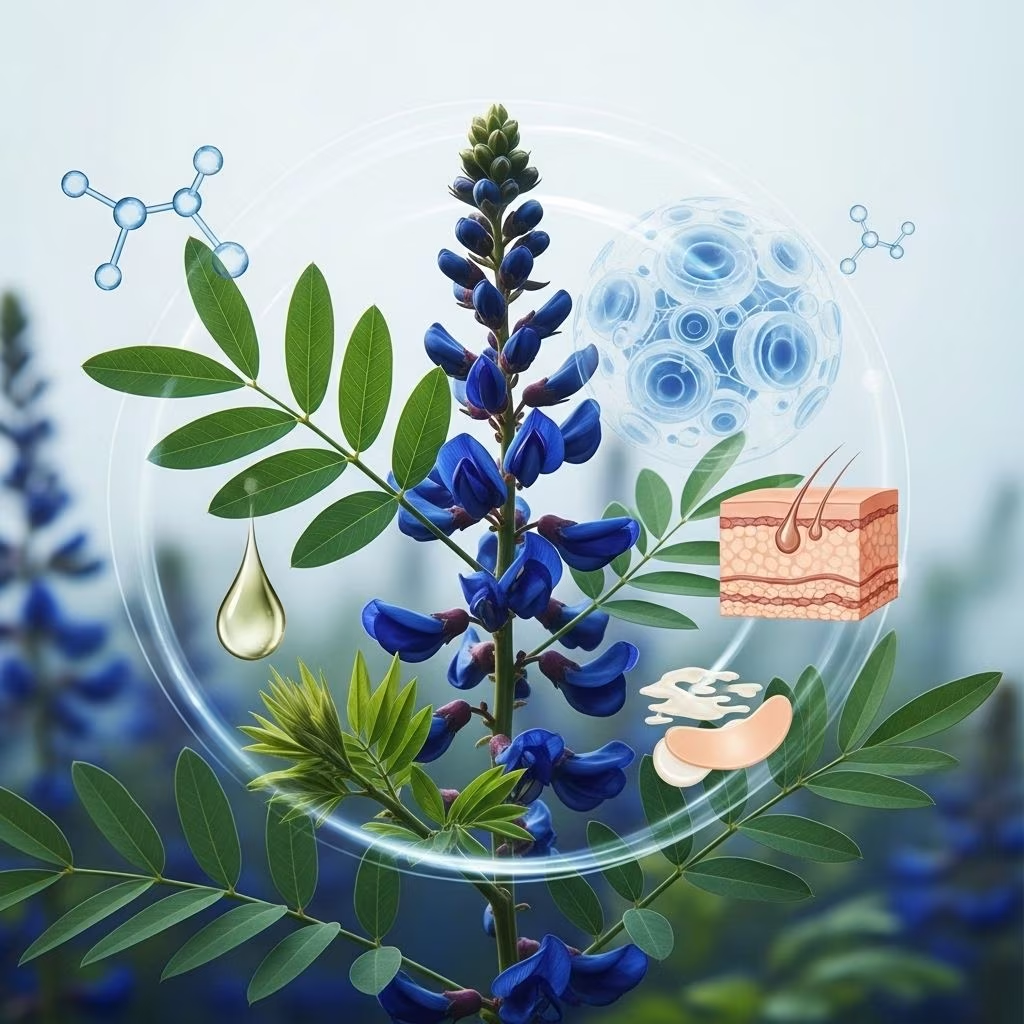
Indigofera Extract: Skin Benefits, Uses & Side Effects
Indigofera extract, derived primarily from species such as Indigofera argentea, Indigofera tinctoria, and wild Indigo (Indigofera oblongifolia), has been used for centuries in traditional medicine and textiles. In recent years, modern research has highlighted its potent skin-enhancing properties, spotlighting its antioxidant, anti-inflammatory, and wound healing abilities. From topical creams to advanced cosmeceutical formulations, Indigofera extract is emerging as both a natural and effective addition to skincare regimes. This comprehensive guide explores the science, benefits, potential uses, and safety considerations of Indigofera extract in skin care.
What is Indigofera Extract?
Indigofera extract is obtained from the leaves, stems, or roots of plants belonging to the Indigofera genus, a group of leguminous plants known for producing natural blue dye. Beyond its historical uses in textiles, Indigofera species have long been valued in traditional medicine for their skin healing and health-promoting properties. Modern extraction processes focus on isolating bioactive compounds such as polyphenols, flavonoids, and alkaloids that underpin its medicinal and cosmeceutical applications.
Key Bioactive Compounds in Indigofera Extract
Research on Indigofera extracts, especially I. argentea, has identified a rich profile of active constituents contributing to its skin benefits:
- Polyphenols: Including gallic acid, chlorogenic acid, p-coumaric acid, and rutin, which provide antioxidant protection and support skin rejuvenation.
Example analysis: Gallic acid 4.91 μg/g, chlorogenic acid 48.12 μg/g, p-coumaric acid 0.43 μg/g, rutin 14.23 μg/g. - Flavonoids: Plant-derived compounds known for minimizing oxidative stress and inflammation in the skin.
- Indirubin and Tryptanthrin: Alkaloids showing significant anti-inflammatory and immunomodulatory activity, especially relevant in conditions like psoriasis.
Skin Benefits of Indigofera Extract
Indigofera extract’s popularity in skin care stems from its multi-layered benefits, validated through laboratory, animal, and human studies.
Antioxidant Properties
- Indigofera extract features high antioxidant activity, helping to neutralize free radicals generated by sun exposure, stress, or pollution. This effect preserves skin structure, delays aging signs, and promotes a smoother complexion.
- The polyphenols and flavonoids in Indigofera extracts are central to these antioxidant effects, directly reducing cellular damage and boosting skin resilience.
Key Data: Trials found that a cream with 4% Indigofera argentea extract achieved DPPH scavenging activity of 81.81% — similar to known antioxidants like ascorbic acid.
Anti-inflammatory Effects
- Indigofera compounds suppress pro-inflammatory signals in skin cells, reducing redness, swelling, and discomfort.
- Notably, indirubin and tryptanthrin provide strong anti-inflammatory action. Topical application in wound or psoriasis models lowered inflammation and reduced dermal markers of skin irritation.
Clinical Evidence: Indigofera extract reduced skin inflammation and improved healing speeds in rat wound models, lowering markers like MMP-2, MMP-9, and increasing TGF-β1, which supports tissue repair.
Skin Rejuvenation & Moisturizing
- Indigofera extract significantly improves skin moisture (up to 39% increase) and elasticity (up to 30% boost), leading to smoother, plumper skin over time.
- It promotes a reduction in skin melanin (hyperpigmentation), giving a more refined, even appearance.
- Consistent application contributes to gradual removal of minor flaws, texture irregularities, and visible aging signs.
| Parameter | 2 Weeks Change | 12 Weeks Change |
|---|---|---|
| Skin Melanin | -1.70% | -10.8% |
| Moisture | +7.7% | +39.15% |
| Elasticity | +2% | +30% |
Wound Healing
- Topical indigo leaf extract speeds up skin wound healing, enhances repair, and minimizes scarring.
- It increases antioxidant enzymes and decreases oxidative damage markers (such as malondialdehyde), supporting tissue regeneration and protection.
- Action on matrix metalloproteases (MMPs): Lower levels help prevent excessive breakdown of skin matrix, promoting healthy wound closure.
UV Protection
- Indigofera extract exhibits natural UV-absorbing abilities, offering mild sun protection when formulated into creams or lotions.
- Studies show a sun protection factor (SPF) of 20.53 for pure extract, and 10.59 for finished cream formulations.
- This makes Indigofera extract an attractive ingredient for eco-friendly and economical sunscreens or day creams.
Uses in Skin Care
Common Formulations & Products
- Moisturizing Creams: Stable lotions and emulsions containing Indigofera extract are engineered to boost skin hydration and elasticity.
- Anti-aging Serums: Typically combine Indigofera extract with other antioxidants for enhanced wrinkle reduction and skin smoothness.
- Wound Salves and Balms: Targeted at thermal, excision, or abrasion wounds, leveraging the extract’s healing and soothing power.
- Psoriasis Patches & Ointments: Nano-fiber patches and ointments with indigo compounds (indirubin, tryptanthrin) offer local anti-inflammatory relief without systemic absorption.
- Sunscreens: Added for natural SPF boosting and mild UV coverage in facial and body products.
Application Methods
- Apply topical cream or lotion onto cleansed skin, once or twice daily as directed.
- For targeted treatment (wounds, psoriasis), patches or concentrated ointments may be used directly on affected areas.
- As a part of comprehensive skincare, Indigofera extract can be layered with serums, before sun exposure, or integrated into night routines for long-term benefits.
Special Considerations
- The characteristic blue coloration of Indigofera-based products may temporarily tint skin – especially with indigo-rich ointments or patches.
- Formulators often mitigate excessive pigmentation by balancing active ingredient concentrations or using nanoparticle delivery systems.
- The extract’s stability (up to 90 days) allows for diverse product formats: lotions, emulsions, nanoemulsions, and more.
- Extraction quality, sourcing, and formulation greatly affect the efficacy and cosmetic feel of Indigofera-based products.
Contraindications & Side Effects
- Most studies suggest topical Indigofera extracts are safe for short- and medium-term use with minimal side effects.
- Potential side effects include:
- Mild skin staining (blue tint) after application, mostly temporary.
- Possible itchiness, redness, or irritation in people sensitive to plant extracts. A patch test is always recommended before first use.
- Rare allergic reactions (contact dermatitis), especially in individuals with hypersensitivity to legumes or similar botanical compounds.
- Human trials are generally positive, but sample sizes have been limited; larger studies are required to confirm long-term safety.
- No evidence of systemic absorption or major toxicity in short-term usage; nanoparticle formulations show even lower risk of absorption.
Contraindications: Avoid if known allergy to Indigofera species, or in case of persistent irritation. Discontinue use if serious rash, swelling, or breathing difficulty develops.
Scientific Research and Evidence
Key studies have provided robust support for Indigofera extract’s skin enhancement properties:
- Human Trials: Creams with Indigofera argentea extract demonstrated notable improvements in skin hydration, elasticity, reduced melanin, and overall smoother appearance over 12 weeks compared to placebo.
- Animal Models: Indigo leaf extract accelerated wound closure and reduced inflammatory skin markers in rat studies.
- Psoriasis Research: Nano-fiber patches and ointments enriched with indigo, indirubin, and tryptanthrin showed higher efficacy and less staining, combined with low systemic absorption risk in psoriatic skin.
- Antibacterial & Antifungal Activity: Related Indigofera species, such as I. oblongifolia, have demonstrated promising lab results against bacteria and fungi, hinting at supportive roles in managing mild infections and maintaining skin barrier health.
Despite emerging recognition, limitations include relatively short study periods, predominantly small sample sizes, and sparse long-term safety data. Future research should consider larger, more diverse human cohorts and explore extended usage scenarios.
Frequently Asked Questions (FAQs)
Q: How does Indigofera extract compare to synthetic ingredients in skin care?
A: Indigofera extract provides multi-dimensional benefits (antioxidant, anti-inflammatory, moisturizing) with a lower risk of harsh side effects. Its comprehensive natural profile is often comparable or superior to single-ingredient synthetics like kojic acid or ascorbic acid for certain skin types.
Q: Is Indigofera extract suitable for sensitive skin?
A: Most people tolerate it well, but those with sensitivities to legumes or botanicals should perform a patch test first and consult a dermatologist if in doubt.
Q: What conditions can Indigofera extract help manage?
A: Backed by research, Indigofera extract may benefit dry skin, uneven skin tone, mild hyperpigmentation, wound healing, psoriasis, and inflammation-prone skin.
Q: Can Indigofera extract replace sunscreen?
A: While it offers some natural UV protection, Indigofera extract should not fully replace broad-spectrum sunscreen. Rather, it works best as a supplementary shield or part of daytime skin care.
Q: Are there any age restrictions for Indigofera-based skin products?
A: There are no known age restrictions, but pediatric or geriatric use should follow medical advice due to limited research in these groups.
Summary & Key Points
- Indigofera extract is a potent, multifaceted skin ingredient with antioxidant, anti-inflammatory, moisturizing, healing, and mild UV-protective effects.
- Extract quality and formulation are crucial for optimum results and minimal side effects.
- Most users report well-tolerated outcomes, but a patch test is sensible prior to full use.
- Continued research will expand knowledge and applications in modern cosmeceuticals.
References
- https://www.frontiersin.org/journals/pharmacology/articles/10.3389/fphar.2024.1352045/full
- https://pmc.ncbi.nlm.nih.gov/articles/PMC10430593/
- https://pubmed.ncbi.nlm.nih.gov/36708717/
- https://www.ebsco.com/research-starters/complementary-and-alternative-medicine/indigos-therapeutic-uses
- https://pangeaorganics.com/collections/bioactive-wild-indigo
- https://www.ekosfop.or.kr/archive/view_article?pid=kjfp-29-3-367
- https://health.ec.europa.eu/document/download/d9257d03-d565-430b-beb3-08592f285ec4_en


