


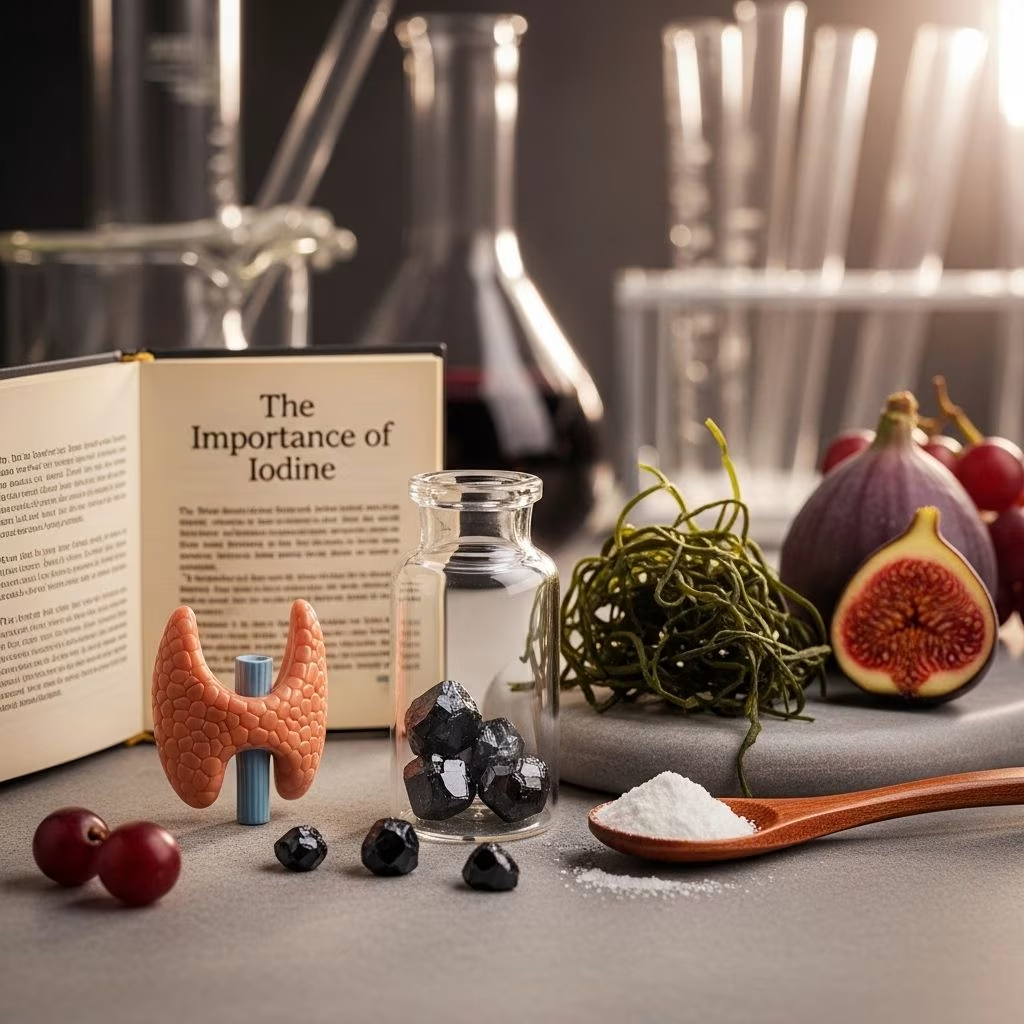
What Is Iodine?
Iodine is a chemical element with the symbol I and atomic number 53, making it one of the heaviest stable halogens in the periodic table. This essential non-metallic element appears as a lustrous, dark gray or purple-blackish solid at room temperature, exhibiting a distinctive glittering crystalline appearance. Discovered by French chemist Bernard Courtois in 1811, iodine has become crucial to both human health and industrial applications worldwide.
As a member of group 17 in the periodic table, iodine sits below fluorine, chlorine, and bromine, sharing many characteristics with other halogens while maintaining unique properties. The element exists naturally in various forms throughout the environment, from ocean water to soil, making it accessible for both biological and commercial purposes.
One of iodine’s most remarkable characteristics is its behavior at standard conditions. Unlike many elements, iodine readily sublimes at room temperature, transitioning directly from solid to gas phase, producing a distinctive deep violet vapor. This property, combined with its moderate vapor pressure, makes iodine both easily recognizable and potentially hazardous in concentrated forms.
Chemical Properties of Iodine
Molecular Structure and Electron Configuration
Iodine possesses an electron configuration of [Kr]5s²4d¹⁰5p⁵, with seven electrons in its outermost shell serving as valence electrons. This configuration makes iodine one electron short of a complete octet, driving its behavior as an oxidizing agent, though it is notably the weakest among stable halogens with an electronegativity of 2.66 on the Pauling scale.
The element forms diatomic molecules with the chemical formula I₂, where two iodine atoms share electrons to achieve stability. At elevated temperatures above 700°C (1,300°F), these diatomic molecules can dissociate into individual iodine atoms, demonstrating the temperature-dependent nature of iodine’s molecular structure.
Oxidation States and Compound Formation
Iodine exhibits remarkable versatility in its oxidation states, including -1, +1, +3, +5, and +7. This range enables iodine to participate in diverse chemical reactions and form various compounds with both metals and non-metals. The element readily reacts with alkali metals to produce iodides, which are fundamental to numerous industrial processes.
A particularly interesting aspect of iodine chemistry is its ability to form polyiodide complexes when combined with iodide ions. These structures possess unique optical and electrical properties that have proven valuable in advanced applications such as solar energy conversion and materials science research.
Solubility and Physical Behavior
Iodine demonstrates selective solubility properties, being only partially soluble in water but dissolving readily in organic solvents such as chloroform, carbon tetrachloride, and carbon disulfide, producing beautiful purple solutions. This characteristic makes it useful in various analytical and industrial applications where specific solvent systems are required.
Health Benefits and Nutritional Importance
Thyroid Function and Hormone Production
Iodine serves as an absolutely essential micronutrient for human health, with its most critical role being the synthesis of thyroid hormones. The human thyroid gland contains approximately 20 milligrams of iodine, which it uses to produce thyroxine (T4) and triiodothyronine (T3), hormones that regulate metabolism, growth, and development throughout the body.
These thyroid hormones influence virtually every physiological process, including:
- Metabolic rate regulation
- Protein synthesis control
- Cardiovascular function
- Nervous system development
- Reproductive health
- Temperature regulation
Brain Development and Cognitive Function
Adequate iodine intake is particularly crucial during pregnancy and early childhood development. Iodine deficiency during these critical periods can result in irreversible cognitive impairment and developmental delays. The element supports proper brain formation and neurological development, making it essential for optimal intellectual capacity throughout life.
Immune System Support
Research indicates that iodine plays a supportive role in immune system function, helping the body defend against pathogens and maintaining overall health. The element’s antimicrobial properties contribute to the body’s natural defense mechanisms, though this benefit requires appropriate intake levels rather than excessive consumption.
Industrial and Commercial Uses
Medical and Pharmaceutical Applications
Iodine finds extensive use in medical settings, primarily as a disinfectant and antiseptic agent. Its powerful antimicrobial properties make it effective against bacteria, viruses, and fungi, leading to its incorporation in various medical preparations including:
- Surgical prep solutions
- Wound care products
- Contrast agents for medical imaging
- Pharmaceutical synthesis
- Thyroid disorder treatments
In diagnostic medicine, iodine-based contrast agents enable clearer imaging in procedures such as CT scans and angiograms, helping healthcare providers visualize internal structures and diagnose conditions more accurately.
Chemical Industry Applications
The chemical industry relies heavily on iodine for various synthetic processes. Its multiple oxidation states and reactive nature make it valuable for:
- Catalyst production
- Organic compound synthesis
- Polymer manufacturing
- Photographic film development
- LCD screen production
Agricultural and Food Industry Uses
Iodine plays a significant role in agriculture and food processing, where it serves as both a nutritional supplement and preservative. Iodized salt represents one of the most successful public health interventions, helping prevent iodine deficiency disorders globally while adding minimal taste alteration to food products.
Taste and Sensory Properties
Metallic and Distinctive Flavor Profile
Iodine possesses a distinctive taste profile that many describe as metallic, bitter, and somewhat medicinal. In its elemental form, iodine is not consumed directly due to its toxicity, but its presence in iodized salt and other food products contributes subtly to flavor profiles. The taste is generally not noticeable in properly iodized salt, as the concentration used for nutritional fortification remains below the threshold for taste detection.
Sensory Detection and Vapor Properties
The characteristic purple vapor that iodine produces when heated or sublimed has a sharp, irritating odor that can be detected at very low concentrations. This vapor is highly irritating to the eyes, nose, and throat, serving as a natural warning system for potentially dangerous exposure levels. The sensory properties of iodine make it easily identifiable in laboratory and industrial settings.
Impact on Food Products
When properly incorporated into food products, iodine typically does not significantly alter taste profiles. However, excessive iodine content or improper storage can lead to off-flavors, particularly in dairy products and baked goods. Food manufacturers carefully control iodine levels to maintain both nutritional benefits and palatability.
Natural and Dietary Sources
Ocean-Based Sources
The ocean represents the most abundant natural reservoir of iodine, containing it in the form of water-soluble iodide. Marine organisms concentrate iodine from seawater, making seafood one of the richest dietary sources of this essential element. Seaweed, in particular, can contain extremely high levels of iodine, sometimes exceeding daily requirements in small servings.
Terrestrial Sources
Soil iodine content varies significantly by geographic location, with coastal areas generally containing higher levels due to ocean spray and historical marine deposits. This variation directly affects the iodine content of crops grown in different regions, contributing to geographic patterns of iodine deficiency in areas with iodine-poor soils.
Dietary Sources and Fortification
Common dietary sources of iodine include:
- Iodized salt (primary source in many countries)
- Seafood and seaweed
- Dairy products
- Eggs
- Certain fruits and vegetables (depending on soil content)
- Fortified bread and cereals
The introduction of iodized salt has been instrumental in reducing iodine deficiency disorders worldwide, representing one of the most cost-effective public health interventions ever implemented.
Iodine Deficiency and Health Risks
Goiter and Thyroid Disorders
Iodine deficiency primarily manifests as thyroid-related disorders, with goiter being the most visible sign. When the body lacks sufficient iodine, the thyroid gland enlarges in an
Developmental Consequences
Severe iodine deficiency during pregnancy and early childhood can lead to cretinism, a condition characterized by stunted physical and mental development. Even mild deficiency can impact cognitive function, educational achievement, and overall quality of life, making adequate iodine intake crucial throughout all life stages.
Global Public Health Impact
Despite the availability of iodized salt, iodine deficiency remains a significant global health challenge, affecting approximately 2 billion people worldwide. Populations in mountainous regions, inland areas far from oceans, and regions with iodine-poor soils face the highest risk of deficiency.
Safety and Toxicity Considerations
Exposure Limits and Toxicity
While iodine is essential for health, excessive exposure can be harmful or even toxic. Highly concentrated iodine is poisonous and may cause serious damage to skin and tissues. The vapor produced by iodine is particularly dangerous, causing irritation to respiratory passages and potentially leading to more severe health complications with prolonged exposure.
Safe Handling Practices
Laboratory and industrial workers handling iodine must follow strict safety protocols, including:
- Working in well-ventilated areas
- Using appropriate personal protective equipment
- Storing iodine in stoppered bottles to minimize vapor exposure
- Following proper disposal procedures
- Maintaining awareness of exposure symptoms
Dietary Safety and Recommendations
For dietary purposes, the recommended daily intake of iodine varies by age and life stage, with pregnant and breastfeeding women requiring higher amounts. Most health authorities recommend 150 micrograms daily for adults, with upper limits established to prevent toxicity from excessive supplementation.
Frequently Asked Questions
Q: What does iodine taste like?
A: Elemental iodine has a metallic, bitter, and medicinal taste, but it’s not consumed directly due to toxicity. In iodized salt, the taste is imperceptible at proper concentrations.
Q: How much iodine do I need daily?
A: Adults typically need 150 micrograms of iodine daily, with pregnant women requiring 220 micrograms and breastfeeding women needing 290 micrograms.
Q: Can I get enough iodine from food alone?
A: Yes, if you regularly consume iodized salt, seafood, dairy products, or live in an area with iodine-rich soil. However, many people rely on iodized salt as their primary source.
Q: Is iodine safe to handle?
A: Pure iodine requires careful handling due to its corrosive nature and toxic vapor. Always use proper ventilation and protective equipment when working with elemental iodine.
Q: What happens if I consume too much iodine?
A: Excessive iodine intake can cause thyroid dysfunction, including hyperthyroidism or hypothyroidism. It’s important to stay within recommended daily limits unless under medical supervision.
Q: Why is iodine added to salt?
A: Iodine fortification of salt is a public health measure designed to prevent iodine deficiency disorders, particularly goiter and developmental problems in children.
References
- https://en.wikipedia.org/wiki/Iodine
- https://www.samaterials.com/blog/iodine-element-properties-and-uses.html
- https://www.britannica.com/science/iodine
- https://byjus.com/chemistry/iodine/
- https://pubchem.ncbi.nlm.nih.gov/element/Iodine
- https://pubchem.ncbi.nlm.nih.gov/compound/Iodine
- https://www.britannica.com/science/iodine/Physical-and-chemical-properties
- https://periodic-table.rsc.org/element/53/iodine
- https://melscience.com/US-en/articles/iodine-purple-nonmetal/


