


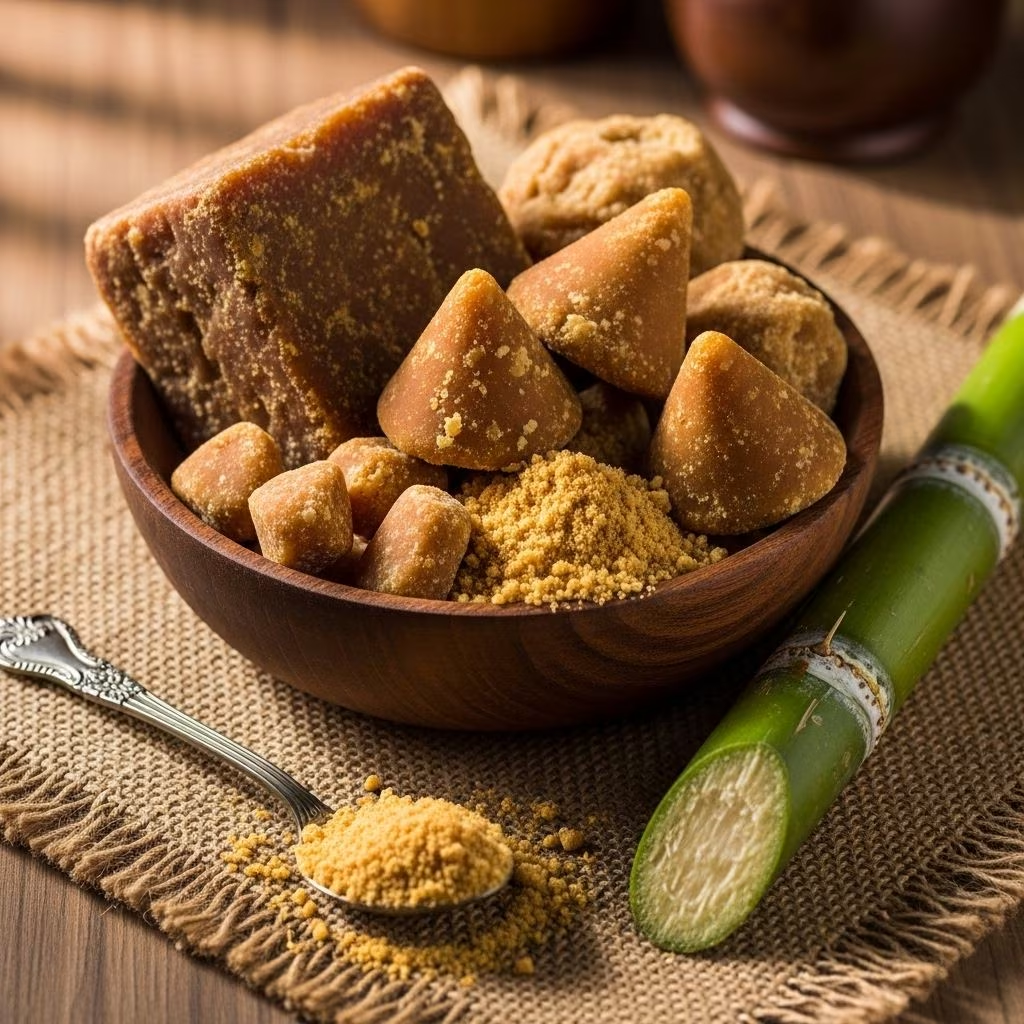
Jaggery is celebrated across Asia, Africa, and Latin America as a quintessential natural sweetener. Known for its unique caramel flavor, traditional production methods, and wholesome nutritional quality, it remains integral to culinary and cultural practices in many regions. This article provides an in-depth examination of jaggery—its origin, production process, health benefits, uses in food and drink, nutritional composition, various types, taste profile, and answers to common questions.
What is Jaggery?
Jaggery is an unrefined natural sweetener traditionally made by concentrating sugarcane juice or sometimes date palm sap. It is widely used in South Asia, especially India, Pakistan, and Sri Lanka, as well as Africa and Latin America. The most common type is sugarcane jaggery, also called gur in India.
- Made by boiling and evaporating sugarcane juice (or date palm sap) with traditional methods.
- No chemical additives or preservatives are used.
- Appears in solid blocks, sometimes powder or liquid form.
- Color ranges from golden yellow to dark brown.
- Characterized by its earthy, caramel-like flavor.
How is Jaggery Made?
Jaggery production is a centuries-old craft practiced using traditional techniques that aim to retain as much of the natural goodness and nutrients as possible. The basic process involves:
- Sugarcane Harvesting:
Fresh stalks of sugarcane are harvested and cleaned. - Juice Extraction:
The stalks are crushed to extract sweet juice using powered crushers. - Filtration:
Juice is filtered to remove impurities. In some regions, a small amount of lime is added to facilitate separation of suspended particles, which rise as froth and are skimmed off. - Boiling:
The juice is boiled in large open pans or cauldrons, usually using dried sugarcane pulp as fuel. - Evaporation and Concentration:
Continuous stirring and simmering evaporate water content. As the juice thickens, impurities are skimmed away, and temperature is monitored closely to prevent burning. - Crystallization:
The syrup reaches a viscous consistency and starts to crystallize. Quality is often judged by color and texture. - Molding and Cooling:
Hot syrup is poured into molds or trays and allowed to cool and solidify. It may be shaped into blocks or powder after cooling.
This process yields a product almost entirely free from chemical additives and retains a more significant portion of the original juice’s vitamins and minerals compared to refined sugar.
Table: Basic Steps in Jaggery Production
| Step | Description |
|---|---|
| Harvesting | Cutting fresh sugarcane stalks from the field |
| Extraction | Crushing stalks to obtain sweet juice |
| Filtration | Removing organic impurities and particles |
| Boiling | Simmering juice until concentrated and viscous |
| Skimming | Continuous removal of foam and impurities |
| Crystallization | Thick syrup reaches thread-like texture |
| Molding & Cooling | Poured into molds or sheets, cooled into solid blocks |
Types of Jaggery
Jaggery is available in a few main forms, each with distinctive characteristics:
- Solid Jaggery: Block or cake form, most common and widely used for cooking.
- Powdered Jaggery: Crumbled or powdered version for easier mixing; popular in beverages and baking.
- Liquid Jaggery: Semi-liquid and syrupy, sometimes used in regional sweets and snacks.
Additionally, jaggery is classified based on its raw material origin:
- Sugarcane Jaggery: Classic and most common type.
- Date Palm Jaggery: Made from the sap of date palm trees; has a distinctive intense flavor.
- Coconut Palm Jaggery: Obtained from coconut palm sap, popular in coastal regions and Southeast Asia.
Nutritional Profile of Jaggery
Jaggery is known as a source of quick energy, but unlike white processed sugar, it retains trace minerals and vitamins from the original plant sap. Nutrient content can vary slightly depending on the source and processing method. Per 100 grams, typical nutritional values include:
- Calories: 370–390 kcal
- Carbohydrates: 95–99 g (mostly sucrose, some glucose and fructose)
- Proteins: 0.4–0.7 g
- Fats: 0.1–0.4 g
- Calcium: 40–220 mg
- Iron: 10–13 mg
- Magnesium: 7–70 mg
- Potassium: 100–180 mg
Jaggery also contains trace B vitamins, antioxidants, and phytonutrients due to minimal refining.
Health Benefits of Jaggery
Jaggery is praised for its potential health benefits, especially when consumed in moderation as part of a balanced diet. Its composition makes it a healthier alternative to refined white sugar for certain applications.
Key Health Benefits
- Rich in Micronutrients: Contains iron, potassium, calcium, and magnesium retained from the original juice.
- Natural Sweetener: Free from chemical refining; does not contain artificial preservatives.
- Lower Glycemic Index: Compared to refined sugar, jaggery is slowly absorbed and hence has a more gradual impact on blood sugar levels.
- Digestive Aid: Traditional medicine values jaggery as a mild digestive tonic post-meals.
- Blood Enrichment: Its iron content can help support hemoglobin synthesis and may help prevent anemia, especially in vegetarian diets where iron sources are limited.
- Antioxidant Properties: Contains a variety of plant-based phytonutrients and antioxidants.
Note: While jaggery offers more nutritional benefits than regular sugar, it is still high in calories and should be consumed in moderation, especially for those managing blood sugar disorders.
Culinary Uses of Jaggery
Jaggery’s unique blend of sweetness and earthiness makes it a staple in diverse culinary traditions. Its versatility is unmatched among natural sweeteners.
Main Culinary Applications
- Traditional Desserts: Integral to classic Indian sweets like chikki, laddoo, payasam, and halwa.
- Confectionery and Candies: Used to make candies and energy-boosting bars.
- Beverages: Dissolved in hot drinks such as tea, coffee, and herbal infusions for flavor and a healthful twist.
- Sauces and Chutneys: Adds depth to tangy chutneys, sauces, and pickles.
- Savory Dishes: Used to balance flavors in curries and stews, especially in regional cuisines across India and Africa.
- Fermented Foods: Sometimes added to aid fermentation of regional alcoholic drinks.
- Baking Substitute: Powdered jaggery can be used instead of sugar in cakes, cookies, and breads for a more complex flavor.
Jaggery Taste Profile
The taste of jaggery is distinctly different from refined white sugar. It features a rich, caramel-like sweetness with subtle earthy, nutty, and slightly smoky undertones due to traditional boiling and the presence of molasses.
Tasting Notes
- Caramel – Deep caramel flavor, more intense than brown sugar.
- Earthy – Hints of earthiness from molasses and unrefined residual minerals.
- Nutty and Smoky – Slight notes depending on the fuel used for boiling and concentration.
- Complex Sweetness – Offers layered sweetness, not one-dimensional.
The color, aroma, and intensity of taste can vary based on the boiling duration, clarity of the juice, and molding method. High-quality jaggery tends to be rich and robust in both taste and aroma.
Jaggery in Cultural Traditions
Beyond the kitchen, jaggery holds significant cultural and ritual importance:
- Festivities: Essential in festive foods for regional celebrations like Pongal, Makar Sankranti, and Diwali.
- Religious Offerings: Used as prasad in Hindu rituals and given as gifts to symbolize good fortune.
- Mediational Practices: Believed to offer cleansing and detoxifying effects according to traditional medicine.
Its use in celebrations and rituals highlights jaggery’s value beyond nutrition and taste—it is deeply woven into the spiritual and communal fabric of many societies.
Potential Side Effects and Safety
While jaggery offers several health benefits, excessive consumption can lead to health problems.
- High Sugar and Calorie Content: Contains almost pure carbohydrates and is calorie-dense; can contribute to weight gain if consumed in excess.
- Blood Sugar Spikes: Although lower than white sugar, jaggery can still cause noticeable increases in blood glucose, especially for diabetics.
- Possible Adulteration: Some producers may add chemical coloring or adulterants to improve appearance; always choose reputable sources.
Moderation is key, and individuals with diabetes or metabolic conditions should consult their healthcare provider before incorporating jaggery into their diets.
Frequently Asked Questions (FAQs)
Q: How is jaggery different from refined sugar?
A: Jaggery is less processed, retains minerals such as iron and potassium, and has a complex flavor compared to the single-note sweetness of refined sugar. It has a lower glycemic index but is similarly calorie-rich.
Q: Is jaggery suitable for diabetics?
A: While jaggery raises blood sugar more slowly than white sugar, it still raises glucose significantly. Diabetics should consume it only on medical advice.
Q: Can jaggery help with anemia?
A: Because it contains iron, jaggery may help prevent mild iron-deficiency anemia, especially in populations with limited animal food sources. However, it cannot replace targeted medical treatment for severe anemia.
Q: Which type of jaggery is healthiest?
A: Natural dark brown jaggery, made with minimal clarification and chemical-free processes, packs the most nutrients.
Q: How should jaggery be stored?
A: Store jaggery in an airtight container in a cool, dry place to prevent hardening or moisture absorption.
Summary
Jaggery is one of nature’s finest sweeteners, treasured for its unique taste, cultural resonance, and wholesome nutritional profile. By choosing jaggery over highly processed sweeteners, home cooks and health-conscious consumers can enjoy both flavor and subtle health benefits. Whether as part of a festive ritual, an iconic dessert, or as a natural substitute in daily cooking, jaggery’s versatility and authenticity continue to make it a staple across the globe.
References
- https://bnborganics.com/blogs/news/what-is-sugarcane-jaggery-and-how-is-it-made
- https://en.wikipedia.org/wiki/Jaggery
- https://www.scribd.com/document/500263738/Production-Process-of-Jaggery
- https://pmc.ncbi.nlm.nih.gov/articles/PMC8314846/
- https://www.youtube.com/watch?v=5W2YaojqhLY
- https://www.britannica.com/topic/jaggery
- https://www.mofpi.gov.in/mediapr/enewsfeb4.html


