


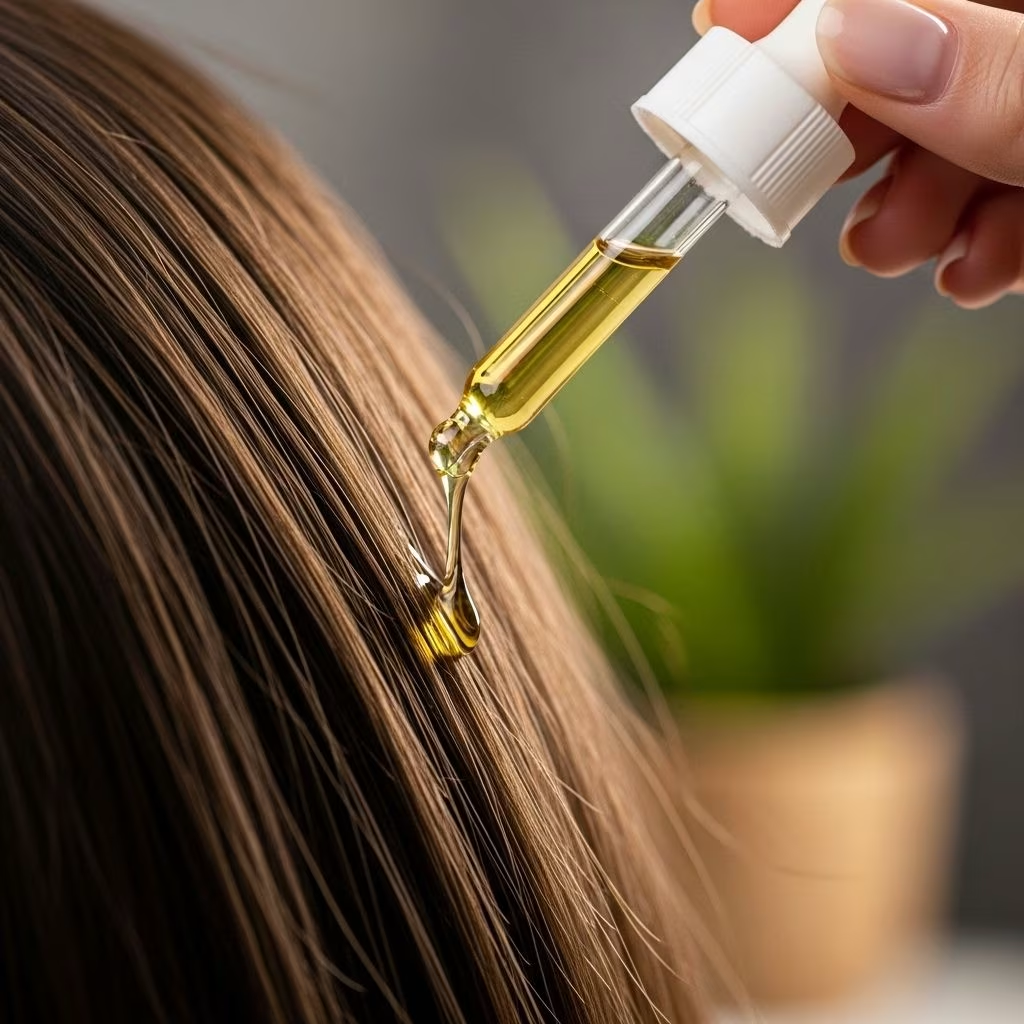
Jojoba oil has garnered growing attention in the world of natural hair care—from beauty experts to dermatologists—for its close resemblance to the natural oils (sebum) our scalps produce. Rich in vitamins, minerals, and essential fatty acids, jojoba oil promises a host of benefits for hair growth, scalp health, and overall hair vitality. This guide explores its proven uses in hair care, backed by scientific research and clinical advice, and provides strategies for maximizing its potential in your daily routine. Whether you’re struggling with dry scalp, brittle strands, or simply want to add a natural shine, jojoba oil might be the remedy you’ve been searching for.
What is Jojoba Oil?
Jojoba oil is a liquid wax extracted from the seeds of the Simmondsia chinensis plant, native to arid regions of North America. Unlike typical plant oils, jojoba oil is composed mainly of monounsaturated liquid wax esters, making it uniquely similar to human sebum. This property allows it to integrate seamlessly into hair and scalp care, hydrating without leaving a greasy residue.
Nutritional Profile of Jojoba Oil
The effectiveness of jojoba oil in hair care stems from its impressive nutrient composition:
- Vitamins: Vitamin E (a powerful antioxidant), Vitamin B complex
- Minerals: Zinc, Copper
- Fatty Acids: Long-chain monounsaturated fatty acids (eicosenoic acid), omega-9 fatty acids
- Wax Esters: Closely mimic scalp’s natural sebum
- Phytosterols and Antioxidants: Contribute to anti-inflammatory and scalp-soothing effects
This composition imparts jojoba oil with several attributes valuable in managing and restoring hair health.
Hair Benefits of Jojoba Oil
Jojoba oil is highly valued in hair care for several key reasons. Here’s a breakdown of its scientifically-backed benefits:
- Moisturizes Dry Hair and Scalp: Jojoba oil provides deep hydration to hair shafts and scalp by imitating natural sebum, without clogging pores or causing buildup.
Result: Softer, more manageable hair and reduction of dry, flaky scalp. - Reduces Frizz and Enhances Shine: Its unique molecular structure forms a coating on hair strands, locking in moisture, smoothing the cuticle, and reducing frizz. This smooths rough, split ends and enhances shine.
- Soothes Scalp Irritation & Dandruff: With anti-inflammatory and antimicrobial properties, jojoba oil calms irritation, reduces itching, and helps manage dandruff.
- Prevents Hair Breakage: By reinforcing the hair cuticle and reducing dryness, jojoba oil lessens breakage and split ends, helping you maintain hair length.
- Balances Sebum Production: Because it so closely resembles sebum, jojoba oil helps regulate scalp oil levels—whether your scalp is oily or dry.
- Protects Against Environmental Damage: Its antioxidants shield hair from pollutants, UV rays, and other environmental stressors.
- Adds Volume and Fullness: Sealing in moisture can make fine hair appear thicker and fuller without weighing it down.
Does Jojoba Oil Promote Hair Growth?
There is ongoing debate and research into the direct role of jojoba oil in stimulating new hair growth. Here’s what recent science says:
- Promotes Healthy Growth Environment: Jojoba oil nourishes follicles with vitamins E, B, zinc, and copper, all of which are linked to hair production. Massaging the oil into the scalp also boosts blood flow and nutrient delivery to follicles.
- Anti-inflammatory and Antifungal Effects: By reducing scalp inflammation and controlling dandruff, jojoba oil can help maintain an optimal environment for the hair growth cycle. This is especially helpful for conditions like seborrheic dermatitis, mild scalp psoriasis, and chronic itch.
- Hair Loss Prevention: While it’s not a cure for androgenetic alopecia (genetic hair loss) or a substitute for minoxidil, jojoba oil’s ability to strengthen strands and prevent breakage may support the retention of hair length.
- Evidence Limitations: Current scientific studies do not support jojoba oil as a primary treatment for clinical baldness, but regular use does foster healthier, less brittle hair, which can increase the perception of fuller growth.
Summary Table: Jojoba Oil and Hair Growth
| Claim | Evidence Level | Practical Outcome |
|---|---|---|
| Stimulates new hair follicle growth | Low/Unproven | May not regrow lost hair, but fosters healthy scalp |
| Strengthens existing hair and reduces breakage | High | Stronger, less brittle, shinier hair |
| Reduces scalp inflammation and dandruff | Moderate/Supported | Helps with dandruff and healthy growth environment |
How to Use Jojoba Oil for Hair
Integrating jojoba oil into your haircare routine is straightforward and can be customized to your unique needs and hair type. Here are some of the most effective methods:
1. Scalp Massage Treatment
- Warm a tablespoon of pure jojoba oil in your palms.
- Section hair and gently massage oil into the scalp using circular motions for 5-10 minutes.
- Leave on for 20 minutes to several hours, or overnight for deep conditioning.
- Shampoo as usual to remove excess.
2. Leave-in Conditioner or Serum
- Apply a few drops to damp hair, focusing on mid-lengths and ends.
- Style as usual to lock in moisture and tame flyaways.
3. Hot Oil Treatment
- Warm 2-3 tablespoons of jojoba oil (do not overheat).
- Apply thoroughly to hair and scalp, cover with a shower cap or warm towel, and leave on for 30–60 minutes.
- Wash with a gentle shampoo.
4. Pre-Shampoo (Pre-poo) Treatment
- Massage jojoba oil into sections of dry hair before shampooing to minimize moisture loss during washing.
- Shampoo and condition as usual.
5. Mixing With Other Products
- Add a drop or two to your regular conditioner or hair mask for a boost of moisture and shine.
Application Tips:
- Always start with a small amount: Jojoba oil is lightweight but potent; too much can leave hair greasy.
- For fine or oily hair, apply only to ends or mix with water as a spray mist.
- Patch test first, especially if you have sensitive skin or scalp conditions.
Tips for Choosing and Storing Jojoba Oil
Quality is paramount for results. Consider the following when selecting and storing your jojoba oil:
- Choose cold-pressed, organic, and 100% pure jojoba oil for the most potent nutrients.
- Avoid refined or blended oils, as these may be diluted with lower-quality ingredients.
- Store in a cool, dark place to preserve potency and prevent rancidity. Amber-glass bottles are ideal.
Jojoba Oil vs. Other Natural Oils for Hair
| Oil Type | Primary Benefit | Best for Hair Type | Texture/Absorption |
|---|---|---|---|
| Jojoba Oil | Mimics scalp’s natural sebum, lightweight hydration, scalp soothing | All types, especially dry scalp, fine hair | Lightweight, easily absorbed, non-greasy |
| Coconut Oil | Deep moisture, reduces protein loss, scalp antimicrobial | Thick, coarse, very dry hair | Heavier, can be greasy or cause buildup |
| Argan Oil | Shine, anti-frizz, antioxidant | Medium to thick hair | Medium-weight, fast-absorbing |
| Castor Oil | Promotes thickness, supports scalp health | Dry, brittle, thinning hair | Very thick, sticky texture |
Jojoba oil stands out for its versatility and ease of use across a wide range of hair types and needs.
Potential Side Effects and Precautions
When used correctly, jojoba oil is considered very safe. However, keep in mind:
- Allergic Reactions: Rare, but always patch-test before widespread use. Symptoms of allergy include redness, itching, or swelling.
- Comedogenicity: Jojoba oil is non-comedogenic and safe for most people, but individual responses may vary.
- Avoid Ingestion: Jojoba oil is not to be consumed; ingestion may cause serious digestive or systemic side effects.
- Use Moderately: Excessive use can make hair greasy, especially for those with fine or oily hair types.
Frequently Asked Questions (FAQs)
Q: Can jojoba oil directly regrow hair lost to male or female pattern baldness?
A: No, current research does not support jojoba oil as a direct treatment for clinical baldness or androgenetic alopecia. However, it can foster a healthier scalp environment and strengthen existing hair, supporting overall hair health.
Q: Is jojoba oil safe for color-treated or chemically processed hair?
A: Yes, jojoba oil can help restore moisture and luster to color-treated hair without stripping or fading dye. Its gentle, protective qualities make it ideal for use after chemical treatments.
Q: How often should I apply jojoba oil to my hair?
A: For dry or damaged hair, 2-3 times per week as a leave-in treatment or mask can be effective. For normal or oily hair, once a week or as needed is sufficient, especially focusing on the ends.
Q: Can I mix jojoba oil with essential oils?
A: Absolutely. Jojoba oil makes an excellent carrier oil for essential oils like rosemary, lavender, or peppermint, which may provide additional benefits for scalp stimulation and hair fragrance.
Q: Does jojoba oil clog pores on the scalp?
A: No, jojoba oil is non-comedogenic and closely mimics natural scalp oil, making it unlikely to clog pores or cause buildup when used in moderation.
Q: Does jojoba oil expire?
A: Jojoba oil is more stable than many other natural oils, often lasting up to two years when stored away from heat and sunlight in a tightly sealed container.
For the healthiest, most vibrant hair, choose high-quality jojoba oil and tailor your application technique to your unique hair needs. Its lightweight, nutrient-rich profile makes it a must-have staple for every hair care arsenal.
References
- https://danglifestyle.co/jojoba-oil-for-hair-growth/
- https://www.simplyorganicbeauty.com/jojoba-oil-benefits-for-hair-skin/
- https://www.healthline.com/health/jojoba-oil-for-hair
- https://www.womenshealthmag.com/beauty/a44289241/jojoba-oil-for-hair/
- https://health.clevelandclinic.org/jojoba-oil-benefits
- https://pmc.ncbi.nlm.nih.gov/articles/PMC8197201/
- https://pubmed.ncbi.nlm.nih.gov/38695844/
- https://www.webmd.com/diet/health-benefits-jojoba-oil
- https://pubs.acs.org/doi/10.1021/acsomega.4c04277


