


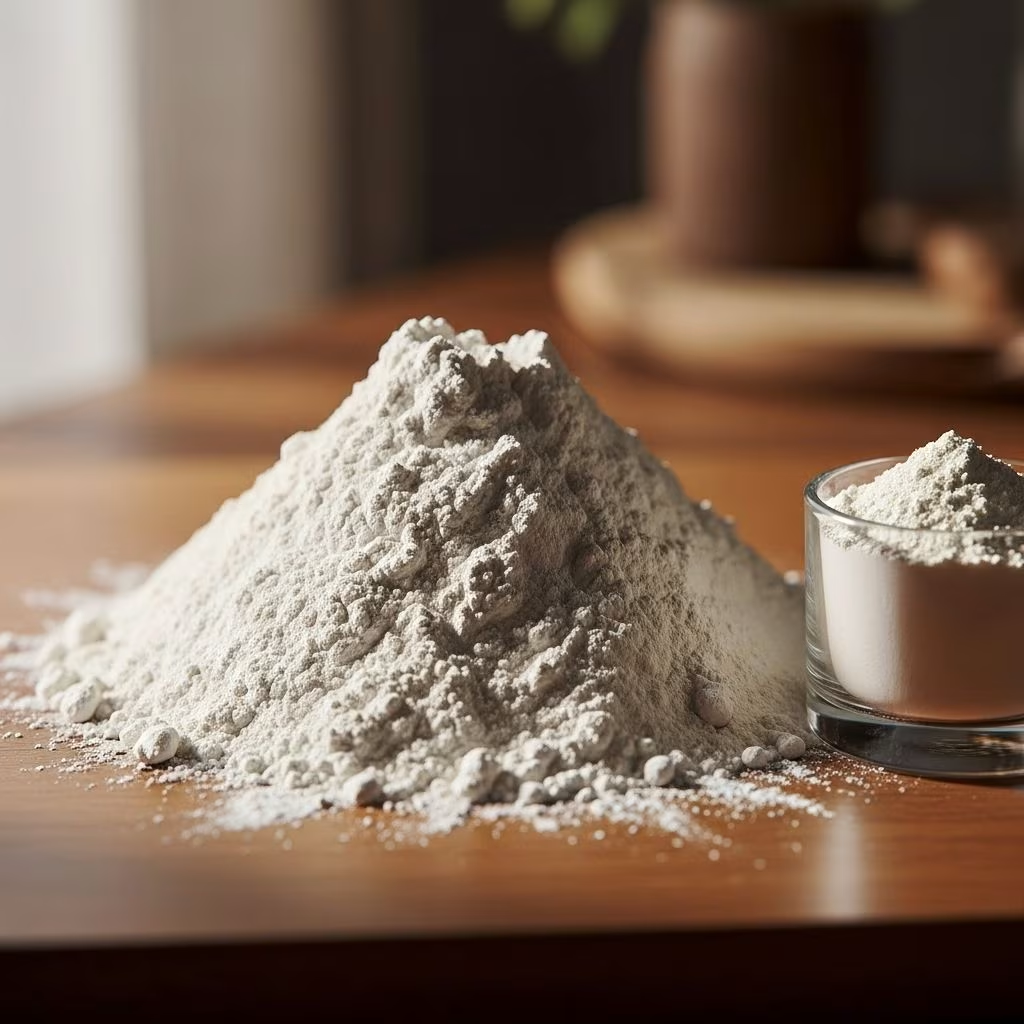
Kaolin clay, also widely known as kaolinite or china clay, is a soft, naturally occurring mineral with a rich history in various fields, from medicine to industry. Its versatile properties make it a staple in ceramics, beauty products, and even pharmaceuticals. This article provides a detailed exploration of kaolin clay, delving into its composition, origins, main benefits, diverse applications, and even its subtle taste. Whether you are interested as a consumer, professional, or simply curious about natural clays, you will find comprehensive answers here.
What Is Kaolin Clay?
Kaolin clay is a naturally occurring, soft, white clay, primarily composed of the mineral kaolinite. This clay mineral is classified chemically as an aluminum silicate, appearing as a fine, powdery material when extracted. Kaolinite’s formula is Al2Si2O5(OH)4, and it occurs extensively across the globe, particularly in regions with rich granite bedrock like parts of Southeast Asia, Europe, the United States, and Africa.
Rocks rich in kaolinite are referred to as kaolin or china clay. Kaolin has distinguished itself by its unique softness, neutral pH, natural absorbency, and chemical inertness, making it suitable for a plethora of applications in both health and industry.
History and Origins of Kaolin Clay
Kaolin clay’s use dates back centuries and is most famously named after the Kao-ling hill in Jiangxi Province, China, where it was first mined for porcelain production. Over time, kaolin deposits have been discovered and mined in many parts of the world, including:
- United States (notably Georgia, which is called the kaolin capital of the world)
- Europe (France, UK, Germany)
- Africa (notably Nigeria and South Africa)
- Australia
- South America
- Southeast Asia
Historically, kaolin was essential in papermaking, ceramics, and later found applications in medicine and beauty as its properties became better understood.
Chemical Structure and Properties
Kaolin clay primarily consists of kaolinite, a layered silicate mineral. Its unique molecular structure is responsible for its physical characteristics and various uses:
- Chemical formula: Al2Si2O5(OH)4
- Crystal Structure: 1:1 phyllosilicate clay mineral, meaning each layer contains one tetrahedral sheet (silicon and oxygen) and one octahedral sheet (aluminum and hydroxyl)
- Color: Usually white, but can be pink, yellow, or red when stained by iron oxide
- Texture: Fine, soft, and powdery
- pH Neutrality: Has a neutral pH, making it inert and ideal for sensitive applications
- Adsorbency: High capacity to absorb unwanted substances, impurities, or oils
- Non-swelling: Remains stable and does not expand in water due to strong hydrogen bonds between layers.
- Low Cation-Exchange Capacity: Kaolinite binds weakly with ions, so it does not alter the chemistry of products it is added to.
Main Benefits of Kaolin Clay
Kaolin clay’s benefits arise from its unique chemical and physical properties. Here are the key advantages:
- Highly gentle and non-irritating — suitable for sensitive skin and internal uses.
- Excellent natural adsorbent — binds toxins, impurities, oils, and bacteria.
- Chemically stable and neutral — does not alter pH or react with most compounds.
- Smooth and soft texture — ideal for cosmetic and dermatological formulations.
- Thermal and electrical insulating properties — important for industrial and technological applications.
- Mild, earthy taste — sometimes used in traditional remedies and detox products.
- Promotes digestive health when used appropriately for gastrointestinal upsets.
- Improves product consistency in paints, ceramics, and paper through its absorbency and dispersion qualities.
Uses of Kaolin Clay
Kaolin is one of the most versatile naturally occurring clays. Its uses span industries and everyday health:
Major Applications of Kaolin Clay
- Industrial and Manufacturing:
- Ceramics and porcelain
- Paper production (as a filler and coating agent)
- Paints and coatings
- Plastics and rubbers
- Cement and building materials
- Health and Medicine:
- Pharmaceutical adsorbent, especially for digestive issues
- Ingredient in anti-diarrheal medications
- Cosmetic and Personal Care:
- Facial masks and scrubs
- Toothpastes and powders
- Bath products
- Soaps and cleansers
- Agriculture:
- Pesticide and fertilizer carriers
- Soil conditioner
- Food Industry:
- Food additive (E559 in Europe, as an anti-caking agent)
Kaolin Clay in Health and Medicine
Kaolin has a long-standing role in traditional and modern medicine due to its adsorbent and gentle nature.
- Digestive Health: Used as a remedy for diarrhea and indigestion by absorbing toxins and bacteria in the gut.
- Detoxification: Occasionally included in detox drinks or as an ingredient in cleansing supplements. It binds impurities and facilitates their removal from the digestive tract.
- Topical Treatments: Applied as pastes or powders for treating mild skin irritations, minor wounds, or eczema due to its drying and soothing action.
Modern pharmaceuticals have harnessed kaolin for use in products like:
- Anti-diarrheal medications (sometimes combined with pectin)
- Surgical absorbents
- Tablet excipients
Note: Kaolin should only be used for internal consumption under medical supervision, as excessive intake can cause or exacerbate digestive issues and interfere with nutrient absorption.
Kaolin in Beauty and Skincare
Kaolin’s gentle, non-abrasive qualities make it a star ingredient in natural skincare and cosmetic products.
- Facial masks — absorbs oil and sebum without over-drying, ideal for oily or sensitive skin.
- Exfoliating scrubs — gently buffs away dead skin cells.
- Cleansers and powders — naturally cleanses while leaving skin soft and smooth.
- Tooth powders — provides a gentle abrasive quality for dental care.
Kaolin is suitable for:
- All skin types, including sensitive and acne-prone.
- Combining with other clays and natural ingredients for DIY beauty treatments.
Kaolin in Industry
Kaolin is invaluable for its chemical stability and physical properties in manufacturing:
- Ceramic and Porcelain Production: Essential for strength and whiteness in high-quality ceramic wares.
- Papermaking: As a coating and filler to improve printability, brightness, and smoothness of paper.
- Paints and Coatings: Enhances texture, coverage, and stability in paints.
- Plastics and Rubber: Used as a filler and reinforcing agent for durability and performance.
- Building Materials: Incorporated in cement, mortar, and insulated products.
Taste of Kaolin Clay
The taste of kaolin clay is subtle, generally described as earthy, chalky, and slightly mineral. It does not have a strong or offensive flavor, which is why it can be found in small quantities in some medicinal formulations and as a remedy in folk medicine. However, kaolin is not consumed for taste but for its functional properties—namely, its soothing and adsorbent action in the digestive system.
In some cultures, kaolin is deliberately ingested as part of a traditional practice known as geophagy, mainly for its potential to soothe gastrointestinal distress or supplement minerals. Consumption should always be cautious and guided by medical advice, as overconsumption may pose risks.
Safety Precautions and Side Effects
Kaolin clay is generally recognized as safe for topical use and is approved as a food additive (anti-caking agent E559). However, certain precautions are necessary, especially regarding ingestion:
- Inhalation: Avoid breathing in fine kaolin dust, as persistent inhalation over time could cause respiratory problems or lung damage in occupational settings.
- Ingestion: Small, controlled doses in pharmaceutical or food products are generally safe, but chronic or excessive ingestion can cause constipation, nutrient malabsorption, and dehydration.
- Pregnancy: Pregnant women should avoid ingesting clay due to potential risks of blockage or mineral imbalances.
- Allergy: Rare, but topical or internal reactions can occur in sensitive individuals.
- Product Purity: Always use high-quality, pharmaceutical- or food-grade kaolin clay for internal or cosmetic applications.
Frequently Asked Questions (FAQs)
Q1: Is kaolin clay safe for daily use on skin?
Yes, kaolin clay is widely used in cosmetic products for daily skin care, especially for oily and sensitive skin types due to its gentleness and low risk of irritation.
Q2: Can you eat kaolin clay?
Kaolin clay is sometimes ingested for medicinal purposes, especially to treat digestive issues, but should only be done under medical supervision. Overconsumption can lead to health risks such as constipation or blockages.
Q3: What sets kaolin clay apart from other clays?
Kaolin is one of the softest and most neutral clays, with non-swelling and low cation-exchange properties, making it gentler for skin and internal use compared to bentonite or montmorillonite clays.
Q4: Does kaolin clay absorb oil?
Yes, one of kaolin’s standout properties is its ability to effectively absorb oils and impurities—making it a favorite in facial masks and cleansers.
Q5: Are there side effects to topical kaolin use?
Topical side effects are rare, but minor dryness or irritation is possible in people with sensitive skin. Discontinue use if you experience a rash or persistent discomfort.
Q6: What does kaolin clay taste like?
Kaolin has a mild, earthy, and chalky taste. It is generally bland, which enables its use as a base in medicinal and detox preparations where strong flavors are not desired.
References
- Active Minerals International. “Kaolin Clay Properties & Applications of Kaolin.”
- Pennsylvania State University. “Kaolin.”
- Wikipedia. “Kaolinite.”
References
- https://activeminerals.com/blog/kaolin-guide/
- https://www.engr.psu.edu/ce/courses/ce584/concrete/library/materials/Altmaterials/Kaolin.htm
- https://en.wikipedia.org/wiki/Kaolinite
- https://www.britannica.com/science/kaolin
- https://cdxapps.epa.gov/oms-substance-registry-services/substance-details/85324
- https://www.droracle.ai/articles/40975/kaolin-what-is-it
- https://taylorandfrancis.com/knowledge/Engineering_and_technology/Materials_science/Kaolin/
- https://digitalfire.com/material/kaolin


