


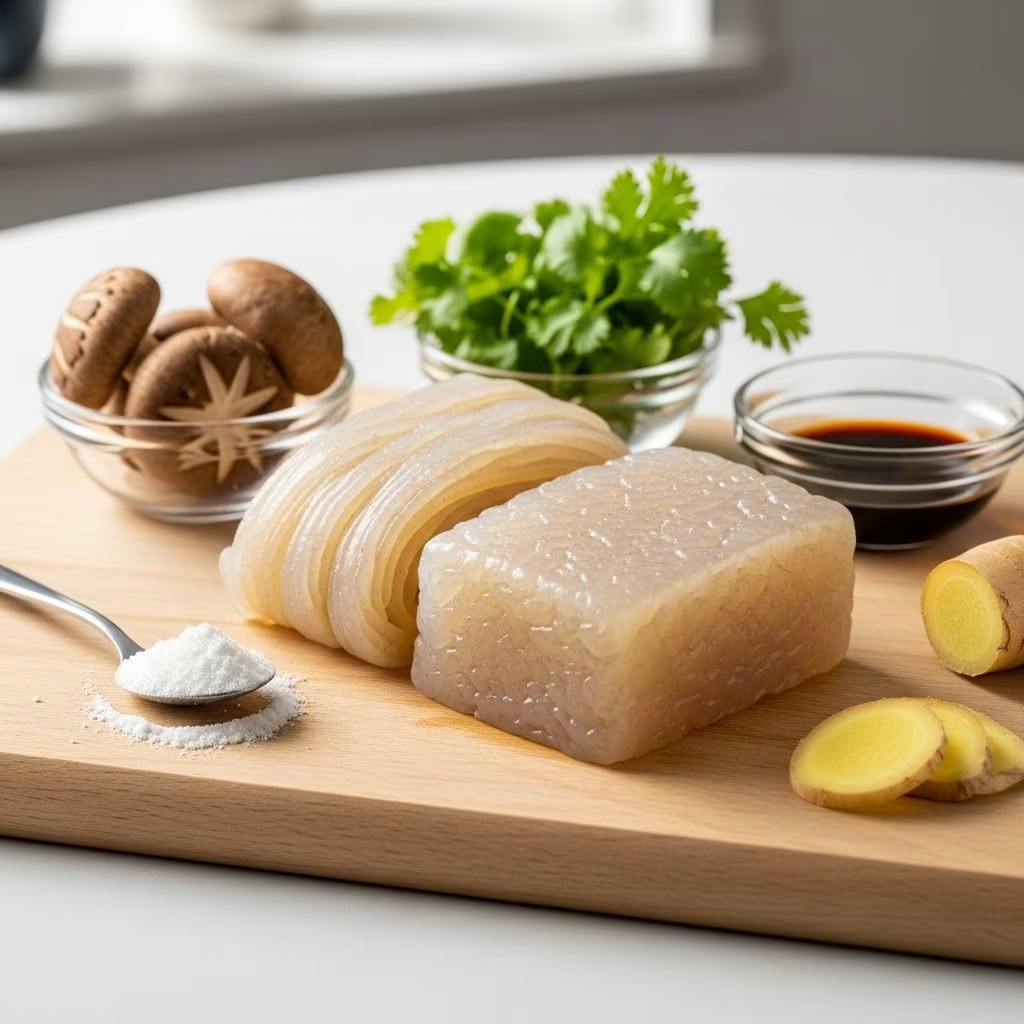
Konjac, specifically its principal polysaccharide known as glucomannan, has rapidly gained prominence in nutritional science, culinary applications, and medical research. Sourced from the tuber of the Amorphophallus konjac plant, this remarkable dietary fiber promises a varied range of health effects, unique culinary versatility, and a distinct taste profile. This in-depth guide covers every aspect of konjac and its star component—glucomannan—drawing on cutting-edge research and practical insights.
What Is Konjac (Glucomannan)?
Konjac is a perennial herb native to parts of Asia, particularly China, Japan, and Korea. The edible corm (starchy root) of the plant is the primary source of glucomannan, a water-soluble dietary fiber that forms gels and films, and is celebrated for its wide-ranging applications in food, medicine, and industry.
Konjac glucomannan (KGM) is a macromolecular polysaccharide comprised of β–glucose and β–mannose units, with acetyl groups conferring solubility and gel-forming capabilities. As a hydrocolloid, it exhibits a chain-like molecular structure with pronounced swelling, film-forming, and gelling properties in aqueous solutions, making it especially valuable in food processing and biomedical contexts.
Molecular Structure and Properties
- Consists predominantly of β–D–glucose and β–D–mannose in approximately a 1:1.6 ratio.
- Features acetyl substituents at the mannose component, essential for gelation and solubility.
- Exhibits a helical chain structure stabilized by hydrogen bonds and electrostatic interactions.
Key Features
- Biodegradability
- Biocompatibility
- High viscosity
- Gel-forming ability
- Soluble dietary fiber content
Major food and supplement forms of konjac include flour, noodles, jellies, and pure glucomannan powder.
Nutritional Composition
Konjac is exceptionally low in calories and carbohydrates, but boasts impressive fiber content. Most of its nutritional profile is due to glucomannan:
- Calories: 6–8 calories per 100 grams (in processed konjac noodles)
- Carbohydrates: Trace levels, nearly all from indigestible fiber
- Protein: Minimal, sometimes less than 1 gram per serving
- Fat: Negligible
- Fiber: A serving of konjac noodles (100 g) supplies 3–5 grams of soluble glucomannan fiber
- Micronutrients: Contains small amounts of minerals such as calcium, iron, and magnesium, depending on processing
This unique nutritional profile underpins konjac’s popularity as a health food and specialty ingredient for weight and metabolic health management.
Health Benefits of Konjac (Glucomannan)
Glucomannan’s robust health profile stems from its indigestible, viscous structure—enabling multiple physiological effects. Key, evidence-based benefits include:
1. Promoting Satiety & Weight Loss
- Its high viscosity enables konjac fiber to form a gel-like substance in the stomach, slowing gastric emptying.
- Enhances the feeling of fullness, resulting in reduced calorie intake and support for weight management.
- Clinical studies show glucomannan supplementation can lead to modest reductions in body weight, especially when combined with a balanced diet.
2. Regulating Blood Sugar and Diabetes Management
- Glucomannan slows the absorption of sugars and carbohydrates, aiding in blood glucose management.
- Demonstrated efficacy in reducing blood glucose by up to 55% (animal studies) and lowering fasting glucose by 23.2% in clinical trials among people with Type 2 Diabetes.
- Improves insulin sensitivity, enhancing cellular responsiveness to insulin—crucial for diabetes control.
- Contributes to lower HbA1c (long-term blood glucose marker), reducing risk of diabetic complications.
3. Lowering Cholesterol & Cardiovascular Protection
- Binds bile acids in the intestine, facilitating their excretion and driving cholesterol metabolism, notably lowering LDL (“bad”) cholesterol and triglycerides.
- Clinical evidence reveals a typical reduction of −32 mg/dl in total cholesterol and −28.7 mg/dl in LDL-C with regular glucomannan supplementation.
- Supports healthy lipid profiles and overall cardiovascular wellness.
4. Supporting Digestive Health
- Acts as a prebiotic, encouraging beneficial gut flora and optimizing intestinal function.
- Improves bowel regularity and can alleviate mild constipation due to its gel-forming and water-absorbing action.
- May reduce the risk of diverticular disease and support overall gut barrier function.
5. Further Benefits
- Skin and Wound Healing: Konjac gel and films have biocompatibility advantageous for wound dressings and biomedical applications.
- Liver and Kidney Protection: Certain studies indicate konjac supplementation may help protect against oxidative damage and inflammation in vital organs, via various molecular pathways.
Scientific Summary Table
| Health Benefit | Mechanism | Clinical Evidence |
|---|---|---|
| Satiety & Weight Management | Gel formation in stomach, delays emptying | Modest but significant weight loss in trials |
| Blood Sugar Regulation | Slows absorption of sugars, improves insulin sensitivity | Reductions in glucose and HbA1c in T2DM patients |
| Cholesterol Reduction | Binds bile acids, enhances cholesterol excretion | Marked reductions in LDL and total cholesterol |
| Digestive Health | Prebiotic action, increases stool bulk | Improved bowel regularity, reduced constipation |
Potential Side Effects & Safety Concerns
Konjac glucomannan is generally recognized as safe, especially when consumed in food form. However, certain points merit consideration:
- Rapid swelling and water absorption may present a risk of choking or esophageal obstruction if not consumed with ample fluids.
- Excessive intake (well above supplement recommendations) may occasionally cause gastrointestinal symptoms: bloating, flatulence, or loose stools.
- May interact with certain oral medications by slowing their absorption; medications should typically be taken 1 hour before or 4 hours after konjac.
- Not recommended for very young children or people with swallowing disorders unless supervised by a healthcare provider.
Ensure all konjac-based foods or supplements are consumed as directed, with plenty of water, to avoid adverse effects.
Culinary and Practical Uses
Konjac’s culinary adaptability owes itself to glucomannan’s distinctive texture and neutral taste. Across Asia and increasingly worldwide, konjac is used in diverse food products:
- Konjac noodles (shirataki): A popular low-calorie alternative to wheat-based pasta, nearly translucent and extremely low in digestible carbohydrates.
- Konjac flour: Used to thicken gravies, soups, and bakery goods, as well as to manufacture gluten-free foods.
- Jellies & gummy candies: Konjac’s gel-forming action lends itself to plant-based desserts and confectionery.
- Meat and seafood analogs: Used to create vegan sausages, hams, and imitation seafood due to its adaptable texture.
- Gluten-free baking: Provides structure, viscosity, and moisture retention in cakes, breads, and pastries.
- Medical applications: Utilized in wound dressings, drug delivery systems, and bio-matrix composites owing to its biocompatibility and film formation.
Taste and Texture Profile
Konjac is prized not for vibrant flavor, but for its functional texture and culinary neutrality. Exploring its taste and sensory experience:
- Taste: Mild, neutral, often described as bland. Absorbs the flavors of sauces and seasonings readily.
- Aroma: Natural aroma is nearly undetectable; sometimes a faint earthiness if minimally processed.
- Texture: Firm, slightly rubbery, elastic, and pleasantly chewy in noodles or gel form.
- Mouthfeel: Gel-like and smooth when hydrated; can be slippery or springy depending on preparation method.
Konjac noodles (“shirataki”) are valued as a culinary blank canvas—they absorb broths, curries, and stir-fry flavors without overpowering other ingredients. The mouthfeel, rather than flavor, defines their appeal.
Buying and Preparing Konjac
Konjac products are available in various forms:
- Konjac flour: Sold as a thickening agent for cooking and baking.
- Glucomannan powder: Used as a fiber supplement; often added to smoothies, shakes, or recipes.
- Pre-made konjac noodles or blocks: Ready to heat or rinse, and cook; packaged in water for freshness.
Buying tips:
- Choose products with minimal additives and preservatives.
- For noodles, rinse thoroughly to reduce any natural odors and achieve optimal texture.
- Always follow fluid recommendations when consuming fiber supplements to prevent swallowing issues.
Preparation advice:
- Konjac noodles are best paired with strongly flavored sauces.
- Powder may be used for thickening or as a fiber boost in drinks or soups—mix swiftly to prevent clumping.
- Use konjac gel or flour in gluten-free and vegan recipes for texture and binding.
Frequently Asked Questions (FAQs)
Q: Is konjac safe for daily consumption?
A: Konjac and glucomannan are considered safe for most people when consumed with adequate water and as part of a balanced diet. Excessive intake may cause gastrointestinal symptoms; always follow package instructions.
Q: Can konjac help with weight loss?
A: Yes, glucomannan’s ability to increase satiety and reduce calorie intake makes it effective as part of a weight management program, especially when combined with healthy eating habits.
Q: Is konjac gluten-free?
A: All konjac products are naturally gluten-free, making them suitable for those with celiac disease or gluten sensitivities.
Q: How does konjac compare to other fibers?
A: Konjac contains one of the most highly viscous dietary fibers; it forms a thicker gel and delivers stronger satiety and gut effects compared to wheat bran or psyllium.
Q: What is the best way to use konjac in cooking?
A: Use konjac noodles in place of pasta, add konjac powder to thicken soups and sauces, or use konjac flour for gluten-free baking. Its mild flavor makes it adaptable to a wide range of recipes.
Conclusion
Konjac (glucomannan) stands out as a powerful, versatile dietary fiber with evidence-backed health benefits ranging from weight and blood glucose management to digestive wellness and cholesterol reduction. With minimal taste but considerable culinary adaptability, konjac-based foods and supplements offer robust nutritional value for modern health-conscious individuals. Whether exploring its use for dietary support or innovative cooking, konjac’s transformative potential continues to expand in both culinary and biomedical fields.
References
- https://pmc.ncbi.nlm.nih.gov/articles/PMC10145206/
- https://www.frontiersin.org/journals/plant-science/articles/10.3389/fpls.2025.1530814/full
- https://pmc.ncbi.nlm.nih.gov/articles/PMC9858196/
- https://www.medicalnewstoday.com/articles/319979
- https://www.healthline.com/health/konjac
- https://en.wikipedia.org/wiki/Glucomannan


