


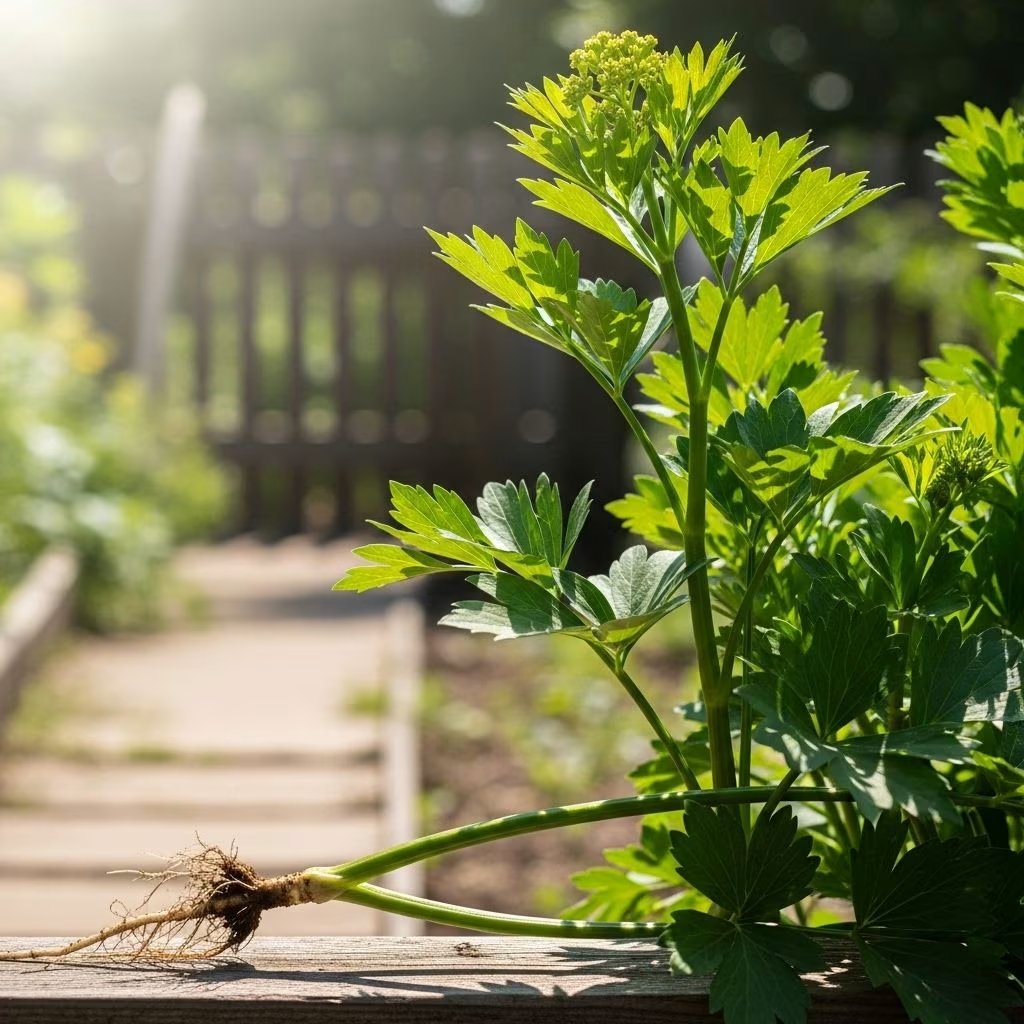
What Is Lovage?
Lovage (Levisticum officinale) is a remarkable perennial herb that deserves recognition in modern gardens and kitchens. Often called the “Maggi plant” in Europe, this towering aromatic herb belongs to the Apiaceae family, sharing kinship with parsley, celery, and carrots. Native to Afghanistan and Iran, lovage has established itself as a staple in European cuisine and traditional medicine for centuries.
This robust perennial can live for up to 15 years, making it an excellent long-term investment for any herb garden. Unlike annual herbs that require replanting each season, lovage’s hardy rootstock grows stronger over time, reliably sprouting fresh growth each spring. The plant’s impressive stature often reaches heights of 6 to 8 feet, creating dramatic vertical interest in garden landscapes while providing practical culinary and medicinal benefits.
What sets lovage apart from other herbs is its incredible versatility – every part of the plant serves a purpose. The leaves function as a potent seasoning herb, the roots offer medicinal properties and can be used as a vegetable, and the seeds work as a flavorful spice similar to fennel seeds. This multi-functional nature made lovage particularly valuable in historical monastery gardens where space was precious and every plant needed to earn its place.
Botanical Description and Characteristics
Physical Appearance
Lovage presents an impressive architectural presence in the garden with its erect, herbaceous structure. The plant develops from a basal rosette of leaves, sending up thick, hollow stems that support additional foliage throughout their length. These stems display a distinctive shiny, glabrous surface that ranges from bright green to yellow-green, immediately releasing a strong celery-like fragrance when crushed or bruised.
The foliage exhibits interesting variation depending on its position on the plant. Lower basal leaves can reach extraordinary lengths of up to 70 centimeters, featuring a tripinnate structure with broad, triangular to rhomboidal leaflets. These leaflets display acute points and possess a few marginal teeth, giving them a serrated appearance. As you move up the stem, the leaves become progressively smaller and less divided, with fewer leaflets creating a more simplified structure.
Flowers and Fruit Development
Lovage doesn’t produce flowers until its second year of growth, but when it does, the display is spectacular. The flowering structure follows the classic umbellifer pattern characteristic of the Apiaceae family. The inflorescences form compound umbels that can reach impressive diameters of 10 to 15 centimeters, creating globe-like clusters at the tops of the stems.
Individual flowers are small but numerous, measuring only 2 to 3 millimeters in diameter. Their coloration ranges from bright yellow to greenish-yellow, appearing in late spring and creating an attractive display that draws beneficial pollinators to the garden. Following pollination, these flowers develop into the plant’s distinctive fruits – dry, two-parted schizocarps measuring 4 to 7 millimeters in length that mature during autumn months.
Taste and Aroma Profile
The flavor profile of lovage represents one of its most distinctive and valuable characteristics. The taste combines multiple familiar elements while creating something entirely unique. At its foundation, lovage carries strong celery notes, but these are intensified and complicated by additional flavor compounds that set it apart from its more common relatives.
The primary flavor components include the brightness and freshness associated with parsley, combined with the savory depth characteristic of celery, all enhanced by subtle anise or fennel-like undertones. This complex flavor profile is significantly more concentrated and intense than either celery or parsley alone, meaning that small quantities of lovage can season entire dishes effectively.
The aromatic compounds in lovage are particularly concentrated, allowing a few leaves to provide substantial seasoning power. This intensity makes lovage an economical herb choice, as minimal quantities deliver maximum flavor impact. The spicy, slightly pungent quality adds warmth and depth to dishes without overwhelming other ingredients, making it an excellent base flavor that enhances rather than masks other components.
Different parts of the plant offer varying intensity levels. Fresh young leaves provide the most delicate flavor, perfect for raw applications and fresh seasonings. Mature leaves develop stronger, more robust flavors ideal for cooking applications where the herb needs to hold up against other strong flavors. The seeds offer the most concentrated flavor experience, working similarly to fennel seeds as a spice.
Health Benefits of Lovage
Traditional Medicinal Uses
Lovage has maintained a distinguished position in folk medicine for several hundred years, with documented therapeutic uses dating back to the 14th century. Traditional healers particularly valued the plant’s diuretic and carminative properties, using it to increase urine flow and relieve digestive discomfort caused by gas and bloating.
Historical applications extended far beyond digestive support. Medieval practitioners prescribed lovage for kidney stones, jaundice, malaria, pleurisy, boils, and sore throats. These traditional uses weren’t merely superstition – modern research has validated many of these historical applications, confirming that traditional knowledge often contained genuine therapeutic wisdom.
European folk medicine continues to embrace lovage for various ailments including stomach upsets, bladder and kidney problems, menstrual disorders, gout, rheumatism, and migraine headaches. The plant’s reputation as a reproductive system tonic led to its association with love and fertility, contributing to both its common name and its historical use in love potions.
Modern Scientific Validation
Contemporary research has begun validating many traditional uses of lovage, revealing the scientific basis for its therapeutic effects. Studies have confirmed the plant’s diuretic properties, supporting its traditional use for kidney and bladder support. The herb demonstrates significant anti-microbial and anti-inflammatory activities, explaining its effectiveness against various infections and inflammatory conditions.
Particularly interesting is research showing that lovage root exhibits estrogen-like activities in the body. This finding provides scientific support for its traditional use in addressing menstrual problems and reproductive health issues. The phytoestrogenic compounds in lovage may help balance hormonal fluctuations and support overall reproductive wellness.
The plant’s digestive benefits also receive scientific support. Lovage’s carminative properties help reduce gas and bloating, while its bitter compounds stimulate digestive secretions, improving overall digestive efficiency. These effects make lovage valuable for individuals dealing with chronic digestive issues or those seeking natural digestive support.
Nutritional Profile
Beyond its medicinal properties, lovage offers substantial nutritional value. The leaves are rich in vitamins and minerals, providing significant amounts of vitamin C, which supports immune function and collagen production. The herb also contains various B vitamins essential for energy metabolism and nervous system function.
Mineral content includes potassium, important for heart health and blood pressure regulation, along with calcium and magnesium for bone health. The plant’s concentrated nutritional profile means that even small quantities contribute meaningfully to overall nutritional intake, making it an excellent addition to health-conscious diets.
Culinary Uses and Applications
Fresh Leaf Applications
Fresh lovage leaves offer incredible versatility in culinary applications, functioning essentially as a one-plant seasoning blend. Their intense flavor means that just a few leaves can season an entire soup, significantly reducing the need for added salt while intensifying overall flavor complexity. This makes lovage particularly valuable for individuals following low-sodium diets or those seeking to enhance flavor naturally.
The leaves work exceptionally well in soup applications, where their robust flavor holds up beautifully against long cooking times. Unlike more delicate herbs that lose their potency when cooked, lovage actually develops deeper, more complex flavors through cooking processes. This makes it ideal for stocks, broths, and slow-simmered dishes where sustained flavor release is desired.
For fresh applications, young lovage leaves can be chopped and added to salads, providing a unique flavor element that bridges the gap between herbs and vegetables. The leaves also work well in herb butter, pesto variations, and fresh sauces where their intense flavor creates interesting complexity.
Root and Seed Uses
Lovage roots offer unique culinary opportunities often overlooked by modern cooks. When young and tender, the roots can be prepared and consumed as a vegetable, offering flavors reminiscent of celery root but with additional aromatic complexity. They can be boiled, roasted, or incorporated into root vegetable medleys for added flavor dimension.
The seeds provide perhaps the most concentrated flavor experience lovage offers. Similar to fennel seeds in application, they can be used whole or ground as a spice in various dishes. The seeds work particularly well in bread baking, spice blends, and pickling applications where their intense flavor adds depth and complexity.
Interestingly, lovage seeds and roots have found their way into commercial food production. The herb serves as a secret ingredient in several popular liqueurs, including Jagermeister, and is increasingly used in craft gin and vodka production where its unique flavor profile adds distinctive character to these spirits.
Preservation Methods
Several methods exist for preserving lovage’s intense flavor for year-round use. Drying is perhaps the most straightforward approach, though the process requires care to maintain flavor integrity. Fresh leaves should be harvested in the morning after dew has dried but before the day becomes too hot. They can be air-dried in bundles or using a dehydrator at low temperatures.
Freezing offers another excellent preservation method that maintains more of the fresh flavor characteristics. Leaves can be blanched briefly and frozen, or they can be chopped and frozen in ice cubes with water or oil for easy portioning. This method works particularly well for cooking applications where texture is less important than flavor.
Growing and Cultivating Lovage
Growing Conditions and Requirements
Lovage proves remarkably easy to cultivate, making it an excellent choice for both beginning and experienced gardeners. The plant thrives in full sun to partial shade conditions, though it performs best with morning sun and some afternoon protection in particularly hot climates. This flexibility makes it suitable for various garden situations and microclimates.
Soil requirements are quite forgiving, though lovage performs best in rich, well-draining soil with good organic matter content. The plant tolerates a wide pH range but prefers slightly alkaline conditions. Good drainage is essential, as waterlogged conditions can lead to root rot and other problems, particularly during winter months when the plant is dormant.
Water needs are moderate once established. Young plants require consistent moisture for proper establishment, but mature plants develop substantial root systems that provide good drought tolerance. However, consistent moisture throughout the growing season promotes the best leaf production and flavor development.
Planting and Propagation
Lovage can be grown from seed or purchased as established plants from specialty herb suppliers. Seed propagation requires patience, as germination can be slow and somewhat erratic. Seeds benefit from cold stratification, which can be accomplished by refrigerating them for several weeks before planting or by direct seeding in fall for spring germination.
When starting from seed, plant in prepared soil in early spring after the last frost danger has passed. Seeds should be planted at a depth of approximately one-quarter inch and spaced adequately to accommodate the plant’s eventual large size. Established plants can spread significantly, so allow at least three feet between plants and other garden elements.
Division of established clumps provides the most reliable propagation method. Mature plants develop substantial root systems that can be divided in early spring or fall. This method ensures genetic consistency and faster establishment compared to seed propagation.
Maintenance and Care
Once established, lovage requires minimal maintenance, making it an ideal herb for low-maintenance gardens. The plant’s perennial nature means it will return reliably each spring from its underground rhizome, even after above-ground portions die back completely during winter months.
Regular harvesting actually benefits the plant by encouraging continued leaf production throughout the growing season. Harvest leaves as needed, cutting stems down to ground level to promote fresh growth. Avoid harvesting more than one-third of the plant at any one time to maintain plant vigor and ensure continued production.
During the growing season, occasional fertilization with compost or balanced organic fertilizer promotes robust growth and enhanced flavor development. Mulching around the base helps retain moisture and suppress weeds while protecting the root system during extreme temperatures.
Historical Significance and Cultural Uses
Medieval and Monastic Gardens
Lovage holds a distinguished place in European agricultural history, particularly within monastic garden traditions. The herb gained significant prominence when Charlemagne decreed that it should be grown in all monastery herb gardens, recognizing its multiple practical applications and therapeutic value. This royal endorsement helped establish lovage as a standard component of medieval herb gardens throughout Europe.
Monastic communities particularly valued lovage for its practical versatility. In an era when space was limited and every plant needed to serve multiple purposes, lovage’s ability to function as medicine, seasoning, and vegetable made it indispensable. The plant’s longevity also appealed to monastic gardeners who appreciated its reliable return each season without replanting requirements.
The association with love and fertility that gives lovage its common name stems from medieval beliefs about the plant’s aphrodisiac properties. Historical records document extensive use of lovage in love potions and fertility treatments, with practitioners utilizing all parts of the plant for these purposes. While modern science has moved beyond these magical associations, the plant’s genuine effects on reproductive health provide some basis for these historical beliefs.
Cultural Significance Across Europe
Different European cultures developed unique relationships with lovage that persist today. In Germany and other Central European countries, the plant is commonly known as the “Maggi plant,” named after the popular seasoning sauce that traditionally contained lovage as a key ingredient. This association demonstrates how deeply embedded lovage became in regional food cultures.
Traditional European cuisine incorporated lovage in various regional specialties. The herb appeared in traditional soups, stews, and meat preparations where its robust flavor complemented hearty, rustic cooking styles. Many of these traditional recipes continue today, preserving cultural connections to this historic herb.
The plant’s escape from cultivated gardens into wild populations across Europe demonstrates its successful adaptation and naturalization. These feral populations often indicate former garden sites, serving as botanical markers of historical human habitation and agricultural activity.
Safety and Precautions
Handling Precautions
While lovage is generally safe for culinary and medicinal use, certain precautions should be observed during handling and preparation. The plant can cause phototoxic skin reactions when exposed to sunlight, similar to other members of the Apiaceae family. This means that handling the plant and then exposing treated skin to sunlight can result in burns or severe dermatitis.
To avoid these reactions, wear gloves when harvesting or handling fresh lovage, particularly during sunny conditions. If gloves are not available, thoroughly wash hands and exposed skin immediately after handling the plant and avoid direct sunlight for several hours. This precaution is particularly important during peak summer months when both plant oils and sunlight intensity are at their highest.
Usage Guidelines
For culinary applications, lovage should be used in moderation due to its intense flavor. Start with small quantities and adjust according to taste preferences, as the concentrated nature of the herb means that a little goes a very long way. Excessive consumption may cause digestive upset in sensitive individuals.
Pregnant and breastfeeding women should consult healthcare providers before using lovage medicinally, as traditional uses included stimulating reproductive systems and menstrual cycles. While culinary quantities are generally considered safe, medicinal doses may not be appropriate during pregnancy or lactation.
Individuals taking diuretic medications should be aware that lovage may enhance these effects, potentially leading to excessive fluid loss or electrolyte imbalances. Anyone with kidney disorders or taking prescription medications should consult healthcare providers before using lovage therapeutically.
Frequently Asked Questions
Q: What does lovage taste like compared to celery?
A: Lovage has a more intense and complex flavor than celery, combining celery’s savory depth with parsley’s brightness and subtle anise notes. The taste is significantly more concentrated, so smaller quantities provide greater seasoning power than celery.
Q: Can I substitute lovage for celery in recipes?
A: Yes, but use much smaller quantities due to lovage’s concentrated flavor. Start with about one-third the amount of lovage leaves compared to celery called for in recipes, and adjust to taste. The substitution works particularly well in soups and cooked dishes.
Q: How long does it take for lovage to grow from seed?
A: Lovage seeds can take 2-3 weeks to germinate and may require cold stratification for best results. Plants typically don’t flower until their second year, but leaves can be harvested during the first growing season once plants are well established.
Q: Is lovage safe for everyone to use?
A: While generally safe for culinary use, lovage can cause phototoxic reactions when handled without gloves in sunlight. Pregnant women and those taking diuretic medications should consult healthcare providers before medicinal use.
Q: Can lovage survive winter in cold climates?
A: Yes, lovage is extremely hardy and can survive harsh winters. The above-ground plant dies back, but the underground rhizome survives freezing temperatures and regrows each spring, often becoming more robust each year.
Q: Which parts of the lovage plant are edible?
A: All parts of lovage are edible and useful. The leaves work as herbs for seasoning, young roots can be prepared as vegetables, and seeds function as spices similar to fennel seeds. Each part offers different flavor intensities and applications.
References
- https://www.herbs2000.com/herbs/herbs_lovage.htm
- https://en.wikipedia.org/wiki/Lovage
- https://plantura.garden/uk/herbs/lovage/lovage-overview
- https://scotlandgrowsmagazine.com/2021/09/10/lovage/
- https://survivalgardenseeds.com/blogs/survival-garden-training/lovage-the-forgotten-herb
- https://germangirlinamerica.com/what-is-maggikraut/
- https://www.rhs.org.uk/herbs/lovage/grow-your-own
- https://www.sierravistagrowers.net/herbs-vegetables/herb-lovage


