


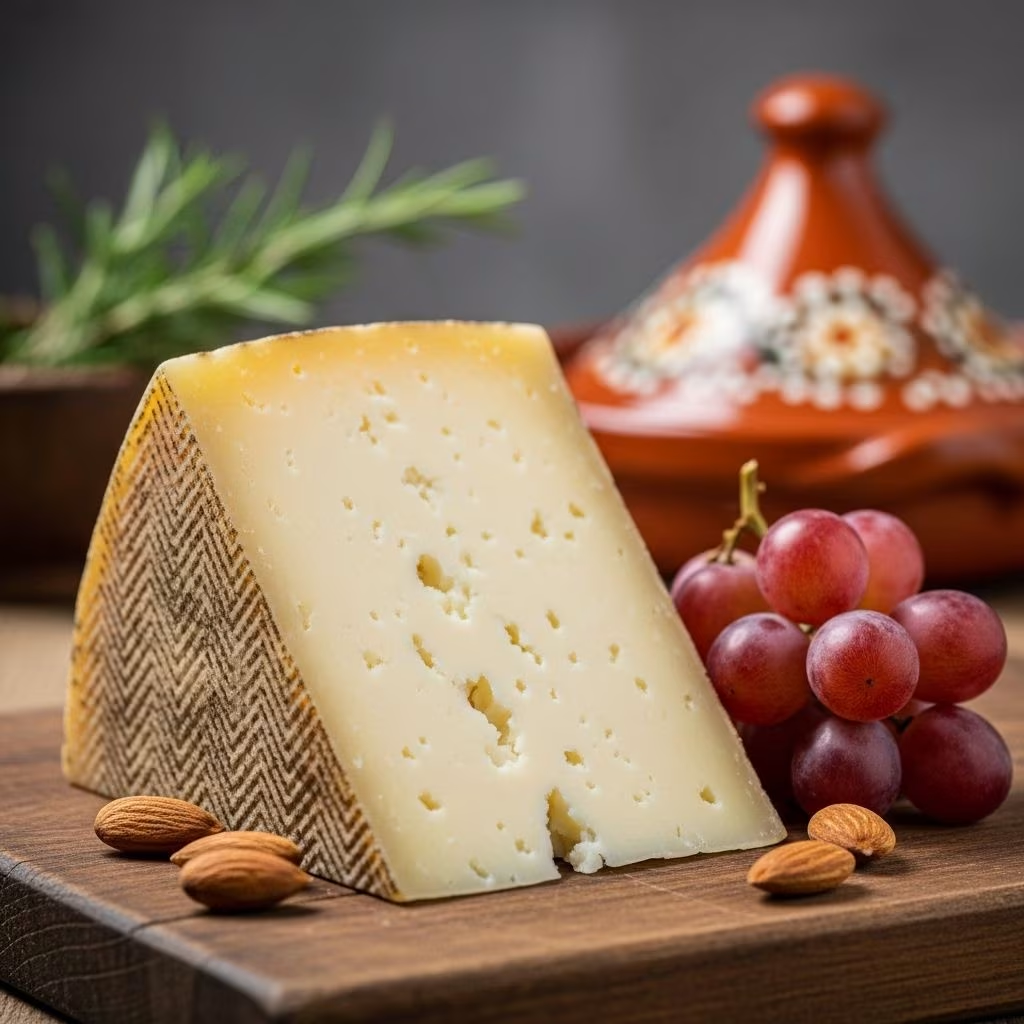
Manchego cheese stands among Spain’s most acclaimed culinary treasures, renowned not only for its rich and nutty profile but also for its storied heritage and remarkable versatility. This comprehensive guide delves into the cheese’s origins, production, health benefits, culinary applications, flavor profiles, and how it fits into both traditional and modern cuisine.
Origin and History of Manchego Cheese
Manchego cheese is inextricably linked to the region of La Mancha in central Spain, the high plateau made legendary by Miguel de Cervantes’ Don Quixote. Its production draws from centuries-old traditions, with evidence of cheese-making in the area tracing as far back as Roman times. The expertise, cultural significance, and continuity of local methods have shaped Manchego into a symbol of both regional pride and Spanish gastronomy.
- Protected Designation of Origin (PDO): Manchego is safeguarded by the PDO status, awarded in 1984. This ensures only cheese made from the milk of Manchega sheep in La Mancha—and following strict guidelines—can be officially called Manchego.
- The cheese traditionally played a significant economic role in La Mancha and featured in important legal and literary texts over the centuries.
- Distinctive patterns and methods persist from early times, such as the characteristic herringbone pattern left by ancient grass-woven molds, now replicated in modern production.
Historic Timeline
- Roman Era: Origins of cheese production in La Mancha documented.
- Middle Ages: Manchego central to regional commerce.
- 1605: Mentioned in Don Quixote, cementing its cultural status.
- Late 19th Century: Gained formal recognition in literature as a distinct cheese variety.
- 1984: Approved for PDO—officially regulating its production and lawfully defining Manchego cheese.
Production Process & Varieties
Manchego’s reputation depends not just on its heritage, but on unique production methods that blend traditional handcraft with modern quality controls.
Traditional Production Steps
- Milk Source: Strictly uses the full-fat milk from Manchega sheep—a breed native to La Mancha, renowned for its contribution to flavor and consistency.
- Coagulation: Milk is mixed with rennet, coagulating at controlled temperatures to form curds.
- Curd Processing: Curds are cut, drained, and gently pressed to release whey. This process affects moisture, texture, and flavor development.
- Molding: Curds are shaped in special molds that imprint the classic herringbone or basket-weave pattern on the rind.
- Salting: Brined in saltwater solutions, aiding preservation and initial flavor formation.
- Aging: Aged in controlled cellars with constant humidity and temperature. Rinds may be brushed with olive oil to lock in flavor and prevent drying.
Varieties of Manchego Cheese
| Variety | Aging Period | Texture | Notable Taste |
|---|---|---|---|
| Manchego Fresco | < 2 weeks | Semi-soft, moist | Mild, milky, not exported |
| Manchego Semicurado | 2 weeks – 3 months | Supple, smooth | Mild, creamy with gentle tang |
| Manchego Curado | 3 – 6 months | Firm, more compact | Richer, nutty, complex |
| Manchego Viejo | 1 – 2 years | Dry, granular, sometimes flaky | Sharp, piquant, full-bodied flavors |
Each variety offers a unique sensorial experience, making Manchego highly adaptable across recipes and tasting preferences.
Nutritional Benefits of Manchego Cheese
Manchego is more than just a flavor powerhouse; it is dense in essential nutrients and boasts several health benefits when consumed in moderation.
- High-Quality Protein: Provides all essential amino acids for muscle growth and maintenance.
- Rich in Calcium: Essential for strong bones and teeth; supports heart and nerve function.
- Source of Vitamins: Notably supplies vitamins A, D, and B12, which are important for immunity and cell function.
- Phosphorus and Zinc: Supports metabolism, energy, immune system health, and tissue repair.
- Beneficial Fats: Contains moderate amounts of saturated fats, which, in moderation, can be part of a balanced diet.
Note: As a sheep’s milk cheese, Manchego can be easier to digest for some people who struggle with cow’s milk cheeses. However, it is relatively high in calories and sodium due to the aging and brining process, so portion control is advised.
Distinctive Taste and Texture
Manchego is celebrated for its diversity in flavor and mouthfeel, which evolve distinctly with maturation:
- Flavor notes: Fruity, nutty (hazelnuts, almonds), buttery and tangy, intensifying with age. Aged Manchego (Viejo) becomes particularly savory and piquant.
- Texture: Initially semi-soft and creamy when young, becoming firmer, granular, and flaky. A dry, slightly crunchy mouthfeel with older wheels.
- Rind: Inedible, hard, and recognizable by the herringbone or woven pattern—typically formed by traditional or modern molds.
- Color: Ranges from creamy white to light yellow, deepening as it matures.
The evolution of taste makes Manchego particularly captivating on tasting boards or within recipes, as it can offer a diverse set of flavor profiles depending on the style selected.
Culinary Uses: How to Enjoy Manchego Cheese
Manchego’s versatility in the kitchen has secured its place as a staple both in Spain and worldwide. Here are some favored ways to use it:
- Cheese Boards: Sliced or cubed with cured meats (like jamón ibérico), olives, grapes, almonds, and fresh bread.
- Tapas: Served solo with a drizzle of local honey or quince paste (membrillo) for classic Spanish tapas.
- Snacking: Paired with fruits or nuts for a healthy, satisfying snack.
- Melted or Grated: Used in sandwiches, grilled cheese, or as a topping on casseroles and vegetable dishes.
- Salads: Crumbled on fresh or roasted vegetable salads for added protein and flavor depth.
- Pasta and Rice: Shaved or grated into risottos, pasta dishes, or Spanish rice recipes for a nutty, creamy boost.
- Baking: Incorporates seamlessly into savory tarts, quiches, and even bread.
Because Manchego’s flavor intensifies with age, the choice of variety can be matched to the dish—young cheeses for melting or light eating, older cheeses for grating or pairing with robust flavors.
Pairings and Serving Suggestions
To highlight Manchego’s nuanced character, pair it thoughtfully:
- Wine: Young Manchego matches well with crisp Spanish whites (Albariño, Verdejo); aged Manchego pairs with robust reds (Rioja, Tempranillo) or dry sherry.
- Beer: Wheat beers or pale ales complement the creamy and nutty notes.
- Accents: Drizzle of honey, quince paste, or fig jam brings out the cheese’s sweetness. Almonds, Marcona nuts, and seeded crackers provide contrast in texture.
- Charcuterie: Serve with Spanish ham, chorizo, or other sliced cured meats for a classic tapas experience.
- Fruit: Slices of pear, apple, or grapes balance the cheese’s richness.
Manchego in Spanish Culture and Cuisine
Beyond the table, Manchego occupies a unique space in Spanish cultural identity:
- Mentioned in Cervantes’ Don Quixote as part of La Mancha’s staple diet, highlighting its long-standing regional pride.
- Frequently featured in traditional Spanish feasts, market stalls, and celebrations.
- A symbol of artisanal heritage that supports rural economies and maintains ancient methods passed down through generations.
How to Choose and Store Manchego Cheese
To enjoy Manchego at its best, consider the following selection and storage tips:
- Authenticity: Look for the PDO label, confirming genuine Manchego made in La Mancha from Manchega sheep’s milk.
- Rind: Check for the unique herringbone or basket-weave pattern, which is a mark of authentic production.
- Age: Decide based on desired texture and taste—young for mildness and softness, old for sharpness and crumbly texture.
- Storage: Keep wrapped in wax paper or parchment, then loosely in plastic wrap or a sealed container in the refrigerator. Allow to come to room temperature before serving for optimal flavor.
- Shelf Life: Properly stored, Manchego can last several weeks. Avoid freezing, as it changes texture and flavor.
Frequently Asked Questions (FAQs)
Q: Is Manchego cheese suitable for vegetarians?
A: Most traditional Manchego uses animal rennet and is not vegetarian. Some producers offer vegetarian-friendly versions using microbial rennet—always check the label.
Q: Can lactose-intolerant people eat Manchego?
A: Manchego is made from sheep’s milk, which naturally contains less lactose than cow’s milk. Aged cheeses generally have lower lactose content, making them easier to digest, but individual tolerance varies.
Q: What does the rind taste like? Should I eat it?
A: The rind is inedible and is best removed before consumption, though it carries the signature basket-weave pattern that makes Manchego identifiable.
Q: How does Manchego compare to similar cheeses?
A: Manchego is similar to some semi-hard sheep’s milk cheeses (like Pecorino or Roncal) but is unique in its flavor evolution, texture, and the PDO designation tied to La Mancha and Manchega sheep.
Q: What are traditional accompaniments for Manchego cheese?
A: Classic accompaniments include quince paste (membrillo), Marcona almonds, figs, crusty Spanish bread, and Spanish wines or sherries.
Conclusion: Why Manchego Cheese Endures
Manchego cheese is more than a foodstuff; it’s an expression of Spanish heritage and craftsmanship. Thanks to its range of ages, distinctive taste, and adaptable uses, it has transcended regional borders to become a beloved cheese worldwide. Whether savored alone, paired on a tapas board, or woven into recipes, Manchego’s rich character endures, offering a taste of Spain’s past and present in every bite.
References
- https://www.wisconsincheese.com/about-cheese/manchego-cheese
- https://lespanola.com/en-us/blogs/flavours-of-spain/ultimate-guide-to-manchego-cheese-history-varieties-and-culinary-uses
- https://www.castellocheese.com/en-us/cheese-types/semi-hard-cheese/manchego-cheese/
- https://socarratnyc.com/blog/food-culture/manchego-cheese/
- https://en.wikipedia.org/wiki/Manchego
- https://www.cheese.com/manchego/
- https://www.cheeseprofessor.com/blog/manchego-history-styles-amp-pairings
- https://cheeseandsuch.com/manchego-cheese/


