


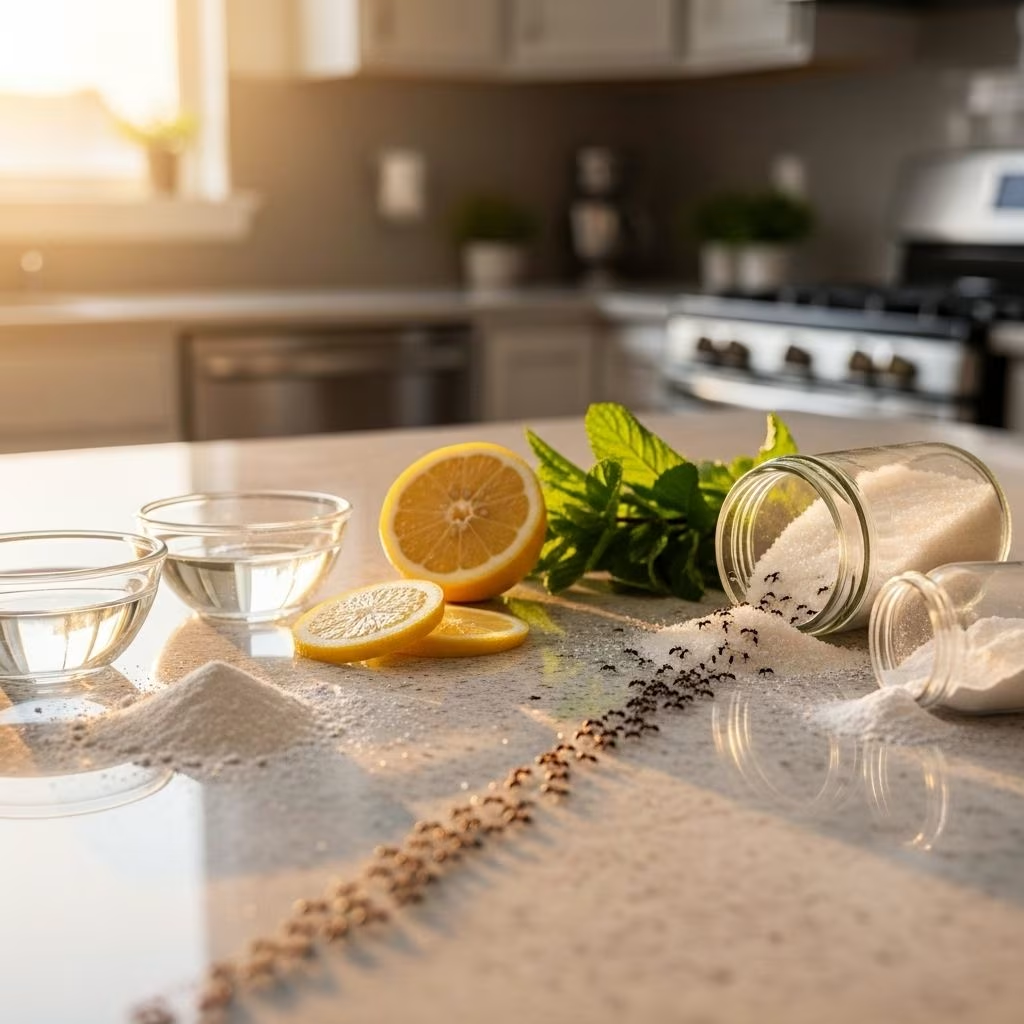
Natural Remedies for Controlling Ant Infestations at Home
Ants are one of the most common household pests, often infiltrating homes in search of food and shelter. While commercial pesticides can be effective, they also pose health and environmental risks when used around children, pets, and sensitive individuals. Fortunately, there are a variety of natural remedies you can use to control and prevent ant infestations without relying on harsh chemicals. This comprehensive guide details effective, eco-friendly strategies to keep ants at bay, drawing on tried-and-tested home solutions, practical tips, and frequently asked questions on natural ant management.
Understanding Ant Behavior: Why Are Ants Invading Your Home?
Ants are highly organized social insects that communicate and navigate using pheromone trails. These invisible scent paths help ants locate food sources and recruit colony members, enabling them to exploit even the tiniest spills or crumbs in your kitchen. Common entry points include gaps around windows, doors, plumbing, and foundation cracks. Recognizing the factors that attract ants is the first step in implementing preventive and remedial measures.
Common Household Ant Species
- Sugar ants
- Odorous house ants
- Pavement ants
- Carpenter ants
- Red imported fire ants
While all ants share similarities in foraging and nesting behaviors, their preferred food sources and nesting sites may vary. This guide focuses on general household ants commonly found indoors.
Top Natural Remedies for Ant Control
Below is a detailed review of the most effective natural solutions for controlling and reducing ant infestations, including instructions on their application and scientific rationale.
Vinegar Solution: Disrupting Scent Trails
White vinegar is a popular and effective remedy for ant problems because it eliminates the pheromone trails ants use to communicate. The acetic acid in vinegar also acts as a cleaning agent, further discouraging ant activity.
- Mix equal parts white vinegar and water in a spray bottle.
- Spray the solution along ant trails, entry points, and surfaces where ants are seen.
- Repeat daily or as needed. The scent dissipates for humans but lingers for ants, effectively deterring re-entry.
This method not only repels ants but helps keep your kitchen and food-storage areas sanitary.
(Sources: )
Lemon Juice and Citrus Peels
Lemon juice neutralizes ant pheromone trails and acts as a natural repellent. Like vinegar, the acidic property breaks the scent path, confusing ants and discouraging others from following.
- Mix one part freshly squeezed lemon juice with three parts water in a spray bottle.
- Spray common ant entry points, window sills, and baseboards.
- Citrus rinds, such as those from lemons or oranges, can also be placed in cupboards or corners to keep ants away.
Essential Oils: Strong Natural Deterrents
Several essential oils have demonstrated potent ant-repellent properties. Ants dislike strong scents, making certain essential oils disruptive to their foraging and nesting.
- Peppermint oil: Mix 10–15 drops with one cup of water, then spray around doorways, windows, and detected ant trails. For more concentrated impact, soak cotton balls in peppermint oil and strategically place them near infested areas.
- Tea tree oil: Combine 5–10 drops with two cups of water. Spray near baseboards, or use soaked cotton balls to repel ants. Tea tree oil’s scent can be pungent; mix with peppermint oil if desired.
- Lemon eucalyptus oil: Place undiluted oil on cotton balls and set them near ant activity hubs. Replace weekly.
- Cinnamon leaf essential oil: Based on scientific studies, cinnamon oil saturates cotton balls for placement in problem zones. Replace weekly for continuous protection.
| Oil Type | Application Method | Special Considerations |
|---|---|---|
| Peppermint | Spray dilution or cotton balls | Safe for most homes; strong aroma |
| Tea Tree | Spray or cotton balls | Keep away from pets |
| Lemon Eucalyptus | Cotton balls near entry | Do not ingest; pet precautions |
| Cinnamon Leaf | Cotton balls, replaced weekly | Keep out of pet reach |
(Sources: )
Diatomaceous Earth (Food-Grade)
Diatomaceous earth is a naturally occurring, fine powder that weaponizes the physical structure of fossilized algae. Food-grade diatomaceous earth is safe for humans and pets, but lethal to insects due to its abrasive properties.
- Lightly dust diatomaceous earth along ant trails, baseboards, foundation crevices, and suspected entry points.
- Keep the powder dry, as moisture reduces effectiveness.
- Vacuum or sweep up and reapply as needed, especially after cleaning.
The microscopic particles scratch the ant’s exoskeleton, leading to dehydration and death.
(Sources: )
Boric Acid and DIY Sugar Baits
Combining boric acid with sugar creates an effective homemade ant bait. Ants are attracted to a sweet food source and will carry the toxic mixture back to their colony, eventually eradicating the queen and the colony.
- Mix 1 part boric acid with 10 parts powdered sugar.
- Place the mixture in shallow lids or bottle caps along ant paths or entry points.
- Keep bait away from pets and children.
Baking soda can also be substituted for boric acid, particularly for safer applications where pets or very young children are present.
(Sources: )
Baking Soda and Powdered Sugar
When ingested together, baking soda reacts with acid in an ant’s digestive tract, producing carbon dioxide gas, which ants cannot expel. In combination with the attractive quality of sugar, it creates a practical low-risk ant bait.
- Combine equal parts baking soda and powdered sugar.
- Distribute the mixture in shallow containers near ant activity.
Cornstarch for Physical Removal
Cornstarch traps and smothers ants. This is a good option for quickly dealing with visible clusters.
- Pour a generous layer of cornstarch over ants.
- Add water to encase ants, then wipe up the remains.
- Alternatively, dry cornstarch can be vacuumed up along with ants. Dispose of vacuum bags immediately outdoors.
(Sources: )
Boiling Water for Outdoor Anthills
A classic method for treating outdoor anthills is pouring boiling water directly into the nest openings. While this will not eliminate large colonies, it can significantly reduce populations near home foundations and in lawns.
- Boil water and carefully pour it over each anthill entrance observed.
- Repeat for all visible mounds; multiple applications may be necessary for stubborn colonies.
This immediate solution does not eradicate entire colonies but disrupts activity around entrances.
(Sources: )
Spices: Pepper, Cayenne, and Cinnamon
Common kitchen spices provide short-term relief from ant trails by interfering with their ability to communicate and follow scents.
- Black pepper and cayenne pepper disrupt ant scent trails when sprinkled around entryways and infested areas.
- Ground cinnamon can be applied as a powder, or use cinnamon essential oil for greater potency.
- The effects of spices are temporary (lasting several hours to a day), but can be helpful for urgent, short-term intervention.
Neem Oil for Exterior and Garden Ants
Neem oil, sourced from the neem tree, offers natural insecticidal properties, reducing feeding and hindering reproduction in pests like ants and aphids. It is most effective applied around gardens or on houseplants.
- Use full-strength neem oil rather than diluted extracts.
- Apply around plant soil and foliage where ant and aphid activities are observed.
- Reapply weekly or after rain.
(Sources: )
Preventive Measures: Making Your Home Inhospitable to Ants
While direct remedies are important, the best ant control strategy combines natural removals with thorough prevention. Here are essential steps to deter ants long-term:
- Seal Entry Points: Carefully inspect your home’s walls, baseboards, windows, and doors for cracks and gaps. Seal with caulk or appropriate sealant.
- Maintain Cleanliness: Wipe down kitchen counters and floors regularly. Store food in airtight containers, clean spills immediately, and avoid leaving dirty dishes overnight.
- Remove Attractants: Take out garbage frequently, keep compost bins tightly sealed, and clear crumbs and food residues in dining and pet feeding areas.
- Fix Leaks: Address leaking pipes and excess moisture, as ants are drawn to water sources as much as they are to food.
- Trim Vegetation: Cut back shrubs, tree branches, and plants touching your house to reduce pathways for ants to enter.
Table: Quick Comparison of Natural Ant Remedies
| Remedy | Main Function | Best Use | Safety |
|---|---|---|---|
| Vinegar Solution | Disrupts trails, cleans surfaces | Indoor use on hard surfaces | Safe, avoid eye contact |
| Lemon Juice | Breaks scent trails | Entry points, food storage | Very safe |
| Peppermint Oil | Repellent | Entryways, corners | Safe, strong scent |
| Diatomaceous Earth | Dehydrates ants | Trails, pet areas | Food-grade is pet safe |
| Boric Acid/Sugar Baits | Kills colonies | Hard-to-reach nests | Toxic, keep from kids & pets |
| Boiling Water | Kills on contact | Outdoor anthills | Safe outdoors, use caution |
When to Consult a Professional
Most household ant problems respond well to natural treatment and diligent prevention. However, if infestations persist for several weeks, or if ants are damaging wooden structures (as with carpenter ants), a licensed pest control professional should be consulted. Professionals can help identify hidden colonies, use targeted treatment for severe infestations, and advise on home maintenance improvements for long-term relief.
Frequently Asked Questions (FAQs)
Q: Are natural ant remedies truly effective for all ant species?
A: Natural remedies are effective against most household ants, especially when combined with cleanliness and exclusion techniques. Certain aggressive or resilient species may require more persistent or varied methods.
Q: How often should I reapply natural deterrents like vinegar or oils?
A: Reapply daily or after cleaning and especially following rainy or humid weather, as residual scents fade over time.
Q: Are essential oils safe for pets and children?
A: While most essential oils are generally safe when used as a spray or in small amounts, avoid applying concentrated oils where pets or small children may touch or ingest them. Always store pure oils securely.
Q: Will boiling water destroy the entire ant colony in my yard?
A: Boiling water is effective for quickly killing ants at the surface and at nest entrances but rarely destroys deep or large colonies. Multiple applications and other complementary methods are usually needed.
Q: What is the fastest natural way to get rid of visible ant trails?
A: Wipe trails with vinegar solution or lemon juice for immediate disruption of pheromone paths, followed by application of repellent oils and sealing affected areas.
Conclusion: Achieve a Chemical-Free, Ant-Free Home
Managing ants in and around your home does not have to rely on hazardous chemicals. Harnessing proven natural remedies—from vinegar and citrus to essential oils and nontoxic powders—empowers homeowners to control ant infestations effectively, safely, and sustainably. Combine targeted remedies with preventative cleaning and home maintenance for lasting protection and peace of mind in your living space.


