


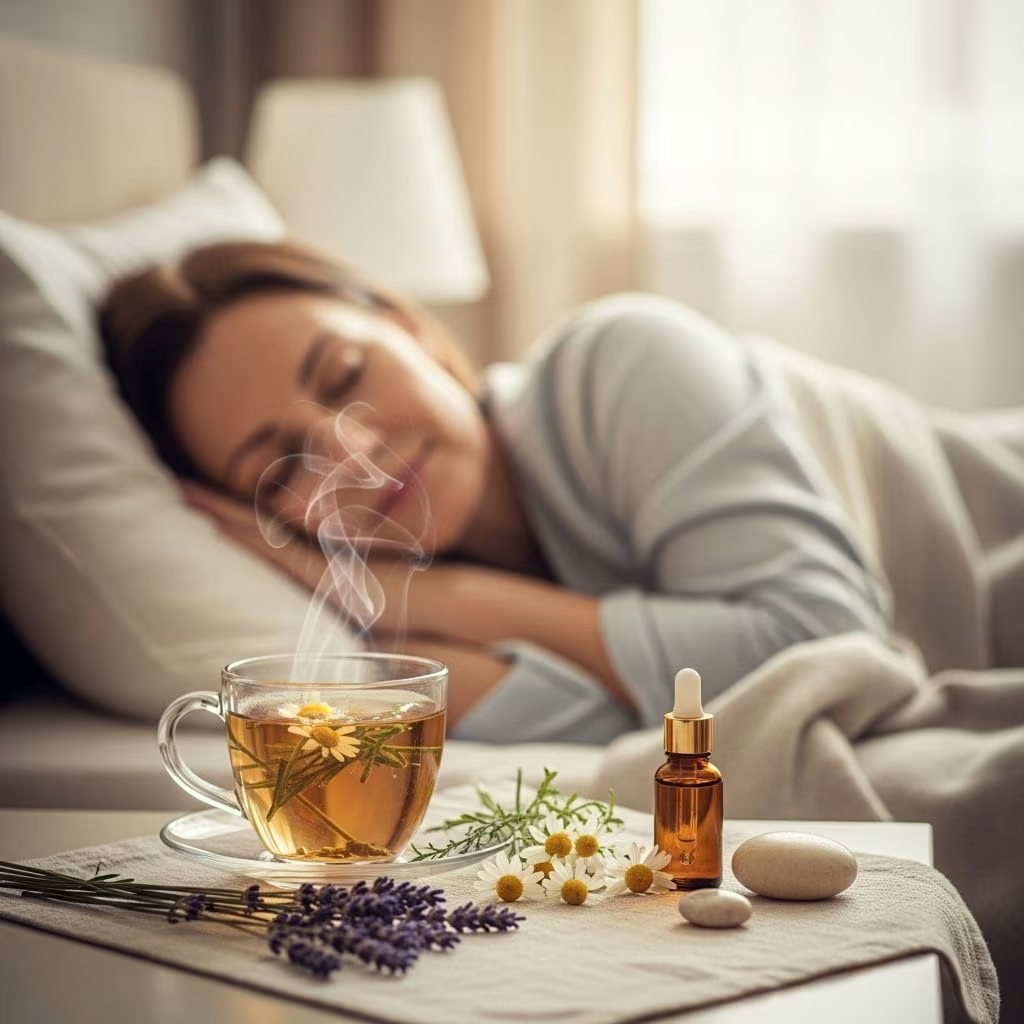
Sleep disturbances are among the most challenging symptoms women face during menopause, affecting up to 60% of women going through this natural transition. The hormonal fluctuations that occur during menopause don’t just cause hot flashes and mood changes—they fundamentally disrupt the body’s sleep-wake cycle, leaving many women exhausted and searching for relief. While hormone replacement therapy remains an option for some, an increasing number of women are turning to natural remedies that offer effective relief without synthetic hormones.
Understanding the connection between menopause and sleep problems is the first step toward finding solutions that work. The declining levels of estrogen and progesterone during menopause directly impact sleep architecture, reducing time spent in deep, restorative sleep stages. Night sweats can jolt women awake multiple times per night, while anxiety and racing thoughts make falling back asleep nearly impossible. Fortunately, a combination of herbal remedies, dietary adjustments, and lifestyle modifications can significantly improve sleep quality during this transitional period.
Understanding Menopause Sleep Disruptions
The relationship between menopause and sleep is complex and multifaceted. Progesterone, which has natural sedative properties, decreases significantly during menopause, making it harder to fall asleep and stay asleep throughout the night. Additionally, the hypothalamic thermoregulatory center becomes unstable due to estrogen withdrawal, leading to the hot flashes and night sweats that plague so many menopausal women.
These hormonal changes create a perfect storm for sleep disruption. Women may find themselves waking multiple times throughout the night, experiencing difficulty falling back asleep, or waking too early in the morning. The cumulative effect of poor sleep quality leads to daytime fatigue, irritability, difficulty concentrating, and decreased quality of life. Beyond hormonal factors, increased anxiety and mood disturbances common during menopause further compound sleep difficulties, creating a cycle that can be challenging to break without intervention.
Herbal Remedies for Better Sleep During Menopause
Traditional herbal remedies have been used for centuries to promote better sleep, and modern research is increasingly validating their effectiveness. Several herbs show particular promise for addressing menopause-related sleep problems, often without the side effects associated with pharmaceutical sleep aids.
Ashwagandha: Ancient Wisdom Meets Modern Science
Ashwagandha, also known as Indian ginseng or winter cherry, has been a cornerstone of Ayurvedic medicine for thousands of years. The Latin name Withania somnifera literally translates to “sleep-inducing,” and scientific evidence supports this traditional use. A comprehensive review of multiple studies found that participants taking daily ashwagandha supplements experienced significant improvements in sleep onset, duration, and quality.
What makes ashwagandha particularly valuable for menopausal women is its dual action on both sleep and anxiety. Research demonstrates that ashwagandha can reduce measures of anxiety, which often contributes to sleep difficulties during menopause. The dosage matters significantly—while 250 milligrams daily showed benefits, studies found that 600 milligrams produced even more impressive results for both sleep quality and anxiety reduction. Women considering ashwagandha should note that benefits become more pronounced with consistent use over at least eight weeks.
Chamomile: More Than Just a Bedtime Tea
Chamomile has earned its reputation as a gentle sleep aid through centuries of use in traditional medicine across multiple cultures. This flowering herb contains apigenin, an antioxidant that binds to specific receptors in the brain that promote sleepiness and reduce anxiety. While chamomile tea is the most common preparation, concentrated extracts and supplements offer higher doses of the active compounds.
The beauty of chamomile lies in its safety profile and versatility. It can be consumed as a warm, soothing tea before bedtime, incorporated into a relaxation routine, or taken as a supplement for more concentrated benefits. For menopausal women, chamomile not only promotes better sleep but also provides anti-inflammatory benefits that may help with other menopause symptoms.
Valerian Root: Nature’s Sleep Inducer
Valerian root has been used as a sleep aid and anxiety reducer since ancient Greek and Roman times. Research demonstrates that valerian can help people fall asleep more quickly, improve overall sleep quality, and increase the total amount of nightly sleep. The herb appears to work by increasing levels of gamma-aminobutyric acid (GABA) in the brain, a neurotransmitter that promotes relaxation and reduces nervous system activity.
For menopausal women specifically, valerian shows particular promise when combined with other herbs. Studies examining valerian paired with lemon balm found that this combination helped improve sleep and reduce sleep disorders in menopausal women, with one study reporting improvements in 36% of participants. Valerian typically requires consistent use over several weeks to achieve maximum benefits, and it doesn’t produce the grogginess often associated with pharmaceutical sleep aids.
Lemon Balm: Calming Body and Mind
Lemon balm is a fragrant herb belonging to the mint family, traditionally used in Middle Eastern medicine for its digestive and sedative properties. This herb is particularly noteworthy because several studies have focused specifically on its effects during menopause. Research involving menopausal women with insomnia found that taking 250 milligrams of lemon balm extract twice daily led to improved sleep quality in 20% of participants after just one month.
The herb’s high antioxidant content provides additional benefits beyond sleep improvement, potentially helping with other menopause-related concerns. When combined with valerian, lemon balm shows even more impressive results, suggesting that the herbs work synergistically to promote better sleep in menopausal women. The combination approach may be particularly beneficial for women experiencing multiple sleep-related challenges.
Tart Cherry: A Natural Source of Melatonin
Tart cherry, also known as sour cherry or Montmorency cherry, offers a unique approach to improving sleep during menopause. Unlike many herbal remedies, tart cherry works partly by naturally boosting the body’s production of melatonin, the hormone that regulates the sleep-wake cycle. Research has shown that participants who consumed concentrated tart cherry juice not only slept longer and more efficiently but also experienced measurable increases in melatonin levels.
Tart cherries are exceptionally high in anthocyanins, powerful antioxidant and anti-inflammatory compounds that provide benefits beyond sleep improvement. A review of multiple studies concluded that while participants didn’t always subjectively feel tart cherry helped their sleep, objective measurements showed improvements in total sleep time and sleep efficiency. For menopausal women, tart cherry can be consumed as juice, in concentrated supplements, or even as dried fruit, making it an accessible and versatile option.
Passionflower: Traditional Tranquility
Passionflower has a long history of use in traditional medicine for anxiety and sleep disturbances. This climbing vine produces compounds that appear to increase GABA levels in the brain, similar to valerian, promoting relaxation and reducing nervous system activity. While research specifically on passionflower for menopause-related sleep problems is more limited than some other herbs, its general effectiveness for insomnia and anxiety makes it a valuable option to consider.
Passionflower is particularly appealing for women who experience racing thoughts or anxiety-related sleep difficulties during menopause. It can be consumed as a tea, tincture, or supplement, and is often combined with other calming herbs for enhanced effectiveness.
Lifestyle Modifications for Improved Sleep
While herbal remedies can provide significant relief, combining them with targeted lifestyle modifications creates a comprehensive approach to managing menopause-related sleep problems. These changes address the underlying factors that disrupt sleep while creating an environment conducive to rest.
Optimizing Your Sleep Environment
Creating the ideal sleep sanctuary is crucial for combating menopause-related sleep disruptions. The National Sleep Foundation recommends maintaining bedroom temperatures between 60°F and 67°F (15.6 to 19.4°C), which helps keep body temperature low and may counteract hot flashes and night sweats. This cooler environment supports the natural drop in core body temperature that occurs during sleep, making it easier to fall and stay asleep.
Beyond temperature control, eliminating light sources is essential. Cell phones, alarm clocks, televisions, and even small indicator lights can alert the brain and interfere with sleep. Consider using blackout curtains, turning alarm clocks away from view, and removing all electronic devices from the bedroom. If you must keep your phone nearby, place it face-down or in a drawer to eliminate light exposure. Additionally, investing in moisture-wicking sheets and breathable, layered bedding allows for easy temperature adjustment throughout the night.
Establishing a Consistent Sleep Schedule
One of the most powerful tools for improving sleep during menopause is maintaining a regular sleep schedule. Going to bed and waking up at the same time every day—including weekends—helps regulate the body’s circadian rhythm and strengthens the natural sleep-wake cycle. This consistency signals to your body when it’s time to feel sleepy and when it’s time to be alert, making both falling asleep and waking up easier over time.
Developing a relaxing bedtime routine further reinforces this schedule. Activities might include taking a warm shower or bath, reading a book, listening to soothing music or sleep stories, or practicing gentle stretching. The key is choosing calming activities that signal to your brain that sleep is approaching. Avoid stimulating activities, intense exercise, or stressful conversations in the hour before bed.
Digital Detox for Better Sleep
The blue light emitted by phones, tablets, and computers suppresses melatonin production, making it harder to fall asleep. For menopausal women already dealing with disrupted sleep patterns, this additional interference can be particularly problematic. Establishing a
References
- https://thebettermenopause.com/blogs/the-better-gut-community/herbal-remedies-menopause-sleep-problems-insomnia
- https://sleepcycle.com/sleep-talk/menopause-sleep-problems
- https://empireobgyn.com/natural-menopause-management-remedies/
- https://www.healthline.com/health/menopause/menopause-and-insomnia
- https://www.psychologytoday.com/us/blog/sleep-newzzz/201808/7-natural-supplements-can-help-sleep-and-menopause
- https://www.nia.nih.gov/health/menopause/sleep-problems-and-menopause-what-can-i-do
- https://www.nhs.uk/medicines/hormone-replacement-therapy-hrt/alternatives-to-hormone-replacement-therapy-hrt/herbal-remedies-and-complementary-medicines-for-menopause-symptoms/
- https://www.webmd.com/menopause/menopause-natural-treatments


