


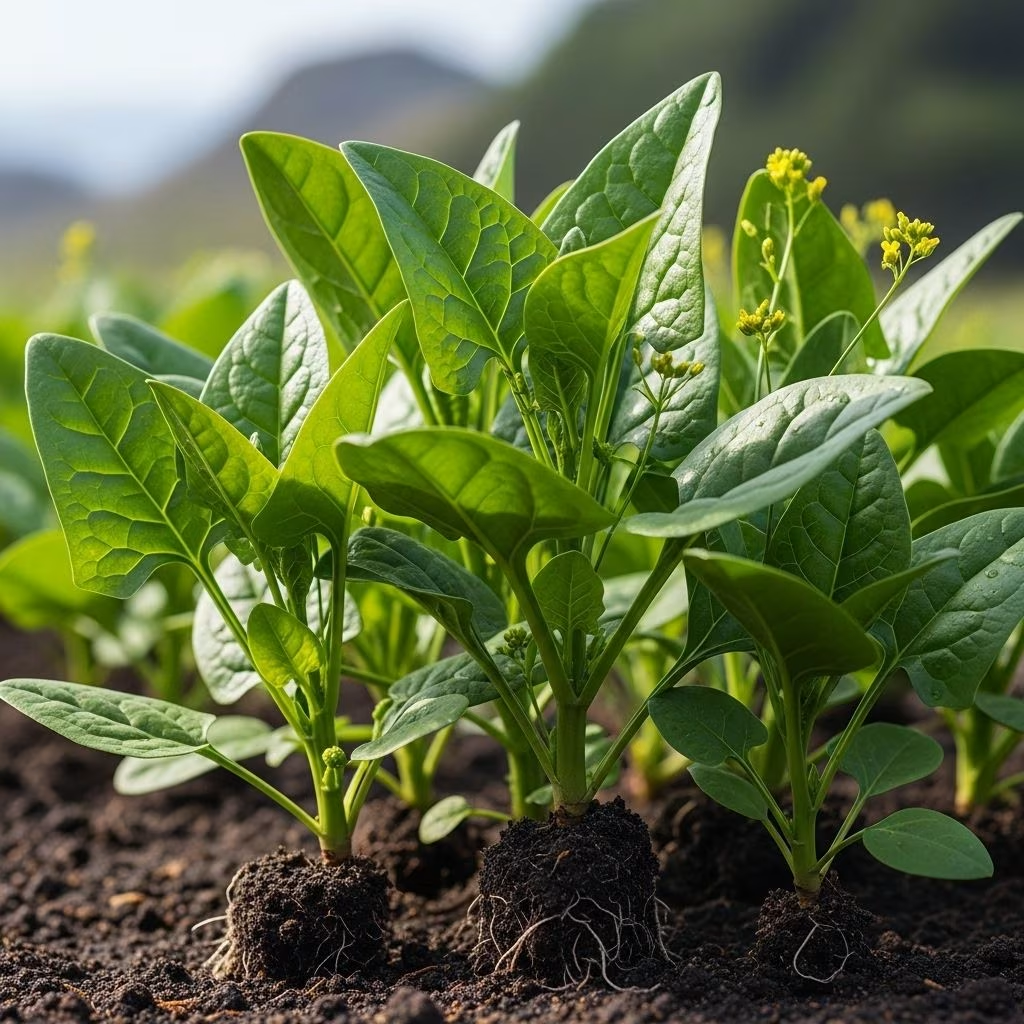
New Zealand spinach, known scientifically as Tetragonia tetragonioides and colloquially as warrigal greens, has intrigued both botanists and culinary enthusiasts for centuries. This hardy, spinach-like leafy vegetable is celebrated for its resilience, nutritional content, and culinary versatility. Despite its name, New Zealand spinach is not closely related to true spinach (Spinacia oleracea), but it has earned its moniker due to a similar taste and functional use in kitchens worldwide.
Overview: What Is New Zealand Spinach?
New Zealand spinach (Tetragonia tetragonioides), also called warrigal greens or Maori spinach, belongs to the fig-marigold family Aizoaceae. Native to the temperate coastal regions of New Zealand, Australia, and surrounding Pacific Islands, this plant has become a staple in both wild foraging and cultivated vegetable gardens. Despite its name, New Zealand spinach is only distantly related to true spinach but functions similarly in the kitchen, offering a comparable taste and nutritional profile.
History and Botanical Origins
New Zealand spinach has a rich ecological and cultural history. Originally foraged as a wild green by the Maori people in New Zealand and Aboriginal Australians, it was popularized internationally following Sir Joseph Banks’ and Captain James Cook’s 18th-century expeditions in the South Pacific. Enthusiastic botanists took seeds back to Europe, and by the late 1700s it was grown in English gardens and eventually spread to North America and other regions.
- Botanical Name: Tetragonia tetragonioides
- Family: Aizoaceae (Fig-marigold family)
- Other Common Names: Warrigal greens, Botany Bay greens, sea spinach, Cook’s cabbage, Maori spinach
- Original Use: Wild food, later introduced to Europe and cultivated for its edible, spinach-like leaves
Historic accounts report that Captain Cook and his crew consumed New Zealand spinach to fight scurvy during their voyages, capitalizing on its abundance of vitamin C and robust growth in saline coastal soils.
Plant Description and Characteristics
New Zealand spinach is a sprawling, low-growing plant with soft, fleshy stems and succulent, triangular or oval leaves. The leaves typically measure 5–10 centimeters long, are dark green to yellow green, and are covered in fine, glistening hairs called trichomes or “salt bladders,” which help it thrive in coastal, saline environments. The plant produces small yellow flowers that develop into four-pointed fruits containing seeds.
| Feature | Description |
|---|---|
| Growth Habit | Prostrate, trailing stems (spreads 1–2 meters), can grow 20–60 cm tall |
| Leaf Shape | Oval to triangular, hearty, and somewhat waxy |
| Flowers | Small, yellow, found in leaf axils (usually in summer) |
| Fruit | Hard, four-angled with pointed ends containing seeds |
| Other Features | Salt-retaining hairs (trichomes), drought and heat tolerant |
The plant’s resilience to drought, heat, and salty soils makes it a valuable green in regions where traditional spinach struggles during hot summers.
Flavor Profile: What Does It Taste Like?
The taste of New Zealand spinach is often described as:
- Mild and vegetal, similar to common spinach but slightly more intense and succulent
- With a subtle salty, grassy, or mineral undertone (especially in older leaves)
- Sometimes slightly bitter, particularly if the leaves are large or mature
- The texture is hearty, chewy, and fleshy, making it an excellent cooking green
Young, tender leaves are preferred for culinary use due to their milder, less bitter flavor.
Nutritional Value and Health Benefits
As a leafy green, New Zealand spinach is loaded with essential vitamins and minerals. Its nutritional profile is similar to that of true spinach, making it an excellent addition to a healthy diet.
- Rich in Vitamin C: Historically valued for its ability to prevent scurvy
- High in Vitamin A: Supports vision and immune health
- Contains Vitamin B6, Calcium, Magnesium, and Potassium
- Good source of Dietary Fiber and Antioxidants
Health Benefits:
- Supports immune function and skin health (vitamins C and A)
- Promotes healthy digestion due to fiber content
- Contains antioxidants that help neutralize harmful free radicals
- Drought-tolerant and less likely to accumulate nitrates like common spinach can in hot weather
- Low in calories, making it suitable for weight management
Note: Like many leafy greens, New Zealand spinach contains oxalates, so those prone to kidney stones or with specific dietary restrictions may wish to consume it in moderation and blanch the leaves before eating.
Culinary Uses and Preparation
New Zealand spinach can be used in much the same way as common spinach, making it a flexible addition to cuisines worldwide. The leaves and young shoots are harvested and prepared either raw or cooked, depending on taste and texture preferences.
- As a Cooking Green: Sauté, steam, stir-fry, or add to soups and stews
- Salads: Young, tender leaves can be eaten raw (often blanched first to reduce oxalates and bitterness)
- Quiche, Frittatas, and Pastries: Consistent texture holds up well in baked dishes
- Pastas and Rice Dishes: Mix into risottos, pasta sauces, or pilafs
- Light Pickling: Traditionally pickled or used in regional relishes
Slightly thicker and heartier than common spinach, New Zealand spinach holds its shape well when cooked and does not wilt as quickly, making it ideal for dishes that require longer cooking durations.
Basic Preparation Tip: Older leaves should be blanched in boiling water for 1–2 minutes before eating to remove oxalates and reduce bitterness. After blanching, rinse with cold water, squeeze out excess moisture, and use as required.
How to Grow New Zealand Spinach
Growing New Zealand spinach is relatively simple, especially in climates where heat or poor soil can be a challenge for other greens. It can be started indoors or sown directly after the risk of frost has passed.
- Soil: Prefers well-drained, moderately rich soil, tolerates poor/sandy, even saline soils
- Sunlight: Thrives in full sun, tolerates partial shade
- Sowing: Sow seeds directly after danger of frost; scarify seeds for better germination
- Spacing: Allow 30–50 cm between plants due to trailing habit
- Water: Drought tolerant, but regular watering promotes lush growth
- Harvest: Pick young leaves and shoots regularly to encourage bushiness and maintain tender growth
It makes a superb heat- and drought-tolerant substitute for spinach in summer gardens, is sometimes used as an edible ground cover, and can be grown in containers as well.
Safety Considerations and Preparation Tips
While New Zealand spinach is generally safe to eat, it contains moderate amounts of oxalic acid (oxalates) and saponins, which can cause an unpleasant taste and may not be suitable for those with certain health concerns (e.g., kidney stone history, gout). Blanching or boiling leaves before use significantly reduces these compounds.
- Blanch leaves before eating raw to lower oxalate content
- Rotate with other leafy greens for dietary balance
New Zealand Spinach vs. Common Spinach
| Aspect | New Zealand Spinach | Common Spinach |
|---|---|---|
| Botanical Name | Tetragonia tetragonioides | Spinacia oleracea |
| Family | Aizoaceae | Amaranthaceae |
| Origin | New Zealand, Australia | Central & Southwest Asia |
| Heat Tolerance | Very high | Low (bolts in heat) |
| Texture | Hearty, fleshy, succulent | Soft, more delicate |
| Oxalate Content | Moderate; should be blanched | Present but lower; often eaten raw |
| Flavor | Spinach-like, slightly saltier/grassy | Mild, earthy |
| Culinary Use | Cooking, stir-fries, quiches, soups | Raw salads, cooking |
| Drought Tolerance | Very high | Low |
Frequently Asked Questions (FAQs)
Q: Is New Zealand spinach a true spinach?
A: No. Although it looks and tastes similar to spinach, New Zealand spinach (Tetragonia tetragonioides) belongs to a different botanical family and is only distantly related.
Q: Can you eat New Zealand spinach raw?
A: The young, tender leaves can be eaten raw, but it’s recommended to blanch them first to reduce oxalates and bitterness. Most people use it cooked.
Q: How does New Zealand spinach compare nutritionally to regular spinach?
A: Both greens are rich in vitamins (notably A and C), minerals, and fiber. Their nutritional profiles are similar, but New Zealand spinach is more heat-resistant and less likely to accumulate nitrates in hot weather.
Q: Is it easy to grow New Zealand spinach at home?
A: Yes. New Zealand spinach thrives in hot, dry conditions and poor soils where true spinach would struggle. It can be grown as an annual or, in warm climates, as a short-lived perennial.
Q: Are there any risks associated with eating New Zealand spinach?
A: Like some other leafy greens, it contains oxalates and mild saponins, which can cause problems for some people if consumed in large amounts. Proper blanching and moderate consumption are advised.
Q: What are some traditional recipes using New Zealand spinach?
A: It can be used in pies (like Greek spanakopita substituting spinach), frittatas, stir-fries, and regional Australian and New Zealand dishes such as warrigal greens with seafood or bush tucker salads.
Q: Why did European explorers value New Zealand spinach?
A: Captain Cook and his crew ate it to prevent scurvy on long sea voyages, thanks to its high vitamin C content and abundance in coastal areas.
Conclusion
New Zealand spinach is a versatile, nutritious, and resilient leafy green that offers a flavorful and practical alternative to common spinach, especially in hot climates. Whether foraged wild or grown in the garden, its taste, history, and health benefits make it a unique addition to the home cook’s repertoire and a valuable crop for sustainable gardening.
References
- https://specialtyproduce.com/produce/New_Zealand_Spinach_6784.php
- https://plantura.garden/uk/vegetables/new-zealand-spinach/new-zealand-spinach-overview
- https://www.cal-ipc.org/plants/profile/tetragonia-tetragonioides-profile/
- https://en.wikipedia.org/wiki/Tetragonia_tetragonioides
- https://www.missouribotanicalgarden.org/plantfinder/plantfinderdetails.aspx?taxonid=275442&isprofile=0&chr=19
- https://savvygardening.com/new-zealand-spinach/
- http://www.gardening.cornell.edu/homegardening/scenef2e7.html
- https://www.ufseeds.com/product/new-zealand-spinach-seeds—1-pound/SPNZ-1-pound.html
- https://www.cabidigitallibrary.org/doi/full/10.1079/cabicompendium.52942


