


Introduction
The partridge is among the most recognizable and widely distributed game birds in the world, celebrated historically for its role in cuisine, culture, and ecological systems. Whether glimpsed in the wild or tasted on a dinner plate, the partridge captivates both naturalists and gastronomy enthusiasts. This comprehensive guide explores what partridges are, their health and ecological benefits, culinary uses, and an in-depth look at their unique flavor.
What Is a Partridge?
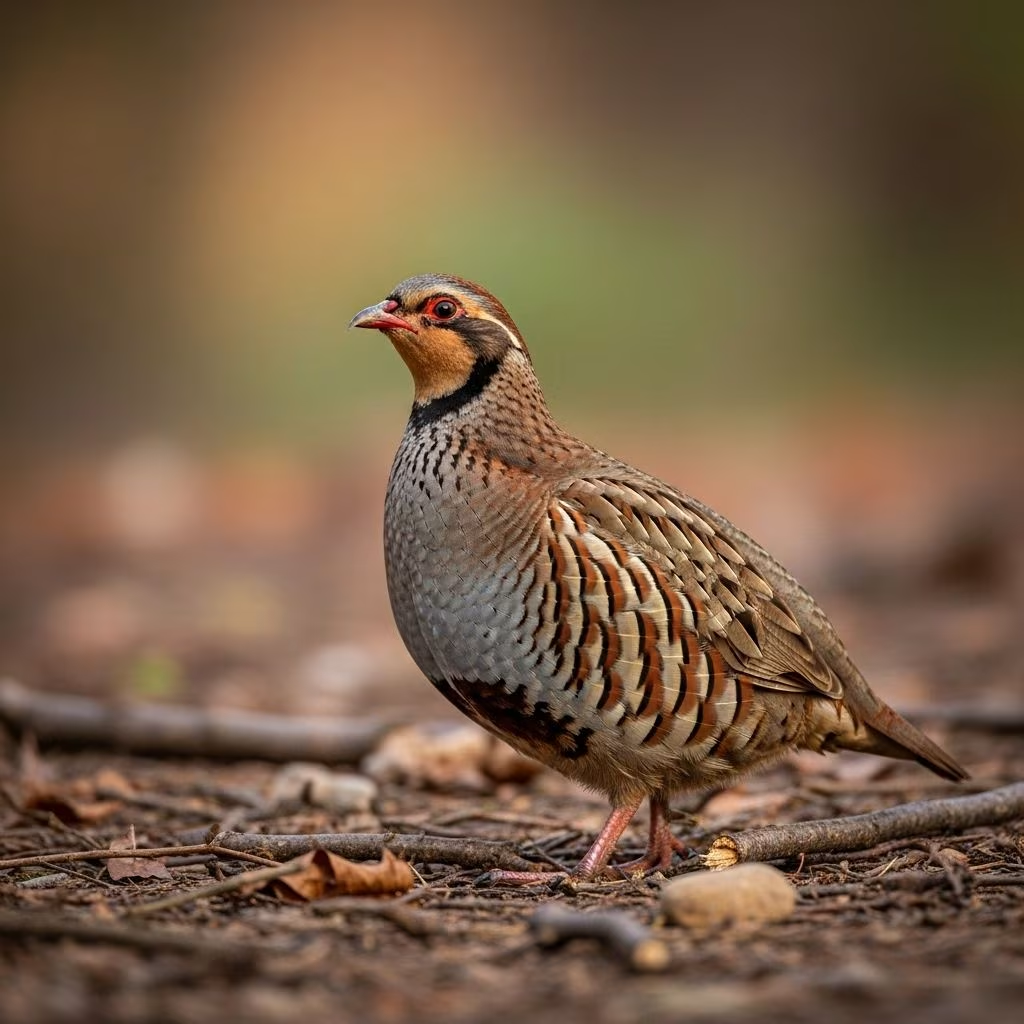
Partridges belong to the family Phasianidae and are classified as medium-sized ground-dwelling game birds. They are characterized by their plump bodies, short tails, strong legs, and intricate feather patterns. The term “partridge” broadly refers to various species across several genera, all sharing key features like robust physiques and cryptic coloration. Out of the forty recognized species, the Gray Partridge (Perdix perdix) and Red-legged Partridge (Alectoris rufa) are especially prominent in both the wild and in culinary traditions .
Species and Physical Characteristics
Partridges display a range of distinct traits that set them apart from other birds:
- Size: Adults typically measure 30.5–33 cm (12–13 inches) in length, weighing between 345–500 grams (0.75–1.1 pounds) depending on the species .
- Coloration: Feathers vary from gray, sandy brown, and buff to chestnut, cream, and even black-brown, creating fine barring and streaking patterns essential for camouflage .
- Distinctive Features: Males often exhibit brighter or more ornate markings (such as a chestnut belly patch or an orange head and throat in gray partridge), whereas females tend to be subtler in appearance .
- Legs and Beaks: Legs are usually gray or reddish, adapted for quick terrestrial movement. The beak is moderately curved and strong for cracking seeds or picking vegetation .
Below is a table summarizing key characteristics of a few notable partridge species:
| Species | Distribution | Color & Markings | Average Size |
|---|---|---|---|
| Gray Partridge (Perdix perdix) | Europe, Central Asia | Gray, brown with chestnut patch (male) | 30–33 cm; 340–500 g |
| Red-legged Partridge (Alectoris rufa) | France, Spain, UK | Sandy brown, pink belly, black-streaked throat | 32–36 cm; 375–450 g |
| Barbary Partridge (Alectoris barbara) | Northern Africa, Canary Islands | Gray-brown upper body, buffy belly, red legs | 33–36 cm; 370–460 g |
| Arabian Partridge (Alectoris melanocephala) | Southern Arabia | Bluish-gray, black crown, white eye band | 39–43 cm; 520–720 g |
Distribution and Habitat
Partridges natively occupy a broad Palearctic range spanning Europe, Asia, and Africa. They favor habitats such as grasslands, lowland plains, scrublands, open woods, and farmlands . Some species have successfully adapted to cultivated agricultural regions, while others prefer rocky outcrops or lightly wooded savannahs. Red-legged and gray partridges are among those most widely naturalized outside their native ranges, especially in the United Kingdom and parts of North America, where they were introduced for hunting .
- Habitat Preference: Open fields, agricultural lands, dry hillsides, and grasslands with ample cover.
- Adaptability: Many species are resilient to moderate habitat changes, contributing to their large populations in some regions .
- Conservation Status: Most species are classified as Least Concern by the IUCN, though some are near-threatened due to hunting pressure and habitat loss .
Lifecycle and Behavior
Partridges exhibit fascinating reproductive and social behaviors, shaped by their ground-nesting lifestyle:
- Breeding: Typically monogamous, partridges form stable pairs for the breeding season, with females laying clutches of 10–20 eggs in well-hidden ground nests.
- Chicks: Hatchlings are precocial, capable of running and feeding shortly after hatching. Their rapid development allows them to evade predation early on .
- Lifespan: In the wild, partridges live between 2 and 6 years. Some face high predation risks, contributing to their short average lifespan .
- Group Living: Outside of the breeding season, partridges may gather in coveys—family groups that roost and forage together for safety and warmth .
- Vocalization: Partridges use an array of calls and duets, particularly during mating or territorial displays. Each species has distinctive sounds, ranging from soft peeps to loud, repetitive notes .
- Diet: Omnivorous; consume grains, seeds, shoots, leaves, and insects, varying with the season and availability. Their powerful beaks are adapted for a diverse diet .
Benefits of Partridge
Partridges confer several ecological, economic, and health benefits:
- Biodiversity: As prey species, partridges support a diverse array of predators, helping to maintain healthy grassland and woodland ecosystems.
- Agricultural Pest Control: By consuming weeds, seeds, and insects, partridges aid in the natural control of agricultural pests and weed proliferation.
- Game Hunting: They are prized as game birds, supporting rural economies through hunting and game farming, and providing outdoor recreation.
- Nutritional Benefits: Partridge meat is lean, high in protein, and rich in micronutrients, making it a healthy alternative to fattier domestic poultry.
- Cultural Significance: Featured in folklore, literature, and seasonal celebrations (notably in the “Twelve Days of Christmas”), partridge has symbolic as well as practical value.
Culinary Uses of Partridge
The partridge’s reputation as a delicacy is centuries-old, particularly in European and Middle Eastern cuisines. Its smaller size and tender meat make it ideal for various traditional and modern preparations:
- Roasting: Whole partridge, particularly young birds (known as poults), are best suited for quick roasting due to their tender flesh.
- Stewing & Braising: Older or tougher birds can be slow-cooked in stews and braises, absorbing complex flavors from herbs, root vegetables, wine, or broth.
- Stuffing: Partridges are often stuffed with wild herbs, mushrooms, and fruits—a preparation that brings out their earthy flavors.
- Game Pie: Partridge is a classic ingredient in British game pies, combined with other game birds for rich seasonal dishes.
- Smoking & Curing: In some regions, partridge is smoked or cured for preservation and flavor enhancement.
The versatility of partridge in recipes allows it to complement both rustic and haute cuisine approaches.
How Does Partridge Taste?
Partridge is renowned among chefs and gourmets for its unique, refined flavor:
- Flavor Profile: Mild yet distinctly “gamey,” partridge meat tends to be more delicate and less assertive than pheasant or wild duck.
- Texture: The flesh is fine-grained, moist, and tender—especially when sourced from young birds.
- Comparison: The flavor is often described as a cross between chicken and quail: lighter and sweeter than most game, without the toughness of older wild fowl.
- Culinary Tip: Because of the delicate taste, partridge is best cooked simply, with minimal seasoning or sauce, so as not to mask its natural qualities.
Partridge has long held a place on the menus of fine restaurants and banquet tables, prized for both its rarity and its ability to pair beautifully with autumnal flavors, root vegetables, wild mushrooms, and light red wines.
Nutritional Value of Partridge Meat
Partridge ranks high among game meats for its nutritional properties. Here’s a general breakdown of the health value of partridge meat (values approximate, per 100g cooked):
- Calories: 120–130 kcal
- Protein: 23–25g
- Fat: 2–3g (mainly unsaturated)
- Cholesterol: 65–75mg
- Key Vitamins: B6, B12, niacin (B3), and riboflavin
- Minerals: Rich in iron, phosphorus, selenium, and zinc
This nutritional profile makes partridge an excellent option for people seeking lean, high-quality protein with robust micronutrient content, lower total fat, and few carbohydrates. It is suitable for those managing cholesterol, weight, or looking for nutrient-dense meat sources.
Conservation and Ethical Considerations
Although most partridge species are not currently endangered, responsible management and sustainable hunting are critical due to pressures from habitat loss, intensive agriculture, and over-harvesting in some areas:
- Sustainable Farming: Increasingly, partridges for consumption are sourced from regulated game farms, which help protect wild populations.
- Conservation Efforts: Many countries have seasonal limits, quotas, and conservation programs to ensure healthy, stable populations.
- Habitat Protection: Conservation organizations and farmers are working to restore hedgerows, native grasses, and reduce chemical use, benefitting partridges and other wildlife.
- Ethical Hunting: Hunters are encouraged to follow best practices: only hunt in season, observe population limits, and ensure proper training for working dogs to minimize injury and loss among birds.
Frequently Asked Questions (FAQs)
Q: Is partridge safe for people with poultry allergies?
A: Partridge is considered a wild game bird, and some people with poultry allergies may react to it. Always consult your allergist before trying partridge if you have any poultry-related sensitivities.
Q: What is the best way to cook partridge for beginners?
A: The most straightforward method is to roast a whole young partridge with only salt, pepper, and a bit of butter or olive oil, basting as it cooks. This preserves its natural flavor and guarantees tenderness.
Q: How can you tell a young partridge from an older bird at the market?
A: Young birds (poults) are lighter, more tender, and have smoother skin. Older birds tend to be larger with tougher flesh, suitable for slow-cooked stews.
Q: Are partridges hard to find outside Europe?
A: Specialty butchers and online purveyors in North America or Asia may stock partridge, though availability is lower than common poultry species. Frozen partridge is often available where fresh cannot be sourced.
Q: Do partridges migrate?
A: Most partridge species are non-migratory. They stay within a relatively small home range year-round, relying on cryptic coloration and group living for protection during winter.
Through understanding its biology, culinary heritage, and ecological importance, one gains appreciation for the partridge not just as a culinary delicacy, but as a vital part of global biodiversity and rural traditions.
References
- https://animaldiversity.org/accounts/Perdix_perdix/
- https://a-z-animals.com/animals/partridge/
- https://avibirds.com/types-of-partridge-bird-species/
- https://en.wikipedia.org/wiki/Partridge
- https://www.allaboutbirds.org/guide/Gray_Partridge/overview
- https://myodfw.com/game-bird-hunting/species/partridge
- https://fieldguide.wildlife.utah.gov/?Species=Perdix+perdix
- https://fieldguide.mt.gov/speciesDetail.aspx?elcode=ABNLC01010


