


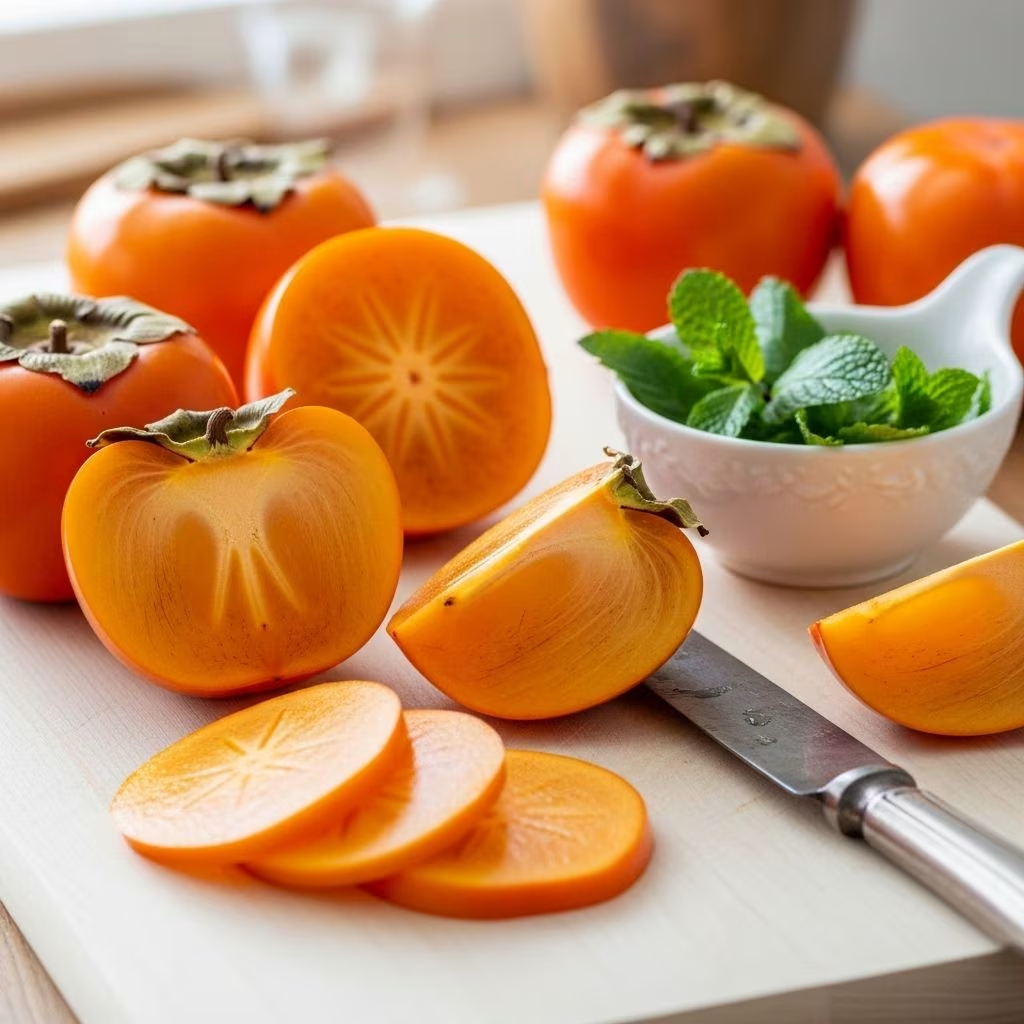
Persimmon, often called the “fruit of the gods,” is a vibrant orange fruit celebrated for its sweetness, versatility, and major health benefits. Originally native to East Asia but now enjoyed globally, persimmons delight the senses and support well-being. This comprehensive guide explores what persimmons are, their varieties, health benefits, uses, and the unique taste that makes them so appealing.
What Is a Persimmon?
Persimmons are a type of edible fruit that grow on trees belonging to the genus Diospyros, which means “divine fruit” in Greek. Despite often being mistaken for tomatoes or other fruits due to their shape and color, persimmons are botanically classified as berries. Unlike most berries that grow on vines or bushes, persimmons develop on trees and can range in size from a large plum to a small grapefruit .
Notably, persimmons have been cherished for centuries, with ancient Greeks referring to them as the “fruit of the gods.” Today, the fruit is popular across Asia, the Mediterranean, Russia, and increasingly in the United States .
- Botanical family: Ebenaceae
- Origin: East Asia (China, Korea, Japan)
- Color: Ranges from pale yellow-orange to deep reddish-orange
- Season: September to January (Northern Hemisphere)
Persimmon Varieties: Astringent vs. Non-Astringent
Persimmons are commonly categorized into two main types based on flavor and astringency:
- Astringent Varieties: These persimmons, such as ‘Hachiya’ and ‘Tanenashi’, are high in soluble tannins when unripe, causing a distinct mouth-puckering sensation. They must be fully ripe—soft and often jelly-like—before eating .
- Non-Astringent Varieties: These include varieties like ‘Fuyu’ and ‘Jiro’. They contain less tannin and can be eaten while still firm and crisp. They’re generally flatter and rounder in shape .
| Characteristic | Astringent (e.g. Hachiya) | Non-Astringent (e.g. Fuyu) |
|---|---|---|
| Tannin Content | High (must be fully ripe) | Low (edible when firm) |
| Shape | Acorn-like, pointed base | Rounded, flat base |
| Texture at Ripeness | Soft, jelly-like | Crisp to soft |
| Common Uses | Baking, eating raw (very ripe), drying | Eating fresh, salads, snacks |
The Anatomy of Persimmon Fruit
A persimmon is composed of three main layers plus seeds, each contributing to its unique taste, texture, and culinary appeal :
- Epicarp (Skin): The smooth, thin, edible peel varies in color depending on ripeness and variety.
- Mesocarp (Flesh): The thick, juicy edible portion is most prized for its sweet-tangy flavor, with color ranging from pale yellow to deep orange.
- Endocarp (Core): This inner layer surrounds the seeds and contains most of the tannins responsible for astringency in some varieties.
- Seeds: Many commercially grown persimmons are seedless, but wild or traditional varieties may have flat or oval hard seeds.
Nutritional Benefits of Persimmon
Persimmons are a highly nutritious fruit, offering an abundance of vitamins, minerals, and dietary fiber in a low-fat, moderate-calorie package .
- Rich in Vitamin C (Ascorbic Acid): Supports immune health and acts as an antioxidant.
- High in Carotenoids (Pre-vitamin A): Important for eye health, skin, and immune function.
- Good Source of Dietary Fiber: Promotes digestive health, aids satiety, and helps regulate blood sugar.
- Contains Essential Minerals: Calcium, potassium, magnesium, iron, zinc, copper, and manganese.
- Abundant in Natural Sugars: Both sucrose and its monomers (glucose & fructose), providing energy and sweetness.
- Low Protein and Fat Content: Making it a low-calorie, heart-healthy snack.
| Nutrient | Amount |
|---|---|
| Water | 80.3% |
| Protein | 0.58 g |
| Fat | 0.19 g |
| Carbohydrates | 18.6 g |
| Sugars | 12.5 g |
| Dietary Fiber | 1.48 g |
| Vitamin C | 7.5 mg |
| Potassium | 161 mg |
Potential Health Benefits
Regular consumption of persimmons can contribute to various aspects of health :
- Antioxidant Power: Rich in vitamin C, carotenoids, and polyphenols (including proanthocyanidins and tannins), persimmons combat oxidative stress and may lower the risk of chronic diseases.
- Gut Health: The combination of soluble and insoluble fiber can foster gut microbiome balance and regularity.\
References
- https://edis.ifas.ufl.edu/publication/HS1479
- https://www.harryanddavid.com/articles/food-drink/what-is-a-persimmon
- https://pmc.ncbi.nlm.nih.gov/articles/PMC4817420/
- https://www.missouribotanicalgarden.org/PlantFinder/PlantFinderDetails.aspx?kempercode=h740
- https://www.ofsedgeandsalt.com/blog/2017/12/22/persimmon-a-plant-profile
- https://mortonarb.org/plant-and-protect/trees-and-plants/persimmon/
- https://news.maryland.gov/dnr/2017/09/01/habichat-persimmon/
- https://hgic.clemson.edu/factsheet/persimmon/


